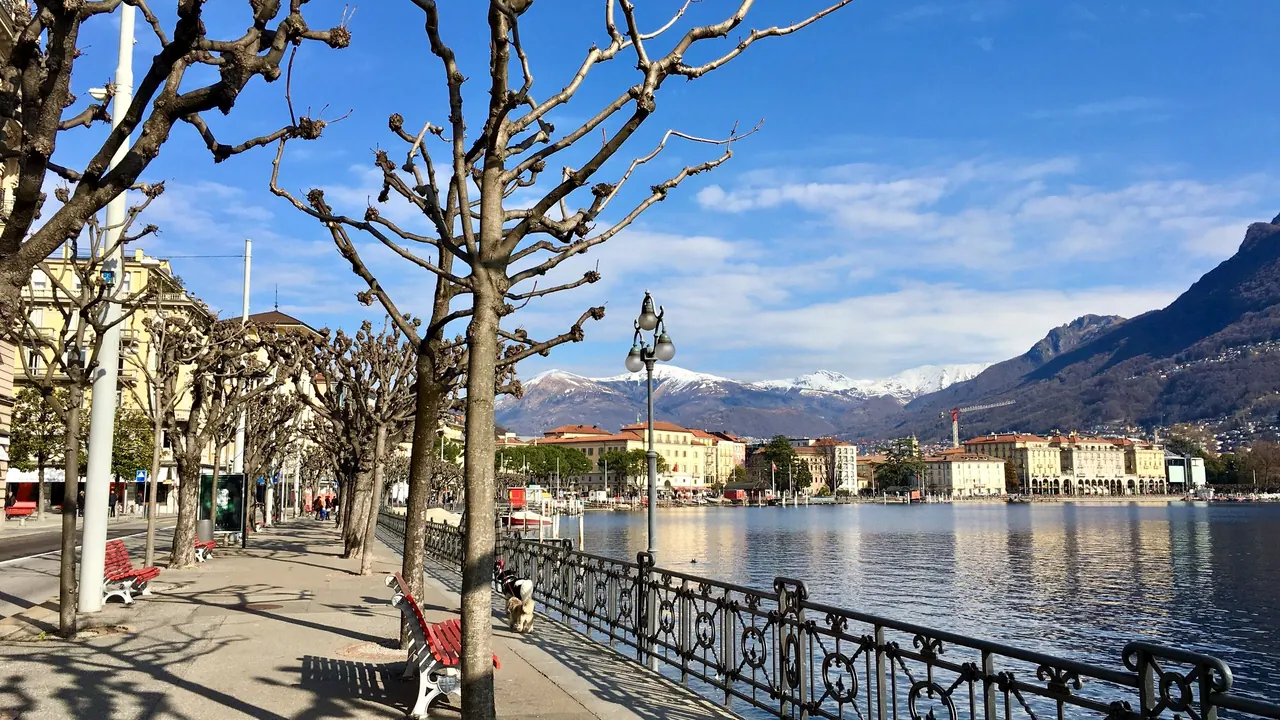
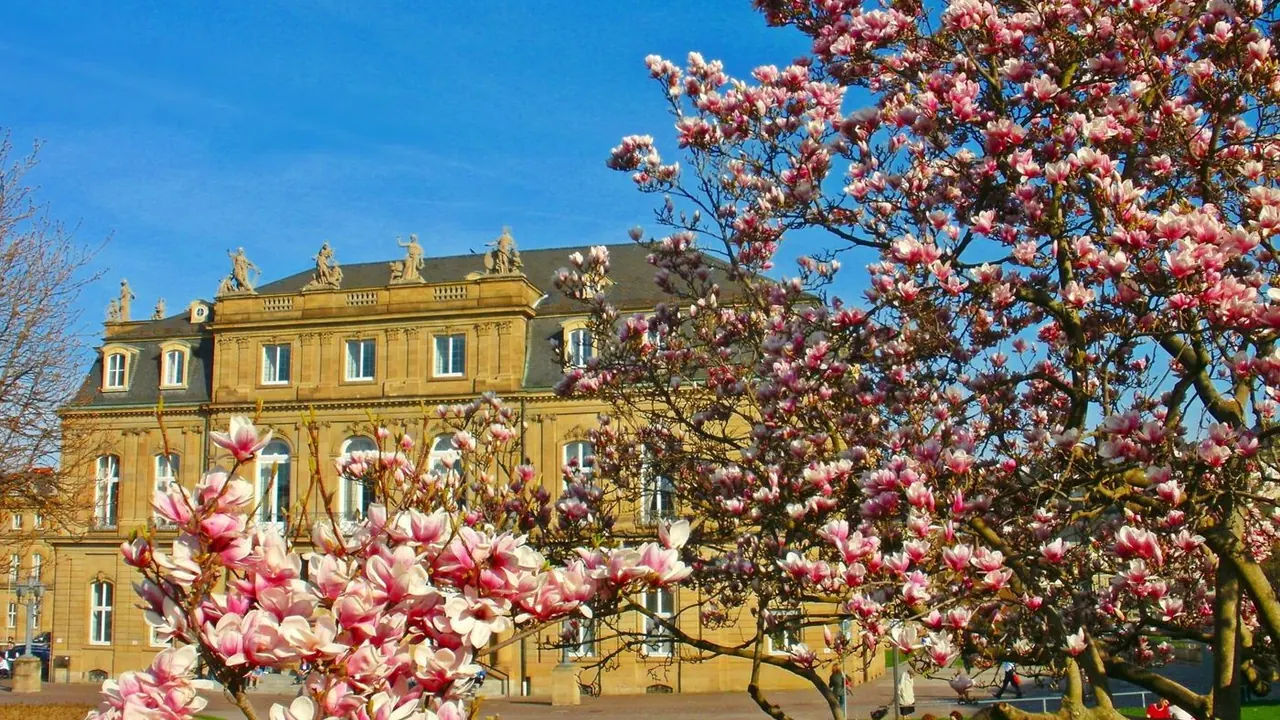
Photos: Lugano by Thomas Woodtli from Zürich, Switzerland, CC BY-SA 2.0, cropped; Stuttgart by Baden de, CC BY 3.0, cropped.
Lugano or Stuttgart?
Our verdict in twelve categories, each scored against the same fixed benchmark cities, and the climate month by month, so you can choose for your trip.
Choose Lugano for
- beaches
- nature and the outdoors
- getting around
Lugano is for travellers who want scenery more than sights. Choose it for a slow lake stay with mountains rising straight from the water: funicular rides up Monte Brè, the lakeside path to Gandria, swimming at a lido, long lunches in a grotto and easy trains to Como, Milan and the castles of Bellinzona. It suits couples and walkers who are happy to pay Swiss prices for the setting and want quiet evenings.
Choose Stuttgart for
- live music and the arts
- prices
- culture and sights
Stuttgart rewards people who want more to do in the city itself. It has world-class car museums, the Staatsgalerie, an opera house and one of Europe's leading ballet companies, mineral baths where locals soak in warm spring water, and a hearty Swabian kitchen with wine from vineyards inside the city limits. It costs less than Lugano and has more for families, and it makes a solid base for German palaces and university towns. You give up the lake and the high peaks.
Scoreboard
Twelve categories on one fixed scale from 0 to 100. The shaded stretch is the gap between the two.
Your match
Pick a travel style or drag the sliders, and both match scores follow your weighting.
Wins on beaches and nature and the outdoors with your weighting.
Wins on live music and the arts and prices with your weighting.
What matters to you?
Category by category
What the scores mean for a trip.
Beaches & swimming
Lugano at least offers a proper swim. In high summer Lake Lugano is warm enough for lazy afternoons at the Cassarate lido or the smaller decks towards Castagnola and Paradiso, and boats take you to village bathing spots around the shore.
Stuttgart has no water you can swim in. The Neckar is a working river and Max-Eyth-See is only for boating, so summer swimming means the outdoor pools, some of them fed by mineral springs. Neither city offers sand, but only Lugano lets you jump into a lake.
Food & drink
Stuttgart has the deeper food scene. Swabian dishes such as Maultaschen, Käsespätzle and Zwiebelrostbraten are served everywhere from the Bohnenviertel taverns to a strong fine-dining tier, and the Markthalle and the seasonal Besen wine rooms add plenty to explore.
Lugano's best eating is the grotto, polenta and braised meat at granite tables under chestnut trees with a glass of Ticino Merlot. Beyond that the choice is narrow and expensive, and many visitors save their big meals for a trip into Italy.
Culture & sights
The two cities' sights come from different centuries. Lugano's are old and intact but few: the arcaded Lombard old town around Piazza della Riforma, San Lorenzo cathedral above it, Luini's Passion fresco in Santa Maria degli Angioli, and the city's art collection split between the lakeside LAC and Palazzo Reali. A single unhurried day covers them.
Stuttgart's draw is industry and modern design, and there is much more of it. The Mercedes-Benz and Porsche museums are of international standing, the Staatsgalerie runs through European painting, and the Weissenhof Estate holds UNESCO-listed Le Corbusier houses. Wartime bombing left the old core in pockets around Schlossplatz, but the essentials still take two or three days.
Nightlife
Neither is a party city, but Stuttgart gives you more choice. Theodor-Heuss-Strasse fills with bars at weekends, basement clubs keep an electronic scene going, and the Cannstatter Volksfest beer tents bring a big autumn blowout. Lugano's evenings are smart aperitivi under the arcades and long dinners, and the town is quiet before midnight. Its young people head to Milan.
Nature & outdoors
Lugano is the stronger destination for the outdoors. Steep, wooded mountains drop into the lake, funiculars climb Monte Brè and San Salvatore, a rack railway climbs Monte Generoso for views to the Alps, and the clear green rivers of the Verzasca and Maggia valleys are an hour away. Kayaks and paddleboards complete the picture.
Stuttgart's green is gentler: vineyard trails above the Neckar, deer in the Rotwildpark, and the Swabian Jura's cliffs and caves or the Black Forest about an hour out. It is good walking and cycling country, but it is not mountain scenery.
Day trips
Both are excellent bases, and the difference is the character of the trips. From Lugano you cross a border and a language: Milan's Last Supper, Lake Como, Bellinzona's castles, the Borromean Islands on Lake Maggiore, all lake and Lombard art.
Stuttgart's excursions are German heritage: Ludwigsburg's baroque palace, punting in Tübingen, Heidelberg's castle, Maulbronn monastery and Hohenzollern on its hilltop, with Strasbourg possible for a long day.
Good for families
Stuttgart is the easier city for children because it has proper attractions. Wilhelma's zoo and botanical garden fills a day, the car museums keep older children busy, Killesberg has a miniature railway and animals, and Ludwigsburg has a fairy-tale garden.
Lugano relies on the lake and the mountains: boat rides, lido slides, funiculars and the Swiss miniature park at Melide. It works well for younger children on outdoor days, but on a rainy day or with teenagers there is less to fall back on.
Getting around
Lugano is slightly simpler to handle. Most of what you want lies along a walkable lakefront, with a short funicular up to the station, and boats and mountain railways stand in for a transit system. Stuttgart has a flat centre but sprawls up its basin, so you will use the Stadtbahn and S-Bahn more often. A single integrated ticket and the Stäffele stairways make that easy.
Shopping & style
Lugano's shopping is narrow and aimed at deep pockets. It comes down to one handsome arcaded street by the lake, where watches, jewellery and Italian labels make for pleasant window-shopping, and the old-town delicatessens are the best place for gifts you can actually take home. For anything wider, people take the train to Milan.
Stuttgart offers a whole city's range rather than a single luxury street. Everyday brands fill the long pedestrian Königstrasse, a long-established family department store handles designer fashion, and the Bohnenviertel adds smaller independent shops. Both cities have a large designer outlet within easy reach, Mendrisio near the Italian border and Metzingen near Stuttgart, but only Stuttgart gives you plenty of choice on its own streets too.
Affordability
Stuttgart is clearly the cheaper stay, although it is not a bargain. Hotels drop at weekends and outside trade fairs, and tavern meals are fair for what you get. In Lugano almost nothing is cheap: hotels, wine, boats and mountain railways all cost Swiss rates. A grotto lunch, the free regional transport that comes with a hotel stay and meals across the Italian border are the only real ways to save.
Live music & performing arts
Here Stuttgart is in another league. The Stuttgart Ballet, renowned since John Cranko, and an adventurous Staatsoper share the state theatre. The Liederhalle carries a strong Bach tradition, musicals run at Möhringen, and a jazz club keeps live music going through the week.
Lugano's stage life centres on LAC, home of the Orchestra della Svizzera italiana, plus Estival Jazz's free summer concerts on Piazza della Riforma. It is good while it lasts, and opera fans head to La Scala.
Wellness & relaxation
Stuttgart has a genuine bathing culture that Lugano lacks. The naturally carbonated springs of Bad Cannstatt and Berg feed public mineral baths with warm pools and saunas, ideal for an afternoon of soaking, even if the city's everyday pace is brisk.
Lugano relaxes you through its rhythm instead: palm-lined promenades, a lido bench and grotto lunches that run into the evening. For proper spas you depend on the big hotels or the pool complex near Rivera.
When should you go?
Pick your month. The climate figures are measured averages, not a forecast.
Lugano in July
Stuttgart in July
Daytime high, °C
Rainfall in the month, mm
Temperature and rainfall are climate normals, averaged over the years shown. Lugano: 1991-2020 normals, Lugano (1.2 km from centre). Stuttgart: 1991-2020 normals, Stuttgart / Neckartal (2.8 km from centre).
The two cities have very similar temperatures, with summer highs of about 27°C in Lugano and a degree cooler in Stuttgart, and both are cold in winter. Rain is where they part. From April to November Lugano is wet, with heavy, often stormy rain peaking at 178mm in May, though it falls in downpours between sunny spells. Stuttgart is much drier all year, and even its wettest month, July, sees only 79mm. For swimming in Lake Lugano, aim for June to early September. Late spring and early autumn are the best times for its hiking paths, if you can accept the chance of rain.
In winter, Lugano's sheltered position south of the Alps gives it almost twice Stuttgart's sunshine, about 124 hours in January against 69. That makes a cold-season lakeside stroll there far brighter than a grey day in the Stuttgart basin. Stuttgart is at its best from May to September for beer gardens, vineyard walks and day trips, and autumn colours in the Swabian Jura give it a good October too.
Which traveller are you?
On an outdoors trip, Lugano is the better choice. Funiculars and a rack railway lift you to summits above the lake, the Monte Lema to Tamaro ridge walk is a classic, and the Verzasca valley is an hour away. Stuttgart's wooded hills are gentler.
For a culture and arts trip, Stuttgart has far more to offer. It has the Mercedes-Benz and Porsche museums, the Staatsgalerie and the Weissenhof Estate, and in the evenings the Staatsoper, the Stuttgart Ballet and concerts at the Liederhalle. Lugano's sights and its LAC season fill only a day or two.
On a trip on a tight budget, Stuttgart is the realistic option. Its taverns serve generous portions at fair prices, a day ticket covers the transit network, and hotels get cheaper at weekends. In Lugano, every meal, boat ride and hotel night comes at Swiss rates.
Before you go
| Measure | Lugano | Stuttgart |
|---|---|---|
| Official language | French, German, Italian, Romansh | German |
| Currency | Swiss Franc (CHF) | Euro (EUR) |
| Sockets | CJ230 V, 50 Hz | CF230 V, 50 Hz |
| Driving side | Right | Right |
| Time zone | UTC+1, UTC+2 in summer | UTC+1, UTC+2 in summer |
| Emergency number | 112 | 112 |
| Elevation | 283 m | 245 m |
| Main airport | Milan Malpensa International Airport (MXP)46 km from centre208 non-stop destinations | Stuttgart Airport (STR)10 km from centre124 non-stop destinations |
| Public holidays this year | 15 days | 12 days |
By the numbers
| Measure | Lugano | Stuttgart |
|---|---|---|
| City population | 63,495 | 609,365 |
| People per km² | 837 | 2,938 |
| Museums within 10 km | 17 | 42 |
| UNESCO World Heritage sites within 50 km | 5 | 3 |
Where else could you go?
Every comparison below shares a destination with this one, so you can follow Lugano or Stuttgart somewhere new.
- Comovs Lugano
- Milanvs Lugano
- Bergamovs Lugano
- Baden-Badenvs Stuttgart
- Heidelbergvs Stuttgart
- Zermattvs Lugano