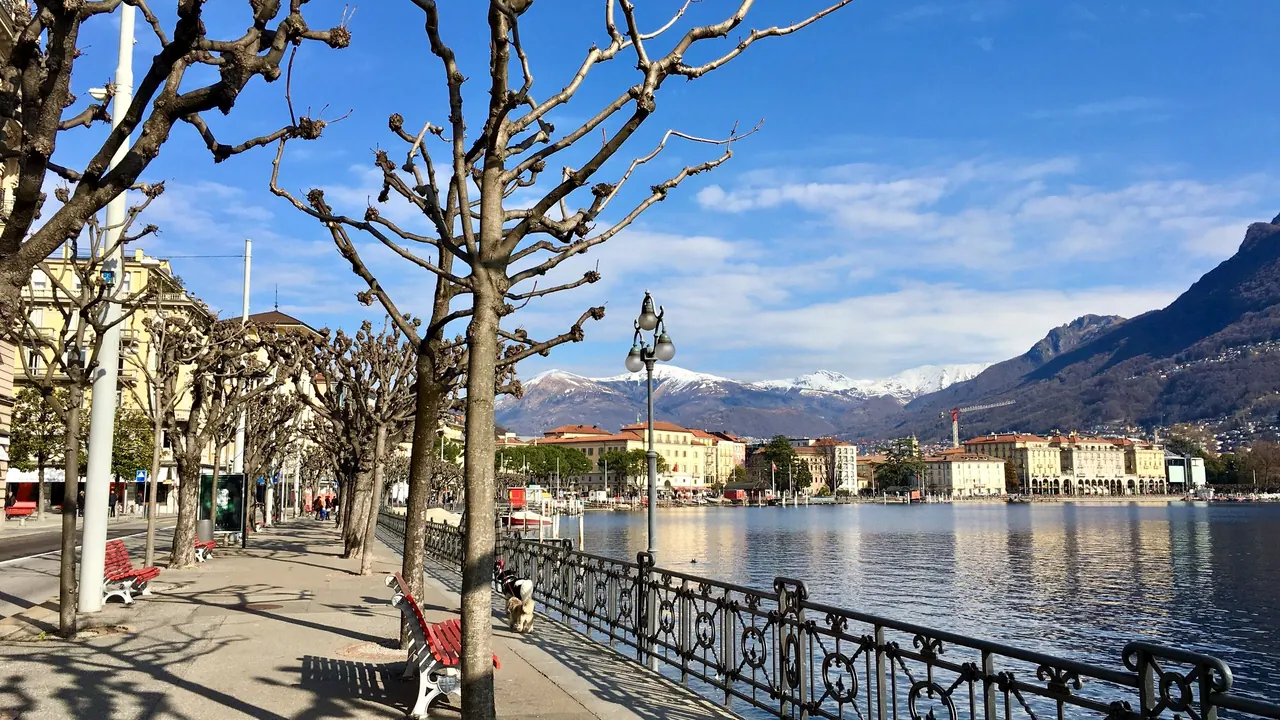
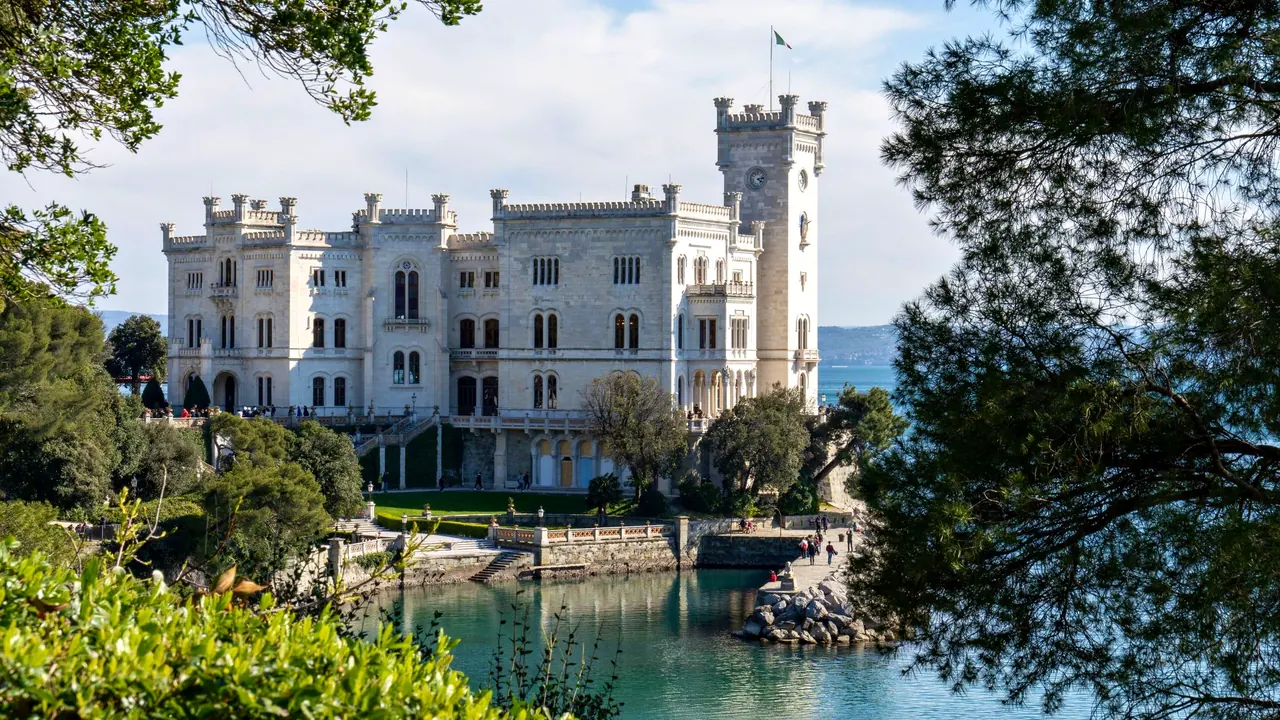
Photos: Lugano by Thomas Woodtli from Zürich, Switzerland, CC BY-SA 2.0, cropped; Trieste by Tibor Szabo, Pexels License.
Lugano or Trieste?
Our verdict in twelve categories, each scored against the same fixed benchmark cities, and the climate month by month, so you can choose for your trip.
Choose Lugano for
- nature and the outdoors
- getting around
- shopping
Lugano is for travellers who measure a trip in views and walks. Funiculars climb Monte Brè and San Salvatore, the lakeside path runs to Gandria, Ticino's ridges and valleys are close, and quick trains reach Como and Milan. It suits a calm, comfortable lake stay where the budget is not the main concern, and it is the easier of the two to get around.
Choose Trieste for
- prices
- culture and sights
- beaches
Choose Trieste if you want a city with more to see and eat, and a real sea to swim in. Its Habsburg squares and Miramare Castle, the buffets and coffee houses, a proper opera house and summer swimming at Barcola give the days more substance. It also costs a good deal less than Lugano.
Scoreboard
Twelve categories on one fixed scale from 0 to 100. The shaded stretch is the gap between the two.
Your match
Pick a travel style or drag the sliders, and both match scores follow your weighting.
Wins on nature and the outdoors and getting around with your weighting.
Wins on prices and culture and sights with your weighting.
What matters to you?
Category by category
What the scores mean for a trip.
Beaches & swimming
Neither city has a sandy beach, but Trieste has the sea and Lugano only a lake. In Lugano you swim at lidos with lawns, decks and pools, the main one at the mouth of the Cassarate. The season is short, roughly June to early September.
Trieste makes more of its water. There is the long Barcola promenade with its platforms and ladders, old bathing establishments in town, clear Adriatic water, and prettier pebble coves at Sistiana, Duino and Grignano. Piran is under an hour away. Swimming off the rocks is part of everyday summer life there.
Food & drink
Both kitchens lean Italian, but Trieste's is the more distinctive and the more rewarding to explore. Lugano's highlight is the grotto, with polenta, braised meats and Ticino Merlot under chestnut trees. Beyond that the choice is thin and prices are Swiss.
Trieste mixes Italy, Austria and the Slavic world. Its buffets carve boiled pork with horseradish, and menus run from jota and sardoni to presnitz and strudel. It has a coffee culture with its own vocabulary, and osmize on the Karst serve Vitovska and Terrano. Restaurant choice is narrow in both cities.
Culture & sights
Trieste has much more to see. The Habsburg seafront around Piazza Unità, the Borgo Teresiano along the Canal Grande, the cathedral and castle on San Giusto, the Roman theatre, Miramare Castle and the Risiera di San Sabba memorial fill several days and carry real historical weight.
Lugano is pleasant but quickly done. The arcaded old town around Piazza della Riforma, San Lorenzo, Luini's Passion fresco and the art collection split between LAC and Palazzo Reali make a good single day.
Nightlife
Neither is a place for a big night out, and in both the evening is aperitivo followed by dinner. Trieste has a little more life: university students keep some wine bars and pubs busy, and in summer the kiosks on the Barcola seafront stay open into warm nights. Lugano is quieter, dearer and more dressed up, mostly lakefront lounges and drinks under the old-town arcades, and its young people go to Milan for a night out.
Nature & outdoors
Both have mountains at the door, but Lugano's setting is the grander one. Steep wooded peaks rise straight out of the lake, with funiculars to Monte Brè and San Salvatore and a rack railway up Monte Generoso. The green water of the Verzasca and Maggia valleys is about an hour away.
Trieste's outdoors is gentler and more varied. There are walks along the Karst edge on the Strada Napoleonica and the Rilke Path, the Val Rosandra gorge and the Grotta Gigante. The gulf is good for sailing, and you can snorkel at Miramare. The Bora can make winter walks hard going.
Day trips
Both are excellent bases that reach across borders, so the difference is in what lies around them. From Lugano the draw is lakes and big-city art: Como, Lake Maggiore and the Borromean Islands, Bellinzona's castles and Milan's Last Supper. Fast trains do most of the work.
Trieste looks towards older and less visited places. Friuli has Roman Aquileia, Cividale, star-shaped Palmanova and Grado. Slovenia has Piran, Ljubljana and the Postojna cave, and Venice makes a long day out. Some of the trips across the border go more easily by car.
Good for families
Both are safe and calm, with little built for children and steep streets above the water. Lugano suits younger children slightly better, with lido pools and slides, lake boats, funicular rides and the Swiss miniature park at Melide.
Trieste plays to older children who like caves and castles: the Grotta Gigante, Miramare's gardens, a small aquarium and a hands-on science centre. Its swimming is off rocks and concrete steps, which is harder for small swimmers than Lugano's lidos.
Getting around
Lugano is the easier of the two to move around. Its small centre is linked by the lakefront promenade, and a funicular takes care of the climb from the station. Lake boats, mountain railways and the Swiss rail network take you almost anywhere without a car.
Trieste's flat core by the sea is easy on foot, and buses and bay boats cover Barcola, Miramare and Muggia. The climb to San Giusto is long flights of steps, though, and the Karst villages and trips across the border go better with a car.
Shopping & style
Lugano has the better shopping, though only at the expensive end: Swiss watchmakers, jewellers and Italian fashion houses under the arcades of Via Nassa, plus a designer outlet village towards Mendrisio. Trieste has no luxury scene. Its best browsing is in the old town's antique and second-hand shops, and the things worth taking home are coffee, Karst wine and presnitz.
Affordability
Trieste is far cheaper. Coffee at the bar and buffet plates cost little, buses are cheap and rooms are reasonable for most of the year. The waterfront, San Giusto and swimming at Barcola are free.
Lugano charges Swiss prices for hotels, meals, wine, boats and mountain railways, and there is no cheap way to stay. Grotti and set lunches help, as does the free regional transport that usually comes with a hotel stay.
Live music & performing arts
Trieste has more to offer for a night at a performance. The Teatro Verdi runs a proper season of opera and ballet, operetta has deep roots in the city, and the Politeama Rossetti and a Slovenian-language theatre add drama.
Lugano's stage life is concentrated at LAC, whose fine concert hall is home to the Orchestra della Svizzera italiana. It suits lovers of classical music more than opera fans, who go to La Scala. Its summer highlight is the free Estival Jazz festival in Piazza della Riforma.
Wellness & relaxation
Neither city has thermal baths, so in both, relaxation comes from the pace of life. Lugano's version is by the lake: lidos, the palm-lined shore, long grotto lunches, hotel spas and the large pool and sauna complex near Rivera. Trieste's is more urban and literary, with long sittings in old coffee houses and sunset strolls on the Molo Audace, and only hotel and day spas for treatments.
When should you go?
Pick your month. The climate figures are measured averages, not a forecast.
Lugano in July
Trieste in July
Daytime high, °C
Rainfall in the month, mm
Temperature and rainfall are climate normals, averaged over the years shown. Lugano: 1991-2020 normals, Lugano (1.2 km from centre). Trieste: 1991-2020 normals, Trieste (1.6 km from centre).
Lugano is warm enough for lake swimming from June to early September, with highs of about 27°C in July and August. It is also a wet place for much of the year. Rain is heavy from April to November and peaks at about 178mm in May, so a sunny spell is never guaranteed. Spring and autumn are the best seasons for hiking. Winter is cold for wandering the streets but brings the least rain.
Trieste runs a little warmer, reaching about 29°C in high summer. The sea is at its best in July and August at around 25°C, and swimming works from June to September. Its summers are drier and sunnier than Lugano's. The rain comes later, building through autumn to about 125mm in November. Winters are a touch milder, but the cold Bora wind can make them feel harsher.
Which traveller are you?
On an outdoors trip, Lugano is the better pick. Its mountains rise straight from the lake, with full-day ridge hikes like Lema to Tamaro and paddling below. Trieste offers shorter outings: a sea-cliff walk, a cave, an afternoon's sailing.
For a culture and arts trip, choose Trieste. Lugano offers a single day of sightseeing within a lake vacation. Trieste rewards a slower stay, its Habsburg past and the shades of Joyce and Svevo unfolding over several days, with opera after dark.
On a trip on a tight budget, Trieste is the obvious choice. In Lugano even the funiculars and lake boats that make the place cost extra. In Trieste, Karst walks are free and an osmize sells farm wine and cheese at the source.
Before you go
| Measure | Lugano | Trieste |
|---|---|---|
| Official language | French, German, Italian, Romansh | Italian |
| Currency | Swiss Franc (CHF) | Euro (EUR) |
| Sockets | CJ230 V, 50 Hz | CFL230 V, 50 Hz |
| Driving side | Right | Right |
| Time zone | UTC+1, UTC+2 in summer | UTC+1, UTC+2 in summer |
| Emergency number | 112 | 112 |
| Elevation | 283 m | 2 m |
| Main airport | Milan Malpensa International Airport (MXP)46 km from centre208 non-stop destinations | Trieste Airport (TRS)31 km from centre32 non-stop destinations |
| Public holidays this year | 15 days | 13 days |
By the numbers
| Measure | Lugano | Trieste |
|---|---|---|
| City population | 63,495 | 198,417 |
| People per km² | 837 | 2,332 |
| Museums within 10 km | 17 | 33 |
| UNESCO World Heritage sites within 50 km | 5 | 5 |
| Swim season, months above 21 °C | - | 4 months |
Where else could you go?
Every comparison below shares a destination with this one, so you can follow Lugano or Trieste somewhere new.