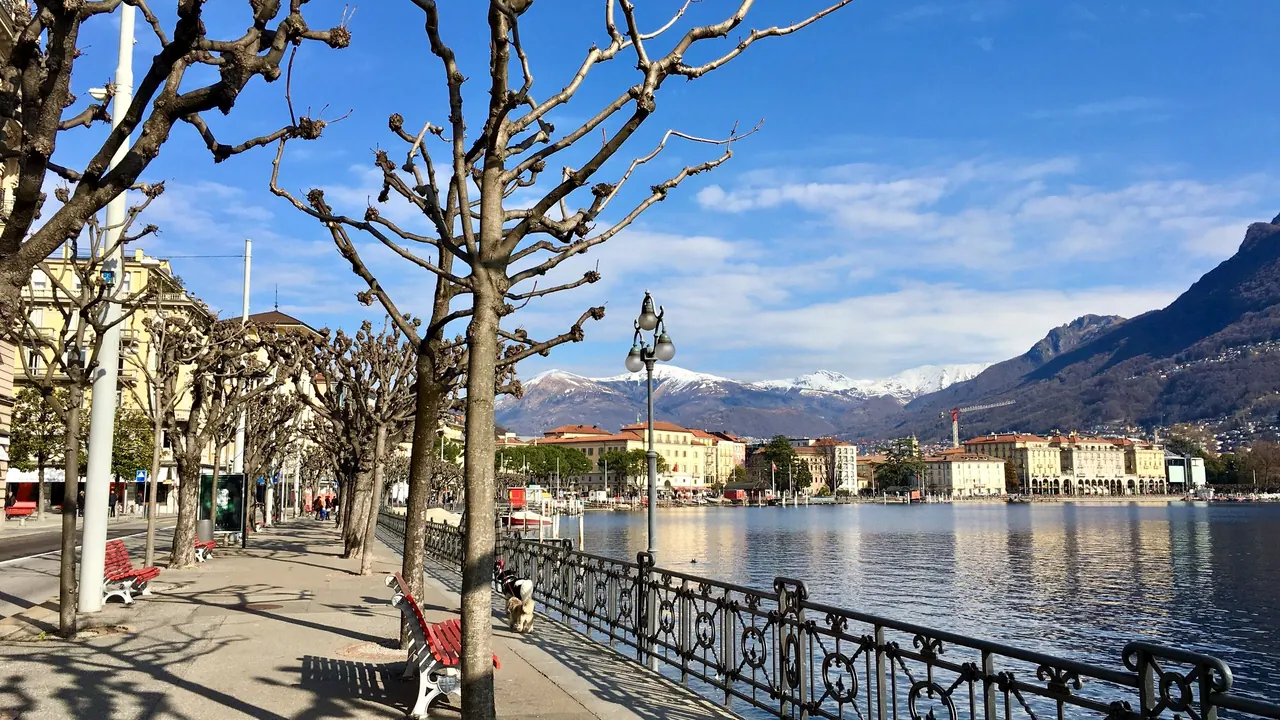
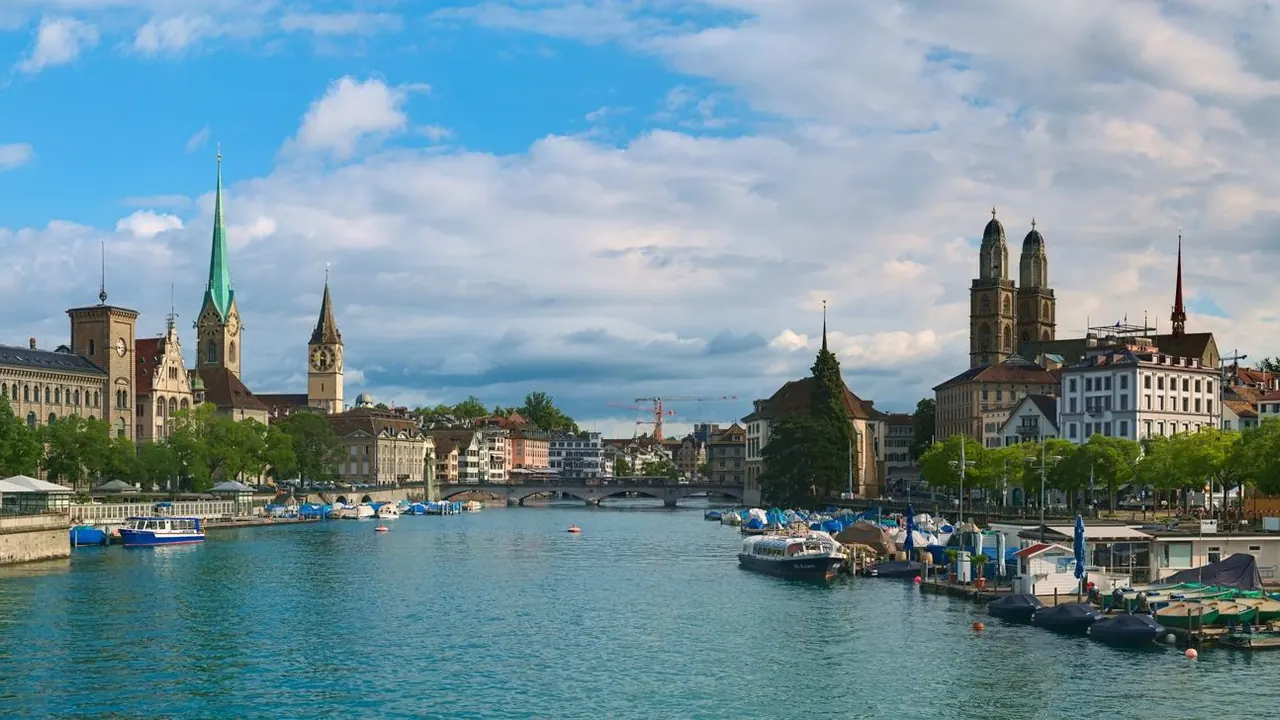
Photos: Lugano by Thomas Woodtli from Zürich, Switzerland, CC BY-SA 2.0, cropped; Zurich by Daniel Kraft, CC BY-SA 3.0, cropped.
Lugano or Zurich?
Our verdict in twelve categories, each scored against the same fixed benchmark cities, and the climate month by month, so you can choose for your trip.
Choose Lugano for
- prices
Lugano suits travellers who want lake-and-mountain scenery with an Italian accent and a slow pace. Days go on funiculars, lido afternoons and long lunches in grotti, and Milan, Como and Lake Maggiore are close by. It is warmer in summer and sunnier in winter, and slightly less punishing on the wallet, but the town itself is quiet and quickly seen.
Choose Zurich for
- nightlife
- live music and the arts
- shopping
Choose Zurich if you want a fuller city around the same kind of lake. It has stronger museums, a real opera house and concert life, clubs that run until morning, a zoo and science centres for children, and trams that make everything effortless. It is the better base for a mixed trip of culture, evenings out and Alpine day trips, provided the cost does not put you off.
Scoreboard
Twelve categories on one fixed scale from 0 to 100. The shaded stretch is the gap between the two.
Your match
Pick a travel style or drag the sliders, and both match scores follow your weighting.
Wins on prices with your weighting.
Wins on nightlife and live music and the arts with your weighting.
What matters to you?
Category by category
What the scores mean for a trip.
Beaches & swimming
Both offer the same kind of summer swim, from lawns, decks and ladders rather than sand, over the same short season from June to early September. In Lugano the main lido sits at the mouth of the Cassarate, and boats carry you to small baths in the lakeside villages.
Zurich adds the river. At Letten a young crowd lets the Limmat carry them downstream, and the historic men's and women's baths stand right in the old town.
Food & drink
Lugano's strength is narrow but distinctive: the grotto, with polenta, braised meats and Ticino Merlot at granite tables under chestnut trees. Outside that tradition the choice thins quickly, and many visitors save their best meals for a trip across the Italian border.
Zurich gives you more range. Veal with rösti and winter fondue in the guild houses sit alongside casual and international cooking in Kreis 4 and 5. The city's chocolate and confectionery, led by the old tea rooms on Paradeplatz, are worth a visit on their own.
Culture & sights
Lugano's sights fit comfortably into a day. There is the arcaded Lombard old town around Piazza della Riforma, San Lorenzo above the lake, Luini's Passion fresco and an art collection split between LAC and Palazzo Reali. It makes a pleasant outing rather than a reason to come.
Zurich needs two or three days and rewards them. The Kunsthaus, the Swiss National Museum and the Rietberg hold collections of real weight. The Altstadt adds the Grossmünster, where the Swiss Reformation began, and Chagall's windows in the Fraumünster.
Nightlife
A night out in Lugano means an aperitivo under the arcades or on the lakefront, then a long dinner. Apart from summer weekends on the promenade, the town is quiet before midnight, and its own young people go to Milan.
Zurich is another matter. Its electronic music scene runs deep, with clubs in Kreis 4 and 5 and Zurich West open until morning at weekends, Langstrasse as the late-night centre and the Street Parade filling the lake shore every August. Drinks are steep in both cities, but only Zurich gives you a proper night out.
Nature & outdoors
Both are lake-and-mountain cities, but the landscapes differ. Lugano's lake is narrow and closed in by steep wooded slopes. Funiculars climb Monte Brè and San Salvatore, the shore path leads to Gandria, the Lema to Tamaro ridge makes a fine day hike, and the green rivers of the Verzasca and Maggia valleys are about an hour away.
Zurich's lake is broader and gentler, with the Glarus Alps at the far end and the Uetliberg as its home hill. What it adds is the high Alps: Rigi, Pilatus and real mountain hiking within about an hour, and skiing at Flumserberg in winter.
Day trips
Both are excellent bases, but they point in different directions. From Lugano the trips are largely Italian: Milan's cathedral and The Last Supper, Lake Como and Bergamo's upper town. On the Swiss side, Bellinzona's castles and Lake Maggiore with the Borromean Islands are within easy reach.
Zurich looks across Switzerland and north to the Rhine. Lucerne is under an hour away, Bern, Basel and St Gallen's abbey library are about an hour each, and the Rhine Falls pair with the painted houses of Stein am Rhein.
Good for families
Lugano suits a calm family stay built around the water: boat trips to the villages, slides at the lidos, funicular rides and the park of Swiss landmarks in miniature at Melide. But the town climbs steeply from the shore, and there is no zoo or large museum for older children.
Zurich has more to fill the days. There is the zoo with its Madagascar rainforest hall and elephant park, Technorama in Winterthur and the Transport Museum in Lucerne, as well as lidos with shallow areas. Trams that take a pushchair without fuss make it the easier city with small children.
Getting around
You can walk the centre of either city, but in Lugano the slope gets in the way. The station sits high above the old town, joined by a short funicular, and buses climb to the hillside districts.
Zurich is easier still. Trams reach every neighbourhood, and the S-Bahn, the Uetliberg railway, the funiculars and even the lake boats all run on one integrated ticket. The airport is a short train ride from the main station.
Shopping & style
Lugano's Via Nassa and Zurich's Bahnhofstrasse sell the same things, mainly Swiss watches, jewellery and fashion. Lugano's offer is smaller, and its extras are mostly for the table: delicatessens, wine shops, the weekly market and a designer outlet village towards Mendrisio. Serious shoppers end up in Milan.
Bahnhofstrasse is longer and grander, with long-established department stores that Lugano lacks. Zurich also has the boutiques and antique shops of the Niederdorf and the design shops in the viaduct arches of Zurich West.
Affordability
Neither city is cheap, but Lugano is the slightly gentler bill. Its costs gather around the things you came for: a room by the lake, boat trips to the villages, the funiculars and the rack railway. It also gives you ways to eat well for less, since a grotto meal or a set lunch costs far less than dinner on the promenade, and your hotel stay usually covers regional buses and trains. Italian lakeside towns are a short trip away for a cheaper meal.
In Zurich the expense reaches the ordinary parts of the day as well, from a modest room to a quick lunch or a round of drinks. There is no local equivalent of the grotto, so saving here means doing without rather than finding a cheaper way to do it: a picnic on the lake shore instead of a restaurant, an afternoon at a public lido instead of a spa. A visitor card that combines transport and museum entry does the job Lugano's hotel transport pass does, but there is no Italian border nearby to cross for a cheaper meal.
Live music & performing arts
Most of Lugano's stage life happens at LAC, where the Orchestra della Svizzera italiana plays in a hall with fine acoustics. In summer, Estival Jazz brings free concerts to Piazza della Riforma. Otherwise there are few small venues, and for opera you go to Milan.
Zurich has an opera house of its own on the lake shore, the Opernhaus, with a full season of opera and ballet. It also has the Tonhalle Orchestra and the Schauspielhaus, one of the leading German-language theatres. The Rote Fabrik and the venues of Kreis 4 and 5 add jazz, indie and electronic acts, so evenings out have far more range.
Wellness & relaxation
In Lugano, wellness comes from the pace of the place: coffee under the arcades, an afternoon at a lido, a long grotto lunch on a palm-lined shore. Proper spas are mostly in the big lakeside hotels, plus an indoor pool complex near Rivera.
Zurich has real bathing places. There are thermal pools and a rooftop pool in the old Hürlimann brewery vaults, and in winter the wooden bathing houses on the lake and river become saunas with cold dips between sessions. Baden's hot springs, used since Roman times, are twenty minutes away by train.
When should you go?
Pick your month. The climate figures are measured averages, not a forecast.
Lugano in July
Zurich in July
Daytime high, °C
Rainfall in the month, mm
Temperature and rainfall are climate normals, averaged over the years shown. Lugano: 1991-2020 normals, Lugano (1.2 km from centre). Zurich: 1991-2020 normals, Zurich Town / Ville. (2.2 km from centre).
Lugano is the warmer and sunnier of the two all year. Summer highs reach about 27°C against Zurich's 24°C, and in winter Lugano gets roughly twice the sunshine, with 124 hours in January against 62. That makes it the better choice for a winter or early spring stroll, when Zurich is often grey and cold and fog lies over the lake. The catch is rain. From April to November Lugano is the wetter city by a clear margin, with the most rain in May at around 178mm, while Zurich's wet months are milder.
Both are at their best for lake swimming in July and August. Lugano's summer can feel hot and humid, so spring and autumn are its best seasons for walking and hiking. In Zurich, June to September is the comfortable window for being outdoors, and December brings its darkest, coldest days.
Which traveller are you?
For a food and nightlife trip, Zurich is the clear choice. Kreis 4 and 5 give it casual and international places to eat, and its clubs and Langstrasse bars carry on until morning. Lugano's grotti are charming, but the town is mostly asleep before midnight.
On a culture and arts trip, Zurich has far more to offer. It has the Kunsthaus, the National Museum and the Rietberg by day and the Opernhaus, the Tonhalle and the Schauspielhaus by night. Lugano's sights take a day, and its stage life centres on LAC.
On a tight budget, Lugano is the less painful of two expensive options. Grotti and set lunches feed you well for less, hotel stays usually include regional transport, and cheaper Italian towns lie a short trip across the border.
Before you go
| Measure | Lugano | Zurich |
|---|---|---|
| Official language | French, German, Italian, Romansh | French, German, Italian, Romansh |
| Currency | Swiss Franc (CHF) | Swiss Franc (CHF) |
| Sockets | CJ230 V, 50 Hz | CJ230 V, 50 Hz |
| Driving side | Right | Right |
| Time zone | UTC+1, UTC+2 in summer | UTC+1, UTC+2 in summer |
| Emergency number | 112 | 112 |
| Elevation | 283 m | 408 m |
| Main airport | Milan Malpensa International Airport (MXP)46 km from centre208 non-stop destinations | Zürich Airport (ZRH)9 km from centre226 non-stop destinations |
| Public holidays this year | 15 days | 10 days |
By the numbers
| Measure | Lugano | Zurich |
|---|---|---|
| City population | 63,495 | 440,935 |
| People per km² | 837 | 5,016 |
| Museums within 10 km | 17 | 63 |
| UNESCO World Heritage sites within 50 km | 5 | 1 |
Where else could you go?
Every comparison below shares a destination with this one, so you can follow Lugano or Zurich somewhere new.