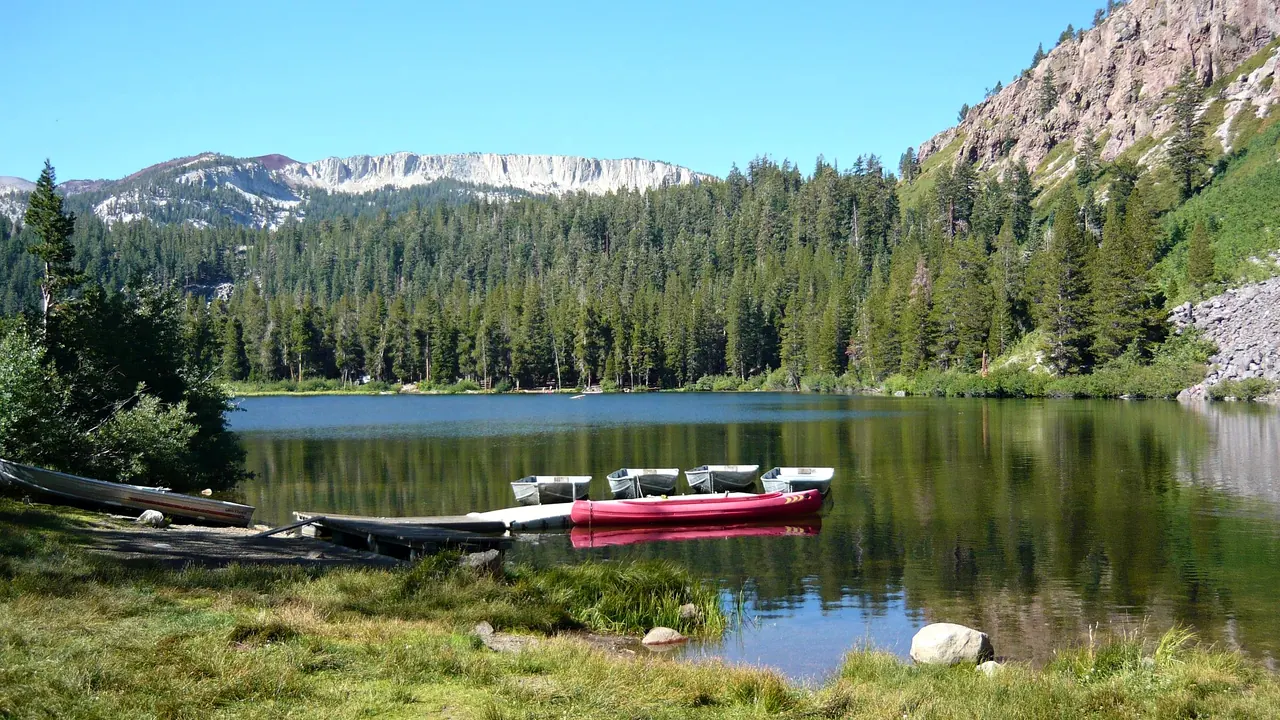
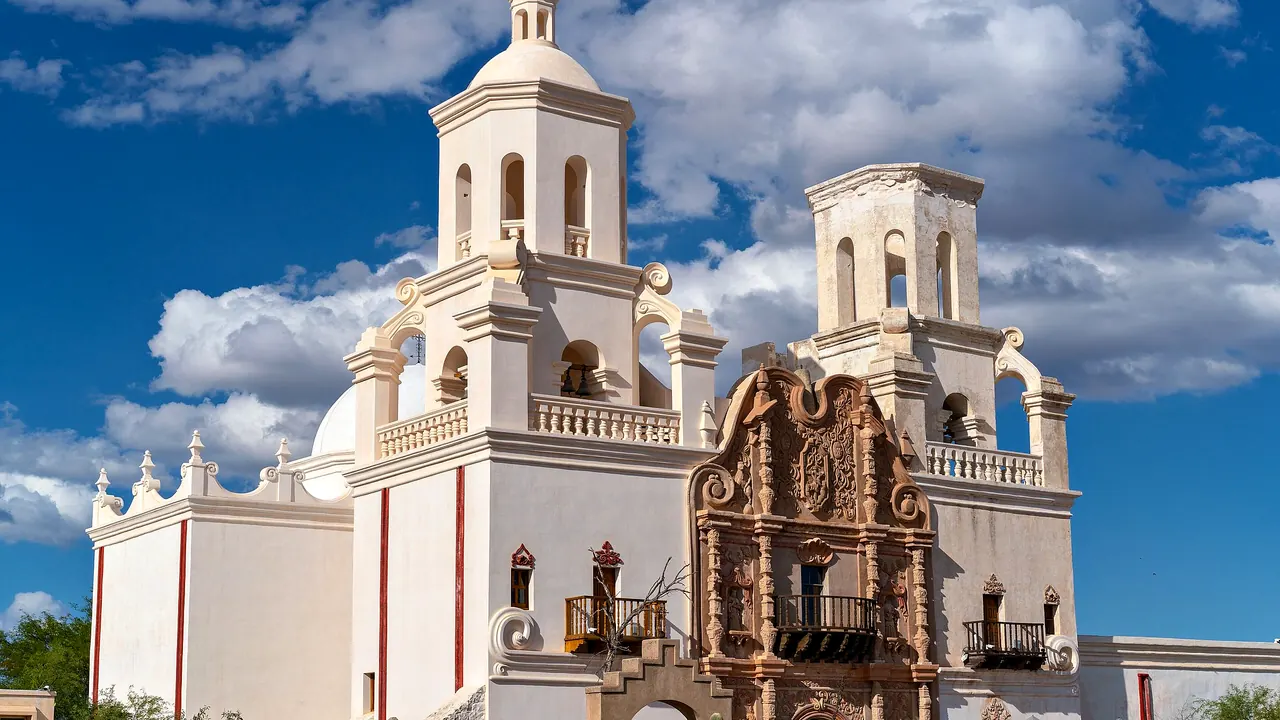
Photos: Mammoth Lakes by Dr. Al. K. Lisch, CC BY-SA 3.0, cropped; Tucson by Steve and Kimberly Rader, CC BY-SA 4.0, cropped.
Mammoth Lakes or Tucson?
Our verdict in twelve categories, each scored against the same fixed benchmark cities, and the climate month by month, so you can choose for your trip.
Choose Mammoth Lakes for
- getting around
- nature and the outdoors
- beaches
Mammoth Lakes is for travellers whose whole trip is the mountains. Skiers get one of North America's largest ski areas, with a season that often runs into early summer. Hikers, paddlers and mountain bikers get the Lakes Basin, Reds Meadow and, once Tioga Pass opens, the Yosemite high country. Expect very little in town after dark, almost no sights, and resort prices.
Choose Tucson for
- culture and sights
- food and drink
- prices
Tucson suits a broader, warmer trip, best taken between autumn and spring. The saguaro forests and Mount Lemmon give you proper days outdoors, and the city adds what Mammoth lacks: Sonoran Mexican cooking, the mission at San Xavier del Bac, an easy evening on Fourth Avenue or Congress Street, and established spa resorts. It is also the easier place to make a budget last.
Scoreboard
Twelve categories on one fixed scale from 0 to 100. The shaded stretch is the gap between the two.
Your match
Pick a travel style or drag the sliders, and both match scores follow your weighting.
Wins on getting around and nature and the outdoors with your weighting.
Wins on culture and sights and food and drink with your weighting.
What matters to you?
Category by category
What the scores mean for a trip.
Beaches & swimming
Neither city has a beach, but Mammoth Lakes at least has open water. In July and August you can take a cold, bracing swim in the Lakes Basin, usually at Horseshoe Lake, or in the lower and slightly warmer Crowley Lake. Most people paddle or fish instead.
In Tucson, swimming means the hotel pool, plus pools in Sabino Canyon that form briefly after rain. The nearest sea, at Puerto Peñasco, is a four-hour drive into Mexico.
Food & drink
Mammoth Lakes feeds skiers and hikers well enough, with big breakfasts, burgers, steakhouses, a few more ambitious kitchens around the Village and beer brewed in town. Still, a meal there is fuel after the mountain, and some places scale back in spring and autumn.
Tucson is much the better place to eat because it has a cuisine of its own. Sonoran Mexican cooking is done properly in family kitchens along South 12th Avenue and in the older barrios. Desert ingredients such as tepary beans, cholla buds and prickly pear turn up on menus and at the farmers' markets.
Culture & sights
This is where the two differ most. Mammoth Lakes is a former mining camp turned ski resort, built mostly of modern lodges and condominiums. A small log-cabin history museum is nearly all there is, and the region's real heritage lies an hour or more away.
Tucson has the white, gilded Mission San Xavier del Bac and the Spanish and Mexican adobe of Barrio Viejo and El Presidio. Add the Native American collections of the Arizona State Museum and the hundreds of aircraft at the Pima Air & Space Museum, and you have two or three full days of sightseeing.
Nightlife
A night out in Mammoth Lakes means après-ski in the Village and a few brewery taprooms. It gets livelier on winter long weekends, and the rest of the time the town is quiet before midnight. Tucson offers a real if casual night out: dive bars and patios on Fourth Avenue, and cocktail bars, rooftops and a few dance floors on Congress Street, all within walking distance. Neither has much club life, and Tucson goes noticeably quiet in summer when the students leave.
Nature & outdoors
Both are outdoor destinations first, but Mammoth Lakes is the stronger base. It has a huge ski mountain that becomes a bike park in summer, the granite-ringed lakes of the Lakes Basin, and Devils Postpile and Rainbow Falls in Reds Meadow. Further out are Convict Lake, the tufa towers of Mono Lake and, in summer, Tuolumne Meadows. Its prime season is summer.
Tucson's landscape is desert rather than alpine. Saguaro forests flank the city, trails climb through Sabino Canyon, and the road up Mount Lemmon passes from cactus to pine within an hour. Road cyclists and birdwatchers come from far away, but summer heat pushes outings to dawn.
Day trips
From Mammoth Lakes, the excursions are few and far apart. Bodie, the gold-rush ghost town, and the Manzanar internment site both repay the drive. But winter closes the Sierra passes, and most days out lead into the mountains rather than to other towns.
Tucson has more to choose from, all by car. Bisbee's steep mining streets, Tombstone, the artists' village of Tubac with the Tumacácori mission ruins, the Sonoita wineries and Biosphere 2 are all within about an hour and a half, and Phoenix is about two hours away.
Good for families
Both work well for families, in different ways and at different times of year. Mammoth Lakes is purely outdoors: ski school and a snow tubing hill in winter, then rowing boats, trout fishing, the bike park and the gondola in summer, with condominium kitchens to make life easier. There is nothing to do on a snowbound day, though, and the altitude can tire young children at first.
Tucson has indoor and animal attractions that Mammoth lacks. The Arizona-Sonora Desert Museum, Reid Park Zoo, the Children's Museum, the planetarium and the giant aircraft all keep children busy. It is a family destination from October to April only, as the summer heat wears small children out.
Getting around
Mammoth Lakes handles its main purpose better. Free winter shuttles and the Village gondola mean a ski trip can work without driving. In summer, a trolley serves the town and the Lakes Basin, and a shuttle runs into Reds Meadow, though the wider Eastern Sierra still needs a car and sometimes snow chains.
Tucson is built around the car. The Sun Link streetcar links downtown, Fourth Avenue and the university, but Saguaro, Sabino Canyon, the Desert Museum, the mission and Mount Lemmon all lie beyond it. A hire car is part of almost every plan, although traffic is light and parking easy.
Shopping & style
In Mammoth Lakes, shopping means equipment: good ski, climbing and fly-fishing shops, rental outlets and a few landscape photography galleries. Tucson has more worth taking home. Look for Native American jewellery, Tohono O'odham baskets and Mexican folk art in the old-town galleries and in Tubac, and for vintage shops on Fourth Avenue. The winter gem and mineral show draws collectors from around the world.
Affordability
Mammoth Lakes is the more expensive stay, especially in winter, when lift tickets, ski rental and peak-week lodging add up quickly. A summer of hiking and scenic drives costs far less, and self-catering in a condominium helps in any season.
Tucson is reasonable for an American city. Mid-range hotels are cheaper than in the bigger Southwest cities, and taquerías and hot dog stands make it easy to eat cheaply. A hire car is an unavoidable extra. Rates peak in winter and during the gem show, then drop sharply in the summer heat.
Live music & performing arts
Mammoth Lakes has a community theatre on the college campus. Summer adds a jazz festival, chamber music and outdoor concerts in meadows with the mountains behind, which make good evenings but nothing to plan a trip around.
Tucson has a proper, if small, season. The Tucson Symphony Orchestra, Arizona Opera and the Arizona Theatre Company all perform here, touring Broadway shows play Centennial Hall, and the restored Fox Theatre hosts concerts. Mariachi runs deep in the city's culture, and most of the programme falls between autumn and spring.
Wellness & relaxation
Mammoth Lakes has something Tucson lacks: natural hot springs. These are primitive pools in the sagebrush, reached by dirt road and crowded at sunset, and the town's hotel spas mostly serve tired skiers.
Tucson does wellness more fully. It is one of the original homes of the American destination spa, and long-established resorts in the Catalina foothills and towards Oracle offer massage, fitness and meditation programmes and pools facing the mountains, all under reliable winter sun.
When should you go?
Pick your month. The climate figures are measured averages, not a forecast.
Mammoth Lakes in July
Tucson in July
Daytime high, °C
Rainfall in the month, mm
Where the figures come from
Mammoth Lakes's station stands 227 m below the city centre, so the centre is likely a little cooler than the figures say.
Mammoth Lakes has no rain gauge within 25 km of the centre, so its rainfall comes from a gridded climate dataset read at the city rather than from a gauge further away.
Temperature and rainfall are climate normals, averaged over the years shown. Mammoth Lakes: 2008-2020 (rainfall 1991-2020) normals, Mammoth / Whitmore Hot Springs (12 km from centre). Tucson: 1991-2020 (sunshine 1981-2010) normals, Tucson International Airport (10.1 km from centre).
In winter both cities are in season, for very different trips. In summer only one of them is. Mammoth Lakes has two seasons worth planning around. From June to September the days are warm and nearly dry, with highs around 28°C in July and August. That is the only time the lakes are warm enough for a cold swim and the high trails are clear. Winter is cold, with highs near 6°C, and most of the year's rain and snow falls then, about 80mm in January, which keeps the ski season going. Spring and autumn are quieter in between, and autumn brings the aspen colour.
Tucson is at its best from October to April. The days are warm in autumn and spring, mild in midwinter and almost always sunny, so its best months line up with Mammoth's ski season. In those months the choice is desert sun or Sierra snow. From May the heat builds, and by June it reaches about 39°C, too hot for walking the streets or hiking much after mid-morning. The monsoon then brings storms in July and August, with around 56mm of rain in July. Summer is the one season when Mammoth offers what Tucson can't: dry, pleasant mountain days while the desert bakes.
Which traveller are you?
For a ski trip, Mammoth Lakes is the obvious choice. Its mountain is one of North America's largest ski areas, with a long season, a big ski school, and free shuttles and a gondola from the Village. Tucson has only a small ski area at the top of Mount Lemmon.
On a culture and arts trip, Tucson wins easily. Mission San Xavier del Bac, the adobe streets of Barrio Viejo, the Arizona State Museum and a season of symphony, opera and theatre fill both days and evenings. Mammoth Lakes has one log-cabin museum.
For a food and nightlife trip, choose Tucson. You can eat mesquite-grilled carne asada and Sonoran hot dogs from the south-side stands, then move on to the patio bars of Fourth Avenue and the rooftops of Congress Street. Mammoth offers ski-town burgers and an après-ski scene that ends early.
Before you go
| Measure | Mammoth Lakes | Tucson |
|---|---|---|
| Currency | US Dollar (USD) | US Dollar (USD) |
| Sockets | AB120 V, 60 Hz | AB120 V, 60 Hz |
| Driving side | Right | Right |
| Time zone | UTC-8, UTC-7 in summer | UTC-7 |
| Emergency number | 911 | 911 |
| Elevation | 2,402 m | 728 m |
| Main airport | Reno Tahoe International Airport (RNO)217 km from centre25 non-stop destinations | Tucson International Airport (TUS)12 km from centre18 non-stop destinations |
| Public holidays this year | 13 days | 12 days |
By the numbers
| Measure | Mammoth Lakes | Tucson |
|---|---|---|
| City population | 7,191 | 542,629 |
| People per km² | 110 | 923 |
| Museums within 10 km | 0 | 10 |
| UNESCO World Heritage sites within 50 km | 0 | 0 |
Where else could you go?
Every comparison below shares a destination with this one, so you can follow Mammoth Lakes or Tucson somewhere new.
- South Lake Tahoevs Mammoth Lakes
- Scottsdalevs Tucson
- Phoenixvs Tucson
- San Josevs Mammoth Lakes
- Montereyvs Mammoth Lakes
- Carmel-by-the-Seavs Mammoth Lakes