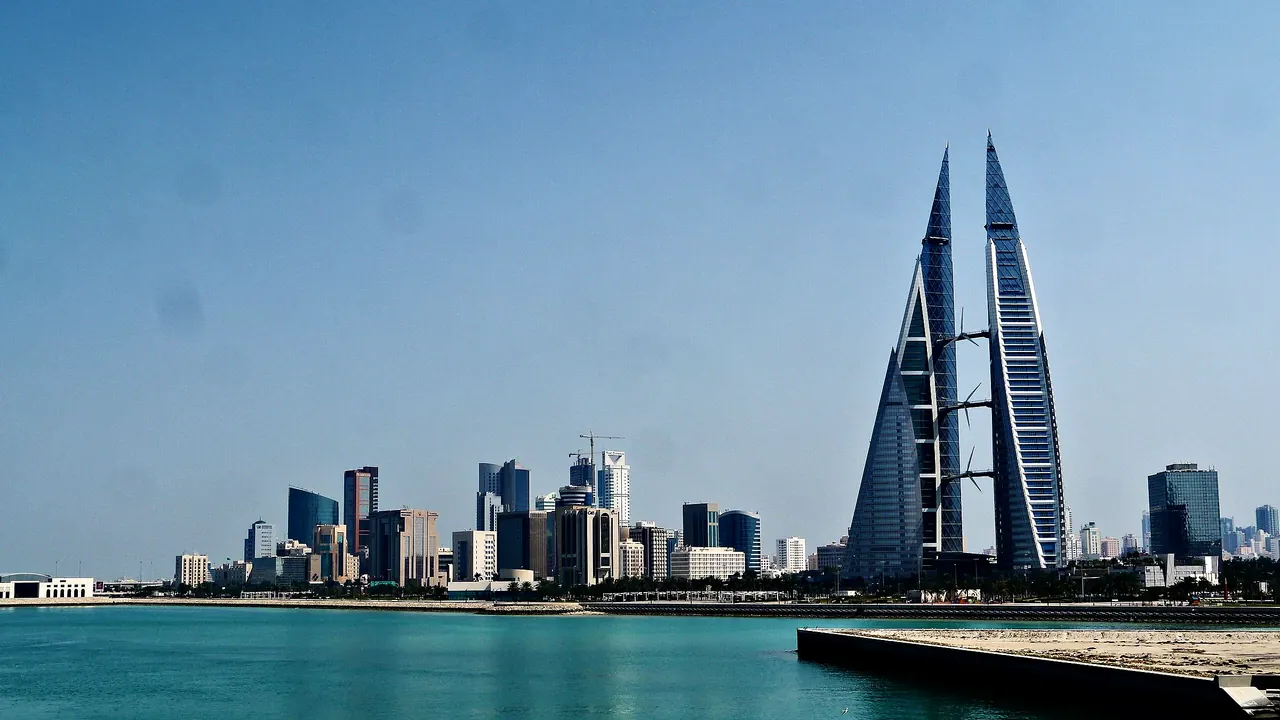
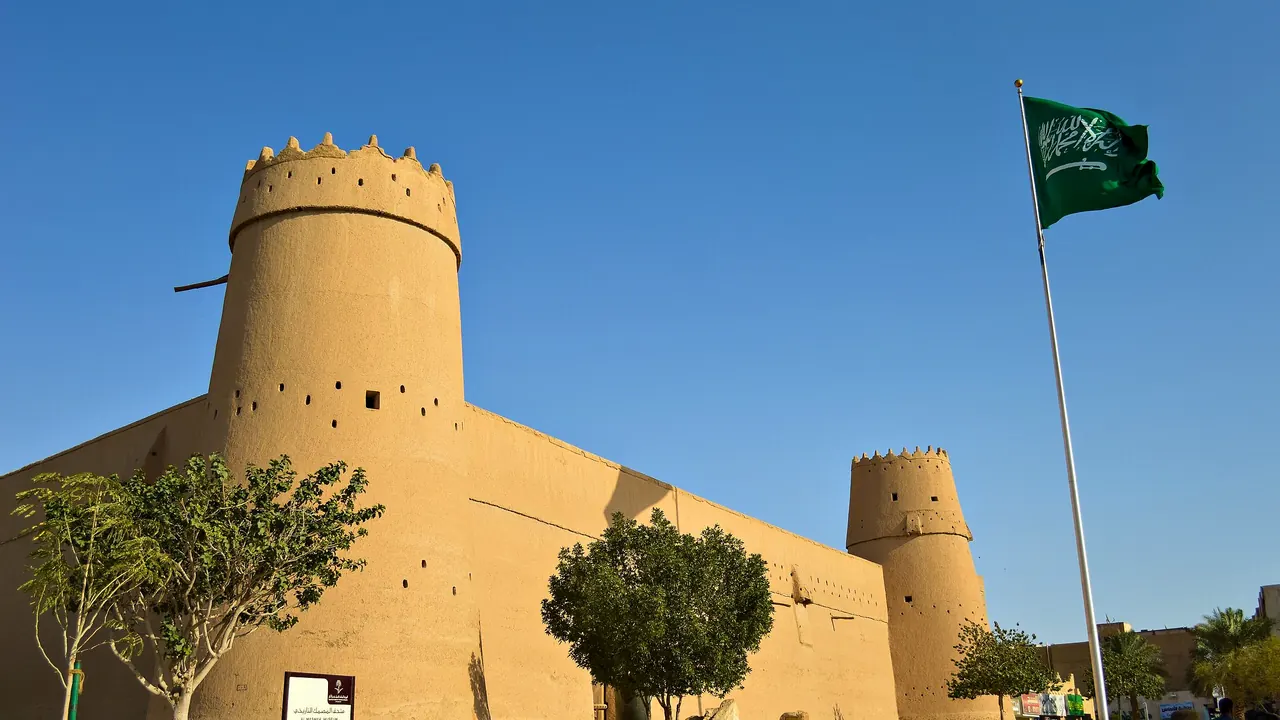
Photos: Manama by Zairon, CC BY-SA 4.0, cropped; Riyadh by Francisco Anzola, CC BY 2.0, cropped.
Manama or Riyadh?
Our verdict in twelve categories, each scored against the same fixed benchmark cities, and the climate month by month, so you can choose for your trip.
Choose Manama for
- beaches
- nightlife
- wellness
Manama is the better pick for a warm winter break where the sea, a spa and a drink in the evening all matter. Its resort beaches and hotel spas make rest easy to arrange, the bars of Juffair and Adliya give it a real night out, and the Pearling Path and Qal'at al-Bahrain add a maritime history that goes back thousands of years.
Choose Riyadh for
- nature and the outdoors
- getting around
- culture and sights
Choose Riyadh if you want the desert and the story of the Saudi state rather than the coast. At-Turaif in Diriyah, the Edge of the World escarpment and nights in a dune camp give it an outdoor side Manama cannot match, and the driverless metro makes its main corridors easier to cover. There is no alcohol, and evenings mean coffee, malls and late family outings, so the city suits curious travellers better than anyone who mainly wants to unwind.
Scoreboard
Twelve categories on one fixed scale from 0 to 100. The shaded stretch is the gap between the two.
Your match
Pick a travel style or drag the sliders, and both match scores follow your weighting.
Wins on beaches and nightlife with your weighting.
Wins on nature and the outdoors and getting around with your weighting.
What matters to you?
Category by category
What the scores mean for a trip.
Beaches & swimming
Manama at least has the sea, and it is warm, shallow and calm. Getting to sand is the catch. The city's own shore is corniche and reclaimed land, so a swim from a beach usually means staying at a resort or paying for a hotel day pass on the Amwaj islands, or driving about forty minutes to the south-west coast near Zallaq.
Riyadh is about 400km inland on the desert plateau. Swimming there means a pool or a water park, and the sea is a separate trip.
Food & drink
The two eat about equally well, but the meals feel different. Manama has Bahraini machboos and muhammar, saffron halwa from the old Muharraq sweet shops, and cheap Indian and Persian canteens in the lanes behind Bab al-Bahrain. Hotel brunches with alcohol add an indulgent weekend side.
Riyadh's table is Najdi: kabsa, mandi and jareesh on big shared platters, often in family sections, eaten late into the night. Its real speciality is coffee, from cardamom Arabic coffee with dates to the specialty roasters of Olaya. There is less street food, and no wine or beer with dinner.
Culture & sights
Each city has two or three days of sightseeing, but the history they tell differs. Manama's story is maritime. Dilmun finds and the pearl trade fill the national museum, Qal'at al-Bahrain rises in layers above the north shore, and the Pearling Path links merchants' houses across Muharraq.
Riyadh's story is about land and dynasty. The mud-brick citadel of At-Turaif above Wadi Hanifah is its strongest single sight, and Masmak Fort and the Murabba Palace show Najdi building in the centre. Its National Museum covers Arabian history from prehistory to the founding of the kingdom.
Nightlife
This is one of the sharpest differences between the two. Manama is where the region comes to go out. At weekends visitors from across the causeway fill the pubs and late hotel venues of Juffair and the cocktail bars of Adliya, even if the feel is more expat lounge than club culture.
Riyadh stays up just as late but serves no alcohol. Nights are spent in coffee shops, dessert cafés and open-air entertainment zones full of families, with the occasional big festival in winter.
Nature & outdoors
Riyadh has more desert to explore. The Edge of the World, a sheer limestone escarpment on the Tuwaiq range, is about two hours away by four-wheel drive. The red dunes east of the city are good for quad biking and overnight camps, and Wadi Hanifah gives you a long green corridor of palms for walking or cycling.
Manama's landscape is flat and largely built over. What it has is water: kayaking in the Tubli Bay mangroves and boat trips to sandbanks and dolphins, plus a drive south to the lone Tree of Life.
Day trips
Manama's outings are short hops across a small island, while Riyadh's are long drives across Najd. From Manama you can reach the Bronze Age burial mounds at A'ali, Riffa Fort on its ridge and old Muharraq quickly. Anything further means crossing the causeway to Al-Ahsa and facing the border queues.
From Riyadh it is about two hours to the restored mud-brick village of Ushaiger and the old houses of Shaqra. More often the excursion is into the desert itself.
Good for families
Children are warmly welcomed in both, and both send families into air-conditioned malls for the summer. Manama has the edge in water: the Lost Paradise of Dilmun water park, the Al Areen wildlife park and resort beaches with calm, shallow sea suit younger children.
Riyadh is more for staying out late on winter evenings in the entertainment districts and parks along Wadi Hanifah. Desert camps with camel rides and dune drives will thrill older children. In both cities you need a car for everything.
Getting around
Riyadh is easier to cover without a car. Its driverless metro runs along Olaya and King Abdullah Road and out to the airport, though sights are far apart and the last stretch often still needs a taxi.
Manama has no transport a visitor can really use, so taxis and ride-hailing do all the work. The island is small and almost everything is within forty minutes, which makes this less tiring than it sounds. In summer, both cities' few walkable pockets are best left until evening.
Shopping & style
Both are mall cities with similar ranges of international brands, so the difference is in what each does locally. Manama's speciality is natural pearls, sold by long-established jewellers in the souq behind Bab al-Bahrain alongside its gold souq, perfume oils and fabrics.
Riyadh has more luxury, with the upper floors of the Kingdom Centre and Al Faisaliah. Its own specialities are oud, Arabian perfume and abayas, and Souq Al Zal sells carpets, antique daggers and coffee pots, with the busiest trade in the evening.
Affordability
Overall costs are similar, but they fall in different places. In Manama upscale hotels can be good value, especially on weekdays, and the souq canteens are very cheap. Alcohol and a taxi for every trip are where the money goes.
Riyadh's hotels are priced for business travel, particularly around Olaya, but low metro fares cut transport costs. Both keep their main museums free or nearly so.
Live music & performing arts
Manama has a fixed stage and a fixed festival: the Bahrain National Theatre on the waterfront, with concerts, dance and visiting productions, and the annual Spring of Culture. Otherwise live music mostly means hotel bands.
Riyadh goes for scale instead, with big-name Arab and international concerts and large outdoor festivals in arenas and temporary venues during the cooler months. The ardah sword dance appears at national celebrations.
Wellness & relaxation
Manama is the easier place to slow down. Its beachfront and island resorts combine pool, sea and large spas, some offering thalassotherapy, so a few quiet days are simple to arrange.
Riyadh's hotel spas offer massage and hammam treatments, usually with separate facilities for men and women. The city around them is hot, sprawling and full of traffic, so real calm means a desert camp or the palm groves of Diriyah on a winter evening.
When should you go?
Pick your month. The climate figures are measured averages, not a forecast.
Manama in July
Riyadh in July
Daytime high, °C
Rainfall in the month, mm
Temperature and rainfall are climate normals, averaged over the years shown. Manama: 1991-2020 normals, Bahrain International Airport (8.7 km from centre). Riyadh: 1991-2020 normals, Riyadh (8.9 km from centre).
Both cities are at their best in the cooler half of the year. From December to February highs sit in the low twenties, ideal for walking the souqs and old quarters. November and March are warmer, in the mid to upper twenties, and still comfortable for sightseeing. Rain is light in both, but it comes at different times. Manama's few showers fall between November and March, and it is almost dry by April. Riyadh gets some winter rain too, but its wettest spell is March and April. Both are very sunny all year.
From May to September both are punishing, though in different ways. Manama reaches 40°C, with the sea warming alongside it, and inland Riyadh climbs to 43°C. The sea gives Manama extra months. The water is warm enough to swim by May and is still around 26°C in November, so April, May, October and November combine a swim with bearable evenings. In midwinter the Gulf is noticeably cooler.
Which traveller are you?
For a beach and sun trip, Manama is the only real option of the two. Its warm, calm Gulf water and resort sand at Amwaj or Zallaq give you a daily swim, while Riyadh lies far inland and offers swimming pools and water parks instead.
On a food and nightlife trip, Manama wins easily. Dinner in Adliya's Block 338 can run on into cocktail bars or the pubs of Juffair. Riyadh eats late and has excellent coffee, but with no alcohol there are no bars at all.
For an outdoors trip, Riyadh has more to offer. You can drive out to the Edge of the World escarpment, ride the red dunes and camp under winter stars. Flat, built-up Bahrain has little beyond mangrove kayaking and dolphin boats.
Before you go
| Measure | Manama | Riyadh |
|---|---|---|
| Official language | Arabic | Arabic |
| Currency | Bahraini Dinar (BHD) | Saudi Riyal (SAR) |
| Sockets | G230 V, 50 Hz | G60 Hz |
| Driving side | Right | Right |
| Time zone | UTC+3 | UTC+3 |
| Emergency number | 999 | 112 or 911 |
| Elevation | 9 m | 612 m |
| Main airport | Bahrain International Airport (BAH)8 km from centre71 non-stop destinations | King Khalid International Airport (RUH)36 km from centre118 non-stop destinations |
| Public holidays this year | 5 days | - |
By the numbers
| Measure | Manama | Riyadh |
|---|---|---|
| Population | 297,502 | 7,009,100 |
| People per km² | 9,917 | 3,898 |
| Museums within 10 km | 3 | 5 |
| UNESCO World Heritage sites within 50 km | 3 | 1 |
| Swim season, months above 21 °C | 9 months | - |
Where else could you go?
Every comparison below shares a destination with this one, so you can follow Manama or Riyadh somewhere new.