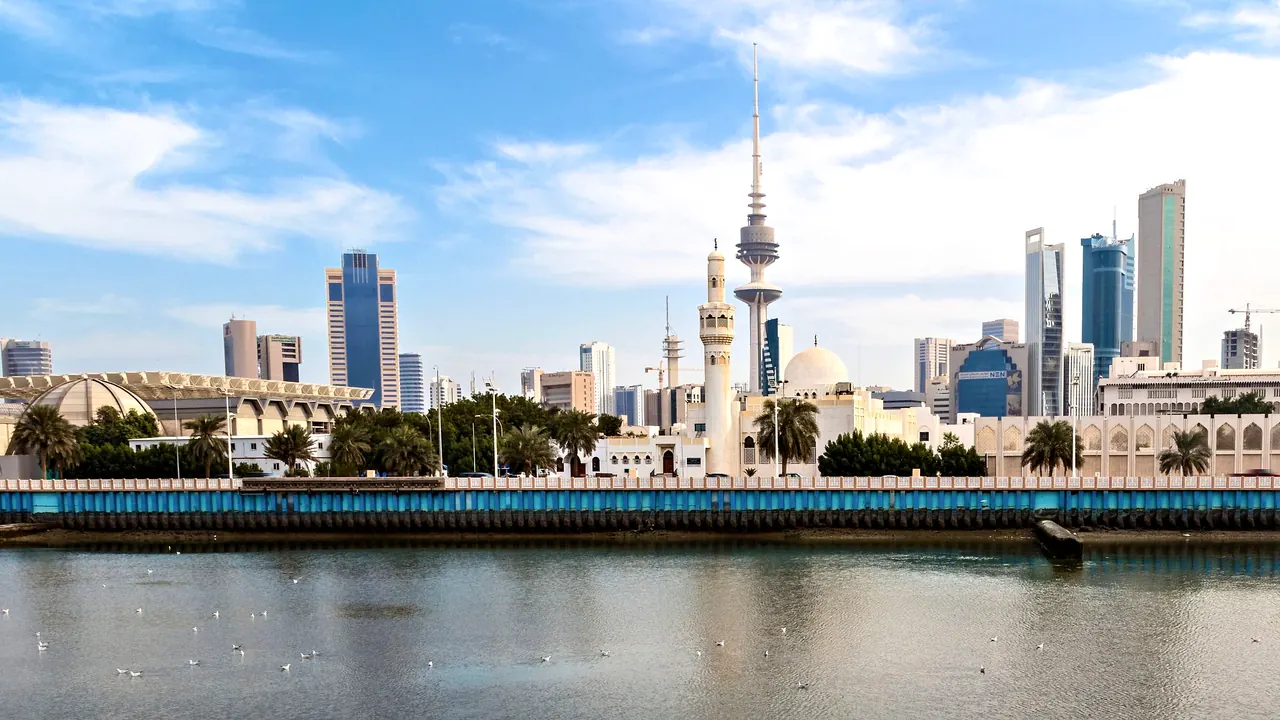
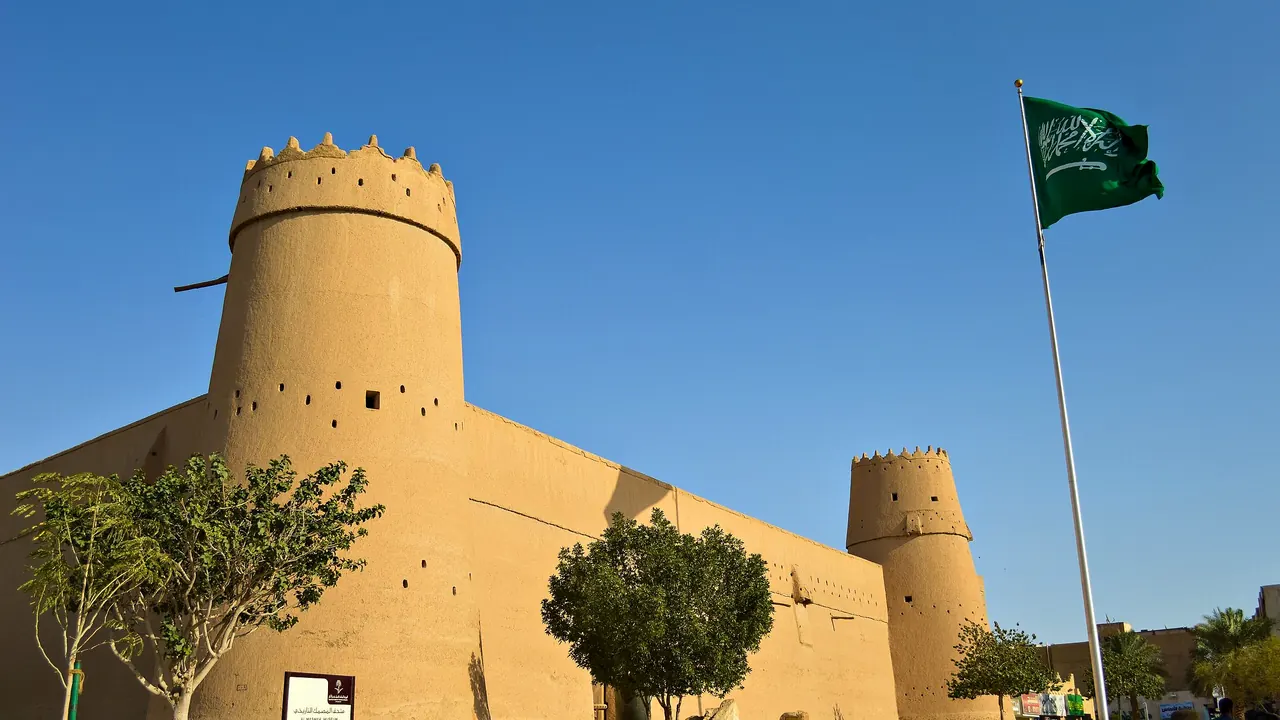
Photos: Kuwait City by Tayssir Kadamany, Pexels License; Riyadh by Francisco Anzola, CC BY 2.0, cropped.
Kuwait City or Riyadh?
Our verdict in twelve categories, each scored against the same fixed benchmark cities, and the climate month by month, so you can choose for your trip.
Choose Kuwait City for
- beaches
- families
- prices
Kuwait City is for the traveller who wants the sea within reach and a city that is easy on children. The Gulf runs along its whole length, so a swim in spring or autumn is part of the day rather than a separate trip, and its science museums, aquarium and parks give families more to do. Its sights are fewer, but the Islamic art collections and Kuwait Towers reward a short, unhurried visit.
Choose Riyadh for
- getting around
- nature and the outdoors
- culture and sights
Choose Riyadh if heritage and the desert itself are the point. The mud-brick citadel of At-Turaif in Diriyah and the old Najdi forts give it a deeper sense of history, and the Edge of the World escarpment, the red dunes and Wadi Hanifah make the landscape around it far more worth leaving town for. A metro along the main corridors also makes it a little easier to move around without a car.
Scoreboard
Twelve categories on one fixed scale from 0 to 100. The shaded stretch is the gap between the two.
Your match
Pick a travel style or drag the sliders, and both match scores follow your weighting.
Too close to call, level with your weighting
Wins on beaches and families with your weighting.
Wins on getting around and nature and the outdoors with your weighting.
What matters to you?
Category by category
What the scores mean for a trip.
Beaches & swimming
This is the clearest gap between them. Kuwait City has a real shoreline, with small public beaches along the corniche from Shuwaikh to Salmiya and Messila and warm Gulf water for much of the year. The sand is narrow and coarse and the sea hazy, so it is pleasant rather than memorable, and much of the summer beach life moves to private chalets and hotel clubs.
Riyadh has no water to swim in at all. The coast is some 400km away, so a swim means a hotel pool or a water park, and anyone who wants the sea has to plan a separate stay elsewhere.
Food & drink
The two eat equally well, but the flavour differs. Kuwait City's cooking leans towards the sea and towards India and Persia, with fish machboos, zubaidi and saffron breakfasts, and Souq Al-Mubarakiya gives it a proper old market to eat in.
Riyadh's Najdi food is heartier and inland: kabsa, mandi and jareesh served on shared platters, often on floor seating in family rooms. Neither serves alcohol, and both spend their evenings over coffee, with Riyadh's northern districts the more devoted to specialty cafés.
Culture & sights
Riyadh has the stronger historical core. At-Turaif in Diriyah, the restored mud-brick seat of the first Saudi state above the palm groves, is a sight of real weight, and Masmak Fort, the Murabba Palace and the National Museum tell the story of Arabia in one compact quarter.
Kuwait City has almost no old townscape after decades of rebuilding, so its appeal lies in individual places: Kuwait Towers, the Grand Mosque and fine collections of Islamic art, calligraphy and Bedouin weaving. It suits a museum visitor more than someone hoping to walk through history.
Nightlife
Neither city has bars or clubs, since alcohol is banned in both, and evenings in each are spent eating late, in coffee shops and along malls and open spaces until after midnight. The difference is that Riyadh adds large music festivals, outdoor entertainment zones and the occasional alcohol-free club night in the cooler months, while Kuwait City's nights stay centred on shisha cafés and the waterfront.
Nature & outdoors
Riyadh has the more rewarding desert. The Tuwaiq escarpment at the Edge of the World, the red dunes to the east and the long green line of Wadi Hanifah give real landscapes to drive, walk and camp in during winter.
Kuwait's land is flat gravel desert, and its outdoors is quieter: winter camping, birdwatching at the Jahra Pools and Sabah Al-Ahmad reserve during migration, and boating or fishing from the marinas, which Riyadh cannot offer.
Day trips
Neither city is a base for touring, but Riyadh gives a little more. Ushaiger's restored mud-brick village and the old Najdi houses of Shaqra make a worthwhile day, and the desert itself is the main excursion.
From Kuwait City the one real outing is the ferry to Failaka Island, with its Bronze Age and Hellenistic remains and a village marked by the 1990 invasion. After that the choice is down to the Red Fort in Al Jahra and the resort canals of Al Khiran.
Good for families
Both welcome children late into the evening and both are hard work in summer, with everything reached by car. Kuwait City gives families more to fill a day: the aquarium and discovery space at the Scientific Center, the dinosaur skeletons and hands-on galleries of the Sheikh Abdullah Al-Salem Cultural Centre, and the playgrounds of Al Shaheed Park.
Riyadh relies more on mall amusement parks, a zoo and outdoor entertainment districts. Its desert camps with camel rides and dune drives are the stand-out, though they suit older children best.
Getting around
Both are car cities, but Riyadh has a driverless metro running along Olaya, King Abdullah Road and to the airport, which takes care of the long stretches, even if a taxi is often needed for the last part. The old centre around Masmak Fort and Diriyah can be walked in winter.
Kuwait City has no metro or tram and buses meant for commuters, so taxis, ride-hailing or a hire car are the only practical choice along its long coastal road. The corniche is the one good walk, and only in the cool months.
Shopping & style
Shopping in both means large air-conditioned malls full of international brands, and neither has streets to browse. What differs is the local speciality: Kuwait City's Souq Al-Mubarakiya is good for dates, spices, oud, gold and bisht cloaks, with Bedouin weaving at Sadu House, while Riyadh is the place for abayas and Arabian perfume houses, and Souq Al Zal adds carpets, antiques, daggers and coffee pots in its evening trade.
Affordability
The costs are similar, with Kuwait City slightly easier on the budget. In both, hotels are set at business-city levels, while market grills and South Asian eateries keep everyday meals cheap and most museums cost little or nothing. The main difference in daily spending is transport: Riyadh's metro fares are low, while in Kuwait City taxis or a hire car are a steady expense.
Live music & performing arts
There is little to choose between them, but they work differently. Kuwait City has a permanent home for performance in the Sheikh Jaber Al-Ahmad Cultural Centre, whose opera theatre and concert halls host Arab stars, orchestras and touring productions through the cooler season.
Riyadh has no resident opera or orchestra and lives on big winter events instead: arena concerts, outdoor festivals and touring shows, plus the ardah sword dance at heritage occasions.
Wellness & relaxation
Neither is a place to unwind, and in both wellness means a hotel spa with massage and hammam treatments rather than any bathing tradition. The quiet moments differ: in Kuwait City it is a winter evening walk along the corniche, while in Riyadh it is a night at a desert camp or the palm groves around Diriyah.
When should you go?
Pick your month. The climate figures are measured averages, not a forecast.
Kuwait City in July
Riyadh in July
Daytime high, °C
Rainfall in the month, mm
Temperature and rainfall are climate normals, averaged over the years shown. Kuwait City: 1991-2020 normals, Kuwait International Airport (17.6 km from centre). Riyadh: 1991-2020 normals, Riyadh (8.9 km from centre).
Both cities have the same kind of year: mild, bright winters, a short spring and a long summer when the midday heat stops almost everything outdoors. November to March is the time for walking, sightseeing and desert trips in either. Kuwait City is hotter at the peak, reaching about 47°C in July against Riyadh's 43°C. Riyadh is a shade warmer and noticeably sunnier through the winter months. Rain is light in both and falls only in the cooler half of the year, a little more in Kuwait City in January and in Riyadh around March and April.
Only Kuwait City has the sea. The Gulf is cool in winter and warms enough for a swim by April, the one spring month when the air is still pleasant, because from May the days are already close to 40°C. The water stays warm right through summer and is near 32°C by late August, but the heat then makes a beach day hard going. The second good window is November, when the sea is still warm enough to swim and the days are comfortable again. Riyadh has no sea, so the heat alone decides when to go.
Which traveller are you?
On a beach and sun trip, Kuwait City is the only real option of the two. Its corniche passes a run of public beaches with warm, shallow Gulf water, while Riyadh lies far inland and offers nothing beyond hotel pools and water parks.
For an outdoors trip, Riyadh wins clearly. The Edge of the World escarpment, red dunes for driving and camping, and the palm corridor of Wadi Hanifah give it far more to explore than Kuwait's flat gravel desert and marshes.
On a family trip with children, Kuwait City has the edge. The Scientific Center's aquarium, the dinosaur and science galleries of the Sheikh Abdullah Al-Salem Cultural Centre and Al Shaheed Park give more structured days than Riyadh's malls and zoo.
Before you go
| Measure | Kuwait City | Riyadh |
|---|---|---|
| Official language | Arabic | Arabic |
| Currency | Kuwaiti Dinar (KWD) | Saudi Riyal (SAR) |
| Sockets | CG240 V, 50 Hz | G60 Hz |
| Driving side | Right | Right |
| Time zone | UTC+3 | UTC+3 |
| Emergency number | 112 | 112 or 911 |
| Elevation | 16 m | 612 m |
| Main airport | Kuwait International Airport (KWI)17 km from centre106 non-stop destinations | King Khalid International Airport (RUH)36 km from centre118 non-stop destinations |
By the numbers
| Measure | Kuwait City | Riyadh |
|---|---|---|
| Population | 2,989,000 | 7,009,100 |
| People per km² | - | 3,898 |
| Museums within 10 km | 6 | 5 |
| UNESCO World Heritage sites within 50 km | 0 | 1 |
| Swim season, months above 21 °C | 8 months | - |
Where else could you go?
Every comparison below shares a destination with this one, so you can follow Kuwait City or Riyadh somewhere new.
- Manamavs Riyadh
- Manamavs Kuwait City
- Dohavs Riyadh
- Dohavs Kuwait City
- Abu Dhabivs Riyadh
- Abu Dhabivs Kuwait City