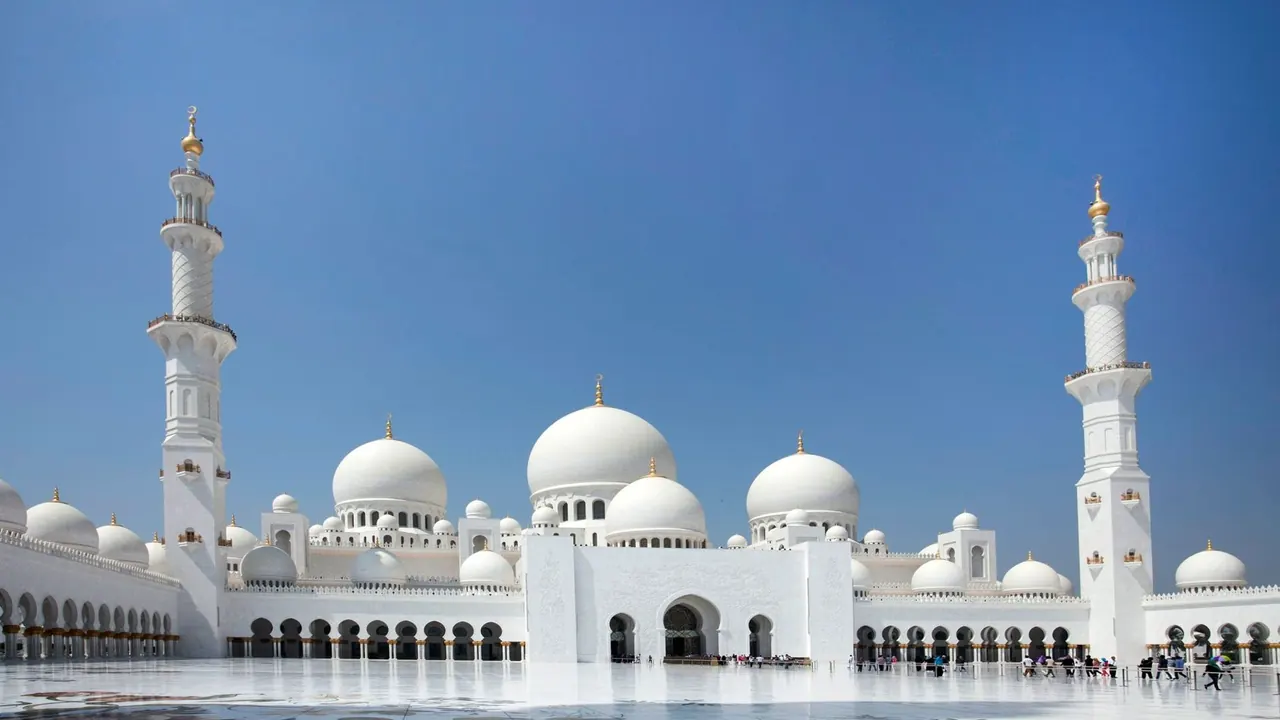
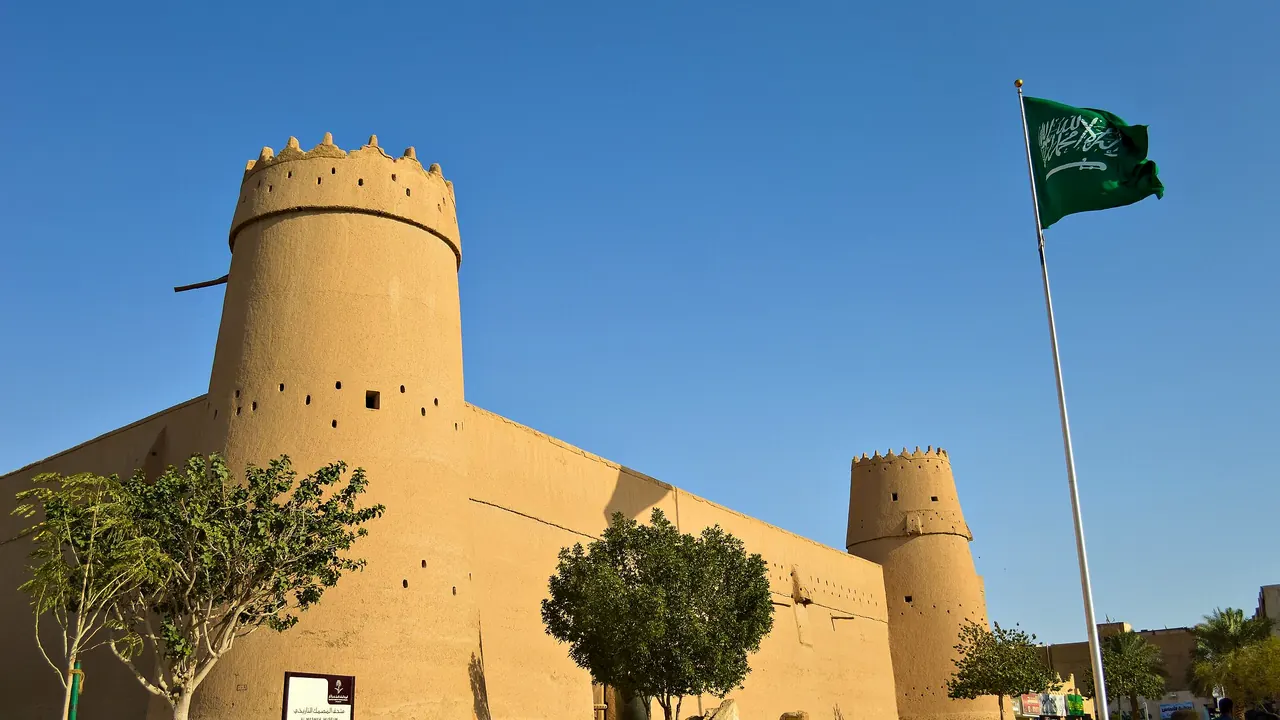
Photos: Abu Dhabi by Jeffry Surianto, Pexels License; Riyadh by Francisco Anzola, CC BY 2.0, cropped.
Abu Dhabi or Riyadh?
Our verdict in twelve categories, each scored against the same fixed benchmark cities, and the climate month by month, so you can choose for your trip.
Choose Abu Dhabi for
- beaches
- families
- wellness
Abu Dhabi is the better choice for most leisure trips. It has a real beach on calm, swimmable water, the Yas Island theme parks for children and slow resort days on Saadiyat. It also has two sights that justify the journey on their own, the Sheikh Zayed Grand Mosque and the Louvre Abu Dhabi. Hotel bars give it a social evening that Riyadh does not have, and Dubai and Al Ain are both easy day trips.
Choose Riyadh for
- getting around
- shopping
- prices
Riyadh suits the traveller who wants to see the Saudi heartland itself. That means the mud-brick citadel of Diriyah, Najdi cooking served on shared platters, cardamom coffee and evenings in cafés and souqs that run past midnight. It also wins on shopping and has a metro to cover the main corridors. Without a sea, bars or much in the way of resorts, it works best as a few days of heritage, desert and city life rather than a beach-and-pool vacation.
Scoreboard
Twelve categories on one fixed scale from 0 to 100. The shaded stretch is the gap between the two.
Your match
Pick a travel style or drag the sliders, and both match scores follow your weighting.
Wins on beaches and families with your weighting.
Wins on getting around and shopping with your weighting.
What matters to you?
Category by category
What the scores mean for a trip.
Beaches & swimming
This is where the two cities differ most. Abu Dhabi has long pale sand on calm Gulf water. The Corniche beach sits at the edge of downtown, and Saadiyat has a wide natural shore where turtles nest. Many visitors simply use the beach in front of their hotel.
Riyadh lies on the central plateau, about 400km from the coast. Swimming there means a hotel pool or a water park, and anyone who wants the sea has to plan a separate stay somewhere else.
Food & drink
Both cities eat well, but in different ways. Abu Dhabi's food falls into two camps. One is polished hotel dining built around Friday brunch, with wine where the venue is licensed. The other is cheap Keralan, Pakistani and Levantine kitchens downtown, and Emirati cooking takes some effort to find.
In Riyadh, Arabian cooking is the main event: kabsa, mandi and jareesh served late on large shared platters, often in family sections with floor seating. Specialty coffee is a real strength in Olaya. There is no alcohol at all.
Culture & sights
Abu Dhabi has more in the way of headline sights. The Sheikh Zayed Grand Mosque, the Louvre under its perforated dome and the ceremonial halls of Qasr Al Watan are each a destination in their own right, but there is little old town beyond Qasr Al Hosn.
Riyadh's best sight goes deeper into history. At-Turaif in Diriyah is the mud-brick birthplace of the Saudi state, set above the palm groves. Masmak Fort and the National Museum fill out the story, though two or three days covers it all.
Nightlife
Abu Dhabi has a modest but real night out. Licensed hotels hold rooftop and beach bars, pubs and a few clubs, with the busiest clusters on Yas and Al Maryah islands. Riyadh has no alcohol and so no bars at all. Its late hours belong to coffee shops, dessert cafés and entertainment zones full of families and groups of friends long after midnight.
Nature & outdoors
Neither city is an outdoor destination, and the difference lies in the landscape. Around Abu Dhabi it is flat and watery: the best of it is kayaking or walking the boardwalks through the mangroves at Jubail and on the eastern side of the island. Riyadh offers rock and sand instead. The sheer drop of the Edge of the World escarpment is a long four-wheel-drive outing, the red dunes suit quad biking and the palm corridor of Wadi Hanifah is good for walking and cycling.
Day trips
Abu Dhabi has much better day trips. Dubai's skyline and old souks, the UNESCO-listed oases and forts of Al Ain and the museums of Sharjah are all within reach by road.
From Riyadh, the best outing is the restored mud-brick village of Ushaiger, together with the old Najdi houses of Shaqra, about two hours away. Beyond those, excursions lead into the desert, and the kingdom's other cities are a flight away.
Good for families
For children, Abu Dhabi is in a different league. Yas Island packs a Ferrari-themed coaster park, a Warner Bros world, a water park and a marine park into a small area, and the beach resorts add kids' clubs and shallow, calm sea.
Riyadh is just as welcoming, with children out late with their parents on winter evenings. What it offers them is more ordinary, though: mall play centres and ice rinks, the zoo, Wadi Hanifah's parks and camel rides at desert camps for older children.
Getting around
Both cities are spread out and built for cars, but Riyadh has the edge thanks to its driverless metro. It runs along Olaya, King Abdullah Road and out to the airport, though a taxi often finishes the journey. Abu Dhabi has no metro and only slow buses, so visitors take a taxi or ride-hailing car between the mosque, Saadiyat and Yas. On foot, both are limited to the cool season, on the Corniche in Abu Dhabi and in the old centre and Diriyah in Riyadh.
Shopping & style
Riyadh offers the more rewarding shopping. The luxury floors of the Kingdom Centre and Al Faisaliah carry the big international names, abayas and oud are sold in dedicated perfume houses, and in the evening Souq Al Zal trades in carpets, antiques, daggers and brass coffee pots.
Abu Dhabi has the same mall-led pattern on a smaller scale, with luxury brands on Al Maryah Island. Its local side is more limited: dates and perfume at the Central Market and Qaryat al Beri, and household goods and pottery at the Iranian souk by the port.
Affordability
Both are moderately expensive, but the costs fall in different places. In Abu Dhabi, chain hotels can be good value outside the winter peak, but drinks, brunches and theme-park tickets push the total up quickly. Riyadh's hotels are priced for business travel. Its main museums and heritage sites cost little or nothing, metro fares are low and, with no alcohol, there is no bar bill.
Live music & performing arts
Neither city has an opera house or a regular orchestra season, so both rely on touring acts in the cooler months. Abu Dhabi has a steadier calendar: the long-running Abu Dhabi Festival brings orchestras and dance companies each spring, and the Cultural Foundation and Saadiyat venues host concerts. Riyadh's live music comes in big bursts of arena concerts and outdoor festivals, and the ardah sword dance appears at national celebrations.
Wellness & relaxation
Abu Dhabi is much the better place to unwind. The beach resorts on Saadiyat and the palace-style hotels combine large spas with long, quiet days by the sea, and the pace on those islands is slow.
Riyadh's hotel spas offer massages and hammam treatments, usually with separate facilities for men and women. The city around them is hot and full of traffic, though, so real calm means a desert camp or the palm groves of Diriyah on a winter evening.
When should you go?
Pick your month. The climate figures are measured averages, not a forecast.
Abu Dhabi in July
Riyadh in July
Daytime high, °C
Rainfall in the month, mm
Where the figures come from
Abu Dhabi's temperatures are measured 26 km from the centre, at Abu Dhabi International Airport.
Temperature and rainfall are climate normals, averaged over the years shown. Abu Dhabi: 1991-2020 (sunshine 1981-2010, rainfall 1981-2010) normals, Abu Dhabi International Airport (25.7 km from centre). Riyadh: 1991-2020 normals, Riyadh (8.9 km from centre).
The two cities share a season. Both are at their best from November to March, and from May to September both are too hot to be outside in the middle of the day, with highs in the low 40s. Riyadh is the cooler of the two in winter, around 21°C in January, with cold desert nights that suit camping and stargazing. Abu Dhabi stays a few degrees warmer, which makes winter days comfortable for the beach as well as for sightseeing.
Only Abu Dhabi has the sea. It is around 22°C in midwinter and warms through spring until it stops being refreshing in summer, so October to April is the time for swimming. Rain is light in both cities. Riyadh gets its wettest spells in March and April, at about 24mm a month, while Abu Dhabi's little rain falls mostly in February. Both are sunny all year.
Which traveller are you?
For a beach and sun trip, Abu Dhabi is the clear choice. From October to April its shallow, calm sea is ideal for easy swimming off the sand at Saadiyat or the Corniche. Riyadh is far inland and has only hotel pools and water parks.
On a family trip with children, Abu Dhabi is the easier base. It has coaster, water and marine parks close together on Yas Island, and the resorts have calm sea in front. Riyadh offers a zoo, parks along Wadi Hanifah and camel rides at desert camps, but nothing on that scale.
On a shopping trip, Riyadh is the better pick. Abu Dhabi's malls lean towards international brands, and its markets are fairly small. Riyadh has more malls, abayas as a local speciality and evening trade at Souq Al Zal in antiques, daggers and brass coffee pots.
Before you go
| Measure | Abu Dhabi | Riyadh |
|---|---|---|
| Official language | Arabic | Arabic |
| Currency | UAE Dirham (AED) | Saudi Riyal (SAR) |
| Sockets | CG220 V, 50 Hz | G60 Hz |
| Driving side | Right | Right |
| Time zone | UTC+4 | UTC+3 |
| Emergency number | 112 | 112 or 911 |
| Elevation | 14 m | 612 m |
| Main airport | Zayed International Airport (AUH)26 km from centre96 non-stop destinations | King Khalid International Airport (RUH)36 km from centre117 non-stop destinations |
By the numbers
| Measure | Abu Dhabi | Riyadh |
|---|---|---|
| City population | 1,570,000 | 7,009,100 |
| People per km² | 1,615 | 3,898 |
| Museums within 10 km | 3 | 5 |
| UNESCO World Heritage sites within 50 km | 0 | 1 |
| Swim season, months above 21 °C | 11 months | - |
Where else could you go?
Every comparison below shares a destination with this one, so you can follow Abu Dhabi or Riyadh somewhere new.