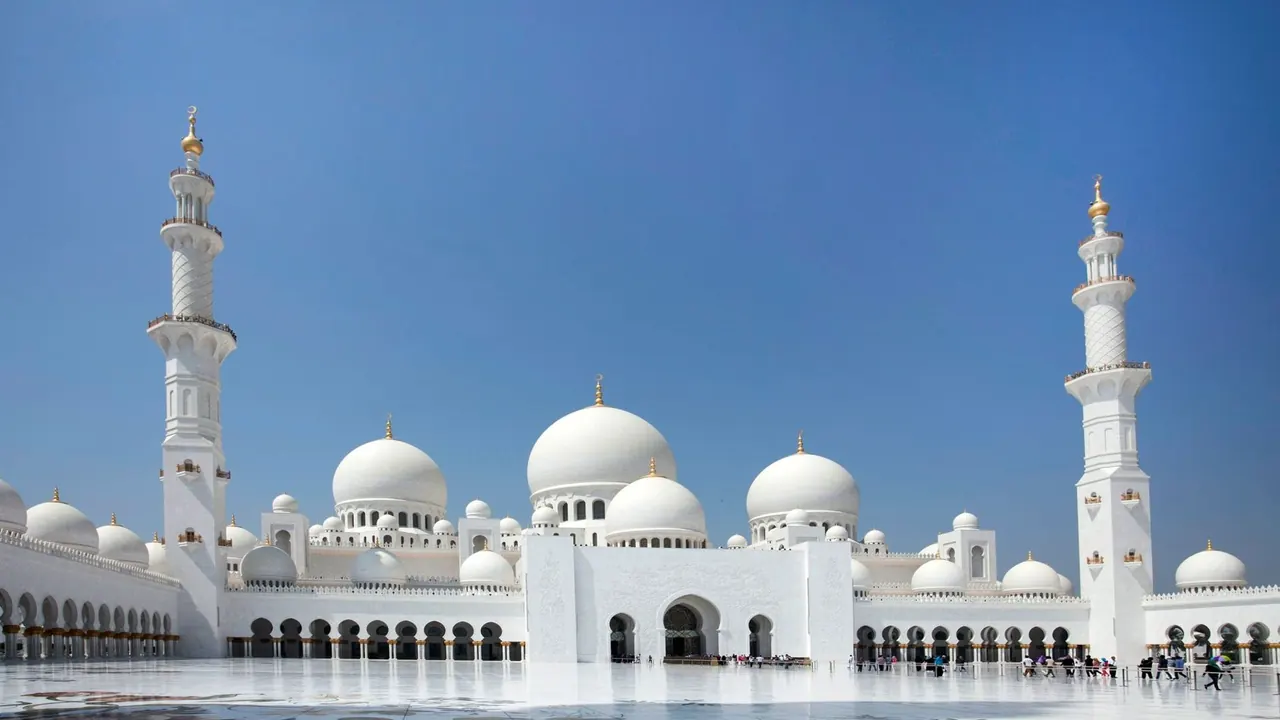
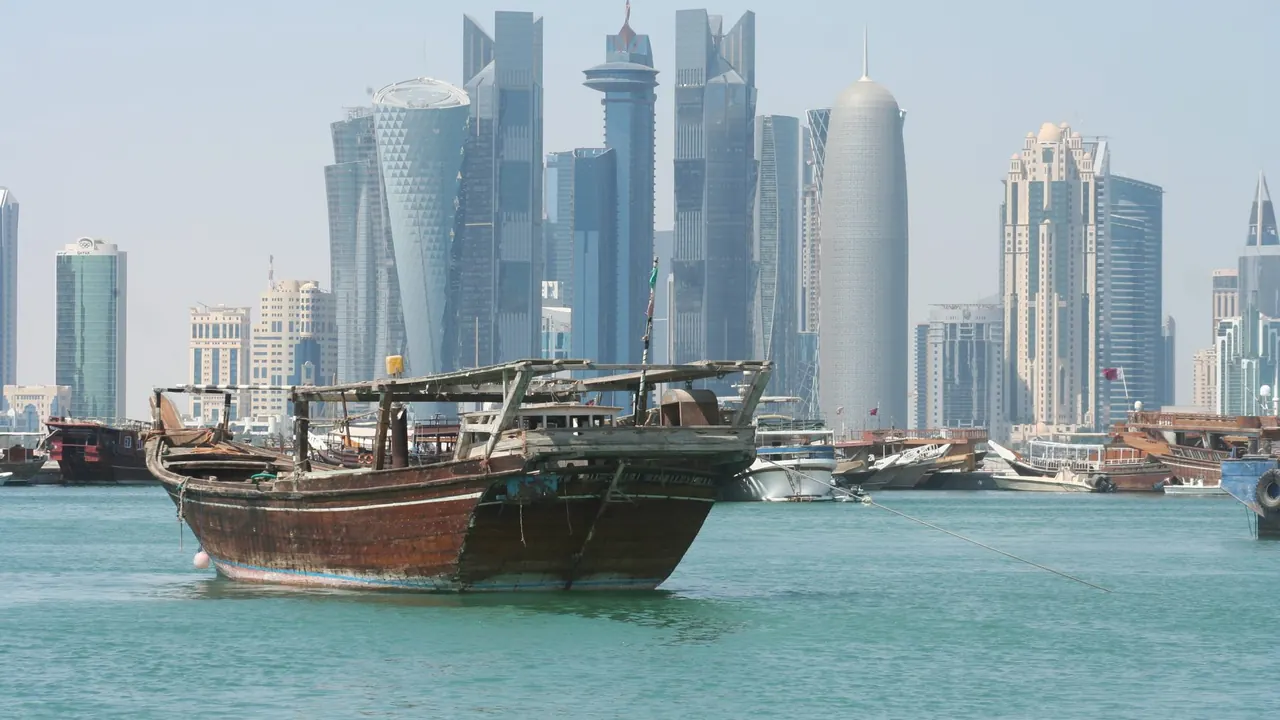
Photos: Abu Dhabi by Jeffry Surianto, Pexels License; Doha by Gregory Hawken Kramer, CC BY-SA 4.0, cropped.
Abu Dhabi or Doha?
Our verdict in twelve categories, each scored against the same fixed benchmark cities, and the climate month by month, so you can choose for your trip.
Choose Abu Dhabi for
- day trips
- beaches
- families
Abu Dhabi is the better pick for a winter vacation built around the sea and children. The broad sand on Saadiyat, Yas Island's cluster of theme parks and resorts made for families give it real depth for a week's stay. The Grand Mosque and the Louvre are two outstanding visits, and Dubai and the oases of Al Ain are within easy reach. Expect to take a taxi almost everywhere.
Choose Doha for
- getting around
- shopping
Doha suits a shorter, more urban stay centred on its two great museums, the souq and long evenings on the Corniche. The metro links most of what a visitor wants, and Souq Waqif makes for better browsing than anything in Abu Dhabi's malls. Beach time and excursions are thinner, so it works best as a city break or a stopover rather than a week by the water.
Scoreboard
Twelve categories on one fixed scale from 0 to 100. The shaded stretch is the gap between the two.
Your match
Pick a travel style or drag the sliders, and both match scores follow your weighting.
Wins on day trips and beaches with your weighting.
Wins on getting around and shopping with your weighting.
What matters to you?
Category by category
What the scores mean for a trip.
Beaches & swimming
Abu Dhabi has much the better sand. Saadiyat Island's broad natural beach, backed by dunes where hawksbill turtles nest, is the finest stretch in either city, and the Corniche puts a lifeguarded beach right at the edge of downtown.
Doha's water is just as calm and shallow, but most of the good swimming is at groomed hotel beaches in West Bay and on The Pearl, with quieter public shores at Al Wakrah and Simaisma to the south. For wilder sand you have to drive about an hour to Sealine, where the dunes meet the sea.
Food & drink
The two cities eat in much the same way: cheap South Asian, Levantine and Iranian kitchens on one side, and expensive hotel dining, which also has the only alcohol, on the other. Neither does food better overall.
What differs is where local cooking shows itself. In Doha, machboos and harees are easiest to find on the terraces around Souq Waqif, where a late dinner is the evening's main event, with karak tea everywhere. Abu Dhabi's Emirati dishes take more seeking out. Its social ritual is the hotel Friday brunch, and the Mina Zayed fish and date markets make a good morning.
Culture & sights
Abu Dhabi has the stronger set of sights. The Sheikh Zayed Grand Mosque is worth the trip on its own. The Louvre Abu Dhabi, under its perforated dome, anchors a whole museum district on Saadiyat, and Qasr Al Watan opens its palace halls.
Doha answers with two exceptional museums, I. M. Pei's Museum of Islamic Art and Jean Nouvel's National Museum, plus Mathaf, but has less beyond them. Neither city has an old town to speak of. Abu Dhabi has the fort of Qasr Al Hosn. Doha has the reconstructed Souq Waqif, which is at least a pleasant place to wander after dark.
Nightlife
Neither is a nightlife city, but Abu Dhabi offers more of a conventional night out. Hotel bars, beach bars and expatriate pubs cluster on Yas Island and Al Maryah Island, and race and concert weekends bring a crowd.
Doha's licensed scene is smaller and more formal, mostly hotel rooftops looking over West Bay and a handful of hotel clubs. Its strength is the sober evening, when Souq Waqif, Katara and the Corniche fill with families and friends over tea and shisha until well past midnight.
Nature & outdoors
Abu Dhabi's mangroves, threaded with boardwalks and kayak routes, are the closest thing either city has to nature on the doorstep. Herons and crabs share the quiet channels on the east of the main island and at Jubail. Dune drives start within an hour, and Jebel Hafeet near Al Ain is the one ridge of real height within reach.
Doha sits on flat gravel desert with a shore that is largely built over. Its one memorable outing is a four-wheel-drive run south to Khor Al Adaid, the Inland Sea, where the dunes run down to a tidal inlet. The mangroves at Al Thakira in the north offer quieter kayaking, but they are a drive away rather than part of the city.
Day trips
This is one of the widest gaps between the two. From Abu Dhabi, Dubai's skyline and souks and the palm oases and mud-brick forts of Al Ain are each about an hour and a half away and could hardly be more different. Sharjah's museums and heritage quarters lie just beyond Dubai.
Qatar is small, so Doha has little to reach. Al Zubarah, the ruined pearling town in the northwest, is the one heritage site of note, and most visitors see the rest of the country on a single desert tour.
Good for families
Abu Dhabi is the stronger family base, largely because of Yas Island, where a Ferrari-themed park, a Warner Bros world, a water park and a marine park sit a short hop apart. Many of its resorts are also designed around children, with shallow pools and calm sea in front.
Doha welcomes children just as warmly, and they stay out late with everyone else in the souq and on the Corniche. Its attractions are smaller and more scattered: indoor rides in the malls and at Doha Oasis, water parks and the hands-on galleries of the sports museum. In both cities, summer drives family life indoors.
Getting around
Doha is the easier city to get around. Its three driverless metro lines link Souq Waqif, Msheireb, the National Museum, West Bay, Katara and Lusail, and in the cool months you can walk around the souq quarter and the Corniche.
Abu Dhabi has no metro, and its main sights are spread over separate islands joined by highways, so nearly every outing means a taxi or a hire car. Taxis are plentiful in both cities, but you will rely on them far more in Abu Dhabi.
Shopping & style
Doha has the more rewarding shopping, mainly because Souq Waqif gives it a real market to wander, with spices, incense, falconry gear and textiles in its lanes and the Gold Souq next door. Its malls are more theatrical too, some styled as Venetian canals.
Abu Dhabi's shopping is mostly in malls, with the luxury brands on Al Maryah Island. For local goods there are the modern souk at Qaryat al Beri, the Central Market and the Iranian souk by the port, which are useful for dates, oud and pottery but less of an outing.
Affordability
Costs come out much the same. In both cities the money goes on big international hotels, alcohol and hotel restaurants, and you save it in the cheap canteens of the South Asian and Arab communities.
The difference is in the extras. In Abu Dhabi, theme park and museum tickets add up quickly on a family trip. In Doha, the inexpensive metro cuts transport costs and an evening in the souq costs very little.
Live music & performing arts
Abu Dhabi's live calendar runs on occasions rather than a resident company. The Abu Dhabi Festival brings orchestras and dance companies each spring, and the Yas Island arenas fill with pop stars and comedy tours around the Formula 1 weekend. Through the cooler months, the Cultural Foundation and the Louvre's auditorium stage concerts and talks.
Doha has the permanent base that Abu Dhabi lacks: the Qatar Philharmonic plays in the opera house at Katara, whose amphitheatre also hosts winter concerts, and touring musicals come to the convention centre. The programme is still uneven, so in either city it pays to check what is on, and summer is close to empty in both.
Wellness & relaxation
Both cities keep their spas in hotels rather than any bathing tradition, but Abu Dhabi does the slow resort stay a little better. The beach resorts on Saadiyat and the palace-style hotels pair large spas with quiet sand and long pool days.
Doha's hotel spas in West Bay, Lusail and The Pearl are of a high standard. For a longer retreat, a traditional wellness resort on the north coast, built around Arabic and Islamic healing practices, is about an hour and a half away. The city is calm, but its beaches add less to a few days of doing nothing.
When should you go?
Pick your month. The climate figures are measured averages, not a forecast.
Abu Dhabi in July
Doha in July
Daytime high, °C
Rainfall in the month, mm
Where the figures come from
Abu Dhabi's temperatures are measured 26 km from the centre, at Abu Dhabi International Airport.
Abu Dhabi has no rain gauge within 25 km of the centre, so its rainfall comes from a gridded climate dataset read at the city rather than from a gauge further away.
Temperature and rainfall are climate normals, averaged over the years shown. Abu Dhabi: 1991-2020 normals, Abu Dhabi International Airport (25.7 km from centre). Doha: 1991-2020 normals, Doha International Airport (5.5 km from centre).
Both cities follow the same Gulf rhythm: pleasant from November to March, punishing from May to September. Abu Dhabi runs a little warmer in winter, with January highs around 25°C, a sea that stays comfortable for swimming and strong sunshine all year. Doha is slightly cooler in midwinter, nearer 23°C, and its water drops to about 19°C in February, which is brisk for a long swim. Rain is scarce in both, though Doha gets a few more showers in December and March.
From May the heat closes in. Highs sit around 43°C in both cities through July and August and the sea turns as warm as a bath, so walking and beach time shrink to dawn and dusk. October and April are shoulder months: good for the beach in Abu Dhabi, still too hot for long walks through either city.
Which traveller are you?
On a beach and sun trip, Abu Dhabi is the clear choice. Saadiyat's wide natural beach, the lifeguarded Corniche sands and many resorts with calm water in front make the beach a reason to go. In Doha it is mostly a pleasant pause between other plans.
For a shopping trip, Doha has the edge. Souq Waqif and the Gold Souq beside it sell oud, frankincense, spices and jewellery by weight in real market lanes, and Lusail and The Pearl add designer flagships. Abu Dhabi's shopping is mostly malls.
For a short city break, Doha is easier to manage. Its driverless metro reaches the souq, Msheireb, the National Museum and West Bay, and two or three days cover the main sights. In Abu Dhabi the mosque, the Louvre and Yas sit far apart and need taxis.
Before you go
| Measure | Abu Dhabi | Doha |
|---|---|---|
| Official language | Arabic | Arabic |
| Currency | UAE Dirham (AED) | Qatari Rial (QAR) |
| Sockets | CG220 V, 50 Hz | G240 V, 50 Hz |
| Driving side | Right | Right |
| Time zone | UTC+4 | UTC+3 |
| Emergency number | 112 | 999 |
| Elevation | 14 m | 0 m |
| Main airport | Zayed International Airport (AUH)26 km from centre147 non-stop destinations | Hamad International Airport (DOH)8 km from centre195 non-stop destinations |
By the numbers
| Measure | Abu Dhabi | Doha |
|---|---|---|
| City population | 1,570,000 | 1,186,023 |
| People per km² | 1,615 | 8,985 |
| Museums within 10 km | 3 | 6 |
| UNESCO World Heritage sites within 50 km | 0 | 0 |
| Swim season, months above 21 °C | 11 months | 9 months |
Where else could you go?
Every comparison below shares a destination with this one, so you can follow Abu Dhabi or Doha somewhere new.