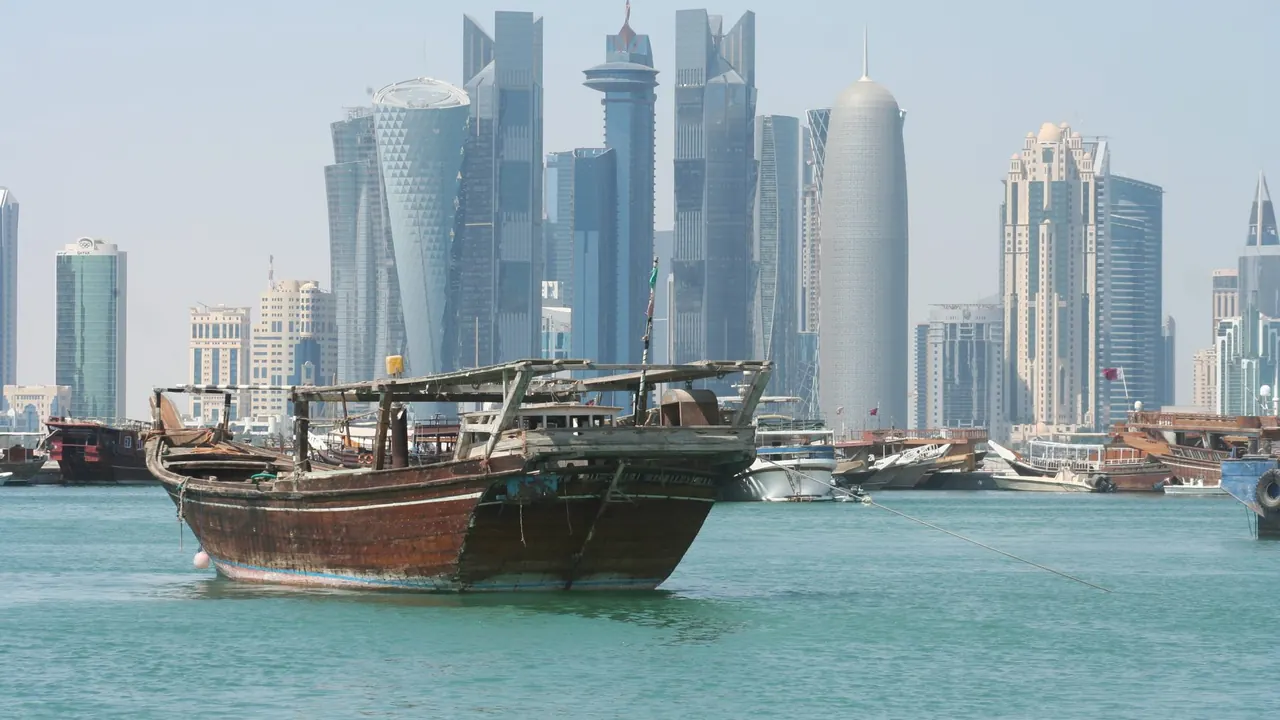
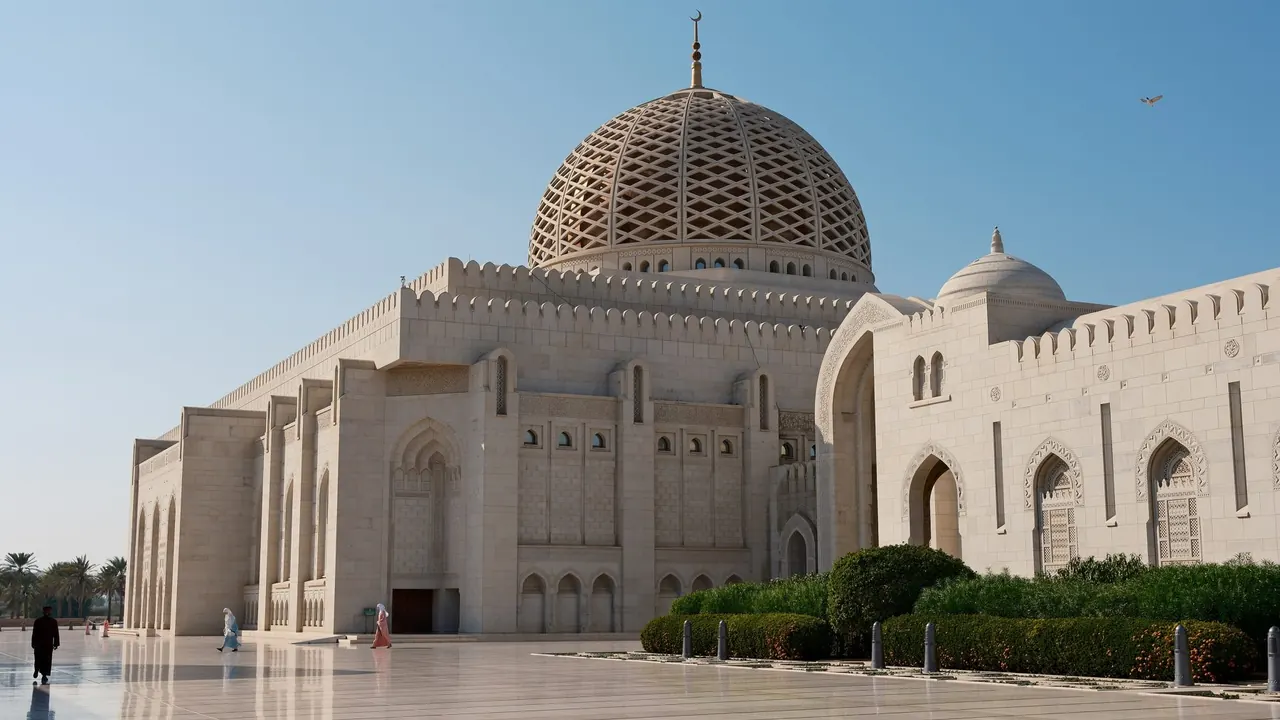
Photos: Doha by Gregory Hawken Kramer, CC BY-SA 4.0, cropped; Muscat by Alli Khalil, CC BY 4.0, cropped.
Doha or Muscat?
Our verdict in twelve categories, each scored against the same fixed benchmark cities, and the climate month by month, so you can choose for your trip.
Choose Doha for
- getting around
- shopping
- food and drink
Doha suits a compact, comfortable city trip built around a few world-class museums, big malls and long evenings at Souq Waqif. The metro links most of the sights, children are catered for indoors and out, and everything outside the city fits into a single desert tour, so a long weekend works well.
Choose Muscat for
- nature and the outdoors
- day trips
- beaches
Choose Muscat if the landscape matters as much as the city. Mountains rise straight behind the coast, the coves and islands offer real swimming and snorkelling, and the forts and mud-brick villages of the interior are a drive away. It is calmer and more spread out, and it rewards travellers who hire a car and stay longer.
Scoreboard
Twelve categories on one fixed scale from 0 to 100. The shaded stretch is the gap between the two.
Your match
Pick a travel style or drag the sliders, and both match scores follow your weighting.
Wins on getting around and shopping with your weighting.
Wins on nature and the outdoors and day trips with your weighting.
What matters to you?
Category by category
What the scores mean for a trip.
Beaches & swimming
Muscat is the better choice for the sea. Its sand runs through the city at Qurum and Shatti al Qurum, the coves at Qantab, Al Bustan and Yiti have clear water below rocky headlands, and boats from Mutrah reach secluded beaches and the coral around the Daymaniyat Islands.
Doha's Gulf is shallow and still, and the most pleasant swimming is at groomed hotel beaches in West Bay and on The Pearl, with quieter public shores at Al Wakrah and Simaisma. It makes a good afternoon off between museums. Muscat's coastline is worth planning whole days around.
Food & drink
Both cities eat mostly from South Asia and the Levant, with Keralan and Pakistani canteens doing most of the everyday cooking, and both keep wine to the hotels. Doha has the wider range. Iranian and Syrian kitchens add to the mix, machboos and harees are easy to find on the late terraces around Souq Waqif, and the hotels of West Bay, Lusail and The Pearl have big-name international restaurants.
Muscat has the more distinctive local cooking but far fewer places serving it. Shuwa, grilled kingfish and rosewater halwa with cardamom coffee are worth seeking out, along with an early visit to the Mutrah fish market. Still, Omani food is mostly found at a handful of floor-seated restaurants, so a food-led trip runs out of options sooner.
Culture & sights
The two are evenly matched, and each takes two or three days, but the appeal is quite different. Doha is about modern museums of real ambition: Pei's Museum of Islamic Art and Nouvel's desert-rose National Museum are architecture and collections worth the flight on their own, set in a city where Souq Waqif is a reconstruction and little old fabric survives.
Muscat has more history in place. The Grand Mosque is its showpiece, and the walled cove of Old Muscat, with Al Alam Palace between the Portuguese-era forts and Mutrah's merchants' houses facing the dhows, gives a sense of a real old port that Doha cannot match.
Nightlife
Neither city is for a big night out, and in both, alcohol is confined to licensed hotels. Doha has a little more on offer, with rooftop lounges over West Bay and a few hotel clubs bringing in visiting DJs. Muscat's handful of hotel nightclubs fill mostly with expatriates at the weekend.
In either city, the better reason to stay up late is the sober evening. In Doha, crowds fill Souq Waqif, Katara and the Corniche until past midnight. Mutrah's corniche is gentler, more of a stroll and a shisha café than a whole city out for the evening.
Nature & outdoors
This is where the two differ most. Muscat sits against the bare Hajar mountains, which drop into the sea in cliffs and fjord-like inlets. Within easy reach are the emerald pools of Wadi Shab, the Bimmah sinkhole, the terraced gardens of Jebel Akhdar, dolphins off the marinas and turtles at the Daymaniyat reserve.
Doha stands on flat gravel desert with a largely built-up shore. Its outings come down to a four-wheel-drive run to the Inland Sea at Khor Al Adaid and a mangrove paddle at Al Thakira, with the Corniche and Aspire Park for a walk.
Day trips
Muscat is a base for exploring Oman. Inland, Nizwa's round fort and Friday livestock auction, the UNESCO-listed walls of Bahla, painted Jabrin Castle and the hanging village of Misfat al Abriyeen can fill several days. Down the coast, Sur still builds wooden dhows.
From Doha the options are thin. The ruined pearling town of Al Zubarah is the one heritage site worth the drive, and most visitors see the rest of Qatar on a single desert tour.
Good for families
Doha does more for children. Theme parks with roller coasters inside the malls and at Doha Oasis, large water parks and the hands-on sports museum keep them busy whatever the heat, and families stay out late on the Corniche without anyone noticing. The metro also cuts down some of the time in taxis.
Muscat is a gentler choice built around the sea, with calm hotel beaches, morning dolphin trips, snorkelling in shallow coves and the lakes of Qurum park. Away from the beach it has less for children: the aquarium and snow park in Seeb and a children's science museum, but no theme park and long stretches in the car.
Getting around
Doha is much easier without a car. Three cooled, driverless metro lines run to Souq Waqif, Msheireb, the National Museum, West Bay, Katara and Lusail, and taxis fill the gaps.
Muscat has nothing comparable. It is a chain of separate districts spread over about 50km of coast, the buses are of little use for sightseeing, and most visitors hire a car on its good, well-signed roads. On foot, both cities work only in short stretches and after dark in summer.
Shopping & style
Doha is the stronger shopping trip. Souq Waqif sells oud, frankincense, spices, falconry gear and Arabic coffee pots, the Gold Souq next door sells jewellery by weight, and the malls of Lusail and The Pearl have designer flagships and department stores, some dressed up as Venetian canals.
Muscat's Mutrah Souq is calmer and more characterful, with silverwork, curved khanjar daggers, embroidered caps and little hard selling, and Nizwa's Friday market is worth a stop if you head inland. Beyond those, its suburban malls are mostly chain stores.
Affordability
Both cities cost a lot to sleep in and very little to eat in, and both charge heavily for alcohol in hotels. Muscat works out somewhat cheaper overall. Its hotels are dear but ease off in the hot months, and fuel is cheap, although a hire car or taxis have to go into the budget.
Doha's large international hotels in West Bay, Lusail and The Pearl are priced like other wealthy Gulf cities and rise further during big sporting events. Against that, its inexpensive metro and very cheap karak and canteen meals help a visitor who stays out of hotel restaurants.
Live music & performing arts
Muscat has the better stage. The Royal Opera House runs a proper season from autumn to spring, with touring opera and ballet, symphony orchestras, jazz and Arab music stars in a grand hall with a strict dress code.
Doha has the venues but a patchier calendar. The Qatar Philharmonic plays at the Katara opera house, the amphitheatre there hosts concerts in the cooler months, and the National Convention Centre takes touring musicals and comedy. In both cities it is worth checking dates before you travel.
Wellness & relaxation
Muscat is the more restful choice. The city is low-rise, slow and uncrowded, the resort spas in the coves south of the centre offer frankincense treatments and quiet pool days, and the warm springs at Nakhal and Rustaq let you bathe as locals do beneath the forts.
Doha's hotel spas in West Bay, Lusail and The Pearl are polished, with hammam rooms and scrubs. There is also a retreat on the north coast based on Arabic and Islamic healing. However, the setting is more urban, and a spa day there is a break in a city trip rather than its purpose.
When should you go?
Pick your month. The climate figures are measured averages, not a forecast.
Doha in July
Muscat in July
Daytime high, °C
Rainfall in the month, mm
Where the figures come from
Muscat's sunshine is measured 32 km from the centre, at Seeb, International Airport.
Temperature and rainfall are climate normals, averaged over the years shown. Doha: 1991-2020 normals, Doha International Airport (5.5 km from centre). Muscat: 1991-2020 normals, Qaboos Port (3.4 km from centre).
Both cities are winter destinations, but Doha's swings are sharper. Its January afternoons of around 23°C are ideal for walking the souq and the Corniche, and the Gulf cools to about 19°C, which is fresh for a long swim. From May the heat climbs fast, reaching 43°C in June and July, and until October outdoor plans shrink to early mornings and late evenings. Doha's little rain comes in winter, as the odd shower between December and March, and the summer months are completely dry.
Muscat starts warmer in winter, with the sea holding at around 24°C, so the beach season is more reliable from November to March. Its summer peak comes earlier and lower, about 37°C in May and June, but by day it stays too hot for hiking or sightseeing until October. Rain is scarce all year. Apart from a few showers in November and December, Muscat's wettest month is actually June, in the middle of the heat. Sunshine is generous in every month.
Which traveller are you?
On an outdoors trip, Muscat is the clear choice. Wadi Shab's pools, the Jebel Akhdar plateau, dolphin trips and diving at the Daymaniyat Islands all sit within reach, while Doha offers little beyond one dune drive to Khor Al Adaid.
For a shopping trip, Doha has far more to work with. Souq Waqif and the Gold Souq cover perfume, incense and jewellery, and the malls of Lusail and The Pearl add designer flagships. Muscat has its lovely Mutrah Souq, but little beyond it.
For a short city break, Doha is easier. The metro reaches the National Museum, Souq Waqif, West Bay and Katara, and the Museum of Islamic Art is a short walk away. In Muscat the sights are strung along a long coast, and you need a car.
Before you go
| Measure | Doha | Muscat |
|---|---|---|
| Official language | Arabic | Arabic |
| Currency | Qatari Rial (QAR) | Rial Omani (OMR) |
| Sockets | G240 V, 50 Hz | CG240 V, 50 Hz |
| Driving side | Right | Right |
| Time zone | UTC+3 | UTC+4 |
| Emergency number | 999 | 968 |
| Elevation | 0 m | 69 m |
| Main airport | Hamad International Airport (DOH)8 km from centre195 non-stop destinations | Muscat International Airport (MCT)31 km from centre83 non-stop destinations |
By the numbers
| Measure | Doha | Muscat |
|---|---|---|
| City population | 1,186,023 | 1,421,409 |
| People per km² | 8,985 | 406 |
| Museums within 10 km | 6 | 10 |
| UNESCO World Heritage sites within 50 km | 0 | 0 |
| Swim season, months above 21 °C | 9 months | 12 months |
Where else could you go?
Every comparison below shares a destination with this one, so you can follow Doha or Muscat somewhere new.