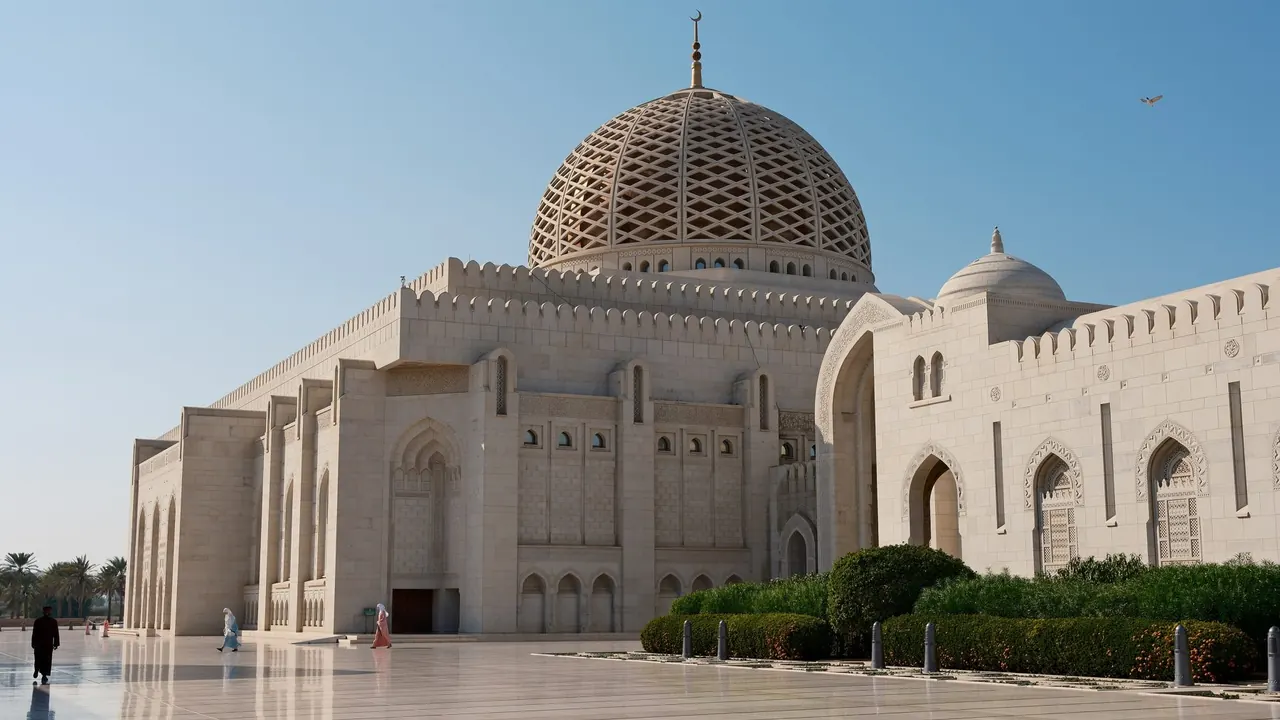
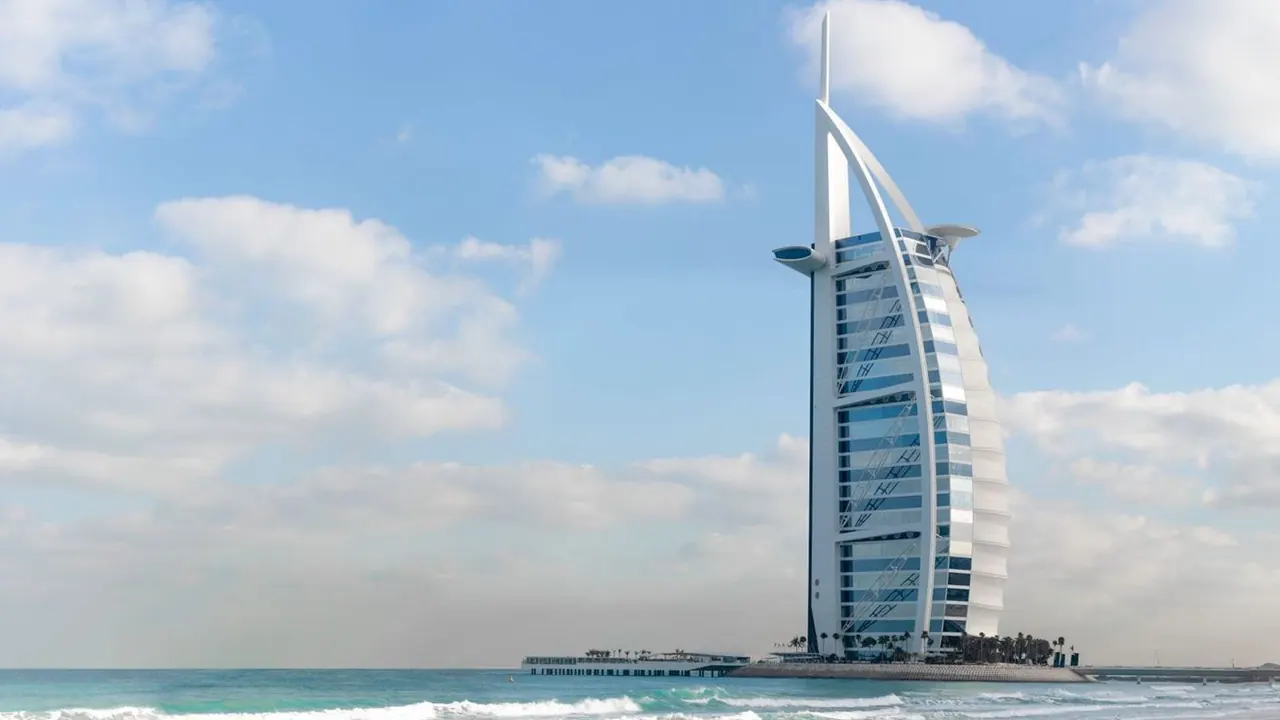
Photos: Muscat by Alli Khalil, CC BY 4.0, cropped; Dubai by Aleksandar Pasaric, Pexels License.
Muscat or Dubai?
Our verdict in twelve categories, each scored against the same fixed benchmark cities, and the climate month by month, so you can choose for your trip.
Choose Muscat for
- nature and the outdoors
- day trips
- culture and sights
If you would rather spend your days outside the city than in it, choose Muscat. The Hajar mountains rise straight behind its coves, and gorges, dolphin trips, island reefs and the fort towns of the interior are all within reach by car. The city is calmer, lower and somewhat cheaper, and its old quarters feel more rooted in the place. Evenings are quiet, so pick it for exploring and resting rather than for going out.
Choose Dubai for
- nightlife
- shopping
- food and drink
Dubai suits travellers who want the city to do the work. It has long sandy beaches with a resort behind them, vast malls, theme parks and water parks, an enormous range of food from Deira canteens to hotel dining rooms, and a polished night out in rooftop bars and beach clubs. Families with children who need entertaining, shoppers, and anyone who wants plenty going on after dark will get more from it.
Scoreboard
Twelve categories on one fixed scale from 0 to 100. The shaded stretch is the gap between the two.
Your match
Pick a travel style or drag the sliders, and both match scores follow your weighting.
Wins on nature and the outdoors and day trips with your weighting.
Wins on nightlife and shopping with your weighting.
What matters to you?
Category by category
What the scores mean for a trip.
Beaches & swimming
Dubai is the better pure beach destination. It has one long run of pale sand, from Jumeirah and Kite Beach to the JBR strip, and the water is calm and shallow. Many visitors never leave their resort's private beach on Palm Jumeirah. The shoreline is man-made and has little surf, but it is easy and reliable.
Muscat's coast is more scenic and more varied. There is one long city beach at Qurum, and dark headlands hide small coves at Qantab, Al Bustan and Yiti. Boats run to secluded beaches below the cliffs and to the reefs of the Daymaniyat Islands, which are far better for snorkelling than anything near Dubai. The beach here is part of a wider trip rather than the reason for it.
Food & drink
Dubai is far the stronger city for eating. The canteens of Deira, Karama and Al Satwa cover much of South Asia, Iran and the Philippines, and late-night shawarma counters stay busy. Above them are the hotel dining rooms of Downtown and the Marina and the long Friday brunch. Emirati food itself takes some finding.
Muscat has more of its own cooking to try, such as pit-cooked shuwa, grilled kingfish and rosewater halwa with cardamom coffee, but only a handful of places serve it. Day to day you eat in the Indian, Pakistani and Lebanese canteens of Ruwi and Mutrah. The early fish market at Mutrah is the one food outing worth getting up for.
Culture & sights
Muscat gives the stronger sense of an Arab city with its own past. The Sultan Qaboos Grand Mosque is a great sight in its own right. Old Muscat's walled cove is framed by Portuguese-era forts and the Al Alam Palace, and the National Museum and Bait al Zubair tell Oman's story well. The merchants' houses along the Mutrah corniche face the dhows in the harbour.
Dubai's sights are about modern spectacle: the Burj Khalifa's observation decks, the Museum of the Future and the skyline at dusk. Its older side, the wind-tower houses of Al Fahidi and the abra crossing to the Deira souks, is pleasant but small. Either city takes two or three days to see.
Nightlife
This is where the two differ most. Dubai has a large and glamorous night scene inside its licensed venues, with DJ clubs, rooftop bars above Sheikh Zayed Road, beach clubs on the Palm that run into the evening and brunches that last until dark. It is expensive and dressy, and nothing happens on the street.
Muscat barely goes out. Apart from a few hotel lounges and nightclubs filled with expatriates at the weekend, evenings mean a sober walk along the Mutrah corniche, shisha and a late dinner.
Nature & outdoors
Muscat's setting is one of its main draws. Bare mountains drop into the sea in cliffs and inlets, the gorge of Wadi Shab and the Bimmah sinkhole are an easy drive down the coast, and Jebel Akhdar's rose terraces are two hours inland. At sea there are spinner dolphins, protected reefs and coves to kayak.
Around Dubai the outdoors means desert. You can drive the dunes, sandboard or spend a night at a camp at Al Marmoom, or kitesurf and paddleboard along the shore. The nearest mountains are around Hatta, ninety minutes away. In both cities summer heat rules out most activity except at dawn.
Day trips
Muscat sits at the door of Oman's historic interior. Nizwa's round fort and Friday livestock market, the UNESCO-listed walls of Bahla, painted Jabrin Castle and the terraced village of Misfat al Abriyeen can all fill a day. Down the coast, Sur still builds wooden dhows. You need a car or a driver for all of them.
Dubai offers three strong outings: Abu Dhabi, with its Grand Mosque and the Louvre, the museums and heritage quarter of Sharjah next door, and the oases and forts of Al Ain. Beyond those the choice runs out quickly.
Good for families
Dubai is designed around family attractions. There are the Legoland and theme-park cluster near Jebel Ali, water parks on the Palm, the Dubai Mall aquarium and indoor skiing, so children have plenty to do even in summer, when the heat keeps everyone indoors.
Muscat is gentler and has much less on offer. Days with children revolve around calm hotel beaches, dolphin boats and the lakes and play areas of Qurum park, and the mall in Seeb has an aquarium and a snow park. Both cities welcome children warmly, but in Muscat you spend more of the day in the car.
Getting around
A driverless metro gives Dubai a backbone that Muscat lacks. Its lines link the airport, Downtown, the Marina and the old town by the Creek, and the Marina tram and the abras fill some of the gaps. Taxis cover the rest, though walking between stations in the heat is tiring.
Muscat has no real centre. It is a chain of districts joined by fast highways, and the buses are of little use to visitors, so most people hire a car. Walking works only on the Mutrah corniche and in Old Muscat's cove.
Shopping & style
Dubai is a shopping destination in its own right. The Dubai Mall and the Mall of the Emirates hold nearly every luxury brand, with deep jewellery and watch halls, and the winter Shopping Festival brings sales. The Deira gold, spice and perfume souks add an older kind of trade.
Muscat has one real place to shop, Mutrah Souq. Its covered lanes smell of frankincense and sell silver, khanjar daggers, pashminas and perfume oils, with very little hard selling. For souvenirs made in the country it is the more rewarding of the two, but beyond it there are only suburban malls.
Affordability
Muscat is the somewhat cheaper stay. Food in local canteens costs very little, fuel is cheap and the forts charge small fees. Hotel rooms are the big expense, and a hire car is part of the budget.
In Dubai, the headline attractions, hotel restaurants and alcohol all cost a great deal, and resort rates in the winter high season are steep. A cheap trip is possible if you eat in Deira and Karama and travel by metro. Both cities get noticeably cheaper in summer.
Live music & performing arts
Both cities depend on a single grand house that brings in touring companies, so neither has much to find by chance on an ordinary night. Dubai's dhow-shaped Opera puts on musicals and comedy alongside ballet and orchestras, and its arena and outdoor venues bring international pop and rock tours.
The Royal Opera House Muscat leans more towards classical music, opera and Arab music stars, in a white-stone Omani building worth visiting for itself. It has a strict dress code.
Wellness & relaxation
Along the quiet coves south of Muscat, resort spas use frankincense in their treatments. The city around them is low-rise, uncrowded and slow, which makes it the easier place to unwind. The warm springs at Nakhal and Rustaq also give you a taste of local bathing beneath the forts.
Dubai's hotel spas are larger and just as polished, with hammams, hydrotherapy pools and long massage menus, and they work in any season. Outside them the city is fast and full of traffic. To rest properly, you stay inside your resort or go to a desert retreat inland.
When should you go?
Pick your month. The climate figures are measured averages, not a forecast.
Muscat in July
Dubai in July
Daytime high, °C
Rainfall in the month, mm
Where the figures come from
Muscat's sunshine is measured 32 km from the centre, at Seeb, International Airport.
Temperature and rainfall are climate normals, averaged over the years shown. Muscat: 1991-2020 normals, Qaboos Port (3.4 km from centre). Dubai: 1991-2020 normals, Dubai International Airport (3.3 km from centre).
Both cities are at their best from November to March, when the days are warm rather than hot, walking the streets is pleasant at any hour, and the air feels much the same in each. The difference is in the water. Dubai's sea cools to about 22°C in February, which some swimmers find fresh, while Muscat's stays near 24°C all winter. Dubai's little rain falls in these months as the odd shower, mostly around December and January. Muscat has the occasional winter shower too. It is sunny all year, but winter has its fewest hours of sunshine, and its brightest stretch comes in April and May.
The summers are where they part. Dubai climbs steadily to 42°C in July and August, which is too hot for walking at any hour except dawn and late evening. Muscat's heat peaks earlier, at about 37°C in May and June, and eases a little from July. June is also Muscat's wettest month, with about 16mm, though that is still very little rain. In both cities, the beach and any hiking stay early-morning or evening activities right through the summer. April and October are shoulder months in both, pleasant at either end of the day but already hot by noon.
Which traveller are you?
On a food and nightlife trip, Dubai is the clear choice. You can eat Keralan curry in Karama, have a celebrity chef's dinner in DIFC and finish at a rooftop bar or club. Muscat offers a few traditional Omani dining rooms and quiet hotel lounges.
For an outdoors trip, go to Muscat. You can wade through the pools of Wadi Shab, walk the terraces on Jebel Akhdar, kayak along the coves and dive with turtles at the Daymaniyat Islands. Around Dubai there is mostly desert, and the mountains at Hatta are ninety minutes away.
On a family trip with children, Dubai keeps them busier. It has Legoland, water parks, a giant aquarium, indoor snow and shallow beaches with kids' clubs. Muscat is safe and gentle, with dolphin boats and Qurum's park, but has no theme park.
Before you go
| Measure | Muscat | Dubai |
|---|---|---|
| Official language | Arabic | Arabic |
| Currency | Rial Omani (OMR) | UAE Dirham (AED) |
| Sockets | CG240 V, 50 Hz | CG220 V, 50 Hz |
| Driving side | Right | Right |
| Time zone | UTC+4 | UTC+4 |
| Emergency number | 968 | 112 |
| Elevation | 69 m | 0 m |
| Main airport | Muscat International Airport (MCT)31 km from centre83 non-stop destinations | Dubai International Airport (DXB)7 km from centre293 non-stop destinations |
By the numbers
| Measure | Muscat | Dubai |
|---|---|---|
| City population | 1,421,409 | 3,944,751 |
| People per km² | 406 | - |
| Museums within 10 km | 10 | 14 |
| UNESCO World Heritage sites within 50 km | 0 | 0 |
| Swim season, months above 21 °C | 12 months | 12 months |
Where else could you go?
Every comparison below shares a destination with this one, so you can follow Muscat or Dubai somewhere new.