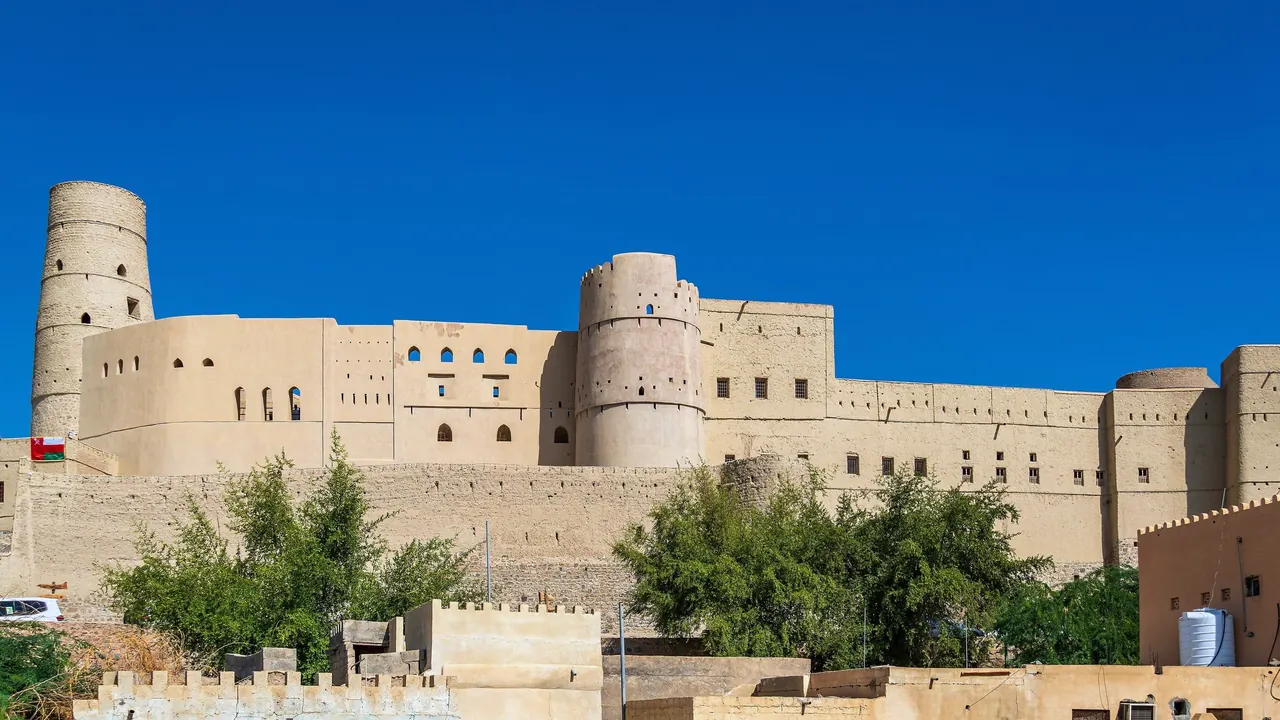
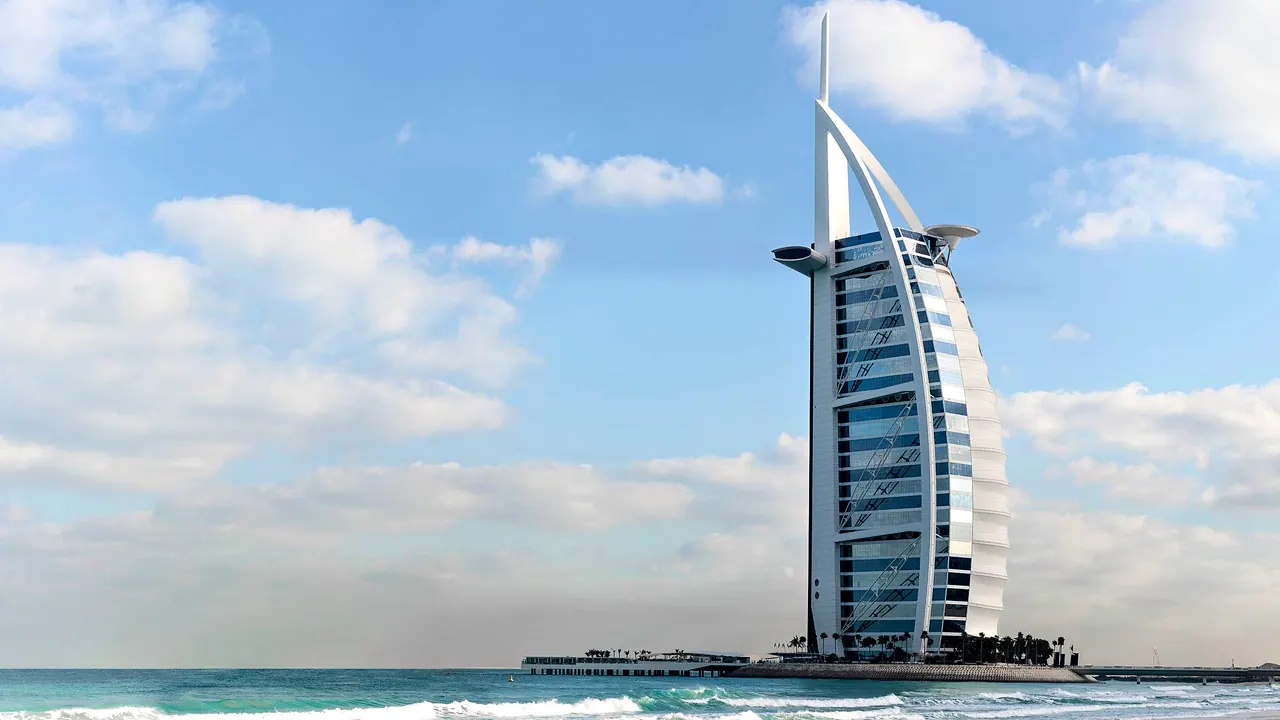
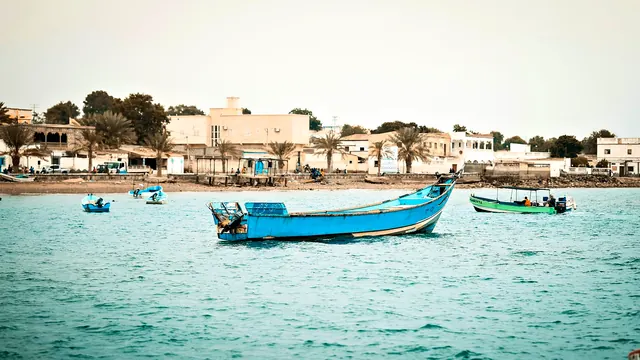
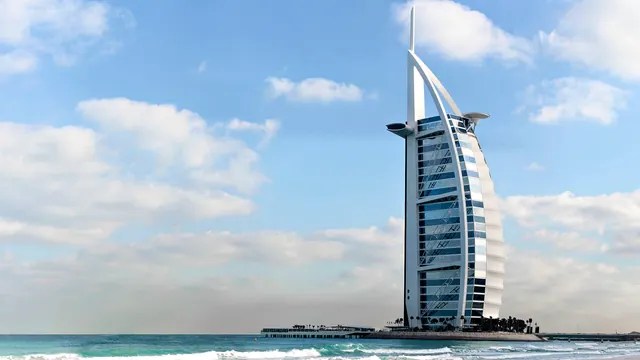
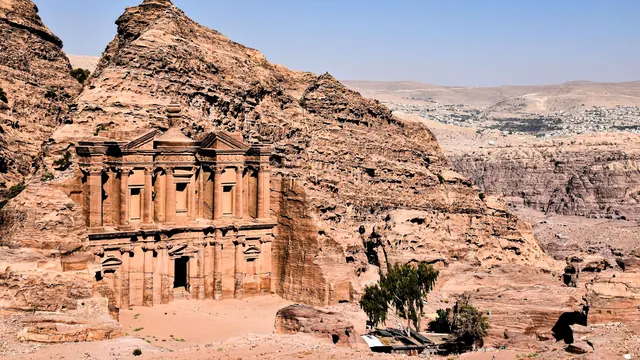
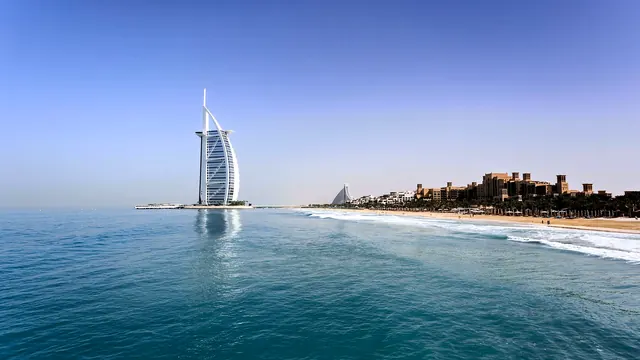
Photos: Oman by dconvertini, CC BY-SA 2.0, cropped; Dubai by Aleksandar Pasaric, Pexels License.
Oman or Dubai?
Our verdict in twelve categories, each scored against the same fixed benchmark cities, and the climate month by month, so you can choose for your trip.
Choose Oman for
- nature and the outdoors
- culture and sights
- prices
Oman suits travellers who want landscape and heritage more than polish. The best trip here is a week or more driving out from Muscat into the Hajar Mountains, the wadis and the Wahiba Sands, with nights in Nizwa among forts and mud-brick oasis villages. You need a car and some planning between regions. In return you get quiet roads, empty beaches on the Sur coast and a sense of the older Gulf that Dubai has largely built over.
Choose Dubai for
- nightlife
- shopping
- food and drink
If comfort and convenience come first, Dubai is the easier choice. From a single base you have resort beaches on calm water, the great malls, a deep restaurant scene running from Karama canteens to Downtown dining rooms, and the only real nightlife of the two. Families looking for theme parks and kids' clubs will find far more to fill the days. Its sights run out quickly, though, and the wild country lies beyond the city.
Scoreboard
Twelve categories on one fixed scale from 0 to 100. The shaded stretch is the gap between the two.
Your match
Pick a travel style or drag the sliders, and both match scores follow your weighting.
Wins on nature and the outdoors and culture and sights with your weighting.
Wins on nightlife and shopping with your weighting.
What matters to you?
Category by category
What the scores mean for a trip.
Beaches & swimming
Dubai has the easier beach vacation. Its coast is one continuous run of pale sand on calm, shallow water. You can swim from the public stretches at Jumeirah, Kite Beach and JBR, or stay put on a private resort beach on Palm Jumeirah. It is engineered rather than wild, but reliable from your door.
Oman's coast offers more variety, but you have to work for it. Muscat has Qurum and the resort coves towards Bandar Jissah, and the Daymaniyat Islands have clearer water a boat ride away. At Fins and Tiwi on the Sur coast, the sand lies against dark cliffs, with nobody around and no facilities. Away from the resorts, modest dress is expected.
Where in Oman: Muscat, Daymaniyat Islands, Sur coast, Salalah
Food & drink
Dubai eats far better than Oman. Its South Asian, Arab and Filipino canteens in Deira, Karama and Al Satwa stay busy late into the night, and Downtown and the Marina have chef-led hotel dining rooms and a Friday brunch culture. Muscat's Indian, Pakistani and Lebanese cafés are good and cheap, but the range is far narrower.
Oman has the more distinctive dishes, if you can find them: shuwa lamb from the pit, Nizwa halwa and kahwa served with dates. Restaurants serving Omani food are scarce, though. Outside Muscat and Salalah, meals come down to simple grills.
Culture & sights
Oman has much more history to see. The Sultan Qaboos Grand Mosque and Muscat's walled old quarter are only the start. Inland, Nizwa's fort, the UNESCO-listed walls of Bahla, Jabrin's painted ceilings and the beehive tombs at Bat fill several days, and Al Baleed in Dhofar adds the frankincense trade.
Dubai's sightseeing is mostly modern spectacle: the Burj Khalifa, the Museum of the Future and the skyline at dusk. Al Fahidi, Al Shindagha and the abra crossing to Deira show the trading port that came before. Two or three days covers it all.
Where in Oman: Muscat, Nizwa and the Dakhiliyah, Bahla, Salalah and Dhofar
Nightlife
Dubai has a real night out, and Oman barely has one. Both serve alcohol only in licensed venues. Within that limit, Dubai has big-name DJ clubs, rooftop bars above Sheikh Zayed Road, beach clubs on Palm Jumeirah and a weekend brunch that carries on into the night.
In Oman, a drink means a hotel bar in Muscat, perhaps with a band. Evenings there are for strolling the Muttrah corniche, sitting in shisha cafés and eating a late dinner, and towns outside the capital go quiet soon after dark.
Where in Oman: Muscat
Nature & outdoors
This is Oman's great strength and Dubai's weak point. Oman has the gorge of Wadi Ghul below Jebel Shams, palm-lined wadis with turquoise pools, the open dunes of the Wahiba Sands, nesting turtles at Ras al Jinz, fjord cruises in Musandam and monsoon-green hills in Dhofar.
Dubai's outdoors comes down to dune drives at Al Marmoom and Lahbab, kitesurfing and paddleboarding, and flamingos at Ras Al Khor. Its one mountain outing, Hatta, is a corner of the same Hajar range that Oman has in full.
Where in Oman: Hajar Mountains, Wahiba Sands, Musandam, Dhofar
Day trips
Oman's day trips are closer together and there are more of them. From Nizwa, Bahla, Jabrin, Al Hamra and the terraces of Misfat al Abriyeen are all under an hour away. From Muscat, you can loop out to the forts at Nakhal and Rustaq or drive along the coast to Sur's dhow yard. Many share the same mix of fort, souq and falaj, and nearly all need a car.
Dubai has three strong outings: Abu Dhabi's Grand Mosque and Louvre, Sharjah's heritage quarter and Islamic museum, and Al Ain's oases. After those, the list thins into desert and road.
Where in Oman: Nizwa, Muscat, Sur
Good for families
Dubai is far easier with children. It has Legoland and the theme-park cluster near Jebel Ali, water parks in Jumeirah, the aquarium in the Dubai Mall, indoor snow, and resort kids' clubs on calm, shallow water. Indoor attractions also keep the summer manageable.
Oman is just as safe and welcoming, but little there is built for children. What it offers are experiences: a dolphin boat, a night-time turtle watch, a desert camp and splashing in wadi pools. These come with long drives between them, and the trip works best from November to March.
Where in Oman: Muscat, Ras al Jinz, Wahiba Sands
Getting around
Dubai is somewhat easier to get around. Its driverless metro runs from the airport through Downtown to the Marina and around the Creek, a tram serves the Marina, abras cross the Creek and taxis are everywhere. It is still a city built for cars, though, and walking between stations is hard going in the heat.
Oman has no railway and few buses, so a car is essential. The roads are excellent and quiet, so driving yourself to Nizwa, Wahiba and Sur is straightforward. Jebel Akhdar needs a 4x4, and Salalah and Musandam are best reached by domestic flight.
Where in Oman: Muscat, Nizwa
Shopping & style
Dubai is one of the reasons to come shopping in the Gulf at all. The Dubai Mall and the Mall of the Emirates hold almost every luxury and high-street brand, the watch and jewellery trade runs deep, and Deira's Gold Souk and spice souk add the older trade. Independent street shopping is the gap.
Oman's shopping is narrower but more local. Muttrah souq sells frankincense, silver and embroidered caps, Nizwa sells pottery and khanjar daggers and holds a Friday livestock market, and Salalah sells frankincense in every grade. Beyond these, it comes down to Muscat's malls.
Affordability
Oman is the cheaper of the two, though it is not a bargain. Hotels and beach resorts in Muscat cost about the same as elsewhere in the Gulf, and car hire, 4x4 trips and desert camps add up. Simple guesthouses around Nizwa and the mountain villages bring the cost down noticeably.
Dubai costs more at almost every turn in winter: resorts, observation decks, theme parks and some of the dearest alcohol anywhere. Its savings come from Deira and Karama eateries, a cheap metro, and hotel rates that drop sharply in the summer heat.
Where in Oman: Nizwa, Muscat
Live music & performing arts
Each has one fine opera house that hosts touring companies in the cooler months: the white stone Royal Opera House Muscat and the dhow-shaped Dubai Opera. Neither has a theatre district, and in both, traditional sword or stick dances appear mainly at festivals.
Dubai offers a little more. Its arenas and outdoor venues bring international pop and rock tours, and hotel lounges have resident jazz. In Muscat, the opera house is nearly all there is.
Where in Oman: Muscat
Wellness & relaxation
The two are broadly level, and both rely on resort spas rather than a local bathing tradition. The difference is the setting. Oman's spa hotels sit on the cool cliff-tops of Jebel Akhdar and in Musandam's secluded coves, and the country itself is slow and quiet.
Dubai's Palm and Jumeirah resorts have larger spas with hammam rituals and hydrotherapy pools, and these work just as well in midsummer. The city outside them is fast and full of traffic, so for silence you need a desert retreat inland.
Where in Oman: Jebel Akhdar, Muscat coast, Musandam, Wahiba Sands
When should you go?
Pick your month, and for a country the place in it. The climate figures are measured averages, not a forecast.
Where in Oman
Muscat (Oman) in July
Dubai in July
Daytime high, °C
Rainfall in the month, mm
Where the figures come from
Muscat (Oman)'s sunshine is measured 32 km from the centre, at Seeb, International Airport.
Temperature and rainfall are climate normals, averaged over the years shown. Muscat (Oman): 1991-2020 normals, Qaboos Port (3.4 km from centre). Dubai: 1991-2020 normals, Dubai International Airport (3.3 km from centre).
In the north, both are winter destinations. From November to March, Muscat and Dubai are both warm enough for the beach and mild enough for walking the souqs and waterfronts. Rain is scarce in both, with only a few winter showers. In January the sea off Dubai is about 23°C, refreshing rather than warm, and the water off Muscat is a little warmer. From May the heat builds quickly. Dubai reaches 42°C in July and August with the sea near 33°C, so outdoor plans shrink to dawn and evening. Muscat is only a little gentler, peaking at 37°C in May and June.
Oman has a second season that Dubai lacks. In Salalah, the summer monsoon all but hides the sun in July and August and makes the sea rough. It also turns the Dhofar hills green, and daytime highs stay around 27°C while the north bakes. Salalah's beaches are at their best from October through the spring.
Which traveller are you?
On an outdoors trip, choose Oman without hesitation. It has the Jebel Shams rim walk, swimming in the pools of Wadi Shab, a night among the Wahiba dunes and turtles at Ras al Jinz. Dubai's desert outings and Hatta are only a taste of all this.
For a food and nightlife trip, Dubai wins clearly. You can eat Keralan curry and Iranian kebabs in Deira, go out to rooftop bars, DJ clubs and the long weekend brunch, and all of it is close by. Oman's evenings end early, mostly in hotel bars.
On a family trip with children, Dubai has the theme parks, water parks, the giant aquarium, indoor snow and resort kids' clubs. Oman is friendly and safe, but its turtle watches and wadi pools come with long drives between them.
More comparisons
Each shares a side with Oman or Dubai.
Where else could you go?
Set Oman against any other country.