Photos: Oman by dconvertini, CC BY-SA 2.0, cropped; United Arab Emirates by Aleksandar Pasaric, Pexels License.
Oman or United Arab Emirates?
Our verdict in twelve categories, each scored against the same fixed benchmark cities, and the climate month by month, so you can choose for your trip.
Choose Oman for
- nature and the outdoors
- prices
- culture and sights
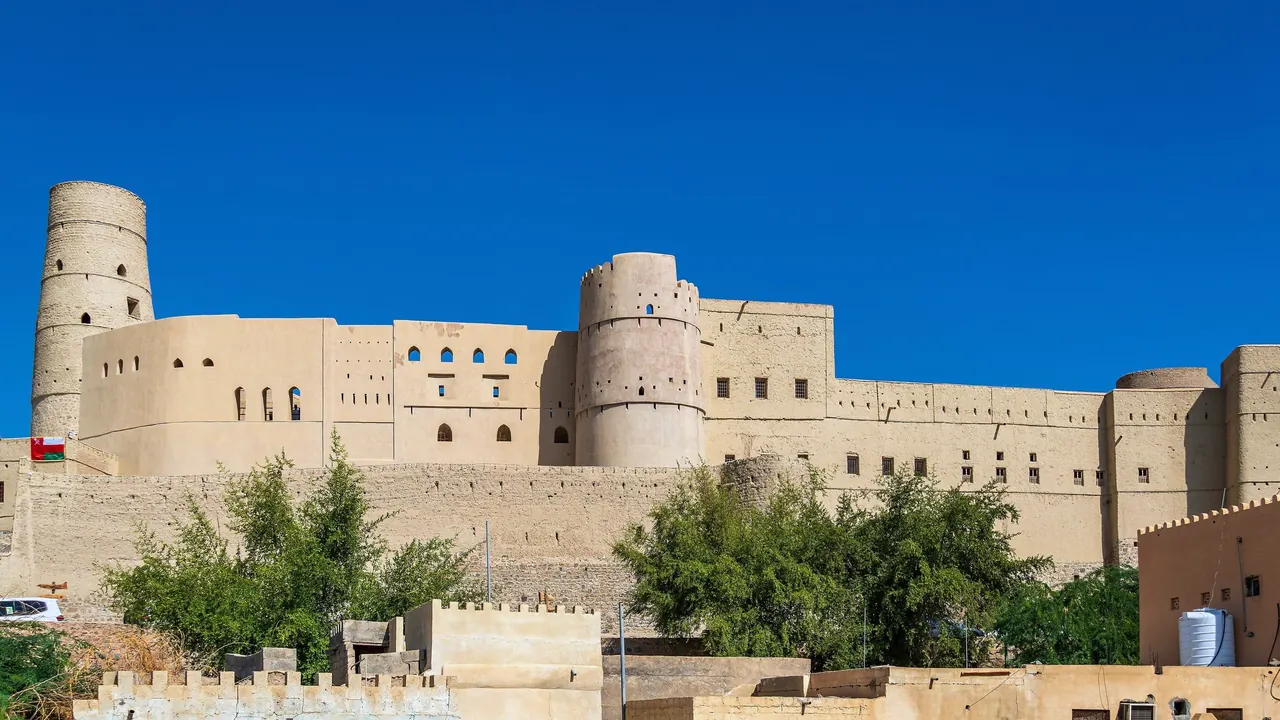
Oman is for travellers who want the land itself to be the vacation. You would drive the Hajar Mountains, swim in wadi pools, sleep in a dune camp in the Wahiba Sands and walk through forts and mud-brick villages around Nizwa. It is calmer and a little cheaper than the UAE, and much of its heritage is still in place. The trade-off is quiet evenings, simple food outside Muscat, and a hire car or driver for almost every day.
Choose United Arab Emirates for
- nightlife
- shopping
- families
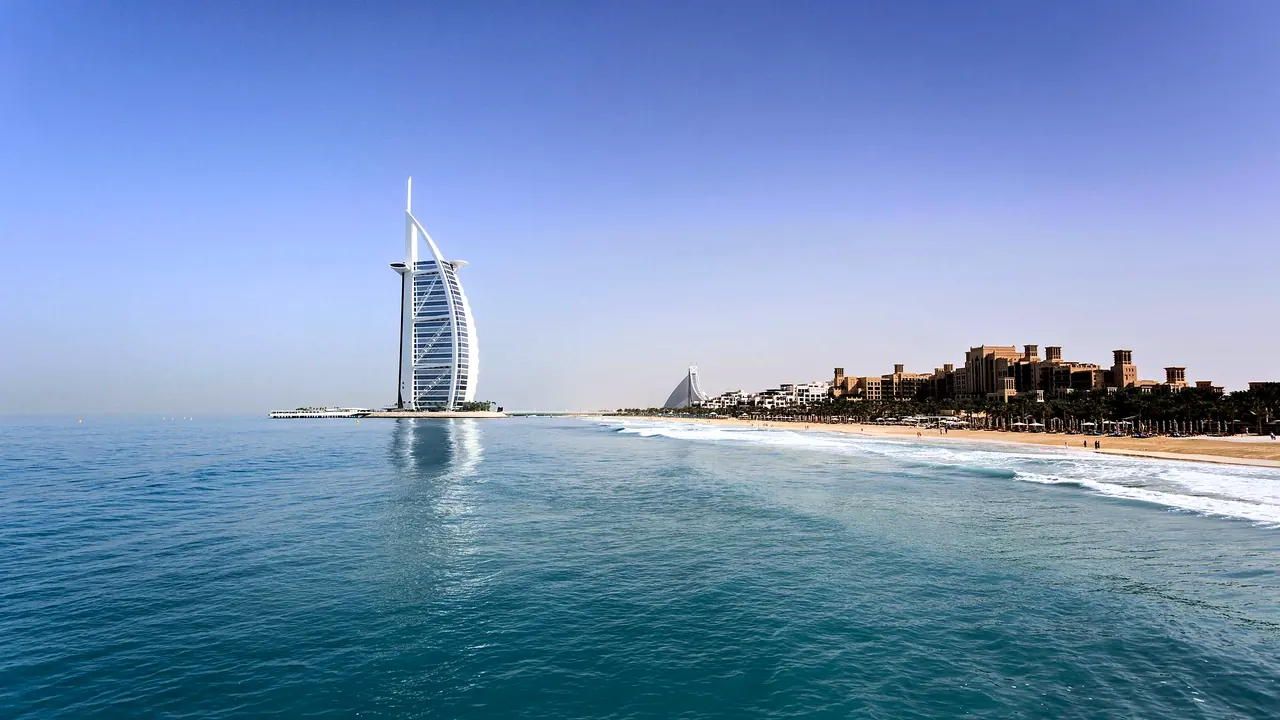
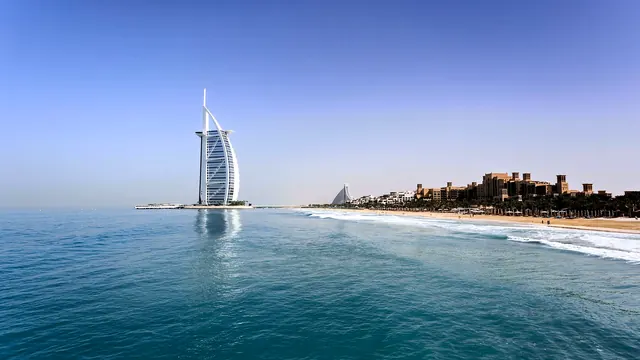
The UAE makes more sense if you want a vacation that runs smoothly from a resort base. It has long, calm beaches in Dubai and on Saadiyat, theme parks and water parks for children, huge malls, and the best range of restaurants and nightlife in the region. Taxis and Dubai's metro make it easy to get around. You get a polished, built-up kind of comfort rather than wild landscape, and you pay for it.
Scoreboard
Twelve categories on one fixed scale from 0 to 100. The shaded stretch is the gap between the two.
Your match
Pick a travel style or drag the sliders, and both match scores follow your weighting.
Wins on nature and the outdoors and prices with your weighting.
Wins on nightlife and shopping with your weighting.
What matters to you?
Category by category
What the scores mean for a trip.
Beaches & swimming
Both countries have warm, calm water through the winter, but the UAE is the better choice for a beach trip. Dubai's sand runs unbroken from Jumeirah to the Marina and the Palm, Saadiyat Island has dunes and nesting turtles, and Ras Al Khaimah and the Fujairah coast give you quieter or clearer water. Much of it belongs to resorts, so you get sunbeds and service.
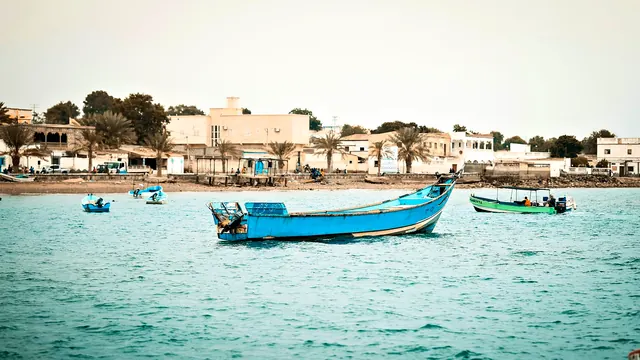
Oman's best coast is wilder and more scattered. There is sand in Muscat at Qurum and in the coves towards Bandar Jissah. Fins and Tiwi on the road to Sur have pale beaches below dark cliffs and no facilities, and the Daymaniyat Islands mean a boat day on empty sand. Away from the resorts, expect modest dress and a family atmosphere.
Where in Oman: Muscat, Daymaniyat Islands, Sur coast, Salalah
Where in United Arab Emirates: Dubai, Saadiyat Island, Abu Dhabi, Ras Al Khaimah, Fujairah coast
Food & drink
The UAE eats far better day to day, and the difference is mostly Dubai. It has hotel tables run by famous chefs, Iranian, Levantine and South Asian canteens in Deira, Karama and Satwa, late-night Arabic grills and the Friday brunch habit. Abu Dhabi adds more, though not as much.
Oman shares the cheap Indian and Pakistani cooking, with grilled fish along the Muscat corniche on top. Its own cuisine is more distinctive than Emirati food: pit-roasted shuwa, kahwa with dates, and halwa from Nizwa. Few restaurants serve it, though, and outside Muscat and Salalah choice soon narrows to simple grills.
Culture & sights
Oman has more historic depth, and much of it is still in its original setting. Muscat's Grand Mosque and the forts of the old walled quarter are a start. The real strength is the Dakhiliyah: Nizwa's round tower, Bahla's UNESCO-listed walls, Jabrin's painted ceilings and the falaj-watered mud-brick villages of Al Hamra and Birkat al Mouz.
The UAE has the stronger collections and the more striking modern landmarks. Abu Dhabi has the Louvre and the Sheikh Zayed Grand Mosque, Sharjah has its museums of Islamic art, and the Burj Khalifa stands over Dubai. Older layers are thinner, found mainly in Al Fahidi and the oases and Hili tombs of Al Ain.
Where in Oman: Muscat, Nizwa and the Dakhiliyah, Bahla, Salalah and Dhofar
Where in United Arab Emirates: Abu Dhabi, Dubai, Sharjah, Al Ain
Nightlife
If going out matters, choose the UAE. Dubai has rooftop cocktail bars, beach clubs that run from afternoon into night, and hotel clubs with touring DJs across Downtown, the Marina, JBR and the Palm. It is polished and hotel-bound rather than spontaneous. Yas Island and Abu Dhabi's corniche add a smaller scene.
Oman has almost none of this. A drink means a licensed hotel bar in Muscat or a resort. Evenings are spent outdoors: families walk the Muttrah corniche, people talk over coffee and shisha, and towns go quiet soon after dark.
Where in Oman: Muscat
Nature & outdoors
This is Oman's strongest card and the widest gap between the two. The same Hajar range that gives the UAE Jebel Jais climbs above 3,000m at Jebel Shams. In Oman it also hides the palm-lined pools of Wadi Shab and Wadi Bani Khalid. Add the Wahiba dunes, nesting turtles at Ras al Jinz, Musandam's fjords and the monsoon-green hills of Dhofar, and you could fill a whole trip.
The UAE's outdoors works more as a day out from a city or beach base. You can hike or ride the zipline on Jebel Jais, kayak at Hatta or in Abu Dhabi's mangroves, and dive off Fujairah. The tall Liwa dunes in the Empty Quarter are its one true wilderness.
Where in Oman: Hajar Mountains, Wahiba Sands, Musandam, Dhofar
Where in United Arab Emirates: Hajar Mountains (Jebel Jais and Hatta), Liwa Oasis, Fujairah and Dibba coast
Day trips
The two are broadly level for day trips, but the outings are different. In the UAE, motorways link cities with different characters. From Dubai you can see Abu Dhabi's mosque and Louvre, Sharjah's museums next door, Al Ain's oases and Hatta's mountain village, though after that the list runs out.
Oman's outings fan out from Muscat and Nizwa into the country: forts at Nakhal and Rustaq, Bahla and Jabrin less than an hour from Nizwa, the terraces of Misfat al Abriyeen, and the dhow yard at Sur. They are lovely drives, but fort, souq and falaj repeat, and you need a car for every one.
Where in Oman: Nizwa, Muscat, Sur
Good for families
Both countries are safe and warm towards children. The UAE, though, has been built with families in mind. Yas Island groups the Ferrari and Warner Bros. parks with a marine park and a water park, and Dubai adds water parks on the Palm, mall aquariums, an indoor ski slope and resort kids' clubs.
Oman offers experiences rather than attractions. Children will enjoy a dolphin boat off Muscat, an evening turtle watch at Ras al Jinz, a night in a desert camp and paddling in wadi pools. There are no theme parks, and long drives between stops test younger children.
Where in Oman: Muscat, Ras al Jinz, Wahiba Sands
Getting around
The UAE is easier to get around without driving. Taxis and ride-hailing are everywhere, Dubai has a driverless metro and a Marina tram, and an intercity railway runs from Abu Dhabi to Fujairah. You will still use taxis at both ends, and walking is pleasant only in a few districts.
In Oman you really do need a car. There is no railway, buses are few and Muscat sprawls along the coast. On the plus side, the roads are excellent and quiet, so a self-drive loop to Nizwa, Wahiba and Sur is easy, with a 4x4 or a driver for Jebel Akhdar and a flight to Salalah or Musandam.
Where in Oman: Muscat, Nizwa
Shopping & style
For a shopping trip, the UAE is far ahead. Dubai's huge malls carry almost every luxury and high-street label, Abu Dhabi adds its own, and the gold, spice and textile souks along the Creek, along with Sharjah's Central Souk for carpets, keep the old trading side alive.
Oman offers less choice but more craft. Muttrah souq is the place for frankincense, silver and embroidered caps, Nizwa's souq for pottery and khanjar daggers, with a Friday livestock market, and Salalah for frankincense of every grade. Beyond those, it is malls and perfumery.
Affordability
Oman is somewhat cheaper. Hotels in Muscat in winter are priced much like the Gulf's, but guesthouses in Nizwa and the mountain villages lower the cost, and forts charge little. The extra costs are car hire, 4x4 days, desert camps and boat trips.
The UAE costs more, especially at beachfront hotels in Dubai and Abu Dhabi, and brunches, bars and theme-park tickets add up quickly. You can spend less by staying in Deira, Bur Dubai, Sharjah or Ras Al Khaimah, eating at the canteens and using the metro, or by accepting summer heat in return for lower room rates.
Where in Oman: Nizwa, Muscat
Where in United Arab Emirates: Sharjah, Deira and Bur Dubai, Ras Al Khaimah
Live music & performing arts
Neither country has much homegrown stage life, and both rely on touring companies, but the UAE has more of it. Dubai Opera hosts visiting ballet, musicals and orchestras, and the arenas in Dubai and on Yas Island bring big pop and rock tours in the cooler months.
Oman's offer is one fine building: the white stone Royal Opera House Muscat, with an autumn-to-spring season of opera, ballet, jazz and Arabic music worth planning a date around. In both countries, traditional song and dance mostly appears at festivals.
Where in Oman: Muscat
Wellness & relaxation
Oman is the more restful of the two, partly because the whole country moves slowly. The best places to switch off are the cliff-top spa hotels on Jebel Akhdar, where the mountain air stays cool, the secluded coves of Musandam and a silent, starlit night in a Wahiba camp.
The UAE has more spas and more polish. Large hotel spas in Dubai and Abu Dhabi often include Moroccan or Turkish hammam rooms, something Oman lacks. Ras Al Khaimah has the Khatt hot springs and quieter resort spas. Dubai's fast, spending-driven pace means resting there usually means picking one resort and staying put.
Where in Oman: Jebel Akhdar, Muscat coast, Musandam, Wahiba Sands
Where in United Arab Emirates: Dubai, Abu Dhabi, Ras Al Khaimah
When should you go?
Pick your month, and for a country the place in it. The climate figures are measured averages, not a forecast.
Where in Oman
Muscat (Oman) in July
Dubai (United Arab Emirates) in July
Daytime high, °C
Rainfall in the month, mm
Where the figures come from
Muscat (Oman)'s sunshine is measured 32 km from the centre, at Seeb, International Airport.
Temperature and rainfall are climate normals, averaged over the years shown. Muscat (Oman): 1991-2020 normals, Qaboos Port (3.4 km from centre). Dubai (United Arab Emirates): 1991-2020 normals, Dubai International Airport (3.3 km from centre).
Both countries are at their best in winter, though neither is completely dry then. In Muscat the comfortable stretch runs from November to March, with warm days, long sunny hours and a sea mild enough to swim in throughout. November and December bring the capital's few winter showers, about 11mm a month, which is still very little. The heat builds from April, and by May Muscat reaches 37°C, so walks through the old quarter and fort visits belong to the early morning. Dubai's window is shorter, roughly December to March, because its October and November stay hotter than Muscat's. January is its wettest month, at about 21mm, and its summer is fiercer, reaching 42°C in July and August with the sea at 33°C.
Salalah, in Oman's far south, keeps a different calendar. Its days stay warm but never extreme for most of the year, and its beaches are best from October to spring. In July and August the monsoon brings cloud, cuts the sunshine sharply and makes the sea rough. The same rain turns the Dhofar hills green, which makes it the one corner of either country where being outdoors in high summer is pleasant.
Which traveller are you?
For an outdoors trip, Oman is the clear choice. Plan a loop by car, splitting your nights between Nizwa for the mountains and a desert camp, and go between October and April. In the UAE, the outdoors is more of an active day added to a beach stay.
More comparisons
Each shares a side with Oman or United Arab Emirates.
Where else could you go?
Set Oman or United Arab Emirates against any other country.