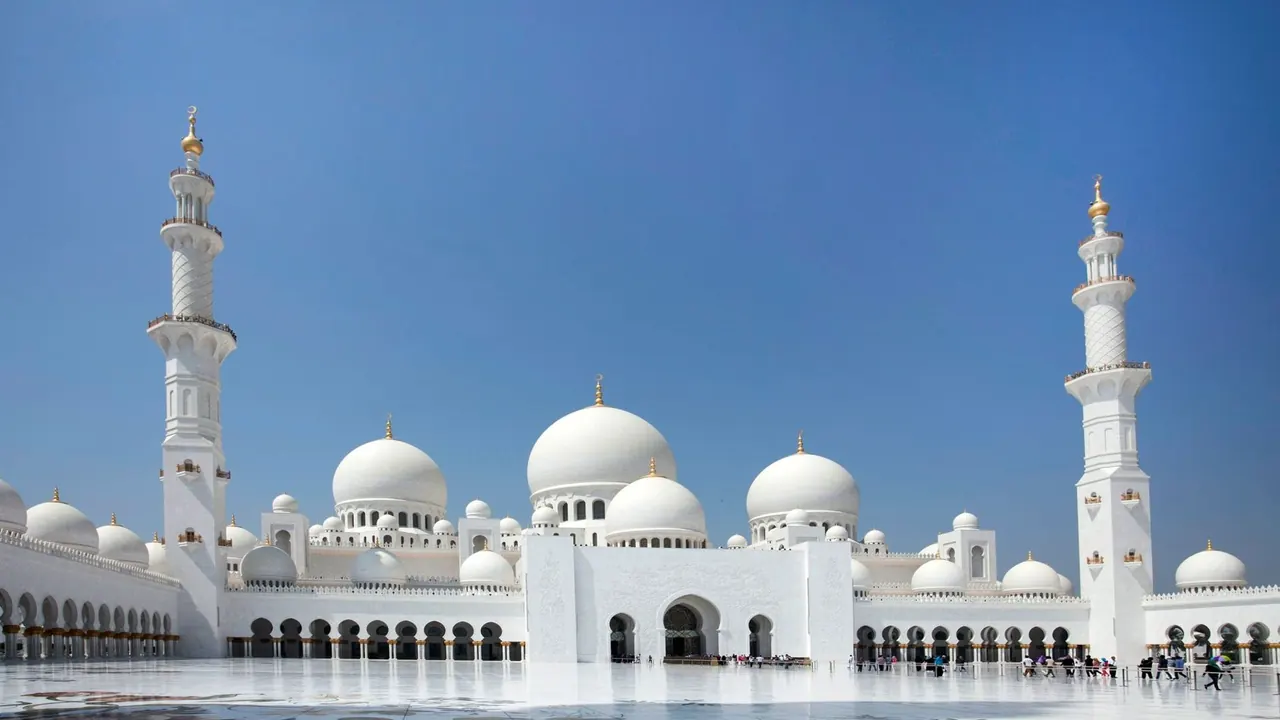
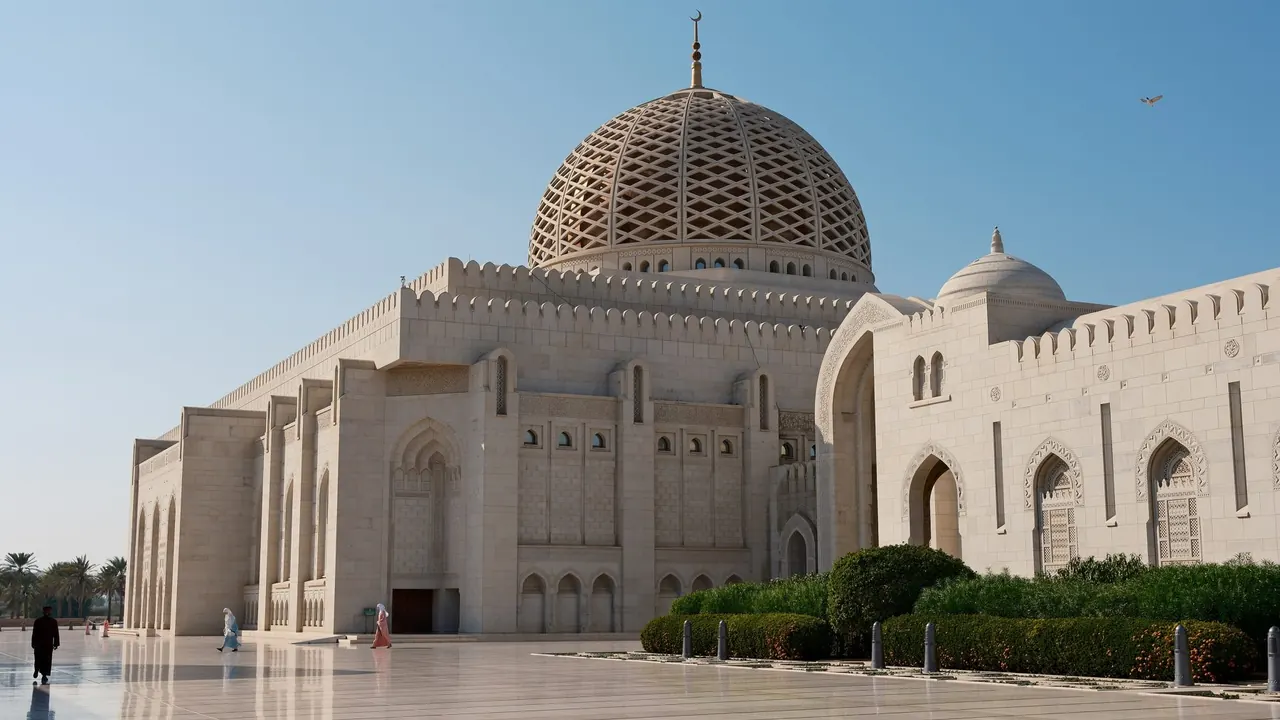
Photos: Abu Dhabi by Jeffry Surianto, Pexels License; Muscat by Alli Khalil, CC BY 4.0, cropped.
Abu Dhabi or Muscat?
Our verdict in twelve categories, each scored against the same fixed benchmark cities, and the climate month by month, so you can choose for your trip.
Choose Abu Dhabi for
- families
- nightlife
- food and drink
Abu Dhabi is the stronger pick for a winter family vacation or a resort stay built around a few big sights. The Yas Island parks, the Grand Mosque and the Louvre give it more to fill the days. It also has long, calm sandy beaches and more places to eat and drink in the evening.
Choose Muscat for
- nature and the outdoors
- day trips
- wellness
Travellers who want landscape and history beyond the city should lean towards Muscat. Behind it are the Hajar mountains, wadis and the old forts of the interior, and dolphins swim off the coast, so it offers far more outdoors and on day trips. Its quiet pace, frankincense souq and opera house suit a slower, more grown-up trip.
Scoreboard
Twelve categories on one fixed scale from 0 to 100. The shaded stretch is the gap between the two.
Your match
Pick a travel style or drag the sliders, and both match scores follow your weighting.
Too close to call, level with your weighting
Wins on families and nightlife with your weighting.
Wins on nature and the outdoors and day trips with your weighting.
What matters to you?
Category by category
What the scores mean for a trip.
Beaches & swimming
Abu Dhabi has the better beaches for plain, easy swimming. The pale sand runs into shallow, flat water, from the lifeguarded Corniche in town to the wide, dune-backed natural beach on Saadiyat where turtles nest. The appeal is safety and space rather than scenery.
Muscat's shore is more varied but matters less to a stay. It has the long strand at Qurum, small rocky coves at Qantab and Yiti, and boat trips to cliff beaches and to the Daymaniyat Islands for snorkelling over coral. Its sea, on the Gulf of Oman, is also a little warmer in winter.
Food & drink
Abu Dhabi has more range. Its hotel kitchens cook at a high level and the Friday brunch is a weekend ritual. The older downtown blocks add cheap Keralan, Lebanese and Iranian cooking.
Muscat has the same South Asian canteens around Ruwi and Mutrah but fewer good restaurants overall. Its draw is Omani food itself: shuwa, grilled kingfish and halwa with cardamom coffee, eaten sitting on the floor at a handful of traditional places. In both cities, wine means a hotel.
Culture & sights
Both cities centre on a great white-marble mosque. Abu Dhabi adds the Louvre Abu Dhabi, the other museums on Saadiyat and the ceremonial halls of Qasr Al Watan, which make a heavier list of major visits. Its old town, though, is little more than Qasr Al Hosn.
Muscat has fewer headline sights but a stronger sense of place. There is the walled cove of Old Muscat with its Portuguese-era forts, the National Museum and Bait al Zubair nearby, and the merchants' houses facing the dhows at Mutrah. Two or three days covers it.
Nightlife
Neither suits a big night out, as drinking happens inside licensed hotels in both. Abu Dhabi at least has groups of rooftop and beach bars, pubs and clubs on Yas and Al Maryah, and race and concert weekends that fill them.
Muscat is quieter still, with a few hotel lounges and clubs that come alive only on Thursday and Friday. Its real evening life is sober: families walking the Mutrah corniche and a seat at a shisha café.
Nature & outdoors
Here Muscat is far ahead. The Hajar mountains rise straight behind the city, and in a day you can wade through the pools of Wadi Shab, look into the Bimmah sinkhole or walk the rim of Jebel Akhdar. At sea you can dive with turtles in the Daymaniyat reserve, and boats find dolphins most mornings.
Abu Dhabi is flat sand and lagoon. Its best outings are kayaking the mangrove channels at Jubail, a dune drive in the desert, or the drive to the bare ridge of Jebel Hafeet near Al Ain.
Day trips
Muscat has the richer interior. Nizwa has its great fort and Friday livestock auction. Nearby are the mud-brick walls of Bahla, the painted rooms of Jabrin Castle and the hanging village of Misfat, and down the coast Sur still builds dhows. All of them need a car or a driver.
Abu Dhabi has three good outings and little beyond them: Dubai's skyline and creek, the palm oases and forts of Al Ain, and Sharjah's museums and heritage quarters.
Good for families
Abu Dhabi is one of the easiest family destinations in the region. The Ferrari, Warner Bros, water and marine parks are close together on Yas Island, and many resorts are built around children's clubs and shallow pools.
Muscat is safe and relaxed with children but has no theme park. Days there are made of calm hotel beaches, dolphin boats, the lakes and play areas of Qurum park, and the aquarium and snow park in the Seeb mall. Both cities keep children indoors from May to September.
Getting around
Both cities are built around the car, neither has a metro, and walking is limited to short stretches in the cool evenings. The difference is in how you get about. In Abu Dhabi the sights are spread over separate islands, and taxis and ride-hailing handle most trips easily. Muscat stretches for 50km along the coast and most outings head inland, so a hire car makes more sense there.
Shopping & style
For brands and luxury, Abu Dhabi has the edge. It has big malls, the luxury houses on Al Maryah Island, and dates, oud and carpets at the Central Market and Qaryat al Beri.
Muscat's malls are ordinary, but Mutrah Souq has more atmosphere. Its covered lanes smell of frankincense, and you can buy silver, khanjar daggers and perfume oils without hard selling.
Affordability
Muscat is somewhat easier on the budget. Local canteens and fuel are cheap and the mosque and forts charge little, though its beach resorts are expensive and a hire car is an extra cost.
Abu Dhabi's chain hotels can be good value outside the peak weekends. Drinks, hotel brunches and theme park tickets, however, make a family resort trip there costly.
Live music & performing arts
Muscat has the one serious stage between the two cities, the Royal Opera House, with touring opera, ballet, orchestras, jazz and Arab music stars from autumn to spring. Abu Dhabi has no opera house or resident orchestra. It relies on arena shows on Yas Island, the spring Abu Dhabi Festival and occasional concerts on Saadiyat.
Wellness & relaxation
Both cities offer rest through resort spas with hammam rooms, but Muscat is the better place to slow down. The city is low-rise and uncrowded, the resorts in its coves offer frankincense treatments, and the warm springs at Nakhal and Rustaq make an outing. Abu Dhabi's palace hotels and Saadiyat resorts do long pool days well, but outside them the city is built around the car and is not especially restful.
When should you go?
Pick your month. The climate figures are measured averages, not a forecast.
Abu Dhabi in July
Muscat in July
Daytime high, °C
Rainfall in the month, mm
Where the figures come from
Abu Dhabi's temperatures are measured 26 km from the centre, at Abu Dhabi International Airport.
Abu Dhabi has no rain gauge within 25 km of the centre, so its rainfall comes from a gridded climate dataset read at the city rather than from a gauge further away.
Muscat's sunshine is measured 32 km from the centre, at Seeb, International Airport.
Temperature and rainfall are climate normals, averaged over the years shown. Abu Dhabi: 1991-2020 normals, Abu Dhabi International Airport (25.7 km from centre). Muscat: 1991-2020 normals, Qaboos Port (3.4 km from centre).
Both cities are best in winter. From November to March the days are warm rather than hot, which is right for beaches and sightseeing, and the sea stays pleasant. Muscat's water holds at around 24°C through the winter, while Abu Dhabi's drops to 21°C in February. Rain is rare in both. Muscat gets a few light showers in November, December and June.
Abu Dhabi heats up sooner and gets hotter. Highs pass 40°C in May and reach 44°C in August, when the sea is too warm to cool you off and life moves indoors. Muscat peaks earlier, at 37°C in May and June, and stays hot until September, so walking and hiking are for early mornings only. April and October are still workable in Muscat but already hot in Abu Dhabi.
Which traveller are you?
On a family trip with children, Abu Dhabi is the clear choice. The Yas Island theme parks sit close together, many resorts are designed around children and the calm, shallow sea makes swimming easy. Muscat has dolphin boats and coves but no big parks.
For an outdoors trip, choose Muscat. Mountains rise straight behind the city, and Wadi Shab's pools and the terraces of Jebel Akhdar are within reach. The Daymaniyat Islands have diving with turtles. Abu Dhabi's flat land offers little beyond mangrove kayaking and dune drives.
On a food and nightlife trip, Abu Dhabi does better, though neither is a party city. Its hotel kitchens, Friday brunches and bars on Yas and Al Maryah give far more choice in the evening than Muscat, where nights out are few and quiet.
Before you go
| Measure | Abu Dhabi | Muscat |
|---|---|---|
| Official language | Arabic | Arabic |
| Currency | UAE Dirham (AED) | Rial Omani (OMR) |
| Sockets | CG220 V, 50 Hz | CG240 V, 50 Hz |
| Driving side | Right | Right |
| Time zone | UTC+4 | UTC+4 |
| Emergency number | 112 | 968 |
| Elevation | 14 m | 69 m |
| Main airport | Zayed International Airport (AUH)26 km from centre147 non-stop destinations | Muscat International Airport (MCT)31 km from centre83 non-stop destinations |
By the numbers
| Measure | Abu Dhabi | Muscat |
|---|---|---|
| City population | 1,570,000 | 1,421,409 |
| People per km² | 1,615 | 406 |
| Museums within 10 km | 3 | 10 |
| UNESCO World Heritage sites within 50 km | 0 | 0 |
| Swim season, months above 21 °C | 11 months | 12 months |
Where else could you go?
Every comparison below shares a destination with this one, so you can follow Abu Dhabi or Muscat somewhere new.