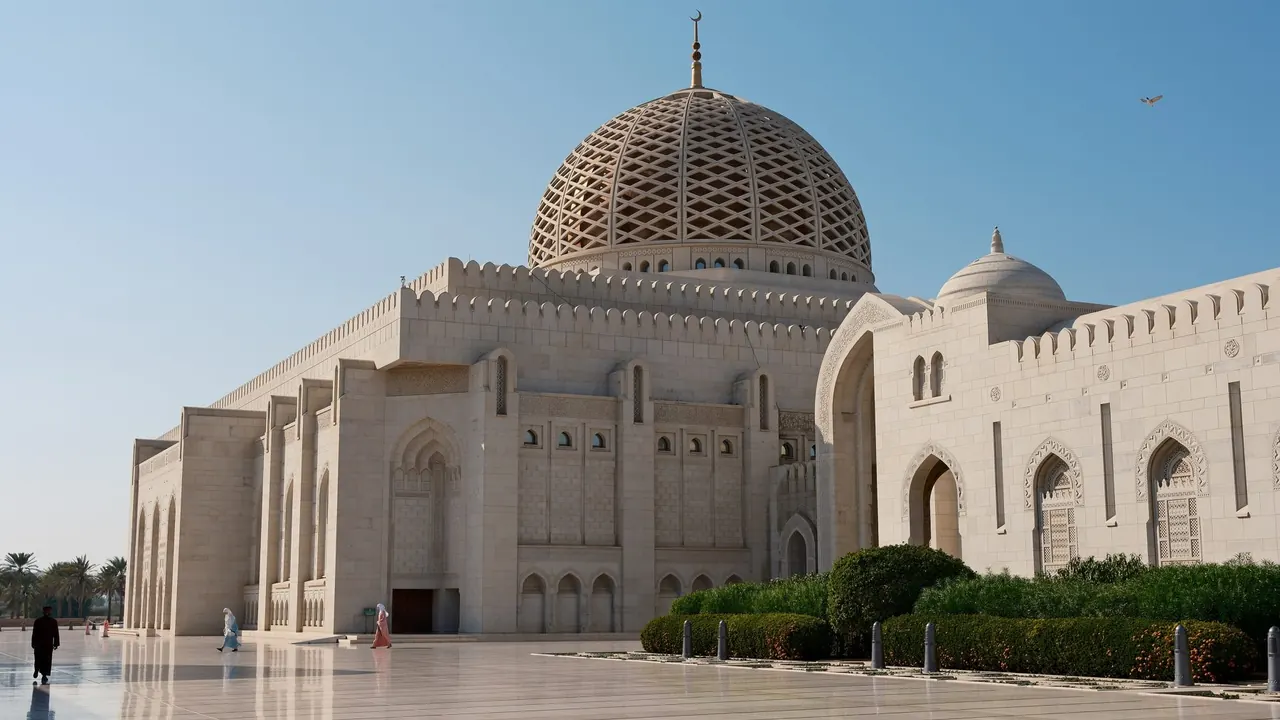
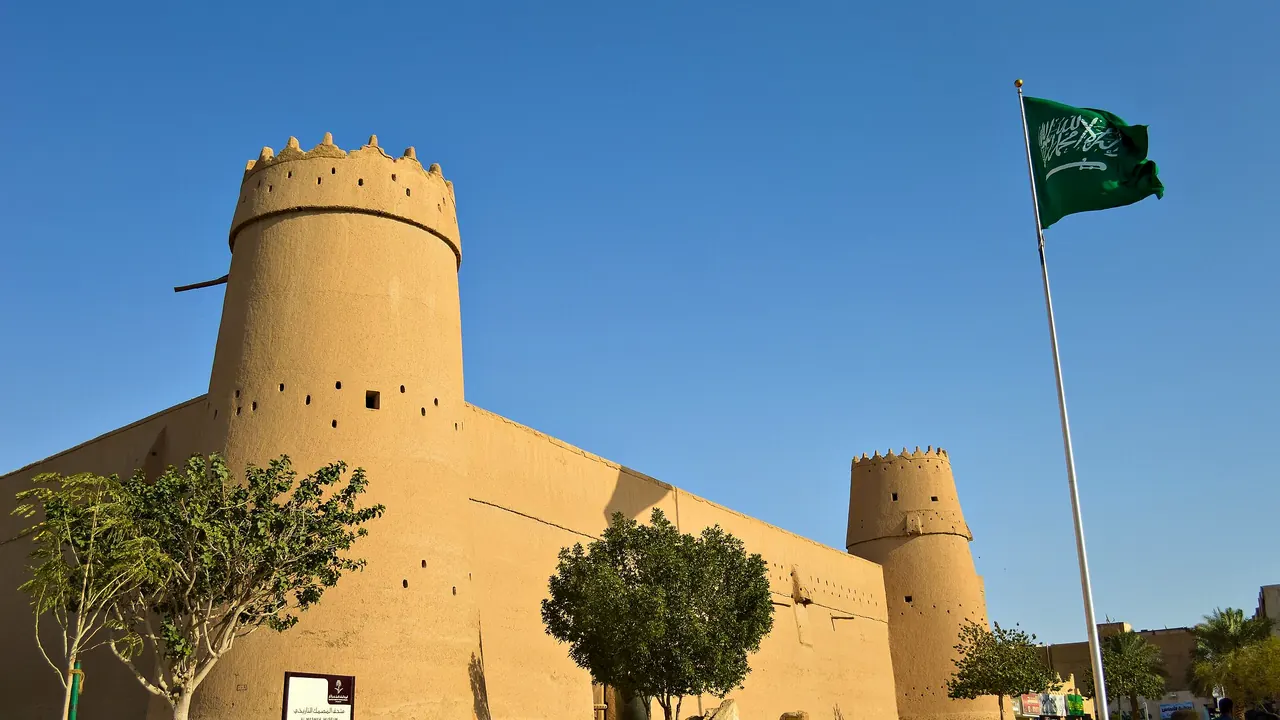
Photos: Muscat by Alli Khalil, CC BY 4.0, cropped; Riyadh by Francisco Anzola, CC BY 2.0, cropped.
Muscat or Riyadh?
Our verdict in twelve categories, each scored against the same fixed benchmark cities, and the climate month by month, so you can choose for your trip.
Choose Muscat for
- beaches
- nature and the outdoors
- day trips
Muscat suits travellers who want the sea and mountains as much as the city. Its days split between sandy beaches and quiet coves, boat trips to dolphins and coral, and drives into the Hajar to wadis, forts and mountain villages. It is also the calmer place to rest, with resort spas along the coast and an opera house season for the evenings.
Choose Riyadh for
- shopping
- getting around
- food and drink
Riyadh makes more sense for someone after a modern Gulf capital, with its big shopping malls, late-night coffee culture and the restored mud-brick citadel at Diriyah. The metro makes it a little easier to get around, and the luxury malls and oud perfume houses are a stronger draw than anything Muscat sells. It has no coast, though, and very little to see in a day out of town.
Scoreboard
Twelve categories on one fixed scale from 0 to 100. The shaded stretch is the gap between the two.
Your match
Pick a travel style or drag the sliders, and both match scores follow your weighting.
Wins on beaches and nature and the outdoors with your weighting.
Wins on shopping and getting around with your weighting.
What matters to you?
Category by category
What the scores mean for a trip.
Beaches & swimming
This is the widest gap between the two cities. Muscat has the warm Gulf of Oman on its doorstep, with the long sand of Qurum where locals gather at dusk, rocky coves at Al Bustan and Yiti, and boats out to secluded beaches and the coral around the Daymaniyat Islands.
Riyadh sits on the inland plateau, roughly 400km from the Gulf. Swimming there means a hotel pool, a resort day pass or a water park. If you want the sea from Riyadh, you need a separate trip to the coast.
Food & drink
Riyadh comes out a little ahead, mostly because eating out is the centre of its social life. Late dinners of kabsa and mandi are served on shared platters, and its coffee culture is a real speciality, from cardamom coffee with dates to the specialty roasters of Olaya. There is no alcohol anywhere in the city.
Muscat's own cooking, with shuwa, majboos and grilled kingfish, is harder to find, because few restaurants serve it. Most good everyday eating is in the South Asian and Lebanese canteens of Ruwi and Mutrah, and the early fish market is worth the visit. Wine is available, but only in the big hotels.
Culture & sights
Both cities take two or three days to see, but Muscat's sights have a better setting. The Sultan Qaboos Grand Mosque is the single most striking building in either city. Old Muscat's walled cove, with its Portuguese-era forts and the palace, and the Mutrah corniche, with merchants' houses facing the dhows, are lovely places to walk.
Riyadh's high point is At-Turaif in Diriyah, the UNESCO-listed mud-brick birthplace of the Saudi state, above the palms of Wadi Hanifah. Masmak Fort and the National Museum fill a good day in the centre. Beyond those, the city is mostly towers and highways.
Nightlife
Neither city is for a night out in the usual sense. In Muscat, a drink is possible in hotel lounges and a few hotel clubs, which fill with expatriates at the weekend. Riyadh has no alcohol at all, but it stays up much later, with coffee shops, dessert cafés and entertainment zones full of families and friends past midnight. It also has occasional big festivals and alcohol-free club nights, while Muscat's evenings are quieter strolls along the corniche and shisha cafés.
Nature & outdoors
Muscat's setting is dramatic. The bare Hajar mountains drop straight into the sea in cliffs and inlets, Wadi Shab and the Bimmah sinkhole are an easy drive down the coast, and the terraced gardens of Jebel Akhdar are about two hours inland. At sea there are spinner dolphins, kayaking and diving with turtles in a protected reserve.
Riyadh's outdoors is desert. The Edge of the World escarpment is the standout, a long four-wheel-drive trip away, and there are red dunes for quad biking and winter camps under the stars. Wadi Hanifah gives a green corridor for walking and cycling, but there are no mountains and nothing on the water.
Day trips
Muscat makes a far better base for day trips. Nizwa's round fort and Friday livestock market, the UNESCO-listed fort at Bahla, the painted ceilings of Jabrin and the hanging village of Misfat al Abriyeen all fit into a day by car. So does the dhow-building town of Sur on the coast.
From Riyadh, the main outing to another town is Ushaiger's restored mud-brick village, often paired with old Shaqra. Other excursions head into the desert, and the kingdom's other cities are a flight away.
Good for families
Both cultures welcome children, but Muscat gives families more to do outdoors. There are calm hotel beaches, dolphin trips in the morning, snorkelling in shallow coves and the lakes of Qurum park. For hot days, the mall at Seeb has an aquarium tunnel and an indoor snow park.
Riyadh's family life is mostly indoors and late at night: amusement parks and ice rinks inside the malls, a zoo, and camel rides at desert camps for older children. In both cities, summer heat and long car journeys are the main problems, so winter is the time to bring children.
Getting around
Both cities are built for the car, but Riyadh is easier without one. Its driverless metro runs along Olaya, King Abdullah Road and out to the airport, and ride-hailing covers the last stretch to each sight.
Muscat spreads about 50km along the coast with no real centre and buses of little use to a visitor, so hiring a car is the usual answer. The good news is that its roads are easy to drive, and you need a car anyway for the interior. On foot, you are limited to Mutrah's corniche and Old Muscat in one city, and the old centre and Diriyah in the other.
Shopping & style
Riyadh is the better shopping city. The luxury floors of Kingdom Centre and Al Faisaliah and the big northern malls carry every international label, and its perfume houses specialise in oud and Arabian scents. Souq Al Zal gets busy in the evening with carpets, antiques and coffee pots.
Muscat has one strong place to shop, Mutrah Souq. It is a calm, frankincense-scented maze where silverwork, khanjars and perfume oils make the best souvenirs. Away from the souq there are only suburban chain-store malls.
Affordability
The two cost roughly the same, with Muscat a touch easier on the budget. In both, the main expense is the room. Muscat's beach resorts are priced like a fashionable Mediterranean coast, but rates drop in the hot months. Riyadh's hotels are priced for business travellers, especially around Olaya.
Cheap South Asian canteens and cheap fuel help in both places. Riyadh's metro fares and free or low-cost museums save money, whereas in Muscat a hire car is part of the budget, and alcohol is costly and only served in hotels.
Live music & performing arts
Muscat has a steadier programme thanks to the Royal Opera House Muscat. From autumn to spring it hosts touring opera, ballet, orchestras and Arab music stars in a grand hall, so a visit in season has a good chance of catching something.
Riyadh's performances come in bursts. In winter there are big arena concerts and outdoor festivals, and the drum-and-sword ardah appears at national celebrations. It has no resident opera or orchestra season.
Wellness & relaxation
Muscat is much the better place to slow down. The city is low-rise, quiet and unhurried, and the resort spas in the coves south of the centre offer frankincense treatments, hammam rituals and long pool days. The warm springs at Nakhal and Rustaq give a simpler, local kind of bathing.
Riyadh is hot, sprawling and full of traffic. Its spas are inside the big hotels, often with separate facilities for men and women. The most restful thing on offer is a night at a desert camp or a winter evening in the palm groves of Diriyah.
When should you go?
Pick your month. The climate figures are measured averages, not a forecast.
Muscat in July
Riyadh in July
Daytime high, °C
Rainfall in the month, mm
Where the figures come from
Muscat's sunshine is measured 32 km from the centre, at Seeb, International Airport.
Temperature and rainfall are climate normals, averaged over the years shown. Muscat: 1991-2020 normals, Qaboos Port (3.4 km from centre). Riyadh: 1991-2020 normals, Riyadh (8.9 km from centre).
From November to March both cities are pleasant. Muscat is the softer of the two, with highs around 24°C in January and a sea that never drops much below swimming warmth, so beach days work right through winter. Riyadh is a little cooler then, around 21°C in January, and that is its season for walking Diriyah and the old centre. The desert nights get cold. Neither city gets much rain, though Riyadh sees a few wet days in March and April.
From May onwards the two part ways. Muscat reaches about 37°C, and the sea rises to around 30°C, warm as a bath, so the beach is for early mornings and evenings. Riyadh gets hotter still, around 43°C from June to August, and outdoor life simply stops. Both places are sunny all year. Muscat's best stretch runs from October to April, while Riyadh's window is the shorter run from November to March.
Which traveller are you?
For a beach and sun trip, Muscat is the only real choice. It has sand at Qurum, clear coves around Qantab and Yiti, and boat trips to snorkel the Daymaniyat Islands. Riyadh is hundreds of kilometres from any coast, so swimming there means a hotel pool.
On an outdoors trip, Muscat wins easily. You can wade the pools of Wadi Shab, walk the terraces on Jebel Akhdar, kayak the coves and dive with turtles. Riyadh has the Edge of the World escarpment and dune driving, but little else once you leave town.
For a shopping trip, Riyadh is the stronger pick. Its luxury floors at Kingdom Centre and Al Faisaliah, its perfume houses selling oud and Souq Al Zal for carpets and antiques go well beyond Muscat. There, Mutrah Souq is charming but the malls are ordinary chain stores.
Before you go
| Measure | Muscat | Riyadh |
|---|---|---|
| Official language | Arabic | Arabic |
| Currency | Rial Omani (OMR) | Saudi Riyal (SAR) |
| Sockets | CG240 V, 50 Hz | G60 Hz |
| Driving side | Right | Right |
| Time zone | UTC+4 | UTC+3 |
| Emergency number | 968 | 112 or 911 |
| Elevation | 69 m | 612 m |
| Main airport | Muscat International Airport (MCT)31 km from centre83 non-stop destinations | King Khalid International Airport (RUH)36 km from centre117 non-stop destinations |
By the numbers
| Measure | Muscat | Riyadh |
|---|---|---|
| City population | 1,421,409 | 7,009,100 |
| People per km² | 406 | 3,898 |
| Museums within 10 km | 10 | 5 |
| UNESCO World Heritage sites within 50 km | 0 | 1 |
| Swim season, months above 21 °C | 12 months | - |
Where else could you go?
Every comparison below shares a destination with this one, so you can follow Muscat or Riyadh somewhere new.