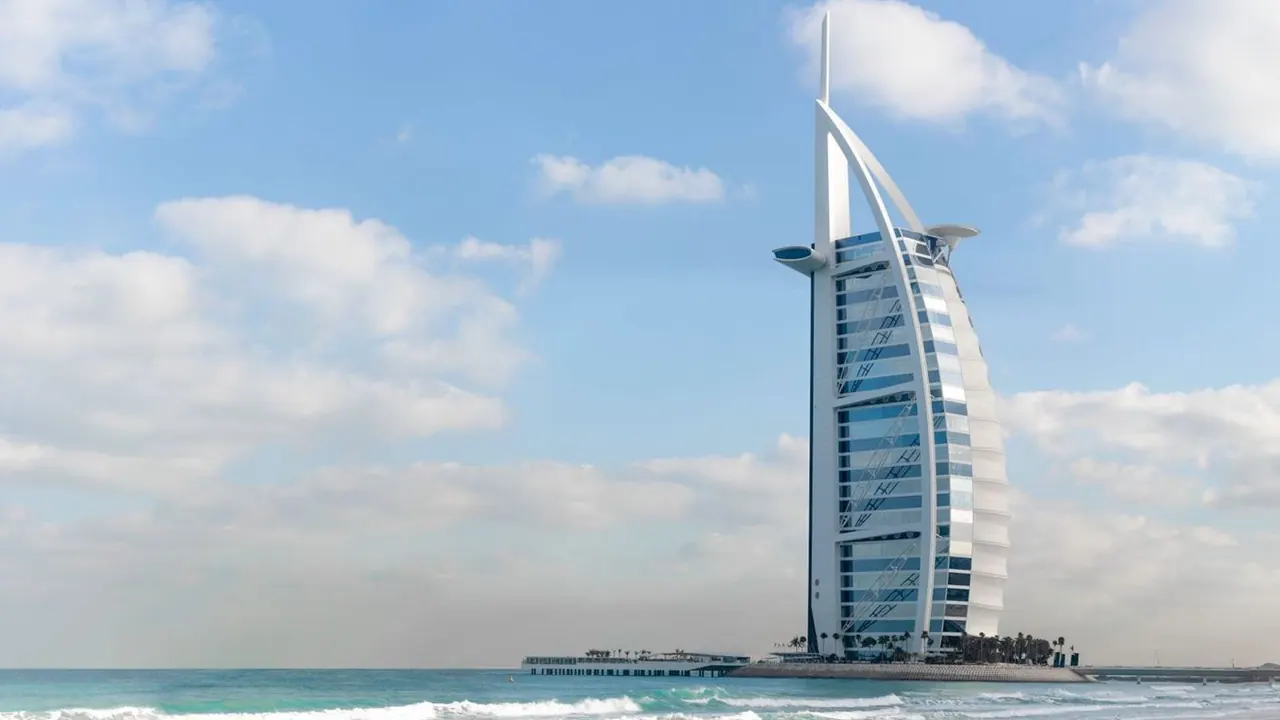
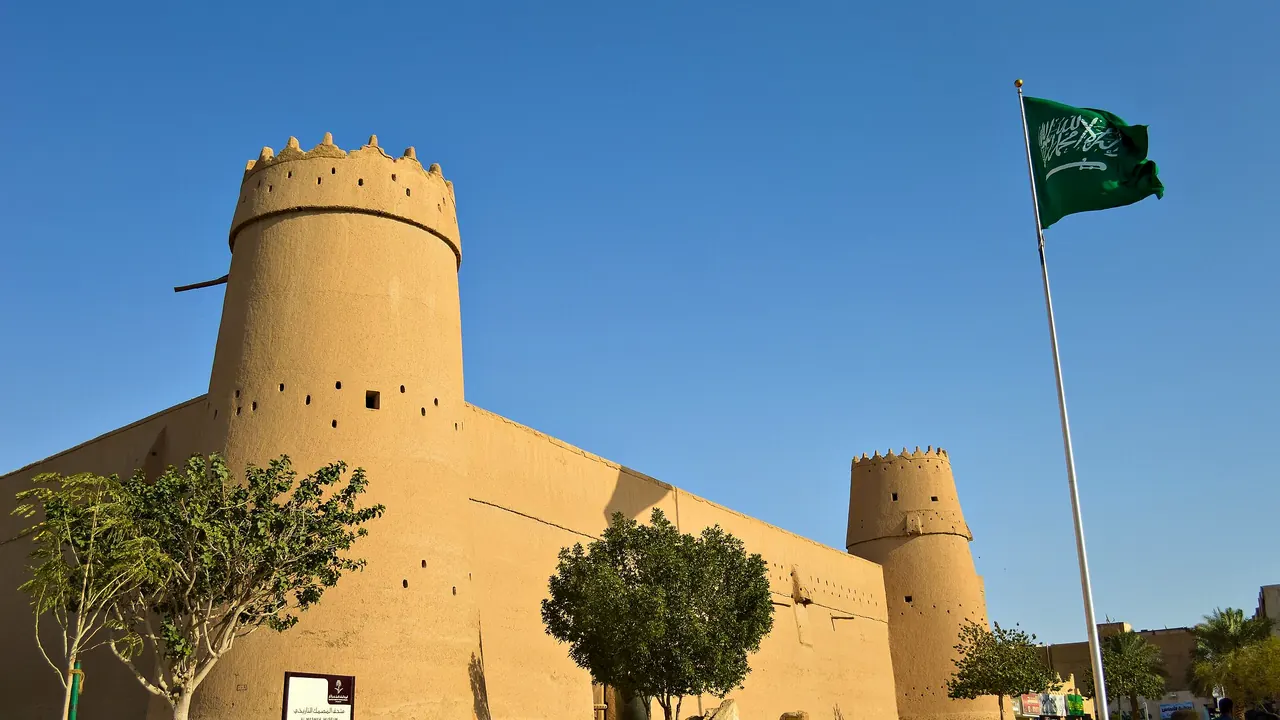
Photos: Dubai by Aleksandar Pasaric, Pexels License; Riyadh by Francisco Anzola, CC BY 2.0, cropped.
Dubai or Riyadh?
Our verdict in twelve categories, each scored against the same fixed benchmark cities, and the climate month by month, so you can choose for your trip.
Choose Dubai for
- beaches
- nightlife
- families
Dubai is the better choice for a sun-and-sand vacation with plenty to fill the evenings. It has a long beach coast, theme parks and water parks for children, huge malls, a wide range of food and licensed bars and clubs. Abu Dhabi, Sharjah and Al Ain are all within a day trip. It suits families, couples who want a resort stay and anyone who likes some glamour.
Choose Riyadh for
- culture and sights
- prices
- nature and the outdoors
Riyadh suits a different traveller: someone curious about Saudi Arabia itself rather than looking for a beach or a night out. Its heritage goes deeper, with the mud-brick citadel of Diriyah, Masmak Fort and a strong national museum. Its social life runs on coffee, shared Najdi platters and late family evenings without alcohol. It also costs somewhat less once the sights are paid for, though it needs the cooler months to be enjoyable.
Scoreboard
Twelve categories on one fixed scale from 0 to 100. The shaded stretch is the gap between the two.
Your match
Pick a travel style or drag the sliders, and both match scores follow your weighting.
Wins on beaches and nightlife with your weighting.
Wins on culture and sights and prices with your weighting.
What matters to you?
Category by category
What the scores mean for a trip.
Beaches & swimming
On beaches, the two cities could hardly be further apart. Dubai has a whole coastline of pale sand on clear, gentle Gulf water, from Kite Beach and the JBR strip to Umm Suqeim, where people swim beneath the Burj Al Arab. Many resorts on Palm Jumeirah also have their own private beaches.
Riyadh sits on the desert plateau, far from the sea, so swimming there means a hotel pool, a resort day pass or a water park. If you want the sea as well, you need a separate stay on the coast.
Food & drink
Dubai offers a much wider range. Its canteens in Deira, Karama and Al Satwa cook for the migrant communities, serving Keralan fish curry, Pakistani karahi and Iranian kebabs. At the other end are celebrity-chef dining rooms in DIFC and the Marina, and wine and cocktails are served in licensed hotel venues.
Riyadh is the place to eat Gulf home cooking. Najdi kabsa, mandi and jareesh come on large shared platters, often with floor seating in family sections. Cardamom coffee with dates is the real local strength. There is no alcohol, though, and less street food.
Culture & sights
Dubai's sights are mostly modern: the observation decks of the Burj Khalifa, the Museum of the Future and the towers seen at dusk. Its past survives in a small restored area along the Creek, the wind-tower houses of Al Fahidi and Al Shindagha.
Riyadh has more history to show. At-Turaif in Diriyah, the UNESCO-listed mud-brick citadel above Wadi Hanifah, was the first seat of the Saudi dynasty. Masmak Fort and the National Museum tell the story of Arabia from prehistory onwards. Each city's sights fill two or three days.
Nightlife
Dubai has a large, polished night scene, though it all happens in hotels and licensed venues. It includes DJ clubs, rooftop bars above Sheikh Zayed Road, beach clubs on the Palm that carry on into the evening, and the long weekend brunch.
Riyadh also stays up late, but with no alcohol there are no bars or conventional clubs. Nights are spent in coffee shops, dessert cafés and open-air entertainment zones full of families, with the occasional big festival or alcohol-free club night.
Nature & outdoors
Both cities are surrounded by desert with red dunes for driving and camping, and summer heat stops nearly all outdoor activity in both. The difference is in kind. Dubai has water sports, such as kitesurfing and paddleboarding, and the Hajar mountains at Hatta, where you can kayak and ride bike trails.
Riyadh has no sea or mountains. Instead it has the Edge of the World, a sheer limestone cliff on the Tuwaiq escarpment, and the palm-lined walking and cycling corridor of Wadi Hanifah.
Day trips
Dubai has three strong day trips. Abu Dhabi has the Sheikh Zayed Grand Mosque and the Louvre on Saadiyat Island. Sharjah, right next door, has its heritage quarter and Museum of Islamic Civilization, and Al Ain has UNESCO-listed oases and forts.
From Riyadh the choice is smaller. The restored village of Ushaiger and the old Najdi houses of Shaqra are about two hours away. After that, outings are mostly into the empty desert.
Good for families
Dubai is built around family attractions. It has Legoland near Jebel Ali, water parks on the Palm, the aquarium in the Dubai Mall and indoor snow at the Mall of the Emirates. Its calm, shallow sea and resort kids' clubs make beach days easy.
Riyadh is just as welcoming to children, who stay out late with their parents. The choice is narrower, though: mall amusement parks, ice rinks, a zoo and desert camps for older children. There is no beach, and almost every outing needs a car.
Getting around
Both cities were built around the car and both have a driverless metro, but Dubai's is easier for a visitor. Its Red Line runs in one straight line from the airport through Downtown to the Marina. Add the Marina tram and the abras crossing the Creek, and a few areas, such as the Marina promenade and Al Fahidi, are pleasant on foot.
Riyadh's lines follow corridors like Olaya and King Abdullah Road, but its sights are spread far apart, so most visitors rely on ride-hailing. Walking is practical only around Masmak Fort and Diriyah, and only in winter.
Shopping & style
Dubai is one of the world's big shopping destinations. The Dubai Mall and the Mall of the Emirates have whole wings of designer flagships and a deep range of watches and jewellery. In Deira, the Gold Souk and the spice and perfume souks keep the older trade alive.
Riyadh's malls, led by the Kingdom Centre and Al Faisaliah, carry the international brands on a smaller scale. Its own specialities are abayas and oud from perfume houses. For carpets, daggers and brass coffee pots, Souq Al Zal is busiest in the evening.
Affordability
Neither city is cheap, but Riyadh is the slightly easier one on the budget. Dubai's winter resort rates, headline attractions and theme parks add up quickly, and alcohol is among the dearest anywhere. The savings come from Deira's canteens and the much lower hotel rates in summer.
Riyadh's hotels are priced for business travellers, especially around Olaya. Its main museums and heritage sites are free or modest, though, and simple local eateries and metro fares cost little.
Live music & performing arts
Neither city has a resident orchestra, opera company or theatre district, but Dubai has a steadier programme. The dhow-shaped Dubai Opera hosts touring ballet, musicals and orchestras through the cooler months, alongside arena tours and jazz in hotel lounges.
Riyadh's live performance comes in short seasons: big winter concerts and outdoor festivals, plus the ardah sword dance at national celebrations. Outside those times, there is little to see.
Wellness & relaxation
Dubai's resort spas are the more serious place to unwind. On Palm Jumeirah and along the Jumeirah coast they fill whole floors with hammam rituals, Moroccan scrubs, hydrotherapy pools and long massage menus. Between treatments you can lie on the hotel's private beach, so a few slow days in one resort becomes the whole point of the stay.
Riyadh's hotel spas have a shorter list of massages, hammam treatments and pools, usually with separate facilities for men and women, and there is no sea to rest beside. Like Dubai, it has no bathing custom of its own. Outside the hotels, the calmest moments are a night at a desert camp or a winter evening in the palm groves around Diriyah.
When should you go?
Pick your month. The climate figures are measured averages, not a forecast.
Dubai in July
Riyadh in July
Daytime high, °C
Rainfall in the month, mm
Temperature and rainfall are climate normals, averaged over the years shown. Dubai: 1991-2020 normals, Dubai International Airport (3.3 km from centre). Riyadh: 1991-2020 normals, Riyadh (8.9 km from centre).
Both cities are best visited in winter, and both are hard going from May to September. Dubai is at its best from November to March, when the days are warm rather than hot and the sea sits around 23°C, which is ideal for swimming. By July and August, daytime highs reach 42°C and the water is as warm as a bath, so beach time shrinks to early mornings and evenings. Rain is rare and comes as a few light showers in winter.
Riyadh is inland on the plateau and stays cooler in winter, around 21°C in January, with cold desert nights. That makes December to February the most pleasant time for walking around Diriyah and the old centre. Its summer is slightly fiercer, reaching 43°C from June to August under long hours of sunshine. The little rain it gets falls mostly in March and April, up to 24mm a month.
Which traveller are you?
For a beach and sun trip, Dubai is the only real option. It has pale sand on a calm, shallow sea and resort beaches on Palm Jumeirah. Riyadh is about 400km from any coast, so swimming there means a hotel pool.
On a food and nightlife trip, Dubai offers far more: cheap Keralan and Iranian canteens in Deira, chef-led dining rooms, rooftop bars and big-name DJ clubs. In Riyadh, evenings mean coffee and dessert cafés because there is no alcohol at all.
On a culture and arts trip focused on history, Riyadh goes deeper. It has Diriyah's UNESCO-listed mud-brick citadel, Masmak Fort and the National Museum. Dubai is better if the plan is a ballet or musical at the Dubai Opera.
Before you go
| Measure | Dubai | Riyadh |
|---|---|---|
| Official language | Arabic | Arabic |
| Currency | UAE Dirham (AED) | Saudi Riyal (SAR) |
| Sockets | CG220 V, 50 Hz | G60 Hz |
| Driving side | Right | Right |
| Time zone | UTC+4 | UTC+3 |
| Emergency number | 112 | 112 or 911 |
| Elevation | 0 m | 612 m |
| Main airport | Dubai International Airport (DXB)7 km from centre293 non-stop destinations | King Khalid International Airport (RUH)36 km from centre117 non-stop destinations |
By the numbers
| Measure | Dubai | Riyadh |
|---|---|---|
| City population | 3,944,751 | 7,009,100 |
| People per km² | - | 3,898 |
| Museums within 10 km | 14 | 5 |
| UNESCO World Heritage sites within 50 km | 0 | 1 |
| Swim season, months above 21 °C | 12 months | - |
Where else could you go?
Every comparison below shares a destination with this one, so you can follow Dubai or Riyadh somewhere new.