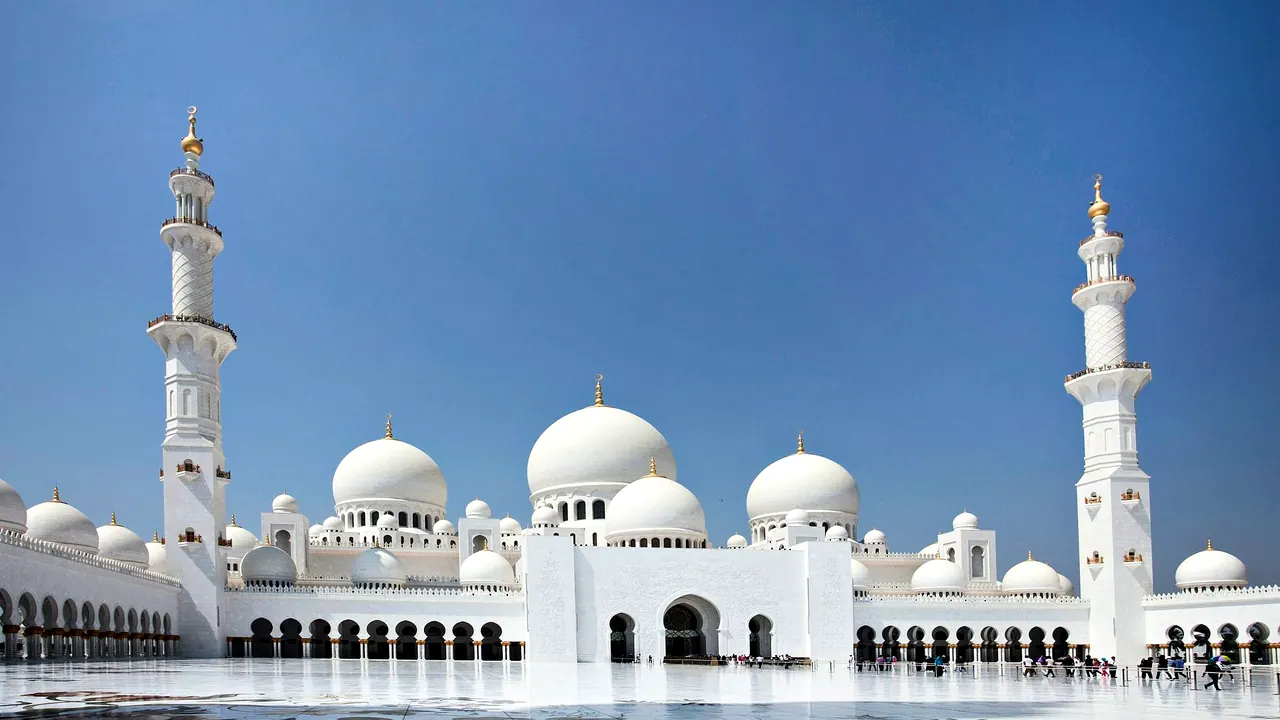
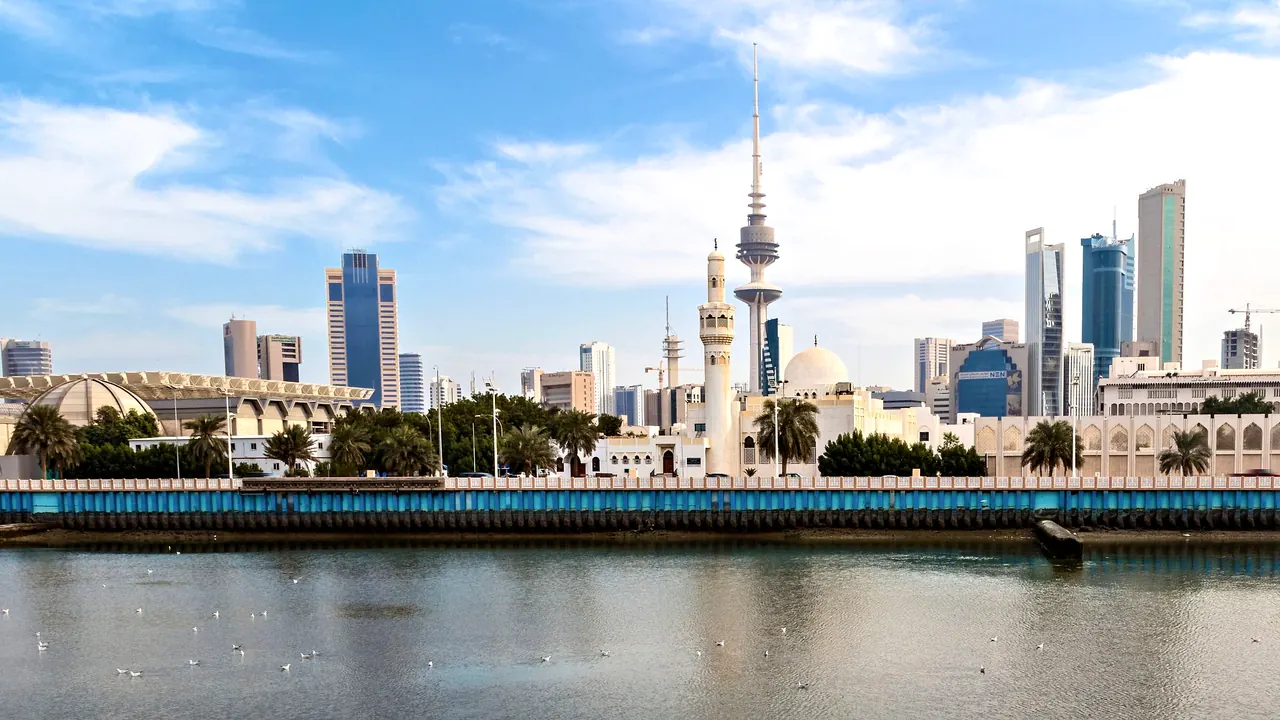
Photos: Abu Dhabi by Jeffry Surianto, Pexels License; Kuwait City by Tayssir Kadamany, Pexels License.
Abu Dhabi or Kuwait City?
Our verdict in twelve categories, each scored against the same fixed benchmark cities, and the climate month by month, so you can choose for your trip.
Choose Abu Dhabi for
- beaches
- families
- day trips
Abu Dhabi is the easier pick for a winter vacation built around sand, sun and a good hotel, and it works especially well with children. Saadiyat's wide beach, the Yas Island theme parks and resort spas fill the lazy days. The Grand Mosque and the Louvre give the trip real weight, a drink is there in the hotels if you want one, and Dubai and Al Ain are both within reach for a day out.
Choose Kuwait City for
- prices
- shopping
Travellers curious about everyday Gulf life, rather than resort life, may get more from Kuwait City. Evenings here are spent in coffee shops and among the grill houses of Souq Al-Mubarakiya. Its collections of Islamic art and calligraphy are excellent, and free museums keep costs a little lower. Go knowing that there is no alcohol anywhere, that the beaches are modest and that Failaka Island is the only real trip out of town.
Scoreboard
Twelve categories on one fixed scale from 0 to 100. The shaded stretch is the gap between the two.
Your match
Pick a travel style or drag the sliders, and both match scores follow your weighting.
Wins on beaches and families with your weighting.
Wins on prices and shopping with your weighting.
What matters to you?
Category by category
What the scores mean for a trip.
Beaches & swimming
Abu Dhabi is a real beach city. Saadiyat Island has a wide natural strand backed by dunes where turtles nest, the Corniche puts lifeguarded sand at the edge of downtown, and many hotels front calm, shallow water that suits easy swimming through the winter.
Kuwait City has the Gulf along its whole length, but its public beaches from Shuwaikh to Messila are narrow and coarse, and the water is often hazy. Much local beach life takes place in private chalets and hotel clubs, and dress on public sand is conservative. A swim is a pleasant extra there, not a reason to book.
Food & drink
The two are close for eating, but they offer different things. Abu Dhabi is stronger at the top end: hotel dining rooms with international chefs, the Friday brunch ritual and wine with dinner in licensed venues. Emirati dishes take some finding, so most visitors eat Keralan, Lebanese or Iranian food in the older downtown blocks.
In Kuwait City, local cooking is easier to meet. Machboos, zubaidi fish and balaleet are served among the spice stalls of Souq Al-Mubarakiya, and the evenings revolve around coffee shops, both specialty coffee and cardamom gahwa. Since alcohol is banned, a meal there is about food and talk rather than drink.
Culture & sights
Abu Dhabi has the bigger sights. The white marble Sheikh Zayed Grand Mosque and the Louvre Abu Dhabi, with light falling through its perforated dome, are each worth the journey on their own, and Qasr Al Watan opens its ceremonial palace halls. The old town is thin, and the 18th-century fort of Qasr Al Hosn is the main survivor.
Kuwait City's appeal is quieter and more specialised. Dar al-Athar al-Islamiyyah and the Tareq Rajab Museum hold fine Islamic art and calligraphy, Sadu House keeps Bedouin weaving alive, and Utzon's National Assembly will interest architecture lovers. Kuwait Towers, with their mosaic spheres, are the city's emblem, but nothing here pulls visitors in the way Abu Dhabi's mosque and museum do, and two or three days cover it.
Nightlife
Abu Dhabi at least offers a night out. Licensed hotels run rooftop and beach bars, pubs and a few clubs, and Yas and Al Maryah islands come alive at weekends and around race nights. Kuwait has none of this, because alcohol is illegal even in hotels. What both cities share is a late evening culture of dinner, shisha and coffee. In Kuwait that is the whole night, carrying on past midnight along the waterfront and in the malls.
Nature & outdoors
Neither city has much landscape, but Abu Dhabi has more to do outside. You can kayak or follow boardwalks through the mangroves at Jubail and on the eastern side of the island, head out for dune drives within an hour or so, or make the trip to the limestone ridge of Jebel Hafeet near Al Ain.
Kuwait's outdoors is gravel desert and shoreline. Its best moments are seasonal: winter desert camping in the local style, and birdwatching at the Jahra Pools and Sabah Al-Ahmad Nature Reserve during the migrations.
Day trips
Abu Dhabi has three very different outings. Dubai's skyline and Deira souks lie about an hour and a half up the coast, Sharjah has the Emirates' most serious museums, and inland Al Ain offers palm oases, falaj channels and mud-brick forts, all part of a UNESCO site.
From Kuwait City there is really only Failaka Island, a ferry ride of about an hour and a half to Bronze Age and Hellenistic remains and a village scarred by the 1990 invasion. After that, Al Jahra's small Red Fort and the resort town of Al Khiran are minor extras.
Good for families
Abu Dhabi is one of the Gulf's great family destinations. On Yas Island the Ferrari-themed park, the Warner Bros world, a water park and a marine park sit a short hop apart, and resorts with shallow pools and kids' clubs face a calm sea.
Kuwait City is warm towards children, who are welcome in restaurants and parks late into the evening. The Scientific Center's aquarium and the dinosaur and science galleries of the Sheikh Abdullah Al-Salem Cultural Centre are excellent, but they make a few good days, not a week of thrills. Both cities move indoors in the heat and need a car for almost everything.
Getting around
Both cities are built for cars, with no metro, buses aimed at commuters and walking limited to the corniche in the cool months. Abu Dhabi is a little easier: its sights sit on separate islands linked by wide highways, but taxis and ride-hailing make each hop simple. In Kuwait City the sights stretch along the coast from the old centre to Salmiya, there are few comfortable pavements, and driving is fast and aggressive if you hire a car.
Shopping & style
Both cities do their serious shopping in big air-conditioned malls, and neither has a street of independent shops to browse. Abu Dhabi groups its luxury houses on Al Maryah Island, and its souks at Qaryat al Beri and Central Market are modern versions of the old idea.
Kuwait has the edge for a real old market. Souq Al-Mubarakiya's lanes sell gold, bisht cloaks, spices and oud, and Sadu House offers woven Bedouin textiles that make a more personal souvenir.
Affordability
Kuwait City is somewhat easier on the wallet. Its hotels are priced like business-city hotels, market food is cheap and most museums cost almost nothing, though taxis or a hire car add a steady daily cost.
In Abu Dhabi, rooms can be good value outside the winter peak, but much of what visitors come for is expensive: hotel drinks, Friday brunches, theme park tickets and resort dining. A family week on Yas Island is the costliest way to see either city.
Live music & performing arts
Neither has a rich stage calendar, and both go quiet in summer, but what they offer differs. Kuwait City has a true home for the arts, the Sheikh Jaber Al-Ahmad Cultural Centre, with an opera theatre that hosts Arab music stars and orchestral concerts. It also has an old theatre tradition, though the plays are performed in Arabic dialect.
Abu Dhabi has no opera house. Its strengths are big arena shows on Yas Island, especially around the Formula 1 weekend, and the spring Abu Dhabi Festival of visiting orchestras and dance companies.
Wellness & relaxation
Neither city has a public bathing tradition, but Abu Dhabi does resort rest well. The palace-style hotels and the Saadiyat beach resorts combine large spas and hammam rooms with long, quiet pool days on slow-paced islands. Kuwait's spas are inside business hotels, and the traffic and heat outside work against slowing down. A winter evening on the corniche is about as restful as it gets.
When should you go?
Pick your month. The climate figures are measured averages, not a forecast.
Abu Dhabi in July
Kuwait City in July
Daytime high, °C
Rainfall in the month, mm
Where the figures come from
Abu Dhabi's temperatures are measured 26 km from the centre, at Abu Dhabi International Airport.
Temperature and rainfall are climate normals, averaged over the years shown. Abu Dhabi: 1991-2020 (sunshine 1981-2010, rainfall 1981-2010) normals, Abu Dhabi International Airport (25.7 km from centre). Kuwait City: 1991-2020 normals, Kuwait International Airport (17.6 km from centre).
Both are winter destinations, but Abu Dhabi's winter is warmer and sunnier. January days there reach about 25°C and the sea holds near 22°C, so from October to April you can spend time on the beach as well as sightseeing, with only the odd shower. Kuwait City is noticeably cooler and greyer in the same months, with January highs around 19°C and the sea near 16°C. Most of its little rain falls between November and March. That is fine weather for the corniche and the souk, but too chilly for swimming.
Summer is harsh in both. From May to September, Abu Dhabi's heat drives life indoors and the sea becomes too warm to refresh. Kuwait is hotter still, close to 47°C in July. Kuwait's best swimming comes in the short gaps between the seasons, around April and from late October into November, when the water is warm and the air can still be borne.
Which traveller are you?
On a beach and sun trip, Abu Dhabi is the clear choice. Saadiyat's broad natural beach, the lifeguarded Corniche sand and the warmer winter sea give it a proper beach season. Kuwait's narrow, hazy shoreline is not why people go there.
On a family trip with children, Abu Dhabi again pulls ahead. Yas Island packs several major theme and water parks close together, and many resorts are designed around children. Kuwait welcomes families warmly and has excellent science museums, but much less to fill a week.
For a trip on a tight budget, Kuwait City stretches money a little further. Most museums are free or nearly so, market grills are cheap, and there is no expensive bar bill to tempt you. Abu Dhabi's brunches, drinks and theme park tickets add up quickly.
Before you go
| Measure | Abu Dhabi | Kuwait City |
|---|---|---|
| Official language | Arabic | Arabic |
| Currency | UAE Dirham (AED) | Kuwaiti Dinar (KWD) |
| Sockets | CG220 V, 50 Hz | CG240 V, 50 Hz |
| Driving side | Right | Right |
| Time zone | UTC+4 | UTC+3 |
| Emergency number | 112 | 112 |
| Elevation | 14 m | 16 m |
| Main airport | Zayed International Airport (AUH)26 km from centre97 non-stop destinations | Kuwait International Airport (KWI)17 km from centre106 non-stop destinations |
By the numbers
| Measure | Abu Dhabi | Kuwait City |
|---|---|---|
| Population | 1,570,000 | 2,989,000 |
| People per km² | 1,615 | - |
| Museums within 10 km | 3 | 6 |
| UNESCO World Heritage sites within 50 km | 0 | 0 |
| Swim season, months above 21 °C | 11 months | 8 months |
Where else could you go?
Every comparison below shares a destination with this one, so you can follow Abu Dhabi or Kuwait City somewhere new.
- Dubaivs Abu Dhabi
- Dohavs Abu Dhabi
- Manamavs Abu Dhabi
- Manamavs Kuwait City
- Muscatvs Abu Dhabi
- Riyadhvs Kuwait City