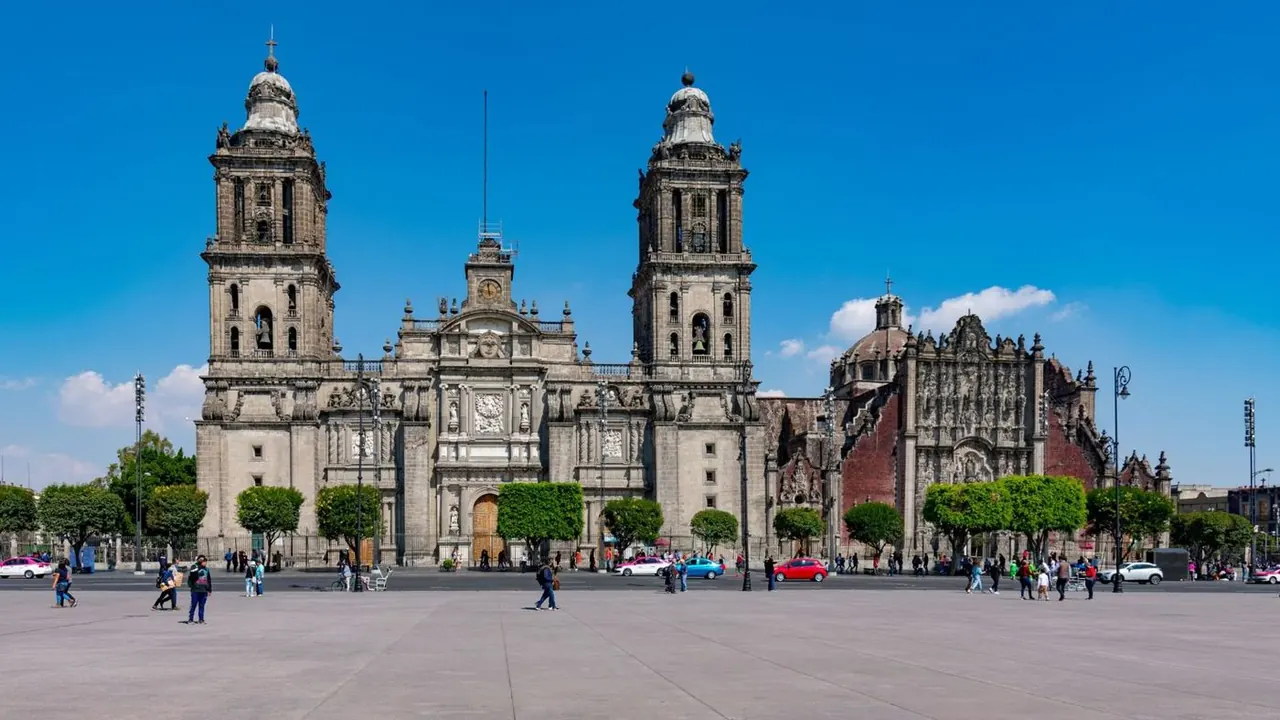
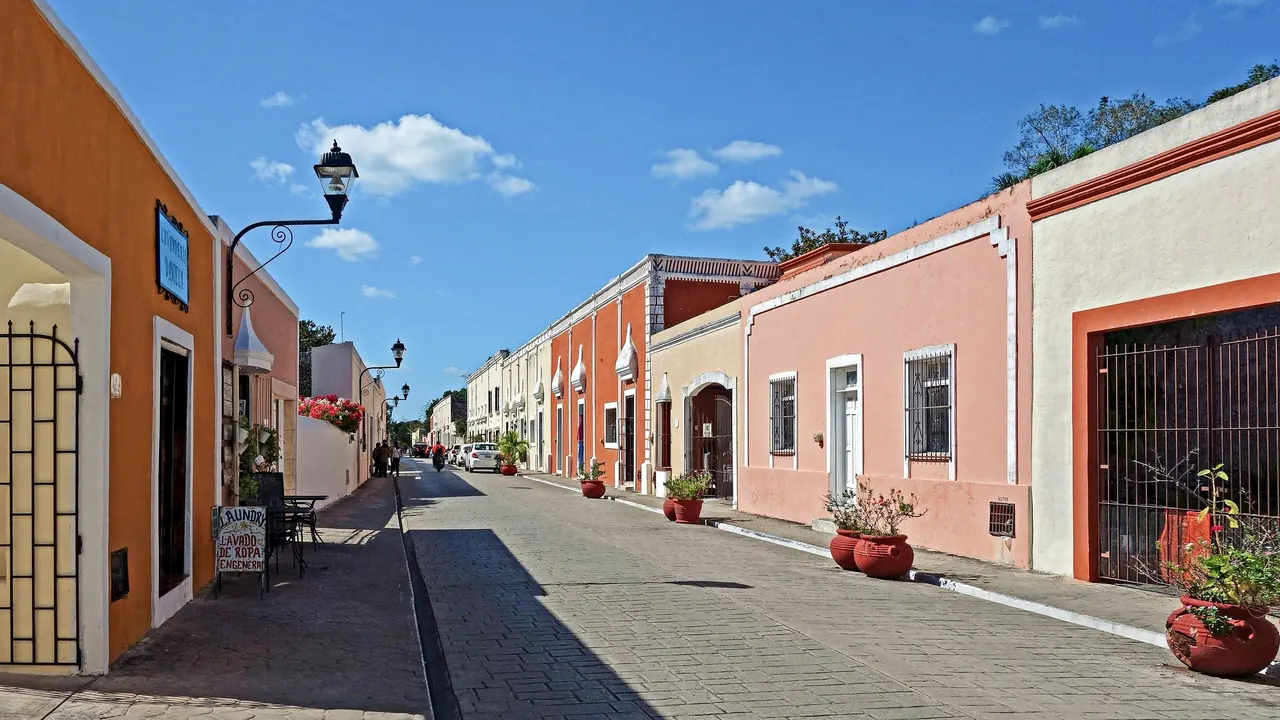
Photos: Mexico City by Oscar Dominguez, Pexels License; Valladolid, Mexico by Haakon S. Krohn, CC BY 4.0, cropped.
Mexico City or Valladolid, Mexico?
Our verdict in twelve categories, each scored against the same fixed benchmark cities, and the climate month by month, so you can choose for your trip.
Choose Mexico City for
- nightlife
- live music and the arts
- culture and sights
Mexico City is the choice for a trip built on eating, museums and late nights. It has the street stalls and markets of Roma and the Centro and the tasting menus of Polanco. Its sights run from the Templo Mayor and the Anthropology Museum to Bellas Artes and the Frida Kahlo house, and its evenings stretch from old cantinas to salsa halls. It suits travellers who want a big capital with a week's worth of depth, and who don't mind long rides across it.
Choose Valladolid, Mexico for
- beaches
- prices
- day trips
Valladolid works best as a small, slow base for the Yucatán. You can reach Chichén Itzá before the coach crowds, then fit in Ek Balam, Cobá and a cenote swim between ruins. The town itself is a few colonial streets and a quiet square, and evenings end early. Choose it if the ancient sites and the countryside are the point of the trip, and you are happy to trade restaurants and nightlife for calm and heat.
Scoreboard
Twelve categories on one fixed scale from 0 to 100. The shaded stretch is the gap between the two.
Your match
Pick a travel style or drag the sliders, and both match scores follow your weighting.
Wins on nightlife and live music and the arts with your weighting.
Wins on beaches and prices with your weighting.
What matters to you?
Category by category
What the scores mean for a trip.
Beaches & swimming
Neither city has a beach, but Valladolid gets you nearer to swimming that feels special. The Zací cenote is in the middle of town, and X'keken, Samulá and Suytun are a short cycle away. These are clear, cool limestone pools, some under cave roofs. El Cuyo and the Caribbean coast are around two hours off.
Mexico City sits on its high plateau with Acapulco hours away by road. Swimming means a hotel pool, and the sea has to be planned as a separate leg of the trip.
Food & drink
Mexico City is one of the reasons people travel to Mexico at all. Taco stands carve al pastor until late, and markets such as Medellín and La Merced lay out every chile and mole. Above that sit cantinas, seafood counters, pulquerías and some of the most admired tasting menus in the Americas. The only cost is crossing a huge city to reach them.
Valladolid cooks well within a narrow range. Look for its own longaniza and lomitos, cochinita pibil at the morning market and marquesitas in front of the cathedral in the evening. There is little beyond Yucatecan cooking and nothing at the fine-dining end.
Culture & sights
The gap here is wide. Mexico City layers the Aztec Templo Mayor, the Zócalo's cathedral and National Palace, the murals of Bellas Artes and the Anthropology Museum's Sun Stone in a single city, with Coyoacán and Xochimilco beyond. A week barely covers it.
Valladolid's sights are its painted colonial streets, the church of San Servacio and the Franciscan convent of San Bernardino at the end of the Calzada de los Frailes, plus the Casa de los Venados's folk art. Two days is enough, and the real draw lies outside town.
Nightlife
Mexico City's nights start late and run until morning. You can walk between cocktail bars and rooftop terraces in Roma and Condesa, drink in old Centro cantinas that bring snacks with each round, or dance in salsa and cumbia halls. There are electronic clubs too, and a large LGBTQ scene in the Zona Rosa.
Valladolid's evening is the main square: families strolling, the lit church, a mezcal or craft beer in a courtyard bar. It is pleasant and short, with no clubs. Most visitors are in bed early ahead of a dawn start for the ruins.
Nature & outdoors
The two are level outdoors, but the landscapes could hardly be more different. Mexico City offers altitude. There is pine-forest hiking at Desierto de los Leones and Ajusco, the volcano pass at Paso de Cortés, the crater lakes of Nevado de Toluca and the monarch butterfly reserves in winter. The catch is traffic on the way out and poor air in the dry season.
Around Valladolid the land is flat limestone forest, and the wonders lie underground in cenotes and caves reached by easy bike paths. Ría Lagartos adds flamingos and mangroves by boat. There are no hills, and summer middays are too hot for much.
Day trips
Both are excellent bases, and the difference is in what you go out to see. From Mexico City the outings mix ancient and colonial: Teotihuacan's pyramids, tiled Puebla and the Cholula pyramid, Cuernavaca, Tepoztlán and silver-town Taxco. Leaving through the traffic takes time.
Valladolid is built for Maya ruins. Chichén Itzá is close enough to reach at opening, before the coach crowds arrive, and Ek Balam and Cobá are nearby. Yellow Izamal and Río Lagartos fill other days. The roads are quiet but buses are sparse, so a hire car or driver helps.
Good for families
Mexico City has much more to keep children busy. Chapultepec alone holds the zoo, boating lakes and the hands-on Papalote museum. On top of that there is an aquarium in Polanco, trajinera boats at Xochimilco and lucha libre. Plan by neighbourhood, though, because traffic, crowded trains and the altitude tire small legs.
Valladolid is calmer and easier to manage, with an evening square to run about in. Older children love the cenote rope swings and climbing at the ruins. But nothing is built for children, and midday heat and long walks in full sun make a pool hotel essential.
Getting around
Mexico City has the edge because it has real transport. The colour-coded metro, Metrobús lanes, bike-share and cheap ride-hailing link walkable districts such as the Centro, Roma and Coyoacán. The distances are long, the trains packed at rush hour and the roads slow.
Valladolid's centre is a short, flat walk from the square to San Bernardino, and bikes take you to the nearer cenotes. The trouble starts with the sights outside town. Ek Balam, Cobá and Río Lagartos are awkward to reach without a car, taxi or tour.
Shopping & style
Mexico City gathers crafts from the whole country at La Ciudadela, so the Yucatán's work is only part of what's on offer. It adds the Lagunilla flea market, San Ángel's Saturday bazaar and the Sonora market's piñatas and herbs. For fashion there are the luxury houses on Masaryk, the grand department stores and the designer shops of Roma and Condesa.
Valladolid sells what the region makes: embroidered huipiles, hammocks, locally made leather sandals, honey and Xtabentún liqueur. It is good for a few souvenirs and little else.
Affordability
Both are cheap for daily life, but the costs fall in different places. In Mexico City, tacos, market lunches, the metro and many museums cost little. Staying and dining in Roma, Condesa or Polanco brings prices close to a European capital, so where you sleep decides the bill.
In Valladolid, courtyard guesthouses cost far less than rooms on the Caribbean coast, and bike hire and colectivos are cheap. Here the extra spending comes from the sights. Chichén Itzá's entry and a separate fee at every cenote add up over a few days.
Live music & performing arts
Mexico City has a full calendar. Bellas Artes hosts the national opera and symphony and the Ballet Folklórico, which needs no Spanish. Sala Nezahualcóyotl and the Auditorio Nacional host concerts. Elsewhere you'll find jazz and son clubs, mariachis in Plaza Garibaldi and the noisy theatre of lucha libre at Arena México.
Valladolid offers vaquería dancers balancing trays on the main square on some evenings, light projections on the convent facade and trova in restaurants. These are charming, but there is no stage or concert hall.
Wellness & relaxation
Neither is a place to build a wellness vacation around, and they fall short in opposite ways. Mexico City has proper spas in Polanco, Roma and Condesa and temazcal steam baths, but the noise and crowds work against rest. Real retreats mean heading to Cuernavaca or Tepoztlán.
Valladolid has almost no spa offer, but its slow pace does most of the work. Shuttered afternoons, hammocks and small pools in courtyard hotels, and a temazcal that can be arranged nearby make it a restful base.
When should you go?
Pick your month. The climate figures are measured averages, not a forecast.
Mexico City in July
Valladolid, Mexico in July
Daytime high, °C
Rainfall in the month, mm
Temperature and rainfall are climate normals, averaged over the years shown. Mexico City: 1991-2020 (rainfall 1961-1990) normals, Mexico Central, D. F. (7.9 km from centre). Valladolid, Mexico: 1991-2020 normals, Valladolid, Yuc. (2 km from centre).
Mexico City's altitude keeps it mild all year, with daytime highs between 22°C and 28°C. That makes any month fine for walking the streets. The best stretch is November to April, which is dry and sunny, with March the sunniest. From June to September the rainy season brings heavy totals each month and the sunniest hours of the year are gone, so plans need a dry hour or an indoor fallback.
Valladolid is hot in every month. December and January are the most comfortable, at around 30°C. By April and May highs reach 37°C, which makes midday sightseeing at the ruins hard work. The rains run from June to October and peak in September at 222mm, though sunshine holds up better than in the capital. The cenotes are cool and swimmable whenever you go. If you want both cities on one trip, the winter months suit both: dry and pleasant in the capital, and as bearable as the Yucatán gets.
Which traveller are you?
For a culture and arts trip, Mexico City is far ahead. It has the Templo Mayor beside the cathedral, Rivera's murals, the Anthropology Museum, and opera and the Ballet Folklórico at Bellas Artes. Valladolid offers a convent, a folk-art house and two pleasant days of colonial streets.
On a food and nightlife trip, Mexico City wins clearly. You can eat al pastor late at night, lunch in the markets, book a tasting menu in Polanco, then go on to mezcal bars and dance halls in Roma and Condesa. Valladolid eats well regionally but goes quiet by late evening.
For a beach and sun trip, Valladolid comes closer, though neither city sits by the sea. It has cenotes in town and a short bike ride out for clear-water swims, plus Caribbean and Gulf beaches about two hours away. From Mexico City the coast is a separate journey.
Before you go
| Measure | Mexico City | Valladolid, Mexico |
|---|---|---|
| Official language | Spanish, Nahuatl, Yucatec Maya | Spanish, Nahuatl, Yucatec Maya |
| Currency | Mexican Peso (MXN) | Mexican Peso (MXN) |
| Sockets | AB127 V, 60 Hz | AB127 V, 60 Hz |
| Driving side | Right | Right |
| Time zone | UTC-6 | UTC-6 |
| Emergency number | 911 | 911 |
| Elevation | 2,240 m | 23 m |
| Main airport | Mexico City Benito Juárez International Airport (MEX)7 km from centre109 non-stop destinations | Cancún International Airport (CUN)143 km from centre135 non-stop destinations |
| Public holidays this year | 9 days | 9 days |
By the numbers
| Measure | Mexico City | Valladolid, Mexico |
|---|---|---|
| City population | 9,209,944 | 56,494 |
| People per km² | 6,202 | - |
| Museums within 10 km | 108 | 0 |
| UNESCO World Heritage sites within 50 km | 6 | 1 |
Where else could you go?
Every comparison below shares a destination with this one, so you can follow Mexico City or Valladolid, Mexico somewhere new.
- Tulumvs Valladolid, Mexico
- Akumalvs Valladolid, Mexico
- Pueblavs Mexico City
- Playa del Carmenvs Valladolid, Mexico
- Meridavs Valladolid, Mexico
- Cancunvs Valladolid, Mexico