Mexico
Mazatlan
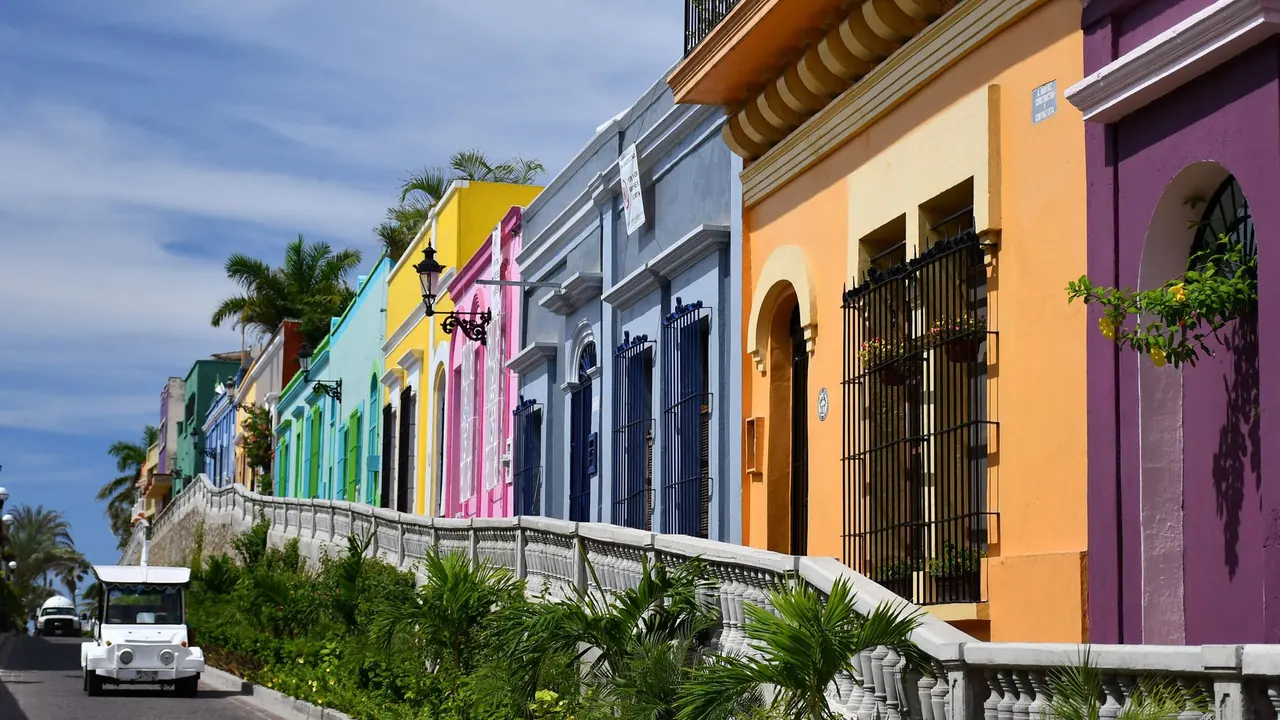
Colourful houses in the old town
- Beaches80
- Affordable cities70
- Nature & outdoors66
Photo: Gzzz, CC BY-SA 4.0, cropped
Match
52
Every category weighted equally
- Beach & sun57
- Culture & arts48
- Food & nightlife51
- Family trip56
- Outdoors56
- Relax & unwind53
- Shopping & style48
- On a budget54
Mazatlan in twelve categories
Our verdict on each, scored 0 to 100 against the same fixed benchmark cities, so a score means the same thing on every page.
Beaches & swimming. Scores 80 out of 100.
Food & drink. Scores 62 out of 100.
Culture & sights. Scores 42 out of 100.
Nightlife. Scores 55 out of 100.
Nature & outdoors. Scores 66 out of 100.
Day trips. Scores 45 out of 100.
Good for families. Scores 60 out of 100.
Getting around. Scores 42 out of 100.
Shopping & style. Scores 30 out of 100.
Affordability. Scores 70 out of 100.
Live music & performing arts. Scores 40 out of 100.
Wellness & relaxation. Scores 35 out of 100.
Mazatlan category by category
Beaches & swimming
80Mazatlan is a beach city first. The sand runs almost without a break along the Pacific shore, from the rocky little bays of Olas Altas by the old town, past Playa Norte where fishermen pull their pangas up, to the long hotel beaches of the Zona Dorada and the quieter, wider sand at Cerritos further north. A short boat ride across the harbour takes you to Isla de la Piedra, a long palm-backed beach with a slower, village feel, and boats also run to the sheltered coves of Isla de Venados.
In summer the sea reaches about 29°C, but it is cooler from January to March, closer to 21°C, which some swimmers find fresh. This is open Pacific, so surf can be strong on the exposed beaches and it pays to watch the flags. The island coves are the calmest water.
Food & drink
62Mazatlan is one of Mexico's shrimp ports, and eating here means seafood. Expect aguachile cured in lime and chilli, ceviche tostadas, smoked marlin tacos, and pescado zarandeado, a whole fish split and grilled over coals, eaten on plastic chairs at beach shacks and open-air mariscos places. In the mornings, street carts sell shrimp cocktails by the glass, and the Pino Suárez market in the centre does cheap breakfasts and fresh juices.
The city brews one of the country's best-known lagers, and a cold beer with a seafood platter is the local ritual. Beyond seafood the choice thins out. There are pleasant restaurants around the Plazuela Machado and some international places in the Zona Dorada, but not much serious fine dining.
Culture & sights
42The historic centre is the cultural heart. Its streets of brightly painted 19th-century houses, built when this was a busy port, lead to the Plazuela Machado, a small square ringed with arcades, and to the Teatro Ángela Peralta. The twin-towered cathedral and the market hall are a few blocks away. Along the seafront, the long malecón has monuments, cliff divers at the rocky point, and El Faro, one of the highest lighthouses in the world, on a hill at the harbour mouth.
The museums are small: a modest archaeology museum and an art museum. A day or two covers it all. Most visitors see the centre as a pleasant break from the beach rather than a reason to come.
Nightlife
55Nights out split between two areas. The Zona Dorada has big open-fronted bars and dance clubs that fill with Mexican visitors and, in spring, with students on break. It gets loud, and on weekends it runs late. In the historic centre, evenings are gentler: drinks at tables around the Plazuela Machado and small bars in the old streets. Everywhere you hear banda, the brass-heavy local music, and it sets the mood.
Carnaval, held before Lent for well over a century, is the high point of the year, with parades and crowds along the malecón for most of a week. Out of season, and on weeknights, the city goes quiet earlier than you might expect.
Nature & outdoors
66The most rewarding outdoor trips are offshore. Boats go out to Isla de Venados and the other islands in the bay for kayaking and snorkelling, and in winter humpback whales pass close enough for whale-watching trips. Sportfishing for marlin and sailfish has a long tradition, and the point breaks near Olas Altas draw surfers. On land, the steep climb up the hill to El Faro gives the widest view over the city and the sea. South of the harbour, mangrove estuaries are full of herons and frigatebirds.
Inland, the road climbs into the pine-clad foothills of the Sierra Madre Occidental within about two hours, and turtle conservation camps on nearby beaches release hatchlings in late summer and autumn. Summer is very hot and humid, so most outdoor activity is best from November to April.
Day trips
45The classic outing goes inland to the Sierra Madre foothills. Concordia, about an hour away, is a colonial town known for its baroque church and its furniture workshops. Copala, a little higher up, is an old silver-mining village of cobbled lanes and whitewashed houses around a stone church. El Quelite, a small farming village to the north, and El Rosario, with its gilded mission church, can also fill a day.
Cosalá, a well-kept mining town, lies at the far edge of a comfortable day out. That is about the whole list: there is no major heritage site or wine region within reach, and most visitors take a single trip inland and spend the rest of the stay on the coast.
Good for families
60Generations of Mexican families have spent their school vacations on this coast, so children are expected everywhere, from beach restaurants to the malecón on a Sunday evening. The large aquarium in the Parque Central, close to the seafront, shows sea life from the Gulf of California and fills a hot afternoon well. Boat trips to the islands and their calmer coves usually please children, and many beach hotels in the Zona Dorada have pools and kids' clubs.
There is no theme park or science museum. The sea on the exposed beaches can be rough for small children, so the island coves and hotel pools are the safer places to splash. Summer is hot and sticky, and winter is the comfortable season for a family stay.
Getting around
42The city stretches along the coast, with the historic centre at the southern end and the Zona Dorada and newer resorts several kilometres north. The malecón connects them, and many visitors walk or cycle part of its length, which is around 20km. Local buses run up and down the coast road, and taxis are easy to find. The most memorable way to travel is the pulmonía, an open-air golf-cart taxi that is a local invention.
The old centre itself is compact and easy on foot. A car is only useful for trips into the sierra. In summer the heat makes long walks hard work.
Shopping & style
30Shopping here is mostly souvenirs and crafts. The Zona Dorada is lined with shops selling silver, hammocks, ceramics and beachwear. In the centre, the Pino Suárez market hall sells everyday goods, food, leather and local sweets, and a few galleries and studios in the old streets show work by local artists. For anything more, there are ordinary shopping malls. Nobody comes to Mazatlan to shop.
Affordability
70Because so many of its visitors are Mexican families rather than foreign tourists, most of the city is priced for a domestic budget. Shrimp cocktails from street carts, seafood at beach shacks, market breakfasts, local buses and short taxi rides all cost little. The main expense is a beachfront hotel or a meal in the Zona Dorada, and rooms fill up and cost more at Carnaval, Easter and Christmas. Staying in or near the historic centre and eating where locals eat keeps a stay cheap.
Live music & performing arts
40The restored 19th-century Teatro Ángela Peralta is the centre of the city's cultural life. It hosts concerts, opera and dance, and it is the heart of the long-running Mazatlan cultural festival held each autumn. Outside the theatre, live music is mostly banda sinaloense, the brass-band music born in this state. You will hear it at beach restaurants, at parties and from strolling groups along the malecón. There is not much formal programming beyond that, so evenings at the theatre need some planning.
Wellness & relaxation
35Wellness here comes mainly from the slow pace of a beach stay: long sunsets, walks on the malecón and hammock afternoons. The city has no bathing or spa tradition of its own. Treatments are limited to spas in the larger resort hotels and some massage places in the Zona Dorada. The quietest stays are at Cerritos or on Isla de la Piedra, away from the Zona Dorada's music.
When should you go?
Pick a month to see what it is like. The climate figures are measured averages, not a forecast.
Mazatlan in July
Daytime high, °C
Rainfall in the month, mm
The whole year
Shaded against this city’s own year: the deepest cell is its best month for that figure and the palest its weakest.
Temperature and rainfall are climate normals, averaged over the years shown. Mazatlan: 1991-2020 normals, Colonia Juan Carras-Co Mazatlan, Sin. (2 km from centre).
Before you go
| Measure | Mazatlan |
|---|---|
| Official language | Spanish, Nahuatl, Yucatec Maya |
| Currency | Mexican Peso (MXN) |
| Sockets | AB127 V, 60 Hz |
| Driving side | Right |
| Time zone | UTC-7 |
| Emergency number | 911 |
| Elevation | 139 m |
| Main airport | General Rafael Buelna International Airport (MZT)16 km from centre23 non-stop destinations |
| Public holidays this year | 9 days |
By the numbers
| Measure | Mazatlan |
|---|---|
| City population | 441,975 |
| Museums within 10 km | 3 |
| UNESCO World Heritage sites within 50 km | 0 |
| Swim season, months above 21 °C | 12 months |
Compare Mazatlan with
Every comparison with a written verdict behind it.