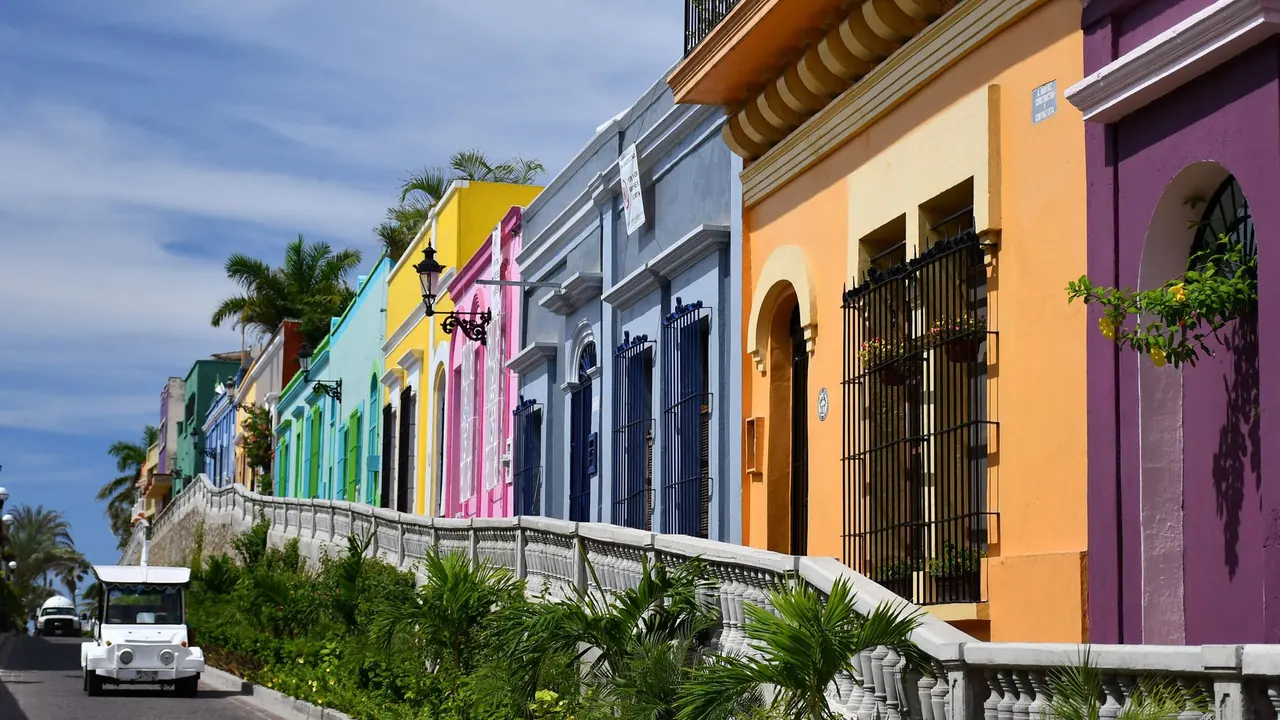
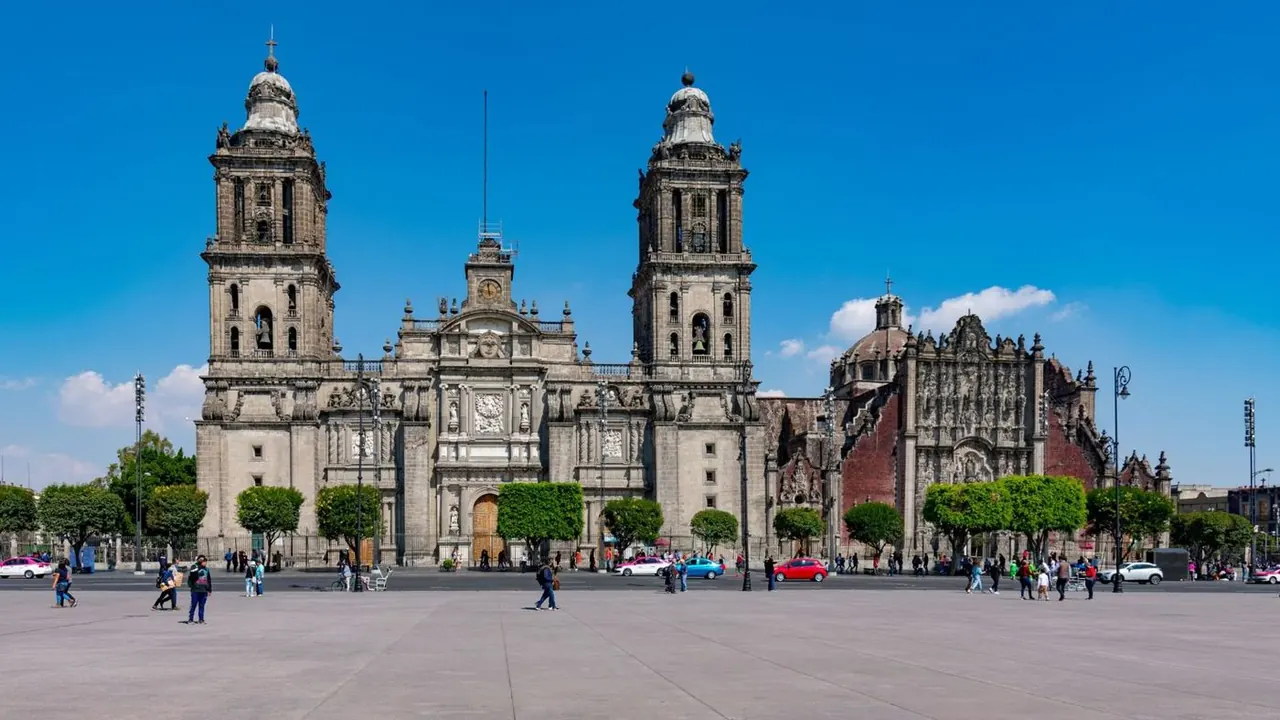
Photos: Mazatlan by Gzzz, CC BY-SA 4.0, cropped; Mexico City by Oscar Dominguez, Pexels License.
Mazatlan or Mexico City?
Our verdict in twelve categories, each scored against the same fixed benchmark cities, and the climate month by month, so you can choose for your trip.
Choose Mazatlan for
- beaches
- nature and the outdoors
- families
Mazatlan is the choice for a trip built around the sea. You get a long run of Pacific sand from Olas Altas to Cerritos, boat rides to Isla de la Piedra and Isla de Venados, whales offshore in winter and seafood eaten at beach shacks. It suits travellers who want sun and slow days. The painted old centre makes a pleasant evening stroll, but it isn't the reason to come.
Choose Mexico City for
- culture and sights
- shopping
- live music and the arts
Pick Mexico City if you want a city to get to know properly. It has great museums, Aztec ruins and murals, markets and taco stands, and late nights in Roma and Condesa, and the pyramids of Teotihuacan are close by. That is far more to do in a week than Mazatlan offers. The trade-off is that the nearest beach is hours away and the pace is anything but restful.
Scoreboard
Twelve categories on one fixed scale from 0 to 100. The shaded stretch is the gap between the two.
Your match
Pick a travel style or drag the sliders, and both match scores follow your weighting.
Wins on beaches and nature and the outdoors with your weighting.
Wins on culture and sights and shopping with your weighting.
What matters to you?
Category by category
What the scores mean for a trip.
Beaches & swimming
This is the widest gap between the two. Mazatlan has open Pacific sand along nearly its whole length. It runs from the small rocky bays of Olas Altas and the fishing beach at Playa Norte to the hotel strip of the Zona Dorada and quieter Cerritos. Boats cross to Isla de la Piedra and the coves of Isla de Venados, which are the calmest places to swim.
Mexico City sits high inland, and swimming there means a hotel pool or a sports centre. The nearest beaches are hours away by road, so anyone who wants sand has to add separate days on the coast.
Food & drink
Mazatlan does one thing very well, and that is seafood from a shrimp port. Think aguachile, smoked marlin tacos and whole fish grilled zarandeado-style over coals, eaten on plastic chairs with a cold local lager. Away from seafood the choice thins quickly, and there is little serious fine dining.
Mexico City is a far bigger food destination. It has late-night al pastor stands, breakfast tamales, market counters at Medellín, San Juan and La Merced, pulquerías and mezcal bars. In Roma, Condesa and Polanco these sit alongside some of the most respected tasting menus in the Americas. The one drawback is that the best of it is spread across a huge city.
Culture & sights
In Mazatlan, culture is a pleasant break from the beach. You have the painted 19th-century streets around the Plazuela Machado, the Teatro Ángela Peralta, the cathedral, the cliff divers and El Faro on its hill. The museums are small, so a day or two covers it.
Mexico City is in a different league. On the Zócalo, the cathedral, the National Palace with Rivera's murals and the excavated Templo Mayor stand side by side, and the National Museum of Anthropology alone justifies the trip. Add Chapultepec Castle, the Frida Kahlo house in Coyoacán and the canals of Xochimilco, and a week is barely enough.
Nightlife
Mazatlan's nights have two moods. The open-fronted bars and clubs of the Zona Dorada get loud at weekends, while the tables around the Plazuela Machado are gentler, and banda music plays everywhere. Carnaval is the big week, but out of season the city winds down early.
Mexico City has far more going on, every weekend of the year. In Roma and Condesa a night out is a walk between cocktail bars, mezcal bars and rooftop terraces. The Centro keeps its old cantinas and Polanco its dressier clubs. For dancing there are electronic clubs that go on until morning, salsa halls and the large LGBTQ scene of the Zona Rosa.
Nature & outdoors
Most of Mazatlan's outdoors is on the water, and that gives it the edge. There is kayaking and snorkelling around Isla de Venados, humpback whales in winter, marlin fishing, surf at Olas Altas and birdlife in the mangroves south of the harbour. Turtle hatchlings are released on nearby beaches in late summer and autumn.
Mexico City has Chapultepec, the Xochimilco wetlands and real hiking at altitude in Desierto de los Leones and on Ajusco. The volcanoes and the crater lakes of Nevado de Toluca are about two hours out. Traffic swallows much of the day getting there, though, and the air can be poor in the dry season.
Day trips
From Mazatlan the outings go inland to small towns in the sierra. There is Concordia with its baroque church and furniture workshops, cobbled Copala, El Rosario with its gilded church and, at a stretch, Cosalá. They make a charming day, but most visitors take one trip and go back to the beach.
Mexico City has a much longer list. Teotihuacan's pyramids are about an hour away, and Puebla and the great pyramid of Cholula about two. Cuernavaca, Tepoztlán and the silver town of Taxco lie to the south. Early starts help you beat the traffic out of the city.
Good for families
Children are welcome everywhere in both cities, but the family trips are quite different. Mazatlan is a classic beach vacation, with hotel pools and kids' clubs in the Zona Dorada, the aquarium in the Parque Central and boat trips to calm island coves. The thing to watch is the rough surf on the open beaches.
Mexico City swaps sand for attractions. There are the zoo and the Papalote children's museum in Chapultepec, a theme park, trajinera boats at Xochimilco, lucha libre and the pyramids. The price is long rides in traffic and the altitude, so the stay works best planned neighbourhood by neighbourhood.
Getting around
Mazatlan is essentially one long strip along the coast. The compact old centre is at the southern end and the Zona Dorada several kilometres north, linked by the 20km malecón, buses on the coast road, taxis and the open-air pulmonía. It is simple to use, but there is no rapid transit and summer heat makes long walks hard work.
Mexico City is far bigger, yet a little easier to get around. The districts visitors spend time in are walkable and joined by a cheap metro, the Metrobús and a bike-share system, with ride-hailing cars to fill the gaps. Expect packed trains at rush hour and heavy traffic on the roads.
Shopping & style
Shopping in Mazatlan is mostly souvenirs. You will find silver, hammocks and beachwear in the Zona Dorada, leather and local sweets at the Pino Suárez market, and a few artists' studios in the old streets.
Mexico City is a real shopping destination. La Ciudadela gathers crafts from across Mexico, and San Ángel's Saturday bazaar and the Sunday flea market at La Lagunilla are good for a slow browse. Masaryk in Polanco has the luxury houses, and Roma and Condesa add Mexican designers and bookshops.
Affordability
Both are easy on the budget, but the savings come in different ways. Mazatlan is priced for Mexican families, so street-cart shrimp, beach shacks and buses cost little. The main expense is a beachfront hotel, and rooms cost more at Carnaval, Easter and Christmas.
In Mexico City, tacos, market lunches, the metro and many museums are cheap. Roma, Condesa and Polanco are the exception, with hotels, restaurants and cocktails priced closer to a European capital. Staying in the Centro keeps a trip inexpensive.
Live music & performing arts
Mazatlan has one main stage, the restored Teatro Ángela Peralta, which is busiest during the autumn cultural festival. Beyond that, the live music is banda sinaloense at beach restaurants and from groups strolling the malecón.
Mexico City has performances all year. Bellas Artes hosts opera, the national symphony and the Ballet Folklórico. There are also the modernist Sala Nezahualcóyotl, big concerts at the Auditorio Nacional, mariachis at Plaza Garibaldi, jazz and son clubs, and lucha libre at Arena México. Nearly all the theatre is in Spanish.
Wellness & relaxation
Neither city is a spa destination, and each offers a different kind of rest. In Mazatlan the calm comes from the beach itself: sunsets, hammocks and quiet stays at Cerritos or on Isla de la Piedra. Treatments are mostly in the resort hotels.
Mexico City is noisy and demanding, but it has the temazcal steam-bath ritual, good day spas in Polanco, Roma and Condesa, and shaded plazas in Coyoacán. For a real retreat, people head south to Cuernavaca and Tepoztlán.
When should you go?
Pick your month. The climate figures are measured averages, not a forecast.
Mazatlan in July
Mexico City in July
Daytime high, °C
Rainfall in the month, mm
Temperature and rainfall are climate normals, averaged over the years shown. Mazatlan: 1991-2020 normals, Colonia Juan Carras-Co Mazatlan, Sin. (2 km from centre). Mexico City: 1991-2020 normals, Mexico Central, D. F. (7.9 km from centre).
Mazatlan is at its best from November to May. The rain almost stops, the days are warm rather than heavy and the sky is reliably bright. March to May are practically dry and the sunniest months of all. The catch in that season is the sea, which stays around 23°C from January to April and feels fresh to some swimmers. From June to October the water warms to about 30°C, but the days reach 34°C with sticky humidity, and July to September bring heavy storms, with about 256mm of rain in September.
Mexico City sits on a high plateau and never gets that hot. Highs run from the low twenties in winter to the high twenties in spring, peaking at about 28°C in April, so walking the streets is comfortable in any month. Its dry season runs from November to April, the best time for long days of sightseeing. June to September bring regular downpours and duller skies. Both cities have their rainy season in summer, so late autumn to spring suits both, and it is the natural time for a trip that combines them.
Which traveller are you?
On a beach and sun trip, Mazatlan is the clear answer. Its sand runs almost unbroken along the Pacific, the island coves give calm swimming and the dry months bring long sunny days. Mexico City is hours from any coast.
For a culture and arts trip, Mexico City wins easily. It has the Anthropology Museum, the Templo Mayor, Rivera's murals and the Kahlo house, plus opera and ballet at Bellas Artes. Mazatlan's old centre and small museums fill a day or two at most.
On a food and nightlife trip, Mexico City pulls ahead again. Taco stands, huge markets and tasting menus feed you by day, and the mezcal bars, cocktail bars and salsa halls of Roma and Condesa run late. Mazatlan has superb seafood but quieter nights outside Carnaval.
Before you go
| Measure | Mazatlan | Mexico City |
|---|---|---|
| Official language | Spanish, Nahuatl, Yucatec Maya | Spanish, Nahuatl, Yucatec Maya |
| Currency | Mexican Peso (MXN) | Mexican Peso (MXN) |
| Sockets | AB127 V, 60 Hz | AB127 V, 60 Hz |
| Driving side | Right | Right |
| Time zone | UTC-7 | UTC-6 |
| Emergency number | 911 | 911 |
| Elevation | 139 m | 2,240 m |
| Main airport | General Rafael Buelna International Airport (MZT)16 km from centre23 non-stop destinations | Mexico City Benito Juárez International Airport (MEX)7 km from centre109 non-stop destinations |
| Public holidays this year | 9 days | 9 days |
By the numbers
| Measure | Mazatlan | Mexico City |
|---|---|---|
| City population | 441,975 | 9,209,944 |
| People per km² | - | 6,202 |
| Museums within 10 km | 3 | 108 |
| UNESCO World Heritage sites within 50 km | 0 | 6 |
| Swim season, months above 21 °C | 12 months | - |
Where else could you go?
Every comparison below shares a destination with this one, so you can follow Mazatlan or Mexico City somewhere new.