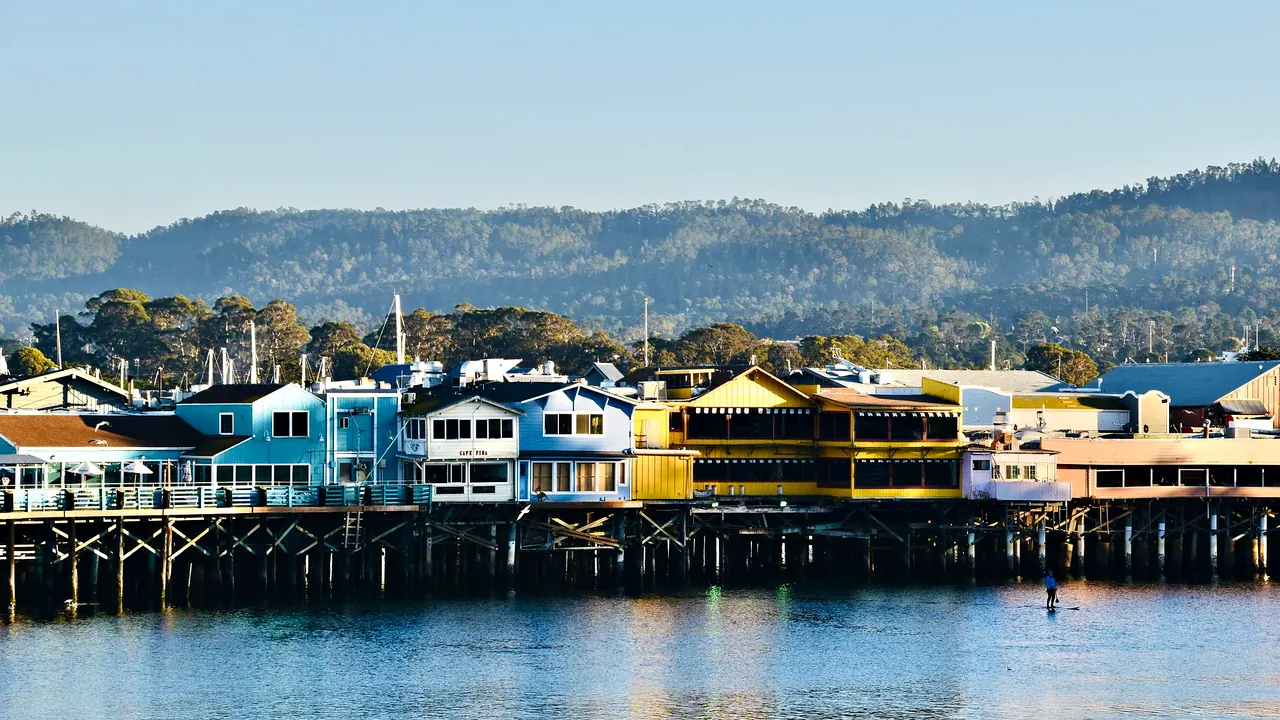
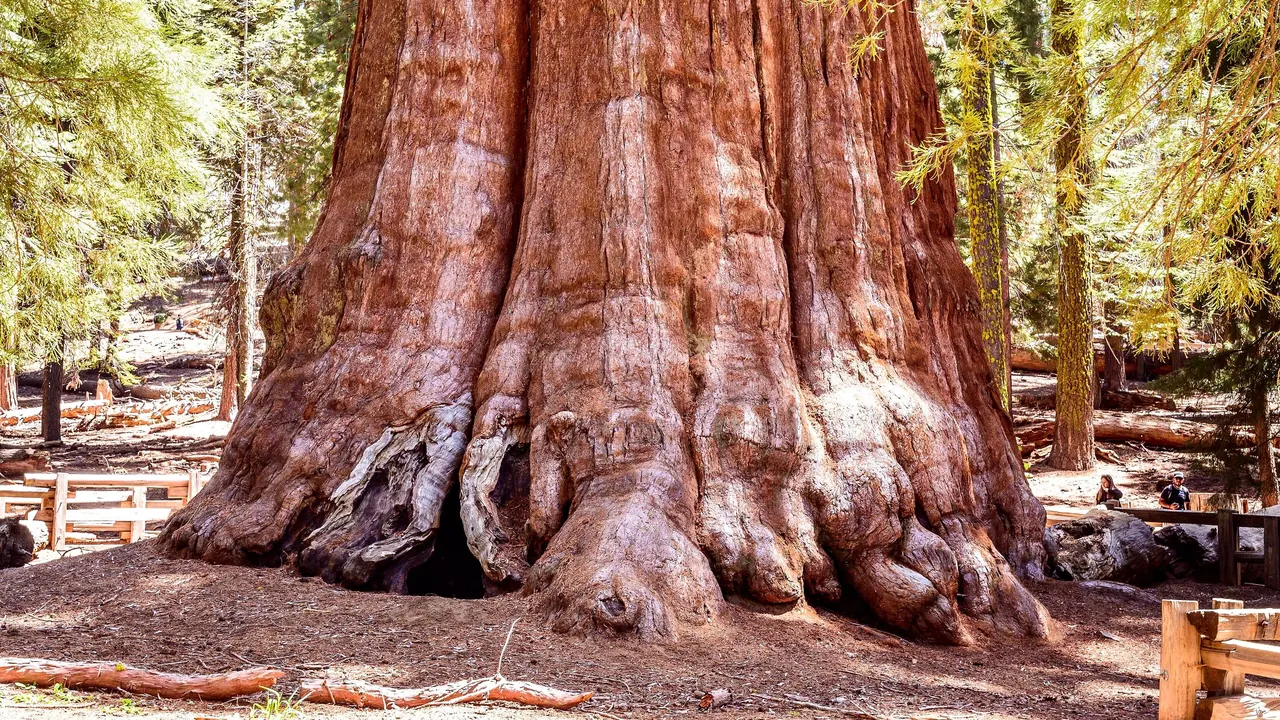
Photos: Monterey by Lesli Whitecotton, Pexels License; Sequoia by Domenico Convertini from Zurich, Schweiz, CC BY-SA 2.0, cropped.
Monterey or Sequoia?
Our verdict in twelve categories, each scored against the same fixed benchmark cities, and the climate month by month, so you can choose for your trip.
Choose Monterey for
- day trips
- shopping
- culture and sights
Monterey suits a slower coastal trip with plenty of variety close by: the aquarium for children, Spanish and Mexican adobes and the Carmel Mission, seafood with Carmel Valley wine, and whales and sea otters seen from the shore. It is the better pick for a mixed group, or for anyone who wants a proper dinner and a walk by the water at the end of the day. The price is that staying there is expensive.
Choose Sequoia for
- prices
- nature and the outdoors
Choose Sequoia if the landscape itself is the trip. The giant sequoia groves, the granite High Sierra and Kings Canyon offer longer and wilder walking than the peninsula, and camping keeps costs down. There is little to do after dark, though, and every move between areas means slow mountain driving.
Scoreboard
Twelve categories on one fixed scale from 0 to 100. The shaded stretch is the gap between the two.
Your match
Pick a travel style or drag the sliders, and both match scores follow your weighting.
Wins on day trips and shopping with your weighting.
Wins on prices and nature and the outdoors with your weighting.
What matters to you?
Category by category
What the scores mean for a trip.
Beaches & swimming
Neither is a swimming destination, but Monterey at least has real beaches. Del Monte Beach, the white sand at Carmel and the Asilomar dunes are good for walks, picnics and watching the surf, though the water is cold all year.
Sequoia has no coast at all. Swimming there means the granite pools of the Kaweah in late summer or the small sandy shore at Hume Lake, and its rivers are dangerous in spring.
Food & drink
Monterey eats from the bay and the Salinas Valley: squid, Dungeness crab and sand dabs, with Pinot Noir and Chardonnay from Carmel Valley and the Santa Lucia Highlands. The best cooking is in Old Monterey, Pacific Grove and Carmel rather than on the wharf.
In Sequoia you eat in lodge dining rooms, at village delis or at your campsite, with burgers and Mexican plates in Three Rivers. The valley towns below add orchard fruit stands and Fresno's Armenian and Hmong cooking, but those are a long drive from the trees.
Culture & sights
Monterey packs real history into a few streets: the adobes of the State Historic Park, the Custom House, Colton Hall, where California's first constitution was written, and the Carmel Mission ten minutes south. Sequoia's human history survives in small places, such as the Western Mono rock paintings at Hospital Rock, Tharp's Log and the Giant Forest Museum. They are worth a stop on a hike but are not a reason to come.
Nightlife
Neither is a place for a big night, but Monterey at least gives you a modest evening out. Alvarado Street downtown has a short run of pubs, wine bars and brewpubs, where students from the language and naval schools mix with locals, and Cannery Row picks up a little at weekends. There are no clubs, though, and anyone who wants to dance has to go as far as Santa Cruz.
Sequoia has almost nothing after dark. A beer in Three Rivers or at one of Visalia's few downtown bars is about the limit, and from the groves either means a long, winding drive down the mountain. Most evenings end at the campsite or the lodge.
Nature & outdoors
Both are superb, in different ways. Monterey's strength is the sea: whales over the submarine canyon, otters in the kelp, and diving and kayaking straight from town, with Point Lobos and the start of Big Sur a short drive south.
Sequoia is the stronger of the two, and its landscape is on land. The Giant Forest and the General Sherman, the view from Moro Rock and the sheer walls of Kings Canyon give a scale the peninsula cannot match. The walking ranges from meadow loops to routes of several days over high passes.
Day trips
Monterey has far more within easy reach. Carmel-by-the-Sea and Pacific Grove are next door, and the Carmel Valley wineries, Steinbeck's Salinas and the mission at San Juan Bautista are a short drive away, with Santa Cruz under an hour north.
From Sequoia, most outings go deeper into the parks. Beyond them lie Visalia's old downtown, Fresno's Underground Gardens and the flat farmland of the San Joaquin Valley, which is a short list for anyone who wants variety.
Good for families
Monterey is the easier family base. The aquarium alone fills a day, and whale-watching boats, tide pools and Dennis the Menace Park are all close by in a small, safe town.
Sequoia suits families who already like the outdoors. Children love the Big Trees Trail, driving through the Tunnel Log and the Junior Ranger booklets. The long switchback roads, the drops on Moro Rock and the fast rivers in spring make it more demanding for parents, though.
Getting around
Both need a car for most things beyond the centre, but Monterey's waterfront is easy without one. A flat coastal trail runs from the wharf past Cannery Row and the aquarium to Pacific Grove, good on foot or by hired bike.
Sequoia is a driving trip in earnest. The Generals Highway takes about an hour of hairpins between the main groves, the roads to Cedar Grove and Mineral King are seasonal, and snow chains are often needed in winter. The summer shuttle around the Giant Forest only eases parking at the busiest trailheads.
Shopping & style
Monterey's own shops sell mostly taffy and sea-otter gifts, but the galleries and boutiques of Carmel and the antique shops of Pacific Grove make a good afternoon. In Sequoia, shopping means lodge gift stores and visitor-centre bookshops, and the most local thing to buy is fruit from the valley stands.
Affordability
Monterey is expensive across the board, from waterfront hotels to dinners in Carmel, and the aquarium is a real expense for a family. You can save by staying in motels in Seaside or Marina, coming midweek or in winter, and spending days on the coastal trail, which is free.
Sequoia is easier on the budget, mainly because camping among the pines is about as cheap as a night in California gets, and the trails and groves cost nothing beyond park entry. Lodges inside the park and the motels of Three Rivers are dear in summer, though, so the savings depend on where you sleep.
Live music & performing arts
Live performance in Monterey is seasonal but real: the Monterey Jazz Festival each September, the Carmel Bach Festival in summer and plays at the open-air Forest Theater. The nearest thing in Sequoia is a ranger's campfire programme, and Visalia's Fox Theatre and Fresno's orchestra are a long drive down the mountain after dark.
Wellness & relaxation
Neither has thermal baths or a bathhouse culture, so relaxation in both comes from the setting. Monterey has the edge, with resort spas among the vineyards of sunny Carmel Valley and at Pebble Beach, plus quiet evening walks by the shore in Pacific Grove. Sequoia offers silence rather than treatments: a cabin near the groves or a creekside cottage in Three Rivers, and dark, starry nights.
When should you go?
Pick your month. The climate figures are measured averages, not a forecast.
Monterey in July
Sequoia in July
Daytime high, °C
Rainfall in the month, mm
Where the figures come from
Sequoia has no weather station within reach, so its figures come from a gridded climate model rather than a measured record, and read a broad area rather than one spot.
Temperature and rainfall are climate normals, averaged over the years shown. Monterey: 1991-2020 normals, Monterey / Pacific Grove Acres (5 km from centre). Sequoia: 2001-2020 normals, NASA POWER reanalysis grid, no weather station within 90 km.
Monterey's weather barely changes through the year. Daytime highs stay in the high teens through winter and peak at about 23°C from August to October, so early autumn is the warmest and most settled time to go. Most rain falls between December and March, and the summer months are almost dry. The bay never warms beyond about 15°C, so in any month the beach is for walking rather than swimming.
Sequoia's weather swings much further. Its figures reach 30°C in July, hot for climbing trails at midday in the foothills, although the groves and the high country above them are noticeably cooler. Winter highs drop to about 8°C, December is the wettest month at around 90mm, and snow closes the high country. June and September are dry and warm without the peak heat, and they are the best months for walking. Between November and April, Monterey's mild coast is the easier of the two.
Which traveller are you?
On a family trip with children, Monterey is the easier choice. The aquarium, the tide pools, the otters beside the waterfront path and a lakeside playground fill the days with short outings. Sequoia means long, winding drives and rivers that are dangerous in spring.
For an outdoors trip, Sequoia wins. You can walk among the largest trees on earth, climb Moro Rock and hike from Mineral King or into Kings Canyon, which is wilder country than Monterey's coast. The peninsula's whale trips and kelp diving are a different kind of draw.
On a tight budget, Sequoia goes further. Its campgrounds are among the cheapest places to sleep in California, and the trails cost nothing beyond park entry. Monterey's rooms and dinners are priced for weekend visitors, so saving money there means highway motels and midweek stays.
Before you go
| Measure | Monterey | Sequoia |
|---|---|---|
| Currency | US Dollar (USD) | US Dollar (USD) |
| Sockets | AB120 V, 60 Hz | AB120 V, 60 Hz |
| Driving side | Right | Right |
| Time zone | UTC-8, UTC-7 in summer | UTC-8, UTC-7 in summer |
| Emergency number | 911 | 911 |
| Elevation | 8 m | - |
| Main airport | Mineta San Jose International Airport (SJC)85 km from centre39 non-stop destinations | Fresno Yosemite International Airport (FAT)15 non-stop destinations |
| Public holidays this year | 13 days | 13 days |
By the numbers
| Measure | Monterey | Sequoia |
|---|---|---|
| Population | 30,218 | - |
| People per km² | 991 | - |
| Museums within 10 km | 5 | - |
| UNESCO World Heritage sites within 50 km | 0 | - |
| Swim season, months above 21 °C | None | - |
Where else could you go?
Every comparison below shares a destination with this one, so you can follow Monterey or Sequoia somewhere new.
- Carmel-by-the-Seavs Monterey
- Kings Canyonvs Sequoia
- Big Survs Monterey
- San Josevs Monterey
- San Franciscovs Monterey
- Yosemitevs Sequoia