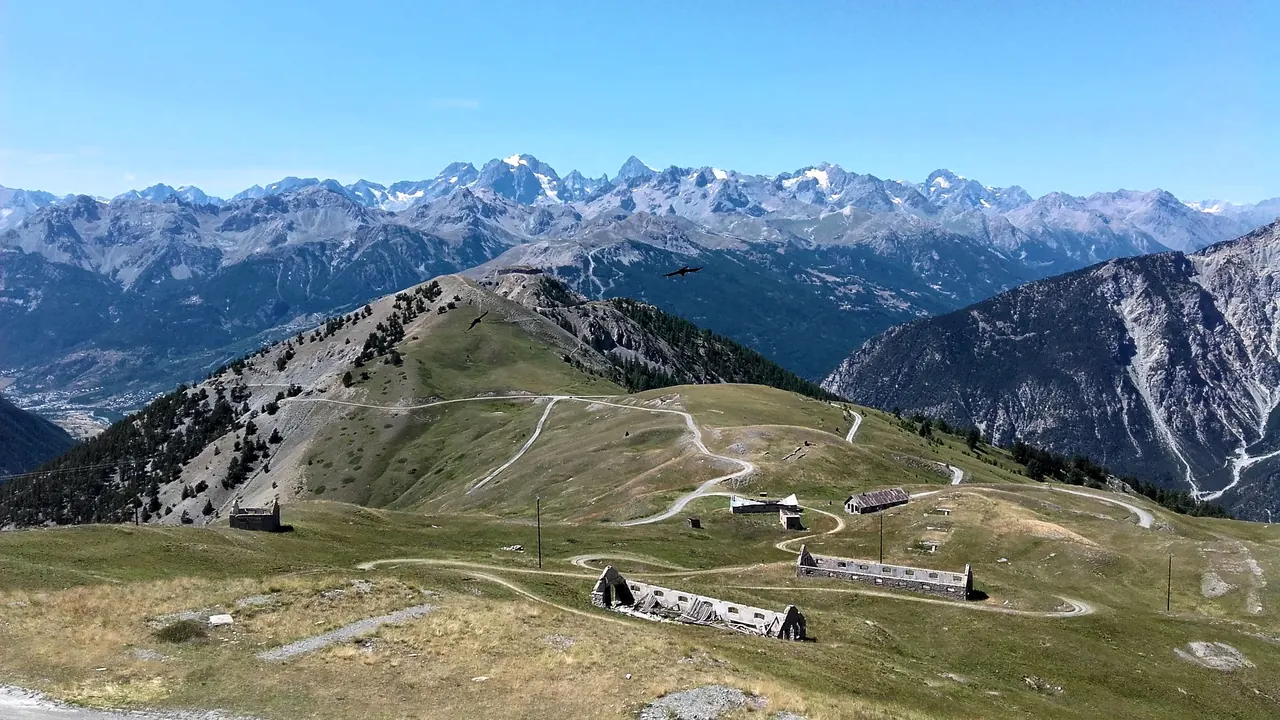
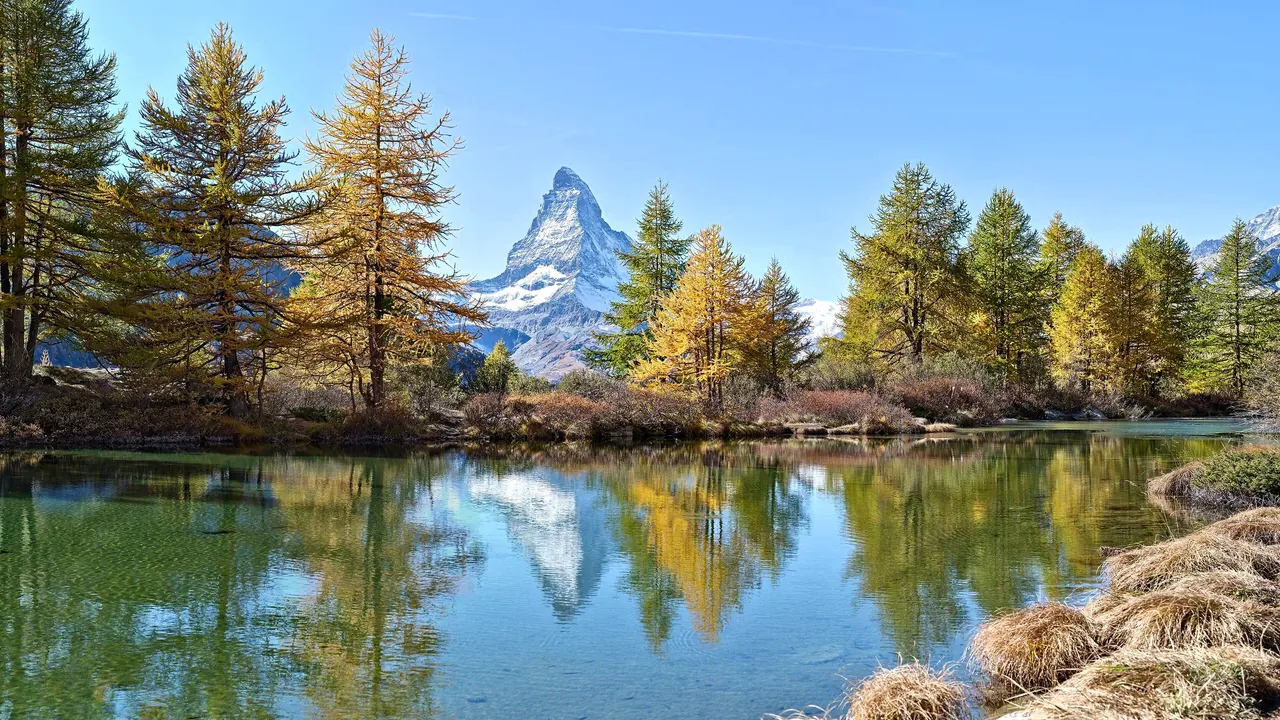
Photos: Montgenèvre by Jonathan Queutois, CC0; Zermatt by Roy Egloff, CC BY-SA 4.0, cropped.
Montgenèvre or Zermatt?
Our verdict in twelve categories, each scored against the same fixed benchmark cities, and the climate month by month, so you can choose for your trip.
Choose Montgenèvre for
- prices
- day trips
- families
Montgenèvre suits families and anyone watching the cost of a mountain week. It is a small resort on the slopes, with self-catering chalets, broad sunny nursery areas and a big cross-border ski area. The valley below is a real bonus: Briançon's Vauban forts, Mont-Dauphin and the Susa valley are all close by, and Turin is within a day's drive. Bring a car, and expect quiet evenings and simple food.
Choose Zermatt for
- getting around
- food and drink
- shopping
Zermatt is the stronger choice when the mountains themselves are the point of the trip and the budget can stretch a long way. The Matterhorn stands over a car-free village, lifts climb to glaciers above 3,800m, and the trails and peaks are on a larger scale. Mountain hut lunches, livelier après-ski and a couple of serious music festivals make the evenings richer, but almost everything costs a great deal.
Scoreboard
Twelve categories on one fixed scale from 0 to 100. The shaded stretch is the gap between the two.
Your match
Pick a travel style or drag the sliders, and both match scores follow your weighting.
Too close to call, 2 points apart
Wins on prices and day trips with your weighting.
Wins on getting around and food and drink with your weighting.
What matters to you?
Category by category
What the scores mean for a trip.
Beaches & swimming
Neither is a swimming destination, and the gap is small. In Montgenèvre there is the leisure centre's heated pool and, for a real summer swim, the warm sandy shores of Serre-Ponçon, more than an hour's drive away. In Zermatt it comes down to a hotel pool, since the tarns around the Matterhorn are far too cold to swim in.
Food & drink
Montgenèvre eats like a busy ski station: fondue, tartiflette, crêpes and pizza, with Claviere's Italian bars and espresso as its best feature. For a proper meal you have to drive down the valley.
Zermatt is clearly better. The chalets in Furi, Findeln and Zum See make lunch on the mountain an occasion, a few ambitious kitchens work in the village, and Valais wines such as Petite Arvine go with the raclette and air-dried beef. You pay for it, and cheap meals are hard to find.
Culture & sights
Neither village is a place for sightseeing, but Zermatt has more to fill a morning. The Matterhorn Museum, the mountaineers' cemetery and the old larch barns of the Hinterdorf tell the story of the 1865 first ascent and of the farming village that came before the hotels. In Montgenèvre there is little beyond the Napoleonic obelisk and a small church, and Briançon's fortified town down the hill is where you go for history.
Nightlife
Both are après-ski towns rather than places for a night out, but Zermatt goes on later. Its slope-side bars fill as the runs come back into the village, and the clubs on the main street stay open past midnight on busy weekends, at a price.
Montgenèvre's crowd of families and friends heads to bed early to catch the first lift. Outside the ski season there is almost nothing going on after dinner.
Nature & outdoors
Both are outstanding mountain bases, and Zermatt has the edge in sheer drama. The Matterhorn rises right above the streets, dozens of four-thousand-metre peaks surround the village, and glacier skiing goes on into summer. Climbers can hire guides for the big summits.
Montgenèvre's setting is gentler, with sunny slopes and larch forest on the Milky Way ski area and reliable snow from Italian storms. The Clarée valley, the Écrins and the Queyras are close by for hiking, via ferrata and rafting.
Day trips
Montgenèvre is much better placed for days out. Briançon's UNESCO-listed Vauban walls are just down the hill, Mont-Dauphin and Embrun make an easy pairing, and on the Italian side you have the Sacra di San Michele, the Fenestrelle fortress and Turin's royal palaces.
From Zermatt, any trip starts with a long train ride down the valley. Sion's castle hills and the Stockalper Palace in Brig are worth the journey, but most visitors spend their spare days up on the mountain instead.
Good for families
Montgenèvre is the simpler place to spend a week with children, in summer as well as in winter. Easy walks, gentle mountain biking and picnics by the alpine lakes keep summer days relaxed. At this altitude the main thing to watch is the strong sun and the sharp cold. Neither resort has zoos, theme parks or museums for children, so in both places the days are built around the outdoors.
What Zermatt offers families is novelty. There are cog railways and glacier gondolas to ride, marmots beside the trails, a small playground lake and nursery slopes on the Sunnegga side. A wet day is harder to fill, though, and at the viewpoints above 3,000m the air can be too thin and cold for small children.
Getting around
Zermatt is far easier without a car. You leave the car at Täsch and take the shuttle train up, then walk everywhere, with electric taxis, a funicular and the Gornergrat railway close to hand. The Swiss rail network links smoothly onwards.
Montgenèvre is walkable within the resort and has free winter shuttles. Beyond that you need a car with chains or winter tyres, although the night train to Briançon and the line to Oulx get you close.
Shopping & style
Zermatt's shopping all lies along one main street between the station and the church, and that still gives it the edge. Swiss watch and jewellery boutiques sit beside very good mountaineering outfitters and plenty of shops selling cowbells and chocolate. Montgenèvre has little beyond ski hire, a small supermarket and some local cheese, so people go down to Briançon's market or over the border for Italian groceries.
Affordability
This is where the two differ most. Montgenèvre is a mid-priced French resort where chalets and apartments keep a family's costs under control, Italian prices are just over the pass, and summer is cheap.
Zermatt is expensive across the board: rooms, lift tickets, the cog railways and even a drink on a terrace. Self-catering or sleeping down the valley in Täsch helps, but it remains a place for a big budget.
Live music & performing arts
Zermatt has two weeks in the year worth timing a visit around. Zermatt Unplugged brings acoustic sets to tents and mountain stages in spring, and a late-summer chamber music festival puts classical musicians in the village church.
Montgenèvre has nothing comparable, only the odd outdoor concert in season and a band in an après-ski bar. For theatre or a proper concert, you have to drive to Briançon or Turin.
Wellness & relaxation
The two are about level for rest and recovery, but they offer it in different ways. Montgenèvre has a public balneo centre with outdoor pools, a hammam and a sauna, and real thermal springs at Le Monêtier-les-Bains, around 40 minutes away. Zermatt has no springs and relies instead on a large number of polished hotel spas with views, and its car-free quiet makes the village itself feel restful.
When should you go?
Pick your month. The climate figures are measured averages, not a forecast.
Montgenèvre in July
Zermatt in July
Daytime high, °C
Rainfall in the month, mm
Where the figures come from
Montgenèvre has no weather station within reach, so its figures come from a gridded climate model rather than a measured record, and read a broad area rather than one spot.
Zermatt has no weather station within reach, so its figures come from a gridded climate model rather than a measured record, and read a broad area rather than one spot.
Temperature and rainfall are climate normals, averaged over the years shown. Montgenèvre: 2001-2020 normals, NASA POWER reanalysis grid, no weather station within 90 km. Zermatt: 1991-2020 normals, TerraClimate 4 km grid at the town, no weather station within 90 km.
Both are high mountain villages where winter means snow. Daytime highs stay around or below freezing from December to March, so these are the ski months, and neither place has beach weather at any time. The real difference comes in summer. Montgenèvre warms to about 19°C in July and August, which is pleasant for hiking and biking. Zermatt stays cooler at around 14°C, and it feels colder still higher up, where the glacier lifts go.
Zermatt is also the wetter of the two in most months, and November is its stormiest at around 130mm. Montgenèvre is generally drier, though May and November bring its heaviest rain, at a little over 90mm. For walking, late June to September is the best time in both places, and Montgenèvre's milder September makes it the better choice for an autumn trip.
Which traveller are you?
On a trip on a tight budget, Montgenèvre is the realistic option. Its apartments and chalets let you cook for yourself, cheaper Italian food and drink are a few minutes away in Claviere, and summer prices drop sharply. Zermatt is expensive in every season.
On a family trip with young children, Montgenèvre makes things simpler. Ski school starts very young, the beginner slopes are broad, and sledging, husky rides and a toddler lagoon in the leisure pool fill the gaps. Zermatt's car-free streets are calm, but there is less for children to do.
For a food and nightlife trip, Zermatt gives you more to work with. You can have long terrace lunches in the hamlets around Findeln, then a busy après-ski scene and late bars on the main street. Montgenèvre's evenings are early and its menus mostly serve hungry skiers.
Before you go
| Measure | Montgenèvre | Zermatt |
|---|---|---|
| Official language | French | French, German, Italian, Romansh |
| Currency | Euro (EUR) | Swiss Franc (CHF) |
| Sockets | CE230 V, 50 Hz | CJ230 V, 50 Hz |
| Driving side | Right | Right |
| Time zone | UTC+1, UTC+2 in summer | UTC+1, UTC+2 in summer |
| Emergency number | 112 | 112 |
| Elevation | 1,360 m | 1,624 m |
| Main airport | Turin Airport (TRN)79 km from centre65 non-stop destinations | Geneva International Airport (GVA)128 km from centre150 non-stop destinations |
| Public holidays this year | 11 days | 9 days |
By the numbers
| Measure | Montgenèvre | Zermatt |
|---|---|---|
| Population | 461 | 6,023 |
| People per km² | 11 | 25 |
| Museums within 10 km | 3 | 2 |
| UNESCO World Heritage sites within 50 km | 1 | 2 |
Where else could you go?
Every comparison below shares a destination with this one, so you can follow Montgenèvre or Zermatt somewhere new.
- Serre Chevaliervs Montgenèvre
- Saas-Feevs Zermatt
- Crans-Montanavs Zermatt
- Verbiervs Zermatt
- Val Cenisvs Montgenèvre
- Leukerbadvs Zermatt