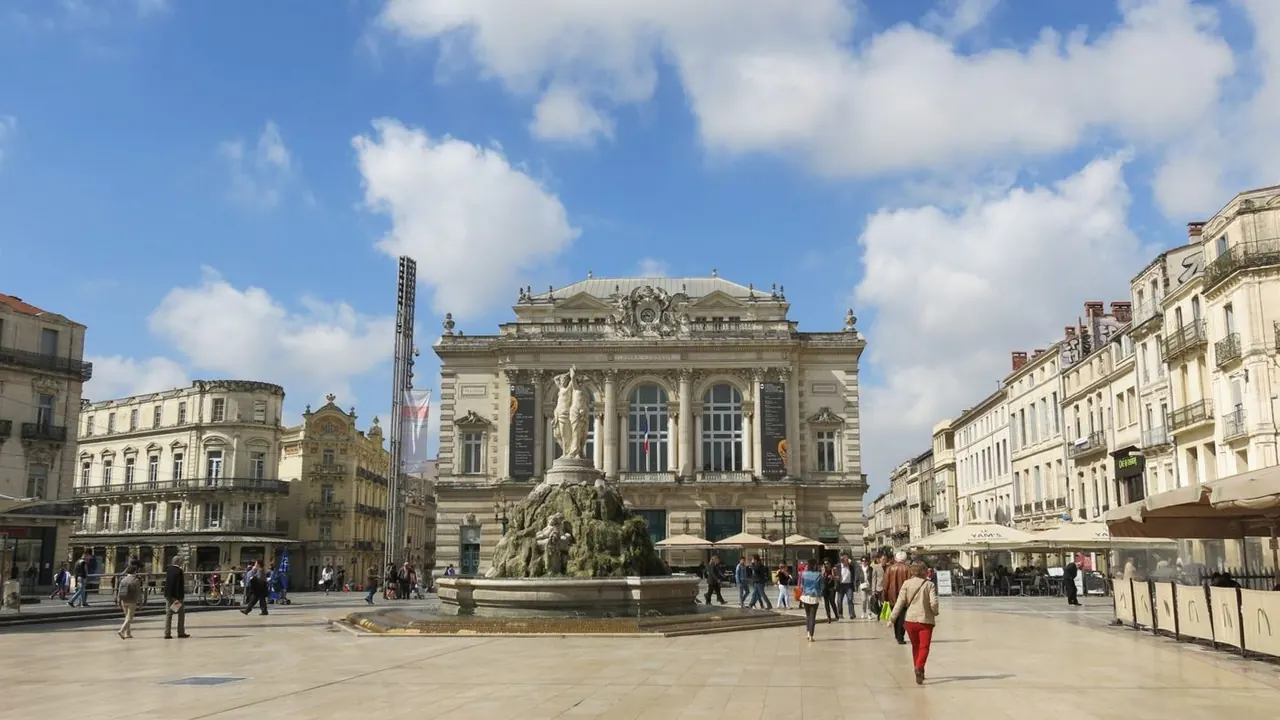
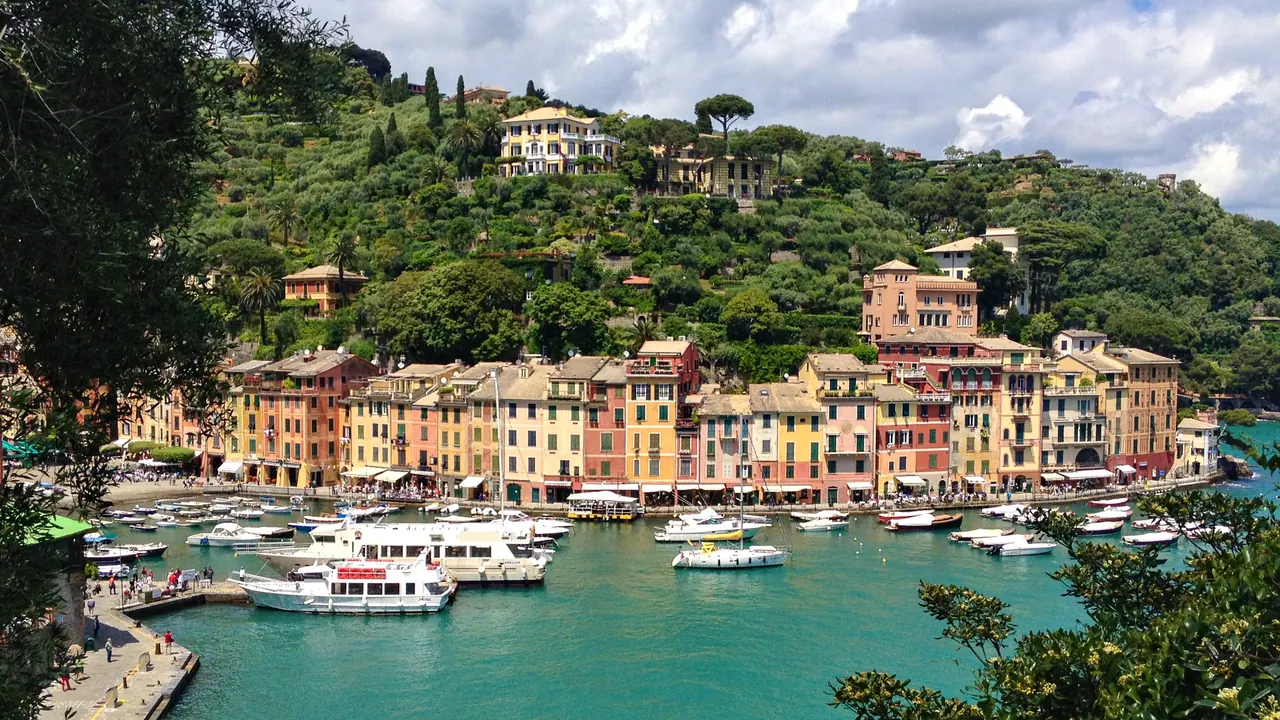
Photos: Montpellier by Peter, CC BY 2.0, cropped; Portofino by Michal Osmenda, CC BY 2.0, cropped.
Montpellier or Portofino?
Our verdict in twelve categories, each scored against the same fixed benchmark cities, and the climate month by month, so you can choose for your trip.
Choose Montpellier for
- live music and the arts
- nightlife
- prices
Montpellier is the better choice for a varied trip. It is a real university city with a medieval old town, a major art museum, a serious opera and dance season, markets and cheap student bars, and trams to get between them. Fast trains reach the Roman monuments of Nîmes, Arles and Avignon. It costs far less than Portofino and works well with children.
Choose Portofino for
- nature and the outdoors
Portofino suits a short, slow stay where the setting matters more than things to do. Travellers who want to hike a protected headland, swim off rocks into clear water, dive the marine reserve and take a boat along the Riviera will enjoy it most. Couples who don't mind paying luxury prices for a view of the harbour will be happy here. Anyone looking for nightlife, museums or a budget stay will be happier in Montpellier.
Scoreboard
Twelve categories on one fixed scale from 0 to 100. The shaded stretch is the gap between the two.
Your match
Pick a travel style or drag the sliders, and both match scores follow your weighting.
Wins on live music and the arts and nightlife with your weighting.
Wins on nature and the outdoors with your weighting.
What matters to you?
Category by category
What the scores mean for a trip.
Beaches & swimming
For swimming, the two are about even, but the water is very different. From Montpellier you take the tram and a bus to a long, flat strip of fine sand from Palavas to the dunes of l'Espiguette. The water is shallow and calm and it is easy to find space, except near town on summer evenings.
Portofino has no sand of its own. People swim from rock platforms and ladders into deep, very clear water, use the small bay at Paraggi, where paid clubs take most of the sand, or take a boat to the pebbles at San Fruttuoso. It is a prettier place to swim, but the spots are small.
Food & drink
Montpellier eats much better. The Languedoc vineyards start at the edge of town, oysters come from the Thau lagoon and Sète supplies its octopus tielle. The Halles Castellane and the Saturday market under the Arceaux aqueduct show off the local produce, and student bistros keep everyday meals cheap.
Portofino's food is good Ligurian cooking, such as pesto with trofie and Recco's cheese focaccia, served on harbour terraces where the view costs extra. There is no market or casual street food, and people who care about food go to Camogli or the trattorie in the hills.
Culture & sights
Montpellier has far more to see. The car-free Écusson has stone mansions with hidden courtyards, and it leads to the Peyrou terrace and its aqueduct, the fortress-like cathedral and France's oldest botanical garden. The Musée Fabre's European paintings and Bofill's Antigone district alone fill a day.
In Portofino the main sight is the village itself, a ring of ochre houses around the harbour. Above it are San Giorgio and Castello Brown, and the abbey of San Fruttuoso is reachable only by boat or path. You will see it all in a day, and there is no museum of any size.
Nightlife
Montpellier is the place for a night out. The big student population fills the terraces of Place Jean-Jaurès and the squares of the old town even on weeknights, and later on clubs out towards Lattes take over. It feels young and casual, and it is quieter outside term time.
In Portofino the evening is a smart aperitivo facing the yachts and then dinner, and the village goes quiet soon after. For anything later you need to go to Santa Margherita, Rapallo or Genoa.
Nature & outdoors
The outdoors is about as good in both, but in Portofino it is all close by while Montpellier's is spread out. From Montpellier you can see flamingos on the coastal lagoons and the horses and marshes of the Camargue, climb Pic Saint-Loup, canoe the Hérault gorges near Saint-Guilhem or visit the Cirque de Navacelles. Most of these are easier by car, and the windy coast suits kitesurfers.
Portofino's headland is a park on land and a marine reserve at sea, and you can walk out of the village straight onto it. Trails climb through holm oak to the Semaforo Nuovo and drop along cliffs to San Fruttuoso and Camogli, with chains on some exposed sections. There is kayaking and diving offshore.
Day trips
Montpellier has the better list of day trips, and most are on fast train lines. Nîmes, with its Roman arena and temple, is about half an hour away and the Pont du Gard is just beyond it. Arles, Avignon and the walled city of Carcassonne also make easy days, and Sète and Aigues-Mortes are close by.
Portofino's day trips run along the coast. Camogli and Santa Margherita are a short boat ride away, Genoa's palaces and port are less than an hour away, and in summer there are ferries to the Cinque Terre and Portovenere. Outside the ferry season it takes more planning and you rely on the trains.
Good for families
Montpellier is the easier choice with children. The old town is mostly pedestrian, the trams take pushchairs, and there are the Lunaret zoo and the aquarium and planetarium at Odysseum. The nearby beaches slope gently into calm water.
Portofino is calm and safe, and children like the boats and the castle, but it is built for adults. The paths are steep steps, there are no playgrounds, and most of the sand is in paid clubs. That is why families usually stay in Santa Margherita and go to Genoa's aquarium for the day.
Getting around
Trams against one winding coast road: that is the gap here. Montpellier's old centre is small and mostly car-free, if a little hilly, and the trams carry you on to Antigone, Port Marianne and Odysseum, while fast trains leave the station for Nîmes and Avignon. A car only earns its keep for the hills and the Camargue.
Portofino takes minutes to cross on foot, though the climbs to the castle and the lighthouse are steep. Arriving and leaving is the problem. The road from Santa Margherita, about 5km away, has very little parking and jams in summer, when the buses fill up. From spring to autumn the ferries are often the nicer way in.
Shopping & style
Neither is a shopping destination, but Montpellier has the wider range. The Écusson lanes have small boutiques, bookshops and delis, the Polygone and Odysseum have the big brands, and the best things to take home are the region's wine and olive oil.
Portofino's few lanes have a surprising number of designer fashion and jewellery shops and some resort wear, plus some Ligurian lace and jars of pesto. It takes under an hour to see it all, and for markets or a longer browse people go to Chiavari or Genoa.
Affordability
Montpellier costs far less, and the gap shows in every part of the budget. A room in Montpellier is a normal city-hotel expense. In Portofino the few beds are mostly luxury hotels on the hillside, so many visitors stay further along the coast and only come in for the day. Meals follow the same pattern. In Montpellier you can lunch from the counters at the Halles Laissac or on a set menu in the Écusson, while in Portofino a plate of trofie on the harbour comes with the yachts added to the bill.
Getting about costs little in Montpellier, where the tram runs from the station to Odysseum and out towards the beaches. In Portofino the walking trails and the coast bus are cheap, but parking, boat hire and a lounger at Paraggi are not. Montpellier gets expensive mainly with a bottle of wine at a sit-down dinner and with beach-town rooms in high summer. In Portofino almost everything is expensive.
Live music & performing arts
Montpellier has a real season. The old Opéra Comédie and the larger Opéra Berlioz share opera, ballet and the national orchestra, and the city is known across Europe for contemporary dance. In summer there are the Radio France festival's often free concerts and outdoor theatre at the Domaine d'O.
Portofino has no stage of its own beyond the odd summer concert in the piazzetta or at the castle. For a night at the opera you have to go to Genoa's Teatro Carlo Felice.
Wellness & relaxation
The two are level for rest, and neither has a bathing culture in town, but they offer different things. Montpellier's real asset is thermal water at Balaruc-les-Bains on the Thau lagoon, about half an hour away, which takes day visitors. The city centre itself is easygoing but lively rather than quiet.
Portofino's wellness means hotel spas and pools on the hillside. Its calm comes from early mornings, evenings and the shoulder months, when the shaded paths are quiet apart from birds and the sea. At midday in high summer the tour boats bring crowds.
When should you go?
Pick your month. The climate figures are measured averages, not a forecast.
Montpellier in July
Portofino in July
Daytime high, °C
Rainfall in the month, mm
Where the figures come from
Portofino's temperatures are measured 31 km from the centre, at Genova / Sestri.
Portofino has no rain gauge within 25 km of the centre, so its rainfall comes from a gridded climate dataset read at the city rather than from a gauge further away.
Temperature and rainfall are climate normals, averaged over the years shown. Montpellier: 1991-2020 normals, Montpellier (7.8 km from centre). Portofino: 1991-2020 normals, Genova / Sestri (31 km from centre).
Montpellier has the hotter, drier summer. Highs reach about 30°C in July, the sun shines for long hours and there is hardly any rain, though the stone streets of the centre get very warm around midday. The sea warms enough for swimming from June to September, but it only reaches about 22°C in August. Rain comes in autumn, with October the wettest month at about 93mm. Winters are mild and fairly sunny, so March to May and late September are good months for walking around the city and in the garrigue.
Portofino stays a little cooler in summer, and its sea is warmer, at about 25°C in August, so swimming is pleasant from June into early October. Its autumn is much wetter than Montpellier's. October brings around 225mm of rain and November nearly as much, and the winter months stay damp. April, May and early June are the best months for hiking the headland, before the exposed slopes get hot.
Which traveller are you?
For a culture and arts trip, Montpellier wins easily. A day in the Musée Fabre, an evening at the Opéra Comédie and, in summer, the Montpellier Danse festival make a full programme. Portofino has a lovely village, a castle-villa and a remote abbey, but no stage.
On a trip on a tight budget, Montpellier is the realistic option. Its large student crowd keeps eating and drinking cheap, and central rooms are moderately priced for most of the year. Portofino offers a saver little beyond its free trails.
For an outdoors trip, Portofino has the edge because it all starts at the door. You walk from the harbour onto the park's cliff trails, then swim, kayak or dive in the marine reserve. Montpellier's gorges, Camargue and Pic Saint-Loup mostly need a car.
Before you go
| Measure | Montpellier | Portofino |
|---|---|---|
| Official language | French | Italian |
| Currency | Euro (EUR) | Euro (EUR) |
| Sockets | CE230 V, 50 Hz | CFL230 V, 50 Hz |
| Driving side | Right | Right |
| Time zone | UTC+1, UTC+2 in summer | UTC+1, UTC+2 in summer |
| Emergency number | 112 | 112 |
| Elevation | 7 m | 20 m |
| Main airport | Montpellier-Méditerranée Airport (MPL)8 km from centre41 non-stop destinations | Genoa Cristoforo Colombo Airport (GOA)32 km from centre25 non-stop destinations |
| Public holidays this year | 11 days | 13 days |
By the numbers
| Measure | Montpellier | Portofino |
|---|---|---|
| City population | 310,240 | 355 |
| People per km² | 5,452 | 142 |
| Museums within 10 km | 14 | 14 |
| UNESCO World Heritage sites within 50 km | 2 | 2 |
| Swim season, months above 21 °C | 2 months | 4 months |
Where else could you go?
Every comparison below shares a destination with this one, so you can follow Montpellier or Portofino somewhere new.