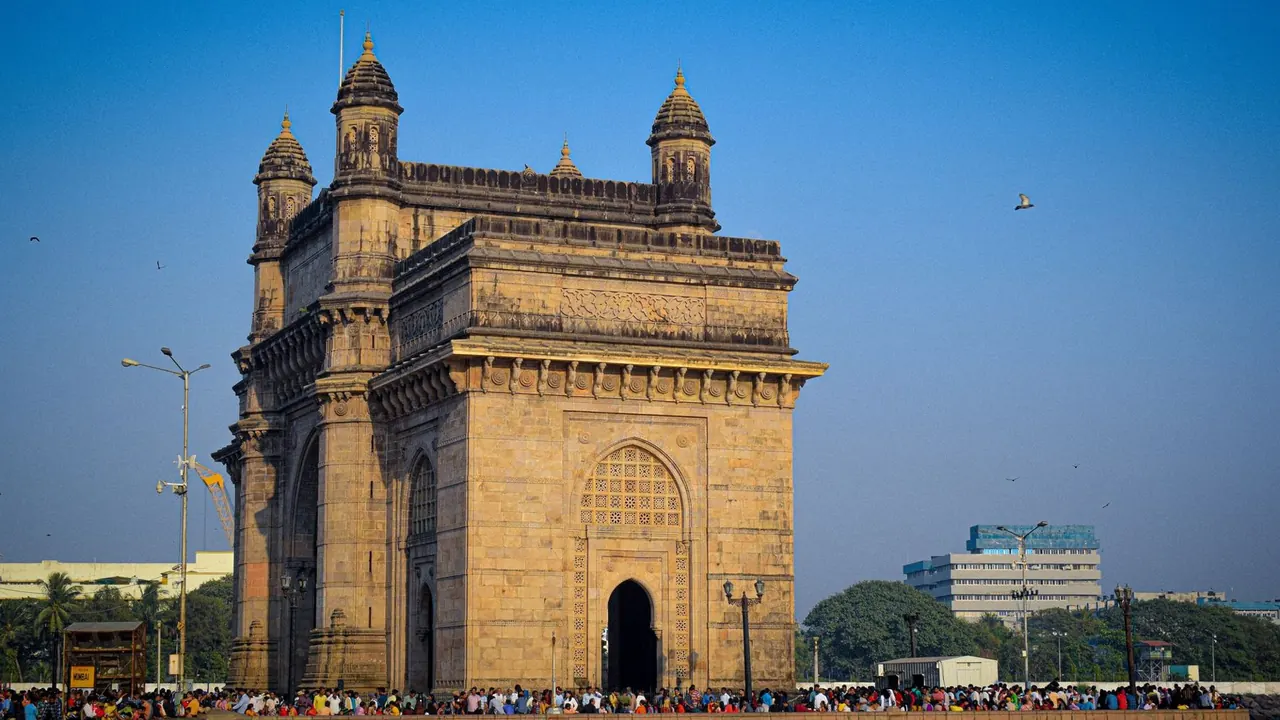
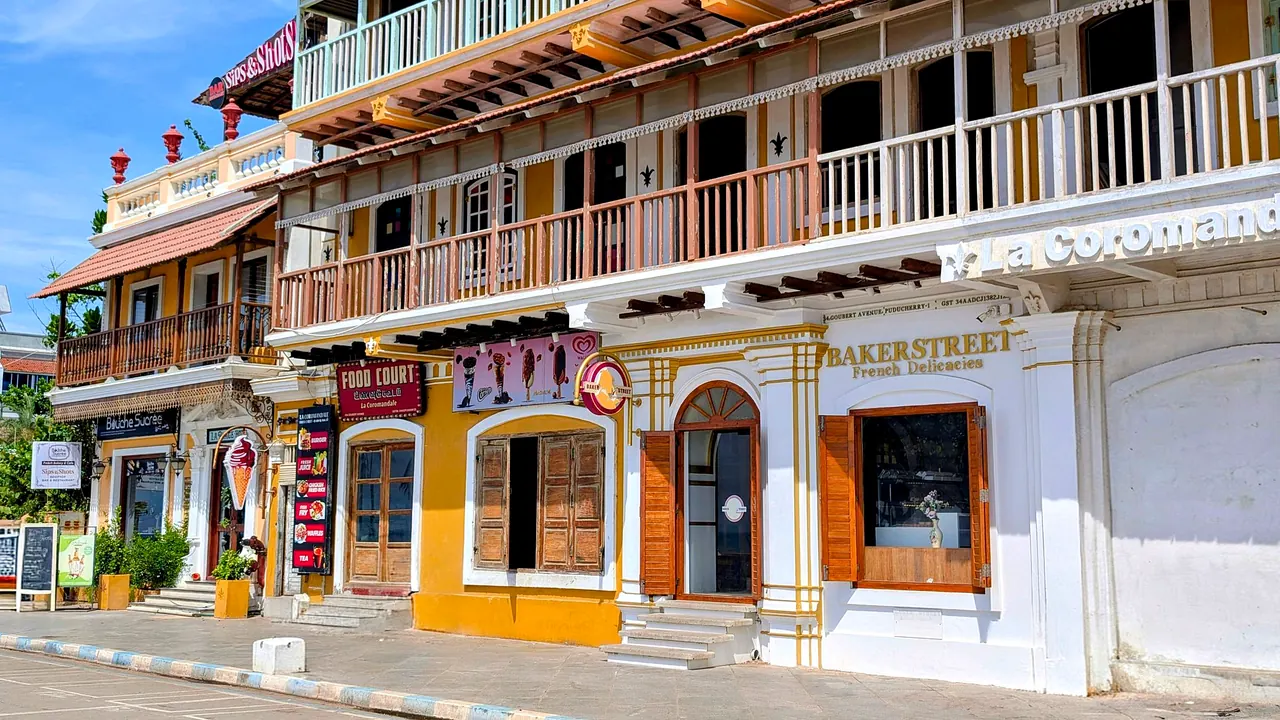
Photos: Mumbai by Shubam Bhasin, Pexels License; Pondicherry by Tushar, Pexels License.
Mumbai or Pondicherry?
Our verdict in twelve categories, each scored against the same fixed benchmark cities, and the climate month by month, so you can choose for your trip.
Choose Mumbai for
- live music and the arts
- nightlife
- food and drink
Mumbai is for travellers who want a big city to work through. It has street food from station carts to Malvani seafood kitchens, the Gothic and Art Deco streetscape around the Oval Maidan, a proper concert hall and theatre scene, and late dinners followed by drinks in Bandra or Lower Parel. You need patience with traffic, crowds and heat, and the city gives you little rest in return.
Choose Pondicherry for
- wellness
- beaches
- day trips
Pick Pondicherry for a slower, cheaper trip of quiet streets, yoga and sea air. The Ashram and Auroville make it one of the easiest places in India to unwind, the French and Tamil quarters are a pleasure on foot, and the great temples of Mahabalipuram and Chidambaram are within a day's drive. The trade-off is thin nightlife and almost no stage, and a few days covers the town itself.
Scoreboard
Twelve categories on one fixed scale from 0 to 100. The shaded stretch is the gap between the two.
Your match
Pick a travel style or drag the sliders, and both match scores follow your weighting.
Too close to call, 2 points apart
Wins on live music and the arts and nightlife with your weighting.
Wins on wellness and beaches with your weighting.
What matters to you?
Category by category
What the scores mean for a trip.
Beaches & swimming
Neither city is built for swimming, but Pondicherry gets you onto usable sand much more easily. Serenity Beach and the Auroville shore are a short scooter ride north, and Paradise Beach is a boat trip through the backwaters. The warm water is good for wading near the lifeguards, though the Bay of Bengal surf rules out proper swims.
Mumbai's Juhu and Girgaum Chowpatty are places to watch the sunset over a plate of bhel puri, not to go in. The water is murky, and in the monsoon swimming is banned. For a real swim you need a day out to Alibaug or a hotel pool.
Food & drink
Mumbai is one of India's great eating cities and has far more range than Pondicherry. You could spend weeks on vada pav from the station carts, bun maska in the Irani cafés of Fort and Colaba, Malvani crab curries, Parsi dhansak and Gujarati thalis. Bandra and Lower Parel add a serious modern restaurant scene.
Pondicherry's appeal is its mix rather than its depth: banana-leaf meals and filter coffee in the Tamil Quarter, Creole Franco-Tamil cooking, French bakeries and long lunches in colonial courtyards. It is a pleasure for a few days, and beer and wine are easier to find there than in most of the south.
Culture & sights
Mumbai has the grander sights. The Chhatrapati Shivaji Maharaj Terminus is a Gothic Revival station of real extravagance, Victorian and Art Deco buildings face each other across the Oval Maidan, and the former Prince of Wales Museum holds fine sculpture and miniatures. Getting between the sights is slow, though.
In Pondicherry, the town itself is the main sight, best seen on foot. Ochre villas line the French Quarter, veranda houses stand across the canal, and there are churches, a temple elephant and the quiet of the Ashram samadhi. You can see it all well in two or three days, but its landmarks are modest beside Mumbai's.
Nightlife
Mumbai gives you a real night out, with dressy cocktail bars, gastropubs and a few clubs in Bandra, Khar and the old mill compounds of Lower Parel. Even so, most places shut around 1am and drinks are heavily taxed.
Pondicherry has cheaper drinks and more bars than its size would suggest, from rooftop lounges to beach shacks, but no clubs. Most evenings end with a stroll on the Promenade.
Nature & outdoors
Mumbai offers more outdoors, largely because of Sanjay Gandhi National Park. This leopard forest, with trails and the Kanheri caves, sits inside the city's northern suburbs. The Western Ghats begin about two hours inland, where Matheran and the hill forts turn green in the monsoon.
Pondicherry's flat coastal plain has no hiking. Its outdoors is about water: surfing at Serenity Beach, diving on reefs and wrecks, boats through the backwaters and pelicans on Ousteri Lake in winter. Both cities get flamingos in the cooler months.
Day trips
Pondicherry is the better base for outings because it sits among the great sites of Tamil temple country. The Pallava Shore Temple and carved rock reliefs at Mahabalipuram, the Nataraja temple at Chidambaram, Gingee Fort on its granite hills and the pilgrimage town of Tiruvannamalai each make a strong full day by car.
From Mumbai, the boat to Elephanta's Shiva caves is a superb harbour trip, and the caves at Karla and Bhaja are worth the drive. But Ajanta, Ellora and Pune are too far for a day, and slow traffic makes leaving the city hard work.
Good for families
Neither city is easy with children, and each is hard in its own way. Mumbai has more to do, with the Nehru Science Centre, the Byculla zoo and the Gateway ferries. But crowds, traffic and broken pavements make every outing a chore, and a car and driver helps a lot.
Pondicherry has little made for children. Still, the shaded French Quarter and the Promenade, which closes to traffic in the evening, give them room to run, and a cycle around Auroville makes an easy day. It suits older children better, because the surf only allows paddling under close watch.
Getting around
Both cities get harder to move around once you leave the old centre, but in different ways. Mumbai has a suburban railway and a partial metro for its long distances, but rush hours are crushing and road traffic can turn a short trip into an hour. Only the Fort and Colaba area is pleasant to walk.
Pondicherry is small enough to cover the French Quarter and the Promenade on foot or by bicycle. It has no rail beyond that, so for the beaches and Auroville you need rickshaws, app taxis or a hired scooter.
Shopping & style
Mumbai is the far bigger shopping city. It runs from the Victorian hall of Crawford Market and the gold of Zaveri Bazaar to the antiques and old film posters of Chor Bazaar. Kala Ghoda and Bandra have designer and handloom boutiques, and the luxury brands are in the malls.
Pondicherry is better for a smaller bag of well-chosen gifts: Indo-French linen and block prints in the French Quarter, handmade paper and incense from the Ashram, and pottery and soaps from Auroville. It has no luxury shopping.
Affordability
Day to day, both cities are cheap: street food, rickshaws and sights cost little. The difference is where you sleep. Comfortable rooms in Mumbai cost far more than elsewhere in India, decent budget places are scarce, and drinks in the smart bars are heavily taxed.
Pondicherry has simple guesthouses near the Ashram and cheap rooms in the Tamil Quarter or near the beaches, and drinks there are cheaper than in neighbouring states. Your money goes further, and only the boutique hotels of the French Quarter push the bill up.
Live music & performing arts
Mumbai has a real stage. The National Centre for the Performing Arts is home to the Symphony Orchestra of India and also puts on Hindustani music and jazz. The small Prithvi Theatre in Juhu is the heart of the city's Hindi and English theatre, and Marathi plays fill halls in Dadar.
Pondicherry has no regular programme. There are occasional Bharatanatyam and Carnatic recitals, events at the French cultural centre and music at temple festivals, so catching a performance is a matter of luck.
Wellness & relaxation
This is where Pondicherry pulls well ahead. You can sit in meditation in the Ashram courtyard, take yoga and breathwork in Auroville, stay in a forest guesthouse and join yoga courses lasting several weeks, so a stay can easily become a retreat.
Mumbai has luxury hotel spas, Ayurvedic massage and yoga studios in Bandra, but the city outside stays loud and humid. Its calm moments are an early walk on Marine Drive or a sit by the Banganga Tank, and for a true retreat people leave for Lonavala.
When should you go?
Pick your month. The climate figures are measured averages, not a forecast.
Mumbai in July
Pondicherry in July
Daytime high, °C
Rainfall in the month, mm
Temperature and rainfall are climate normals, averaged over the years shown. Mumbai: 1991-2020 (rainfall 1961-1990) normals, Bombay / Santacruz (5.4 km from centre). Pondicherry: 1991-2020 (rainfall 1961-1990) normals, Cuddalore (19.8 km from centre).
Both cities are hot all year, so the choice comes down to rain, and their wet seasons fall at different times. Mumbai is almost completely dry from November to May, with long sunny days. The monsoon breaks in June and peaks in July at about 842mm with little sun, and in those months the sea turns rough and swimming is banned. Highs change little through the year. The hottest spells, around 34°C in May and again in October and November, feel heavy and humid, so January and February are the easiest months for walking the streets.
Pondicherry's heavy rain comes later, from October to December, and November is the wettest month at about 456mm. Its summer is fiercer than Mumbai's, with highs near 37°C in May and June that make daytime walking hard. Midwinter is milder than in Mumbai, around 29°C in December. After January's showers, February opens the driest stretch of Pondicherry's year, though Mumbai stays drier still in those months. Its best months are January to March, and the sea is warm enough for wading all year. If you want to visit both cities on one trip, February suits them equally well.
Which traveller are you?
On a relaxing and wellness trip, Pondicherry is the natural choice. You can join the meditation in the Ashram courtyard, do yoga and bodywork in Auroville, stay in a forest guesthouse and find Ayurvedic centres everywhere. In loud, humid Mumbai you can only really relax inside a hotel spa.
For a food and nightlife trip, Mumbai wins on both counts. Vada pav carts, Irani cafés, Konkani seafood and the Ramadan kebab grills on Mohammed Ali Road give it far more range. Bandra and Lower Parel have cocktail bars and clubs, while Pondicherry's evenings end early.
On a beach and sun trip, neither city is a swimming resort, but Pondicherry comes closer. Serenity Beach and Paradise Beach are a short ride away, with warm water for wading and surf schools. Mumbai's city sands are for sunset walks, and to swim you take the ferry to Alibaug.
Before you go
| Measure | Mumbai | Pondicherry |
|---|---|---|
| Official language | Hindi, English | Hindi, English |
| Currency | Indian Rupee (INR) | Indian Rupee (INR) |
| Sockets | CM230 V, 50 Hz | CM230 V, 50 Hz |
| Driving side | Left | Left |
| Time zone | UTC+5:30 | UTC+5:30 |
| Emergency number | 108 or 112 | 108 or 112 |
| Elevation | 14 m | 3 m |
| Main airport | Chhatrapati Shivaji Maharaj International Airport (BOM)2 km from centre122 non-stop destinations | Chennai International Airport (MAA)123 km from centre67 non-stop destinations |
By the numbers
| Measure | Mumbai | Pondicherry |
|---|---|---|
| City population | 15,414,288 | - |
| People per km² | 25,563 | - |
| Museums within 10 km | 1 | 3 |
| UNESCO World Heritage sites within 50 km | 4 | 0 |
| Swim season, months above 21 °C | 12 months | 12 months |
Where else could you go?
Every comparison below shares a destination with this one, so you can follow Mumbai or Pondicherry somewhere new.
- Mysorevs Pondicherry
- Kochivs Pondicherry
- Colombovs Pondicherry
- Udaipurvs Mumbai
- Gallevs Pondicherry
- Jodhpurvs Mumbai