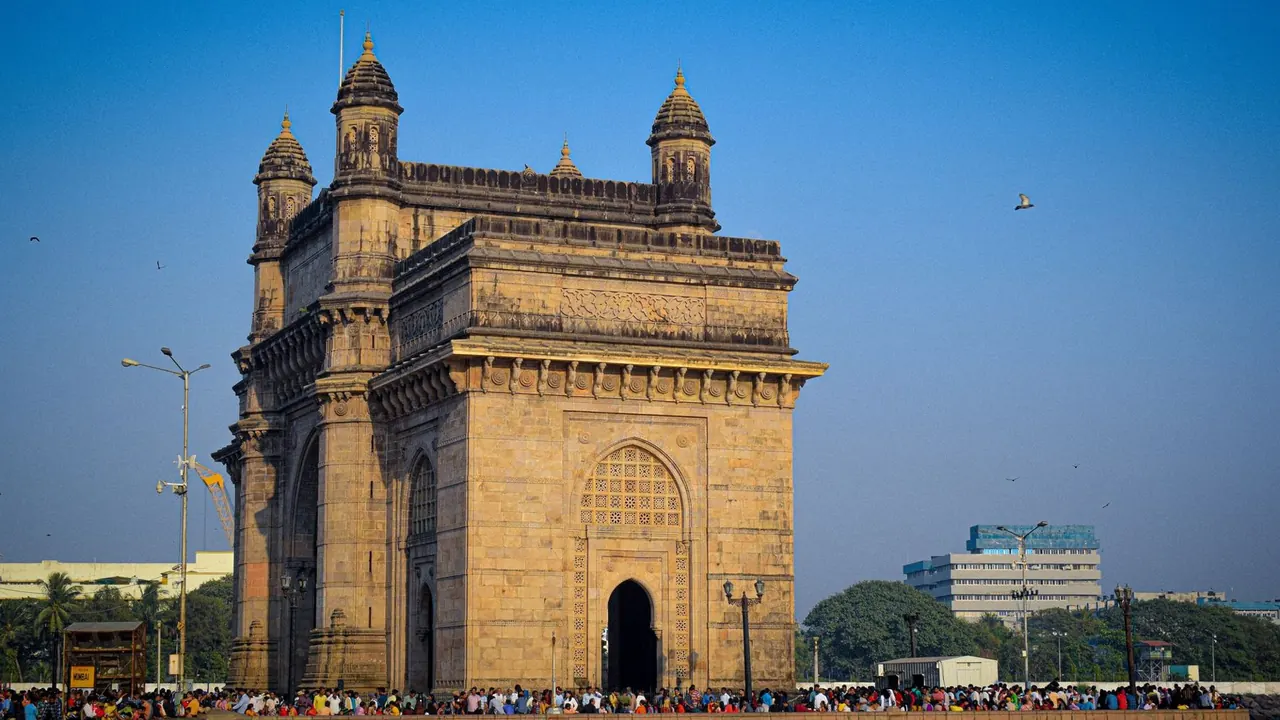
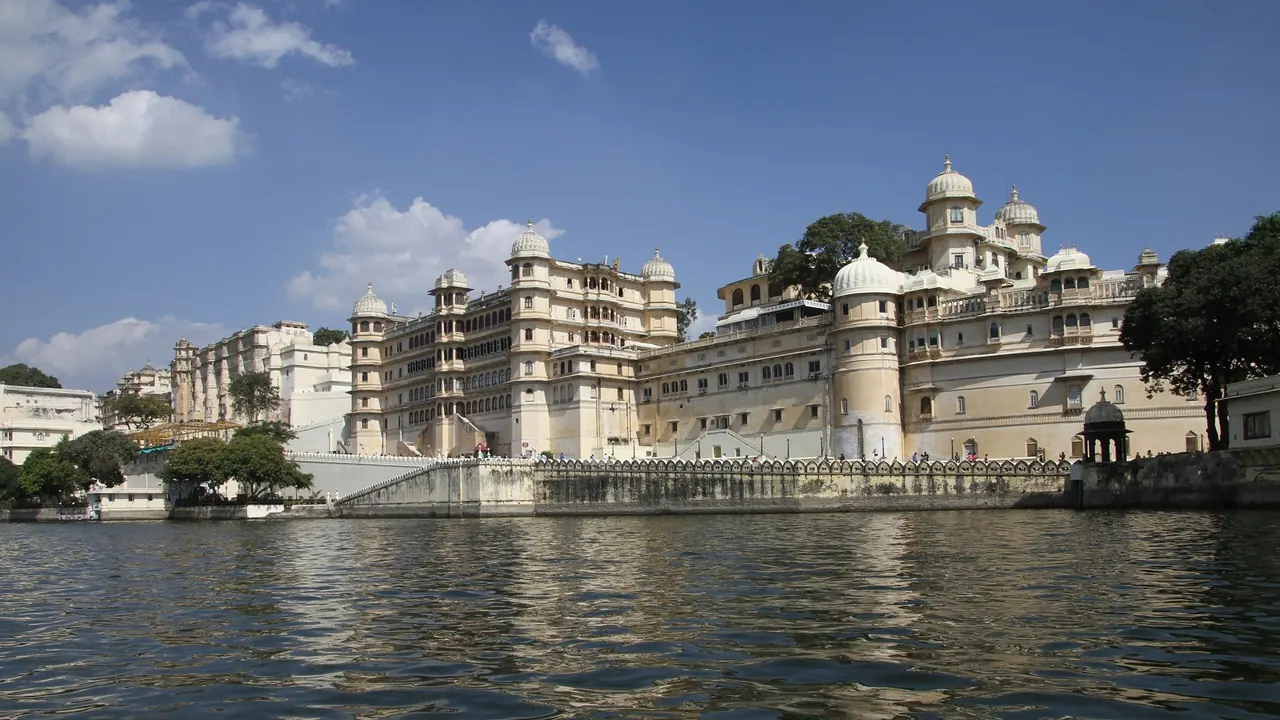
Photos: Mumbai by Shubam Bhasin, Pexels License; Udaipur by Gerd Eichmann, CC BY-SA 4.0, cropped.
Mumbai or Udaipur?
Our verdict in twelve categories, each scored against the same fixed benchmark cities, and the climate month by month, so you can choose for your trip.
Choose Mumbai for
- food and drink
- nightlife
- live music and the arts
Mumbai is for the traveller who wants a big city at full volume. It has the better eating of the pair by a distance, from station-side vada pav to Malvani crab curry, plus a real bar scene in Bandra and Lower Parel, a proper arts centre at Nariman Point and shopping that runs from the gold lanes of Zaveri Bazaar to designer boutiques.
Choose Udaipur for
- wellness
- day trips
- prices
In return it asks for patience: journeys along the long, thin city are slow, and peace is hard to find outside a hotel.\n\nA slower, more romantic trip belongs in Udaipur. The palaces and lakes make a compact set piece, evenings are spent on terraces at sunset rather than in bars, and the town is the better base for the forts and temples of Mewar, from Kumbhalgarh and Ranakpur to Chittorgarh. Day to day it costs less, and it is far easier to unwind there, above all in the cool winter months.
Scoreboard
Twelve categories on one fixed scale from 0 to 100. The shaded stretch is the gap between the two.
Your match
Pick a travel style or drag the sliders, and both match scores follow your weighting.
Wins on food and drink and nightlife with your weighting.
Wins on wellness and day trips with your weighting.
What matters to you?
Category by category
What the scores mean for a trip.
Beaches & swimming
Neither city is a place to swim, but Mumbai at least has a shore. Juhu and Girgaum Chowpatty are broad sands for a sunset walk, kite flying and snacks. If you are set on getting into the water, a ferry across the harbour reaches the cleaner Alibaug coast for a day out.\n\nUdaipur lies in the Aravalli hills far from any coast, and its lakes are for boating, not bathing. In both cities the hotel pool is the realistic answer, though in Udaipur's heritage hotels the pool often looks out over Lake Pichola.
Food & drink
Food is one of the widest gaps between the two. Mumbai eats everywhere and at every hour: vada pav from carts by the stations, bhel puri at Chowpatty, bun maska in the old Irani cafés of Fort and Colaba, and Konkani pomfret and crab in coconut curries. Parsi and Gujarati cooking and a serious restaurant tier in Bandra and Lower Parel add to it.\n\nUdaipur gives a few good days of Mewari cooking, such as dal baati churma, laal maas, thalis with refills and ghewar from the sweet shops. The best of it is in the bazaars away from the water, because the lakeside rooftops sell the view more than the food.
Culture & sights
Both cities give several full days of sightseeing, but of very different kinds. Mumbai's sights are the buildings of the British port: the Gothic extravagance of Chhatrapati Shivaji Maharaj Terminus, the Victorian and Art Deco frontages facing each other across the Oval Maidan, and real museums with sculpture and miniature painting. The Kala Ghoda galleries and the Haji Ali Dargah add more, but they are all spread out, and traffic eats into the day.\n\nUdaipur is one princely ensemble: the City Palace rising from Lake Pichola, the Lake Palace and Jag Mandir on the water and the havelis around the Jagdish Temple behind. It is more romantic and easier to take in, with less variety than Mumbai.
Nightlife
Mumbai has a real night out. Cocktail bars, gastropubs and a few clubs fill Bandra, Khar and the mill compounds of Lower Parel, and Colaba has an older bar strip, though everything closes early for a city of its size. In Udaipur the evening is a rooftop drink over Lake Pichola and a long dinner. There are a few hotel and lounge bars but no club scene, and the old city is quiet well before midnight.
Nature & outdoors
Mumbai has more outdoors than its reputation suggests. Sanjay Gandhi National Park puts forest, leopards and the Kanheri caves inside the northern suburbs, and flamingos feed on the Sewri mudflats in winter. The Western Ghats around Lonavala and Matheran offer green monsoon hiking about two hours inland.\n\nUdaipur's nature is gentler and more scenic: low Aravalli hills around the lakes, boat rides, the Sajjangarh sanctuary and short hikes or bike rides through hill villages, with Kumbhalgarh's jungle further out. It is lovely to look at but offers less to do, and only in the cooler months.
Day trips
Here Udaipur clearly comes out ahead. Eklingji and the carved ruins of Nagda are half an hour away and Nathdwara about an hour. Kumbhalgarh's ridge-top walls pair with the marble Jain temple at Ranakpur, and Chittorgarh lies to the east, enough for several full days with a car and driver.\n\nMumbai has one essential outing, the boat to the Shiva carvings on Elephanta Island. After that come the Karla and Bhaja caves or the Alibaug coast, but getting out of the city by road is slow, and Ajanta and Ellora are too far for a comfortable day.
Good for families
Neither city is easy with children, and each falls short in its own way. Mumbai has more to fill an afternoon, with the Nehru Science Centre, the Byculla zoo, the Gateway ferries and ice cream at Chowpatty, but crowds, traffic and monsoon rain wear families down.\n\nUdaipur is smaller and calmer. Its boat rides, puppet shows, palaces and cable car suit older children who like history, best on a winter visit, though the narrow lanes shared with motorbikes and cows need care. In both cities, a hotel pool to come back to matters.
Getting around
Mumbai is slow to cross, but it does have transport a visitor can use. The suburban railway runs the length of the city outside rush hour, the metro covers part of it, and taxis, rickshaws and ride-hailing fill the gaps. The Fort, Kala Ghoda and Colaba area is pleasant on foot.\n\nUdaipur's old city is small enough to walk, though the lanes are steep in places and full of motorbikes. Beyond it there is no public transport worth using, so the hilltop sights and every day trip depend on autorickshaws, ride-hailing or a hired driver.
Shopping & style
Mumbai has far more range. Crawford Market sells spices under its Victorian hall, Zaveri Bazaar is the gold and jewellery quarter and Chor Bazaar has antiques and old film posters. Colaba Causeway and Linking Road are lined with stalls, Kala Ghoda and Bandra have designer and handloom boutiques, and the malls carry the luxury brands.\n\nUdaipur is narrower but more specialised: a crafts town for miniature paintings from workshops near the City Palace, bandhani and block prints, silver and puppets, with the Shilpgram fair each December. There are no fashion streets, and the selling near the palace is pushy.
Affordability
Both cities are cheap at street level, but Udaipur makes a budget go further. Simple guesthouses in the old city are easy to find and inexpensive, comfortable mid-range lakeside rooms sit in between, and only the palace and heritage haveli hotels reach luxury prices.\n\nIn Mumbai, street food, trains and rickshaws cost little, but good rooms are expensive by Indian standards and decent budget ones are scarce. Heavily taxed cocktails push an evening out towards Western prices.
Live music & performing arts
Formal stages against folk shows is the divide here. In Mumbai, the National Centre for the Performing Arts at Nariman Point is home to the Symphony Orchestra of India and puts on Hindustani classical music, dance and jazz. The small Prithvi Theatre in Juhu and the Marathi stages of Dadar keep theatre alive, and the Kala Ghoda Arts Festival brings street performance each winter.
Udaipur offers folk performance instead: the evening dance show at Bagore ki Haveli, puppetry kept going by Lok Kala Mandal and musicians at the Shilpgram fair. It makes a pleasant evening, but there is no classical music or theatre to follow.
Wellness & relaxation
Udaipur is much the easier place to slow down. Ayurvedic massage and yoga classes are on offer all over the old city, and the lake hotels run elaborate spas. A terrace over Lake Pichola at sunset is restful in itself, even if the lanes behind stay loud with traffic.\n\nIn Mumbai you have to look for calm: in a luxury hotel spa, a Bandra yoga studio, or an early walk along Marine Drive or beside the Banganga Tank. The rest of the day is humid, crowded and noisy.
When should you go?
Pick your month. The climate figures are measured averages, not a forecast.
Mumbai in July
Udaipur in July
Daytime high, °C
Rainfall in the month, mm
Where the figures come from
Udaipur has no rain gauge within 25 km of the centre, so its rainfall comes from a gridded climate dataset read at the city rather than from a gauge further away.
Temperature and rainfall are climate normals, averaged over the years shown. Mumbai: 1991-2020 normals, Bombay / Santacruz (5.4 km from centre). Udaipur: 1978-2025 (rainfall 1991-2020) normals, Udaipur Dabok (20.6 km from centre).
Mumbai is hot all year, with daytime highs that hardly leave the low thirties, so what really divides its year is the rain. From November to May it is almost completely dry and sunny, and the sea stays warm in every month, about 25°C even in January, though the water off the city is not for swimming. The monsoon arrives in June and peaks in July with around 860mm of rain and barely two hours of sun a day, then eases through September.
October is hot and sticky as it clears.\n\nUdaipur swings much further. December and January bring highs of about 24°C, ideal for walking the palaces and old lanes, and the pleasant dry spell runs from October to March. From April to June the heat is punishing, reaching 39°C in May. The July to September monsoon is far lighter than Mumbai's and fills the lakes and turns the hills green. For a winter trip both work, but Udaipur is the more comfortable for a day on foot.
Which traveller are you?
For a food and nightlife trip, choose Mumbai. Station-side vada pav, Irani cafés and Malvani seafood fill the days, and Bandra and Lower Parel add cocktail bars and clubs. Udaipur offers good thalis and a sunset rooftop, then quiet.
On a relaxing and wellness trip, Mumbai's noise, humidity and crowds push rest behind hotel doors. Udaipur is far gentler, with Ayurvedic treatments and yoga classes all over the old city, palace hotel spas and lakeside terraces for sunset.
For a shopping trip, Mumbai wins on breadth: gold in Zaveri Bazaar, antiques in Chor Bazaar, stalls along Colaba Causeway and handloom boutiques in Bandra and Kala Ghoda. Udaipur is worth it mainly for crafts: miniature paintings, bandhani and silver.
Before you go
| Measure | Mumbai | Udaipur |
|---|---|---|
| Official language | Hindi, English | Hindi, English |
| Currency | Indian Rupee (INR) | Indian Rupee (INR) |
| Sockets | CM230 V, 50 Hz | CM230 V, 50 Hz |
| Driving side | Left | Left |
| Time zone | UTC+5:30 | UTC+5:30 |
| Emergency number | 108 or 112 | 108 or 112 |
| Elevation | 14 m | 578 m |
| Main airport | Chhatrapati Shivaji Maharaj International Airport (BOM)2 km from centre122 non-stop destinations | Maharana Pratap Airport (UDR)22 km from centre11 non-stop destinations |
By the numbers
| Measure | Mumbai | Udaipur |
|---|---|---|
| City population | 15,414,288 | 451,100 |
| People per km² | 25,563 | 12,192 |
| Museums within 10 km | 1 | 3 |
| UNESCO World Heritage sites within 50 km | 3 | 0 |
| Swim season, months above 21 °C | 12 months | - |
Where else could you go?
Every comparison below shares a destination with this one, so you can follow Mumbai or Udaipur somewhere new.