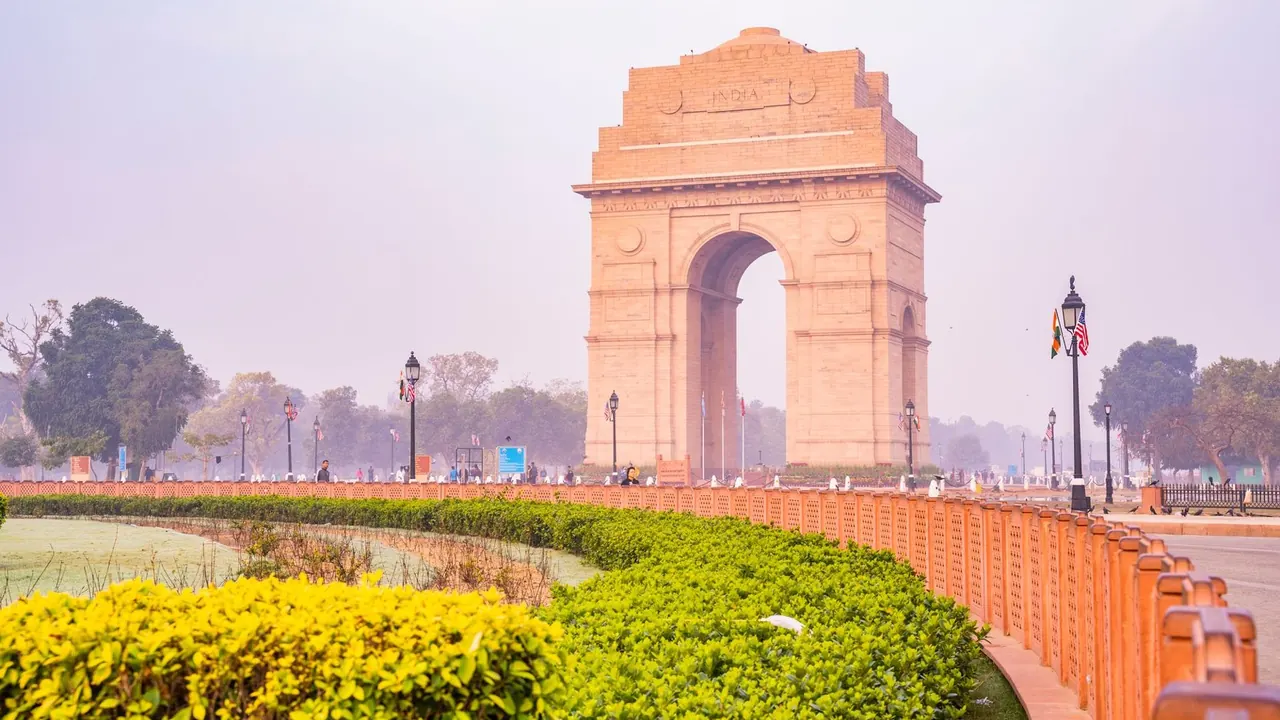
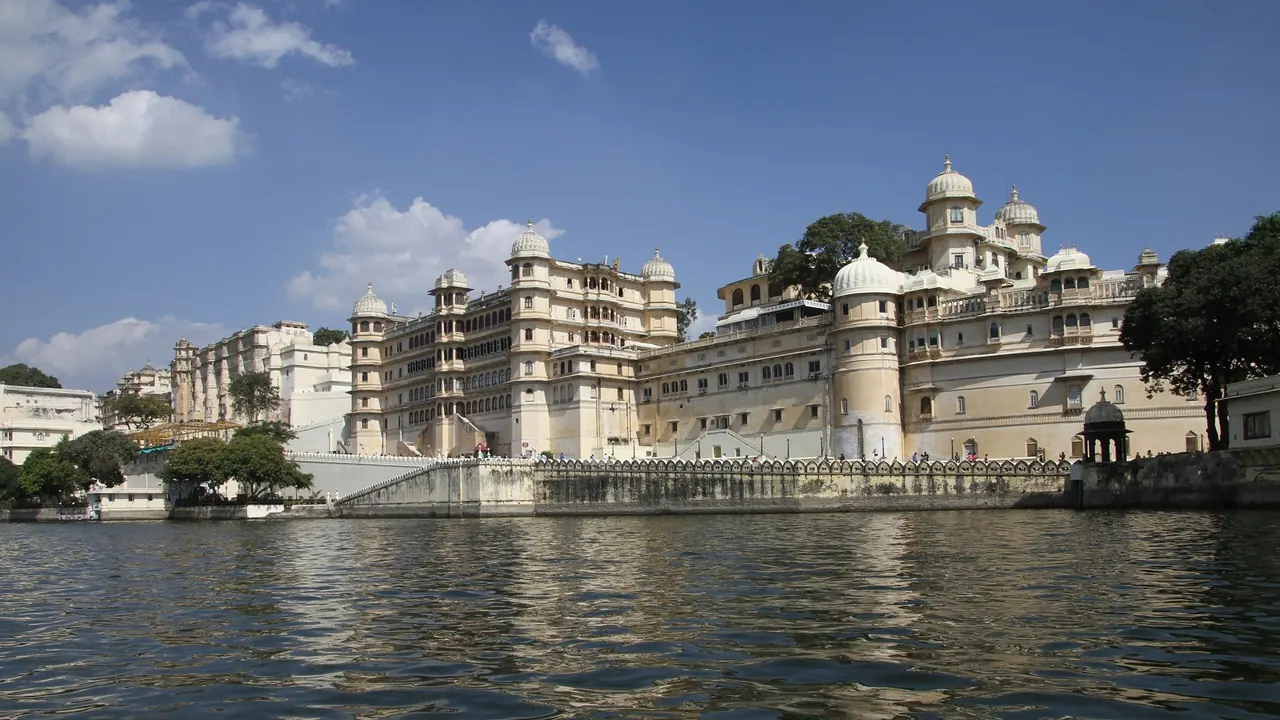
Photos: Delhi by shalender kumar, Pexels License; Udaipur by Gerd Eichmann, CC BY-SA 4.0, cropped.
Delhi or Udaipur?
Our verdict in twelve categories, each scored against the same fixed benchmark cities, and the climate month by month, so you can choose for your trip.
Choose Delhi for
- food and drink
- shopping
- getting around
Delhi suits the traveller who wants India at full scale: Mughal monuments spread across a vast capital, some of the best eating in the country from Old Delhi's stalls to South Delhi's tasting menus, serious bazaars and a winter season of classical music and dance. It takes energy and planning, and the metro makes that manageable, but it is never restful.
Choose Udaipur for
- nature and the outdoors
- wellness
- beaches
For a slower, more romantic stay, Udaipur is the better pick. The City Palace and the island palaces on Lake Pichola make a compact old city you can mostly walk, the hills and lakes around it give easy time outdoors, and evenings end with a rooftop sunset rather than a night out. Food, shopping and nightlife are thinner, so it rewards a few unhurried days more than a long stay.
Scoreboard
Twelve categories on one fixed scale from 0 to 100. The shaded stretch is the gap between the two.
Your match
Pick a travel style or drag the sliders, and both match scores follow your weighting.
Wins on food and drink and shopping with your weighting.
Wins on nature and the outdoors and wellness with your weighting.
What matters to you?
Category by category
What the scores mean for a trip.
Beaches & swimming
Neither city has a beach or any swimming outside a hotel pool, as both lie far inland. Where they differ is the water you look at. Delhi's Yamuna plays no part in a visit, while Udaipur's lakes are central to it, with boat rides on Pichola and heritage hotels whose pools look over the water. Beach time on either trip means flying on to Goa or Kerala.
Food & drink
Delhi is one of India's great eating cities and Udaipur is not. The lanes around Chandni Chowk alone, with stuffed parathas, slow-cooked nihari and kebabs over coals, outdo most whole towns. Delhi also invented butter chicken and dal makhani, and its restaurants range from Kashmiri and Keralan kitchens to modern tasting menus.
Udaipur offers a few good days of Mewari cooking: dal baati churma, laal maas, thalis with refills and morning kachori in the bazaars. The lakeside rooftops sell the view more than the food, so the best meals are found away from the water.
Culture & sights
Delhi has the deeper and broader list of sights. It has three UNESCO sites in the Red Fort, Humayun's Tomb and the Qutb Minar, along with Jama Masjid, the Lodi tombs, the imperial avenue of Kartavya Path and the national collections of art and antiquities. The cost is distance, because the sights are scattered and each day needs planning.
Udaipur's strength is coherence. The City Palace, the white island palaces on Lake Pichola and the havelis around Jagdish Temple form one romantic picture that two or three days cover properly, where Delhi could fill a week.
Nightlife
Neither is a nightlife destination, but Delhi can at least give you a proper night out. There are rooftop bars in Hauz Khas Village, pubs under the Connaught Place colonnades and bigger clubs and brewpubs in Gurugram, all best at weekends and reached by taxi.
Udaipur's evening is a sunset drink over Lake Pichola, a long dinner and an early night. It has a few hotel and lounge bars and no club scene at all.
Nature & outdoors
Udaipur sits in a real landscape of low Aravalli hills wrapped around Pichola, Fateh Sagar and the other lakes. The Sajjangarh forest, walks through hill villages and cycling routes are close by, and the Kumbhalgarh sanctuary lies further out. Delhi's outdoors comes down to parks such as Lodhi Gardens and Sunder Nursery, the scrubby Ridge forest and winter birdwatching at Okhla and Sultanpur, and smog often rules out exercise in the cooler months.
Day trips
Both make strong bases, but for different kinds of outing. From Delhi the prize is Agra and the Taj Mahal by fast train, with Fatehpur Sikri and the Krishna towns of Mathura and Vrindavan as other choices, and rail is the way to travel.
Udaipur's trips are to Rajput forts and temples by road. You can pair the long walls of Kumbhalgarh with the marble Jain temple at Ranakpur, drive east to Chittorgarh, or stay close at Eklingji and Nagda. These are long days with a hired driver rather than a train ride.
Good for families
Both are hard work with small children, and in both, Indian families will make a fuss of them. Delhi has more built for children, with the National Rail Museum, the zoo, the science centre and big water parks on the outskirts, but heat, smog and traffic weigh heavily on a young family.
Udaipur offers boat rides, puppet shows and the cable car instead, in a smaller place where the main trouble is narrow old-city lanes with hardly any pavement. It works best for older children who are curious about palaces and history.
Getting around
Delhi is harder to cross but much better equipped. Its metro is clean, air-conditioned and signed in English, and it reaches most monuments and the airport, with autos and app taxis covering the gaps. Udaipur has no public transport a visitor would use: its old city is compact enough to walk, though narrow and full of motorbikes, and the hilltop sights and every day trip need a hired driver.
Shopping & style
Delhi is by far the bigger market. Crafts from every state are gathered at Dilli Haat and the state emporiums, Old Delhi has specialist bazaars such as Khari Baoli for spices, and the city adds designer boutiques in Khan Market and Shahpur Jat, bargain streets at Janpath and Sarojini Nagar and luxury brands in the South Delhi malls.
Udaipur's range is narrower but more local: miniature paintings made in workshops by the City Palace, bandhani and block-printed textiles, silver and puppets. There is no fashion shopping, and sellers near the palace push hard.
Affordability
Both are very cheap day to day, with street food, thalis and autorickshaw rides costing little. The difference is where the money goes. In Delhi the metro keeps transport cheap and the expense lies in grand hotels, smart South Delhi restaurants and imported drinks. In Udaipur the splurge is the lake view itself, in the form of a room in a palace or heritage haveli on Pichola.
Live music & performing arts
Delhi has a real performing season. Through the cooler months, the halls around Mandi House and Lodhi Road host Hindustani recitals and Kathak and Bharatanatyam dance. The National School of Drama anchors the country's theatre, though plays are mostly in Hindi, and qawwali at the Nizamuddin shrine is free.
Udaipur offers a staged introduction rather than a full programme: the folk dance show at Bagore ki Haveli, puppetry kept alive by Lok Kala Mandal, and folk musicians at the December crafts fair at Shilpgram.
Wellness & relaxation
Udaipur is the gentler place to slow down. Ayurvedic massage and yoga are on offer throughout the old city, the lakeside palace hotels run spas, and the lake at sunset gives the day its calm. Its back lanes are still loud, so the peace is found in the hotel and on the water.
Delhi has good hotel spas and Ayurveda centres in South Delhi, but the noise, traffic and winter smog never let up. Real quiet comes only early in the morning in its gardens or inside a gurudwara or Sufi shrine.
When should you go?
Pick your month. The climate figures are measured averages, not a forecast.
Delhi in July
Udaipur in July
Daytime high, °C
Rainfall in the month, mm
Where the figures come from
Udaipur has no rain gauge within 25 km of the centre, so its rainfall comes from a gridded climate dataset read at the city rather than from a gauge further away.
Temperature and rainfall are climate normals, averaged over the years shown. Delhi: 1991-2020 normals, New Delhi / Safdarjung (9.4 km from centre). Udaipur: 1978-2025 (rainfall 1991-2020) normals, Udaipur Dabok (20.6 km from centre).
Both cities are at their best from October to March. Both are punishing from April to June, when Delhi climbs to around 40°C and walking between monuments becomes an ordeal. Delhi's winter is the cooler of the two. January highs near 20°C are pleasant for long days of sightseeing, though December and January bring the fewest sunny hours. The monsoon reaches both cities in late June and is heaviest in July and August.
Udaipur stays a few degrees warmer through the winter and is almost completely dry from October to May, so the cool season is reliable for sitting out on lakeside terraces. Its monsoon is the heavier of the two, with about 257mm in July, but that is also when the lakes fill and the hills turn green, so the weeks just after the rains show the setting at its fullest.
Which traveller are you?
On a food and nightlife trip, Delhi is the one to choose. You can plan whole days around eating, from street carts at breakfast to a regional kitchen at dinner, then take a taxi on to a bar. Udaipur offers a couple of good meals and an early night.
For a relaxing and wellness trip, Udaipur lets you stay put. With a lakeside room, the treatments, the pool and the view are all in one place, and a day can hold very little. Delhi means constant crossings of a loud city, so rest takes effort.
On an outdoors trip, Udaipur puts you inside a landscape rather than next to one. Hills and water begin at the edge of town, so a morning on foot or by bicycle needs no long transfer. In Delhi, being outdoors means a park walk, and the mountains need a separate journey.
Before you go
| Measure | Delhi | Udaipur |
|---|---|---|
| Official language | Hindi, English | Hindi, English |
| Currency | Indian Rupee (INR) | Indian Rupee (INR) |
| Sockets | CM230 V, 50 Hz | CM230 V, 50 Hz |
| Driving side | Left | Left |
| Time zone | UTC+5:30 | UTC+5:30 |
| Emergency number | 108 or 112 | 108 or 112 |
| Elevation | 221 m | 578 m |
| Main airport | Indira Gandhi International Airport (DEL)17 km from centre144 non-stop destinations | Maharana Pratap Airport (UDR)22 km from centre11 non-stop destinations |
By the numbers
| Measure | Delhi | Udaipur |
|---|---|---|
| City population | 26,495,000 | 451,100 |
| People per km² | 18,962 | 12,192 |
| Museums within 10 km | 23 | 3 |
| UNESCO World Heritage sites within 50 km | 4 | 0 |
Where else could you go?
Every comparison below shares a destination with this one, so you can follow Delhi or Udaipur somewhere new.