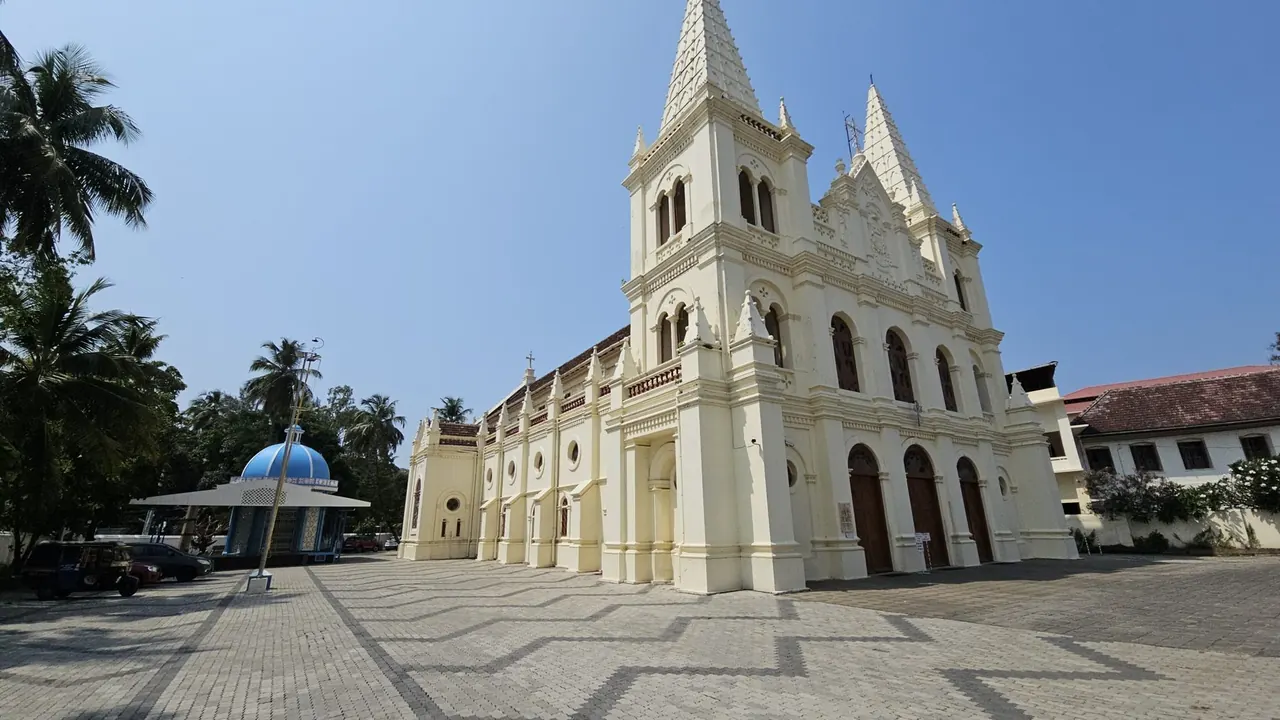
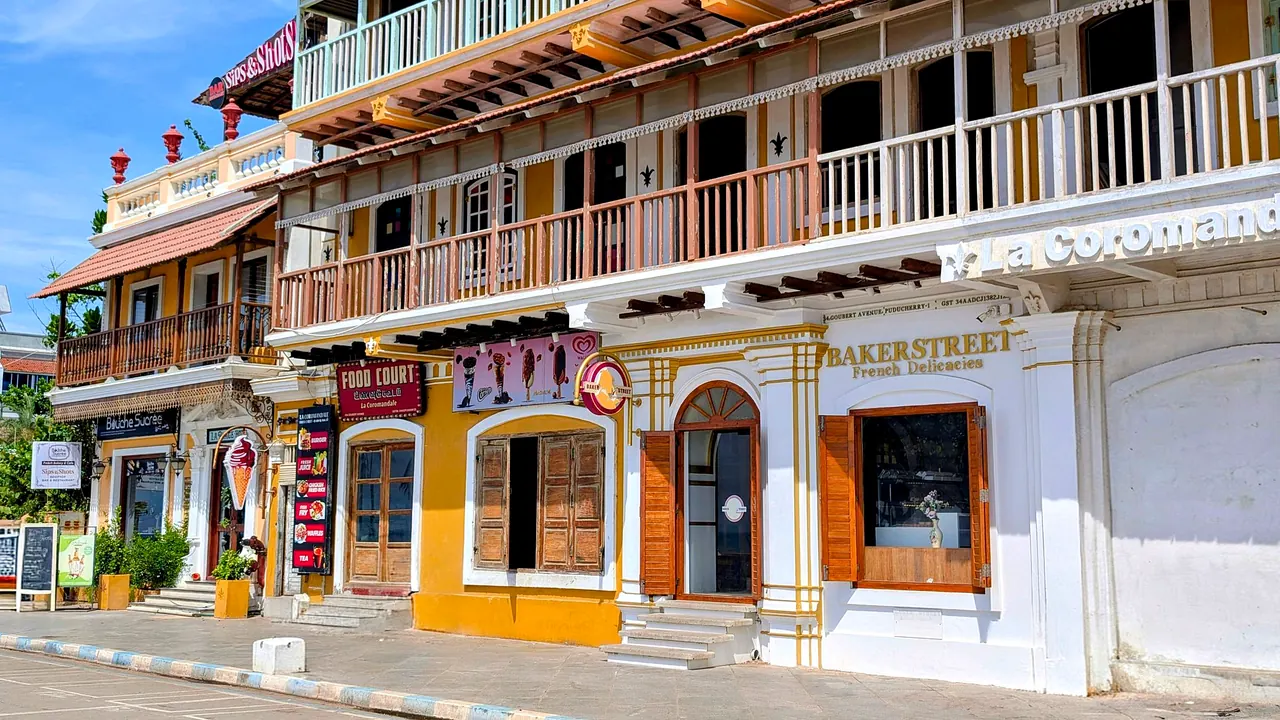
Photos: Kochi by Vis M, CC BY-SA 4.0, cropped; Pondicherry by Tushar, Pexels License.
Kochi or Pondicherry?
Our verdict in twelve categories, each scored against the same fixed benchmark cities, and the climate month by month, so you can choose for your trip.
Choose Kochi for
- nature and the outdoors
- live music and the arts
- culture and sights
Kochi suits a traveller who wants to settle into one place and go deep. The spice-trade lanes of Fort Kochi and Mattancherry hold more history, Kerala cooking is the richer table, and Kathakali is staged every evening. The backwaters and Western Ghats foothills give you more to do outdoors, and the Ayurveda here is serious enough to build a whole stay around. The price is quiet evenings, with very little drinking.
Choose Pondicherry for
- day trips
- nightlife
- beaches
Pondicherry is the better base for someone who wants to travel out each day. Mahabalipuram, Chidambaram, Gingee and Tiruvannamalai put some of the great temples and forts of Tamil Nadu within a day's drive, and the French Quarter is a calm, pleasant place to come back to. It is also easier to have a beer or a glass of wine with dinner here, and Auroville adds yoga and meditation for anyone who has come to slow down.
Scoreboard
Twelve categories on one fixed scale from 0 to 100. The shaded stretch is the gap between the two.
Your match
Pick a travel style or drag the sliders, and both match scores follow your weighting.
Wins on nature and the outdoors and live music and the arts with your weighting.
Wins on day trips and nightlife with your weighting.
What matters to you?
Category by category
What the scores mean for a trip.
Beaches & swimming
Neither city is a beach town, and both have a seafront you walk along rather than swim from. Kochi's answer is a single good beach: Cherai on Vypeen island, about an hour north, a long palm-backed stretch with a lagoon behind it. It is calm enough to swim from November to March but dangerous through the monsoon.
Pondicherry has more sand close at hand. Serenity Beach and the Auroville shore are a short scooter ride away, and you reach Paradise Beach by boat through the backwaters. The Bay of Bengal surf is strong all year, though, so a beach day there mostly means paddling and watching the sunset.
Food & drink
Kochi is the better place to eat. Kerala cooking, with coconut, curry leaf and pepper, has its own character, from appam at breakfast to pearl spot grilled in banana leaf. Syrian Christian and Malabar Muslim kitchens add beef fry, duck roast and biryani, and at the fishing nets you can have the day's catch cooked for you.
Pondicherry's appeal is the mix: Tamil banana-leaf meals and filter coffee, French bakeries, and Creole dishes from old Franco-Tamil families. A few days covers it. It is much easier to order wine or beer here, while in Kochi drinking mostly means hotel bars or a toddy shop.
Culture & sights
Kochi has more to see. In Fort Kochi and Mattancherry you can see St Francis Church, where Vasco da Gama was first buried, the Paradesi Synagogue with its Chinese tiles, and the murals of the Mattancherry Palace. The royal collections at the Hill Palace and the Biennale years add to that.
Pondicherry's main sight is the town itself: the ochre villas of the French Quarter set against the pillared verandas of the Tamil Quarter across the canal. Its landmarks, including the Sacred Heart basilica, the Ashram samadhi and the temple elephant at Manakula Vinayagar, are pleasant to visit but modest.
Nightlife
Both towns go quiet early and neither has clubs, but Pondicherry has more life after dark. Cheaper alcohol supports rooftop lounges in the French Quarter and beach shacks towards Serenity Beach, and weekend visitors from Chennai and Bangalore add a crowd. In Kochi a drink means a hotel bar or one of a few licensed lounges in Ernakulam, and most evenings end after dinner by the water.
Nature & outdoors
Water shapes the landscape around Kochi. You can paddle through village canals and past paddy fields, watch herons in the Mangalavanam mangroves, look for birds in the forests at Thattekad and visit the Athirappilly falls, with the tea hills of Munnar further off.
Pondicherry sits on a flat coastal plain with no hills, so the outdoors there is gentler: winter flamingos on Ousteri Lake, rowing in the Pichavaram mangroves and cycling through Auroville's replanted forest. What it has that Kochi lacks is the sea as a playground, with surf schools and diving on offshore reefs and wrecks.
Day trips
Pondicherry is much the better base for day trips. Within about two hours you can reach the Pallava carvings and Shore Temple at Mahabalipuram, the Nataraja temple at Chidambaram with its daily ritual, the hilltop walls of Gingee Fort and the pilgrimage town of Tiruvannamalai.
Kochi's outings are gentler: a houseboat or ferry day from Alappuzha, the Roman-era port remains of Muziris, and the temple town of Thrissur. They have character, but they are not on the same scale. From either city, expect slow roads and a hired driver.
Good for families
Both are calm, low-key places for children, with heat as the main problem in each. Kochi has more boats to offer, with ferry crossings, the fishing nets being hauled in and backwater rides, plus an amusement and water park on its eastern edge. Pondicherry has its seafront, which closes to traffic in the evening, the toy train in the Botanical Garden and the boat to Paradise Beach. It suits older children who are happy with a slow pace.
Getting around
The two are much alike overall but work in different ways. Kochi is split by its harbour, so ferries and the water metro become part of your day, and a metro line runs through Ernakulam. You still need rickshaws for most things, and the airport is a long drive away.
Pondicherry has no rail transit at all, but its sights are mostly in one small, flat French Quarter that is easy on foot or by bicycle. Many visitors hire a scooter for the beaches and Auroville.
Shopping & style
Both are good for gifts rather than fashion, and what you bring home differs. Kochi has antiques in the Jew Town warehouses, sacks of pepper and cardamom from the spice traders, and kasavu handloom, plus a large mall for international brands. Pondicherry is the place for block-printed cotton, linen and sandals in its Indo-French boutiques, and for handmade paper and incense from the Ashram workshops and pottery from Auroville.
Affordability
Both are very cheap, with Kochi a little cheaper still. In Kochi, homestays, banana-leaf meals and ferry rides cost little, and you only spend much on extras such as a heritage hotel, a private houseboat or a residential Ayurveda course. Alcohol is expensive there, which keeps evenings cheap simply because you drink less.
In Pondicherry, drinks cost less, but staying in the French Quarter costs more, especially at weekends and in winter. Staying in the Tamil Quarter or near the beaches keeps it inexpensive.
Live music & performing arts
Kochi offers one sure thing: Kathakali every evening in small Fort Kochi theatres. You can arrive early to watch the make-up being applied, and the same stages often show Mohiniyattam and Kalaripayattu. It is not a broad arts scene, but you can count on it.
In Pondicherry you have to look for performances. Bharatanatyam recitals, Carnatic concerts, events at the French cultural centre and evenings in Auroville's halls happen now and then, so it is worth asking locally.
Wellness & relaxation
Kochi is the place for treatment. Ayurveda is practised there as medicine, with doctor-led programmes of shirodhara and oil massage that can run for one to three weeks, and the monsoon is traditionally thought the best time for them. Noisy Ernakulam is a drawback, and many visitors move on to a backwater resort to finish.
Pondicherry is better for practice than for treatment. You can meditate in the Ashram courtyard, take yoga and breathwork courses at Auroville and stay in forest guesthouses, and its quiet French Quarter streets help you slow down.
When should you go?
Pick your month. The climate figures are measured averages, not a forecast.
Kochi in July
Pondicherry in July
Daytime high, °C
Rainfall in the month, mm
Where the figures come from
Kochi has no weather station within reach, so its figures come from a gridded climate model rather than a measured record, and read a broad area rather than the city itself.
Temperature and rainfall are climate normals, averaged over the years shown. Kochi: 2001-2020 normals, NASA POWER reanalysis grid, no weather station within 90 km. Pondicherry: 1991-2020 (rainfall 1961-1990) normals, Cuddalore (19.8 km from centre).
The two cities get their rain at opposite times of year. Kochi is driest from December to March, with hot, sticky days of about 33°C. The southwest monsoon arrives in May and is heaviest in June, at 494mm, and the rain carries on through October. From June to September the surf makes its beaches unsafe. Pondicherry is dry from February to June but grows very hot, reaching 37°C in May and June, which makes midday walking hard work. Its own monsoon comes from October to December and peaks in November at 456mm.
For both cities the best overlap is January to March, when the rain has stopped in both places and Pondicherry is at its mildest. The sea stays warm all year off both coasts, never much below 27°C, so it is the rain and the surf, not the water temperature, that decide when you can be on the beach.
Which traveller are you?
On a culture and arts trip, Kochi is the stronger pick. The synagogue, the palace murals and the colonial churches are packed into two neighbourhoods, and Kathakali runs every evening. Pondicherry's stage depends on luck, though its temple day trips are superb.
For an outdoors trip, choose Kochi. Kayaks and country boats go through the canals of Kumbalangi and around Vembanad Lake, Thattekad and Athirappilly are within a day, and Munnar's tea hills are reachable overnight. Pondicherry sits on a flat plain with gentler options.
On a food and nightlife trip, Pondicherry gives you the better evenings. Lower alcohol tax brings rooftop bars and wine with dinner, which Kerala's controls rule out. Kochi is the place to eat more seriously, but its nights end early and dry.
Before you go
| Measure | Kochi | Pondicherry |
|---|---|---|
| Official language | Hindi, English | Hindi, English |
| Currency | Indian Rupee (INR) | Indian Rupee (INR) |
| Sockets | CM230 V, 50 Hz | CM230 V, 50 Hz |
| Driving side | Left | Left |
| Time zone | UTC+5:30 | UTC+5:30 |
| Emergency number | 108 or 112 | 108 or 112 |
| Elevation | 0 m | 3 m |
| Main airport | Cochin International Airport (COK)24 km from centre36 non-stop destinations | Chennai International Airport (MAA)123 km from centre67 non-stop destinations |
By the numbers
| Measure | Kochi | Pondicherry |
|---|---|---|
| City population | 677,381 | - |
| People per km² | 7,138 | - |
| Museums within 10 km | 4 | 3 |
| UNESCO World Heritage sites within 50 km | 0 | 0 |
| Swim season, months above 21 °C | 12 months | 12 months |
Where else could you go?
Every comparison below shares a destination with this one, so you can follow Kochi or Pondicherry somewhere new.