Photos: Mürren by Bob Tan, CC BY-SA 4.0, cropped; Val d'Isère by Rémih, CC BY-SA 4.0, cropped.
Mürren or Val d'Isère?
Our verdict in twelve categories, each scored against the same fixed benchmark cities, and the climate month by month, so you can choose for your trip.
Choose Mürren for
- day trips
- getting around
- wellness
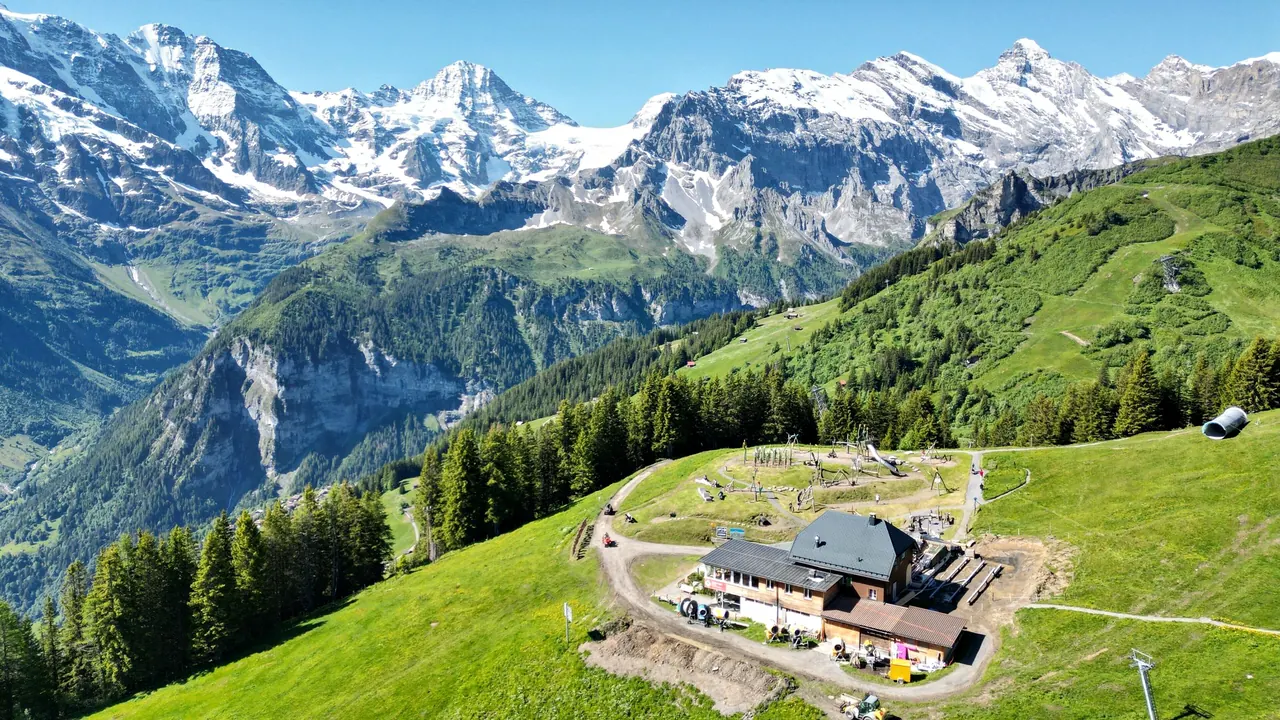
Mürren suits travellers who want the mountains with as little else around them as possible. The car-free village sits on a ledge facing the Eiger, Mönch and Jungfrau, and the evenings are silent. Walks start at the door, and the Swiss rail and cable car network carries you down to Interlaken, the Lake Thun castles or Bern without a car. Choose it for a summer of walking, a quiet ski week or simply a view to rest in front of.
Choose Val d'Isère for
- nightlife
- food and drink
- shopping
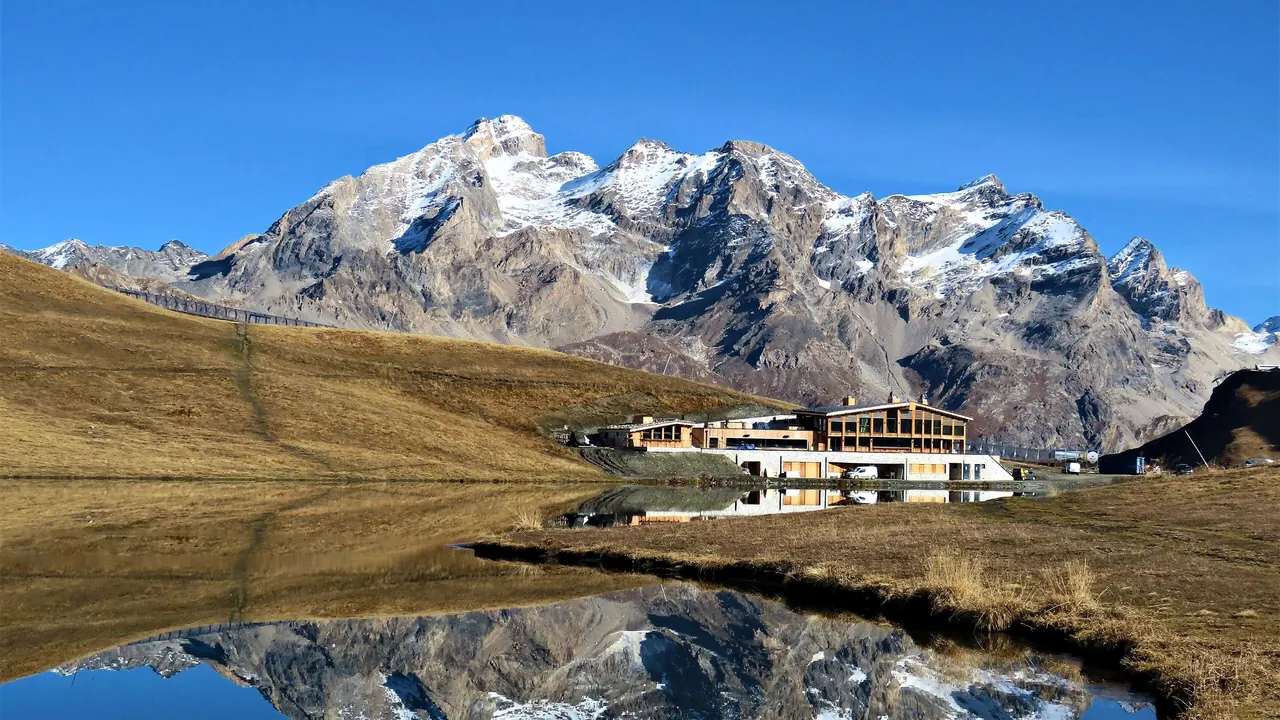
Val d'Isère is the better pick for a ski trip with a social side. Linked with Tignes, it has a far larger and higher ski area, with glacier terrain and serious off-piste. Long Savoyard lunches on the slopes, some of the most celebrated kitchens in the French Alps and après-ski that runs into the early hours fill the rest of the day. It is harder to reach and offers less outside its own valley, but for an active winter week with lively evenings it does far more than Mürren.
Scoreboard
Twelve categories on one fixed scale from 0 to 100. The shaded stretch is the gap between the two.
Your match
Pick a travel style or drag the sliders, and both match scores follow your weighting.
Too close to call, 2 points apart
Wins on day trips and getting around with your weighting.
Wins on nightlife and food and drink with your weighting.
What matters to you?
Category by category
What the scores mean for a trip.
Beaches & swimming
Neither is a place to swim outdoors, and both fall back on an indoor pool at the village sports centre. The difference is what lies further afield. From Mürren, the lidos on Lake Thun and Lake Brienz are more than an hour away by cable car and train, and the water there reaches about 20°C in a warm summer. Val d'Isère's nearest option is Lac de Tignes over the ridge, where the snowmelt rarely passes 15°C.
Food & drink
Val d'Isère eats noticeably better. Beaufort cheese, tartiflette and local charcuterie fill the mountain restaurants, where a long terrace lunch is part of the ski day. In the evening a handful of serious kitchens, some among the most celebrated in the French Alps, sit alongside wine bars pouring Savoie whites.
Mürren offers well-made rösti, fondue and Älplermagronen in hotel dining rooms, chalet restaurants and huts, and the Eiger view helps. Beyond that there is little choice, so many visitors cook for themselves or head down to the valley. Both villages shut much of their dining between seasons.
Culture & sights
Neither village is worth visiting for its sights, and an hour covers what each has. Mürren's best-known building is the revolving Schilthorn summit station with its small exhibition about the 1969 Bond film, plus the old hay barns of Gimmelwald. Val d'Isère has the Baroque altarpiece in its church of Saint-Bernard-de-Menthon and the stone and larch hamlets of Le Fornet and Le Joseray, and ski fans will want to see the Bellevarde face, where the 1992 Olympic downhill was raced.
Nightlife
Evenings are where these two villages differ most. In Mürren a night out means one unhurried drink, at a hotel bar after the ski day or on a terrace in summer. The car-free lanes go quiet early, which suits people who want to be on the first cable car up the Schilthorn.
Val d'Isère is the place for a proper night out, at least in winter. Table-dancing in ski boots at the mountain restaurants gives way to crowded village bars and then a couple of basement clubs, where seasonal workers and chalet groups mix until late. It is busiest over Christmas, New Year and the February break, and outside the ski season there is little more than a few terrace bars.
Nature & outdoors
Both rank among the great Alpine settings, but they suit different trips. Mürren is about the view and the walking. It stands 800m above the cliffs of the Lauterbrunnen valley, facing the Eiger, Mönch and Jungfrau, with trails along the terrace, a via ferrata below the village, waterfalls in the valley and the Inferno run off the Schilthorn in winter.
Val d'Isère is about scale. Together with Tignes it forms one of the world's great ski areas, with steep pistes, big off-piste descents and glacier skiing. In summer the Vanoise National Park offers ibex and chamois, and cyclists climb the Col de l'Iseran.
Day trips
Mürren has more within reach, even if every outing begins with a descent to Lauterbrunnen. Interlaken is about an hour away, and beyond it lie the castles of Thun, Spiez and Oberhofen, the woodcarvers of Brienz and the Ballenberg open-air museum. Bern's arcaded old town makes a long but rewarding day.
Val d'Isère sits at the end of a valley, and in winter the only way out is down to Bourg-Saint-Maurice and the Tarentaise villages. Summer adds Bonneval-sur-Arc over the Iseran and Roman Aosta across the Italian border.
Good for families
Both work for active families and offer little laid-on entertainment, but they suit different families. Mürren lets children roam car-free lanes and has the flower park and playground on the Allmendhubel, which makes it better for families who like to walk, though the cliff edges call for close watching.
Val d'Isère is better organised for skiing families. It has multilingual ski schools from preschool age, fenced snow gardens and childcare included in many chalet stays, and its sports centre adds an ice rink and a climbing wall.
Getting around
Mürren is easier to come and go from. A cable car climbs straight up the cliff from Stechelberg, or a cable car and a small railway arrive via Grütschalp, all on the integrated Swiss timetable, and luggage can be sent ahead. The village itself is a quarter-hour walk from end to end.
Val d'Isère is spread over a few kilometres from La Daille to Le Fornet, but free shuttle buses link it all. The real difficulty is the journey there: an hour by bus from the railhead at Bourg-Saint-Maurice, slow roads on winter changeover days, and a car is needed for anything beyond the valley.
Shopping & style
Nobody chooses either for the shops, but Val d'Isère gives you a little more to browse. Its main street has ski and outdoor stores, boot-fitters and a few upmarket mountain-wear boutiques. Its delicatessens sell Beaufort, charcuterie and Savoie wine, which make the best things to take home. Mürren has a grocer, gear-rental shops and postcards, and for chocolate or watches you need to go down to Interlaken.
Affordability
Both are very expensive, and neither can be done cheaply. In Mürren, Swiss mountain prices apply all year and the Schilthorn lifts cost extra, though Swiss travel passes take the sting out of regional transport. Val d'Isère's costs peak at Christmas, New Year and the February break, when lift passes, hire and lessons pile up. Quieter January weeks and summer bring the cost down somewhat.
Live music & performing arts
Neither offers concerts or theatre worth planning around. The live music differs in character, though. In Mürren it is traditional, with yodelling, alphorns or a brass band at a village festival or on Swiss National Day. In Val d'Isère it means cover bands and DJs in the après-ski bars, plus the odd open-air concert in season.
Wellness & relaxation
Mürren is the more restful of the two. Its calm comes from the absence of traffic and noise, and a balcony facing the Jungfrau does more than any treatment. The sports centre pool, whirlpool and sauna and a few small hotel spas cover the rest.
Val d'Isère's upmarket hotels and chalets have better facilities, with their own pools, hammams and massage rooms. Its winter pace is busy and social, though, so it only becomes a calm place to unwind in early summer and September.
When should you go?
Pick your month. The climate figures are measured averages, not a forecast.
Mürren in July
Val d'Isère in July
Daytime high, °C
Rainfall in the month, mm
Where the figures come from
Mürren has no weather station within reach, so its figures come from a gridded climate model rather than a measured record, and read a broad area rather than one spot.
Val d'Isère has no weather station within reach, so its figures come from a gridded climate model rather than a measured record, and read a broad area rather than one spot.
Temperature and rainfall are climate normals, averaged over the years shown. Mürren: 2001-2020 normals, NASA POWER reanalysis grid, no weather station within 90 km. Val d'Isère: 2001-2020 normals, NASA POWER reanalysis grid, no weather station within 90 km.
The two villages share almost the same temperatures, because both sit high in the Alps. Midwinter highs hover around -4°C, which is fine for skiing but cold for lingering outdoors. Summer stays mild, with July peaking at about 17°C in Mürren and 18°C in Val d'Isère. Neither ever gets too hot for walking, but neither is warm enough for a beach trip in any month. For skiing, December to March is the dependable core in both. Val d'Isère's glacier and the Grande Motte keep the top of its area wintry well into spring.
Rainfall is where they part. Mürren gets much wetter from May to August, with the rain peaking around 165mm in August, so summer hikers there should expect showers and cloud on the peaks. Val d'Isère stays noticeably drier through the same months, at around 79mm in July, which makes it the more reliable choice for high summer walking and cycling. September is a good month in both, as the rain eases and the trails are clear of snow.
Which traveller are you?
On a food and nightlife trip, Mürren offers hearty rösti, a quiet drink and then an early night. Val d'Isère is the clear choice, with Beaufort-rich Savoyard cooking, some of the French Alps' most admired kitchens and winter evenings that run well past midnight.
For a relaxing and wellness trip, pick Mürren. With no cars, no party crowd and little to do but walk and look, slowing down comes easily. Val d'Isère has smarter hotel spas, but its winter weeks revolve around early lifts and late evenings.
On an outdoors trip built around walking, Mürren suits better, as trails leave from the village along the terrace and into the side valleys, with the Eiger in view. Skiers after a vast, high, snow-sure area with serious off-piste should choose Val d'Isère.
Before you go
| Measure | Mürren | Val d'Isère |
|---|---|---|
| Official language | French, German, Italian, Romansh | French |
| Currency | Swiss Franc (CHF) | Euro (EUR) |
| Sockets | CJ230 V, 50 Hz | CE230 V, 50 Hz |
| Driving side | Right | Right |
| Time zone | UTC+1, UTC+2 in summer | UTC+1, UTC+2 in summer |
| Emergency number | 112 | 112 |
| Elevation | 1,650 m | 1,785 m |
| Main airport | Zürich Airport (ZRH)112 km from centre226 non-stop destinations | Geneva International Airport (GVA)111 km from centre150 non-stop destinations |
| Public holidays this year | 10 days | 11 days |
By the numbers
| Measure | Mürren | Val d'Isère |
|---|---|---|
| Population | 377 | 1,567 |
| People per km² | 36 | 17 |
| Museums within 10 km | 0 | 0 |
| UNESCO World Heritage sites within 50 km | 1 | 0 |
Where else could you go?
Every comparison below shares a destination with this one, so you can follow Mürren or Val d'Isère somewhere new.
- Wengenvs Mürren
- Tignesvs Val d'Isère
- Grindelwaldvs Mürren
- Les Arcsvs Val d'Isère
- Val Cenisvs Val d'Isère
- La Rosièrevs Val d'Isère