Inle Lake
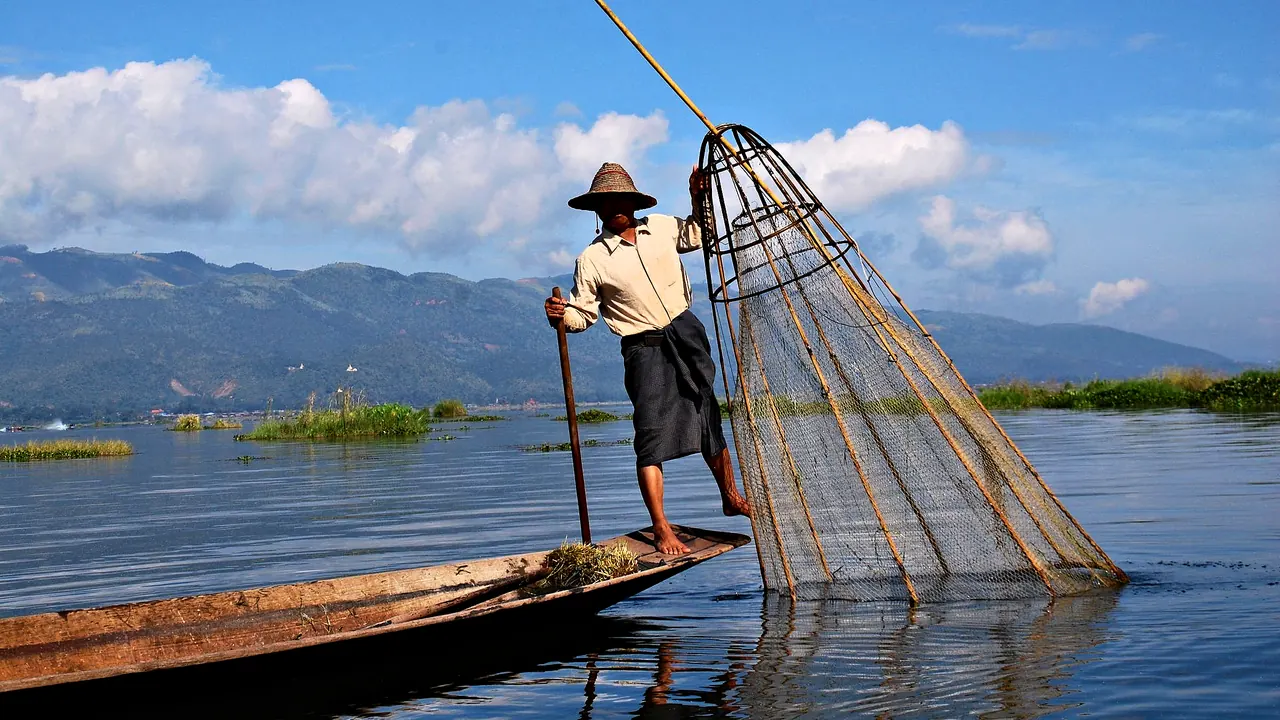
An Intha fisherman with a conical net on Inle Lake
- Affordability88
- Nature & outdoors65
- Wellness & relaxation55
Photo: Micha Höfer, Pexels License
Match
39
Every category weighted equally
- Beach & sun39
- Culture & arts39
- Food & nightlife33
- Family trip43
- Outdoors46
- Relax & unwind42
- Shopping & style36
- On a budget44
Inle Lake in twelve categories
Our verdict on each, scored 0 to 100 against the same fixed benchmark cities, so a score means the same thing on every page.
Beaches & swimming. Scores 5 out of 100.
Food & drink. Scores 35 out of 100.
Culture & sights. Scores 48 out of 100.
Nightlife. Scores 5 out of 100.
Nature & outdoors. Scores 65 out of 100.
Day trips. Scores 52 out of 100.
Good for families. Scores 30 out of 100.
Getting around. Scores 35 out of 100.
Shopping & style. Scores 35 out of 100.
Affordability. Scores 88 out of 100.
Live music & performing arts. Scores 12 out of 100.
Wellness & relaxation. Scores 55 out of 100.
Inle Lake category by category
Beaches & swimming
5There are no beaches here. Inle is a shallow highland lake, much of it covered with floating gardens, reed beds and water hyacinth, and its water is a working space for fishing, farming and boat traffic rather than a place to swim. A few lakeside resorts have pools, and those are the only realistic swimming. A visitor who wants sea and sand should plan that for another part of the trip.
Food & drink
35Eating here means Shan and Intha cooking: Shan noodles in a light broth or tossed dry, yellow chickpea tofu fried or served warm as a porridge, tomato and herb salads, and lake fish wrapped and steamed or mashed into sour rice. It is fresh, lightly spiced food and a real pleasure for a few days.
The range is narrow, though. Nyaungshwe, the base town by the canal, has a modest cluster of family restaurants, noodle shops and teahouses, plus places cooking backpacker standards. The morning market and the rotating five-day markets around the lake are good for snacks and fruit, and a hillside vineyard just outside town makes a pleasant sunset glass. Fine dining is limited to the resort hotels.
Culture & sights
48Most of what is worth seeing is the lake's way of life: Intha villages on stilts, monasteries rising from the water, and fishermen who row standing on one leg so their hands are free for the conical nets. A boat day takes in Phaung Daw Oo Pagoda, home of five small Buddha images so covered in gold leaf they have lost their shape, and craft workshops for lotus-fibre weaving, silver and cheroots.
The outstanding site is Indein, up a narrow channel on the western shore, where hundreds of weathered stupas, some crumbling and overgrown, cover a hillside. Near Nyaungshwe, the teak Shwe Yan Pyay monastery with its oval windows is worth a short cycle. It is a rewarding set, but small and quickly covered in two or three days.
Nightlife
5Evenings are quiet. Life on the lake starts at dawn, and Nyaungshwe winds down soon after dinner, with a few relaxed bars and restaurant terraces serving beer and local wine to travellers. There are no clubs and nothing runs late, so plan on early nights and early boats.
Nature & outdoors
65The lake lies in a broad valley at about 900m, flanked by the blue ridges of the Shan hills, and the setting is the reason most people come. Early morning by boat, with mist on the water, fishermen silhouetted against the light and herons over the reed beds, is the defining experience, and the floating tomato gardens make a landscape found nowhere else.
On land, the flat roads around Nyaungshwe suit cycling to villages, rice fields and hot springs on the western shore, and short hikes climb to hillside monasteries and Pa-O and Danu villages. The best-known walk is the two- or three-day trek over the hills from Kalaw, which ends at the lake. The dry, cool months from November to February are the most comfortable; the monsoon greens the hills but muddies the trails.
Day trips
52The best day out is Kakku, about an hour and a half by road beyond Taunggyi, where more than two thousand stupas stand packed together in Pa-O country, their small bells ringing in the wind. It is usually visited with a local Pa-O guide.
The Pindaya caves, a limestone cavern holding thousands of gilded Buddha images above a small lake, make another full day, about two hours away by winding hill roads. Kalaw, an old hill station with colonial-era houses, a lively market and cool air, is closer, and the Shan state capital Taunggyi gives a sense of an ordinary highland town, above all during its fire-balloon festival around the November full moon. Beyond these, outings mean the lake itself.
Good for families
30Older children who like boats often love it: the long-tail rides, the one-legged rowers, floating gardens and village workshops feel like an adventure, and cycling around Nyaungshwe is easy on flat roads. Resorts with pools on the shore give a calm base.
That is about the whole family offer, though. There are no attractions made for children, a full boat day means hours on hard wooden seats in sun and cool morning wind, and roads from the airport are slow. Medical facilities are basic, so families with small children need to plan carefully.
Getting around
35The lake is easy once you are there. Nyaungshwe is small and flat enough to walk, bicycles are the usual way to reach nearby monasteries and villages, and long-tail boats with a boatman are hired by the day from the town canal to reach every lake site. Many resorts sit on the water and arrange the boats themselves.
Getting in and beyond is slower. The nearest airport, at Heho, is about an hour away by winding road, and day trips to Kakku, Pindaya or Kalaw need a car and driver, as there is no useful public transport for visitors.
Shopping & style
35Shopping here is about crafts made on the lake. Weaving workshops on stilts turn lotus stems into a rare, rough fibre and also weave Shan silk and cotton, and silversmiths, blacksmiths and cheroot rollers work in nearby villages. Many of these stops are part of every boat tour, so expect a sales pitch.
More interesting are the five-day markets, which rotate between lakeside villages and draw Pa-O and other hill people to trade produce, tools and textiles. Beyond that there are souvenir stalls and small shops in Nyaungshwe, and nothing in the way of fashion or design.
Affordability
88Inle is a very cheap place to travel on simple terms. Guesthouses in Nyaungshwe, noodle-shop meals, bicycle hire and a boat with boatman shared between a few people all cost little. Costs rise for those who stay in the resorts built over the water or along the eastern shore, which charge international rates, and for private cars to the airport or for day trips.
Live music & performing arts
12Formal performance is close to absent. Nyaungshwe has a small, long-running marionette show that keeps Burmese puppetry alive for visitors, and that is the main thing to attend. The real spectacle is festival time: during the Phaung Daw Oo festival, usually in September or October, the golden images travel around the lake on a royal barge, escorted by teams of leg-rowers who also race. Outside that, evenings are quiet.
Wellness & relaxation
55The lake's rhythm is the main reason it restores people. Days follow the light, boats drift between villages, and staying in a resort over the water or by the shore means waking to mist and birdsong. Evenings are dark and quiet.
For bathing, there are hot springs at Khaung Daing on the western shore, with pools fed by natural thermal water, an easy cycle and boat ride from Nyaungshwe. Traditional Burmese massage is widely available in town, and the larger resorts have spas. There is no deep bathing tradition, but as a place to slow down for a few days it works well.
When should you go?
Pick a month to see what it is like. The climate figures are measured averages, not a forecast.
Inle Lake in July
Daytime high, °C
Rainfall in the month, mm
The whole year
Shaded against this destination’s own year: the deepest cell is its best month for that figure and the palest its weakest.
Where the figures come from
Inle Lake has no weather station within reach, so its figures come from a gridded climate model rather than a measured record, and read a broad area rather than one spot.
Temperature and rainfall are climate normals, averaged over the years shown. Inle Lake: 2001-2020 normals, NASA POWER reanalysis grid, no weather station within 90 km.
Before you go
| Measure | Inle Lake |
|---|---|
| Official language | Burmese |
| Currency | Kyat (MMK) |
| Sockets | CFG230 V, 50 Hz |
| Driving side | Right |
| Time zone | UTC+6:30 |
| Emergency number | Police 199, ambulance 192, fire 191 |
| Main airport | Heho Airport (HEH)11 non-stop destinations |
Compare Inle Lake with
Every comparison with a written verdict behind it.