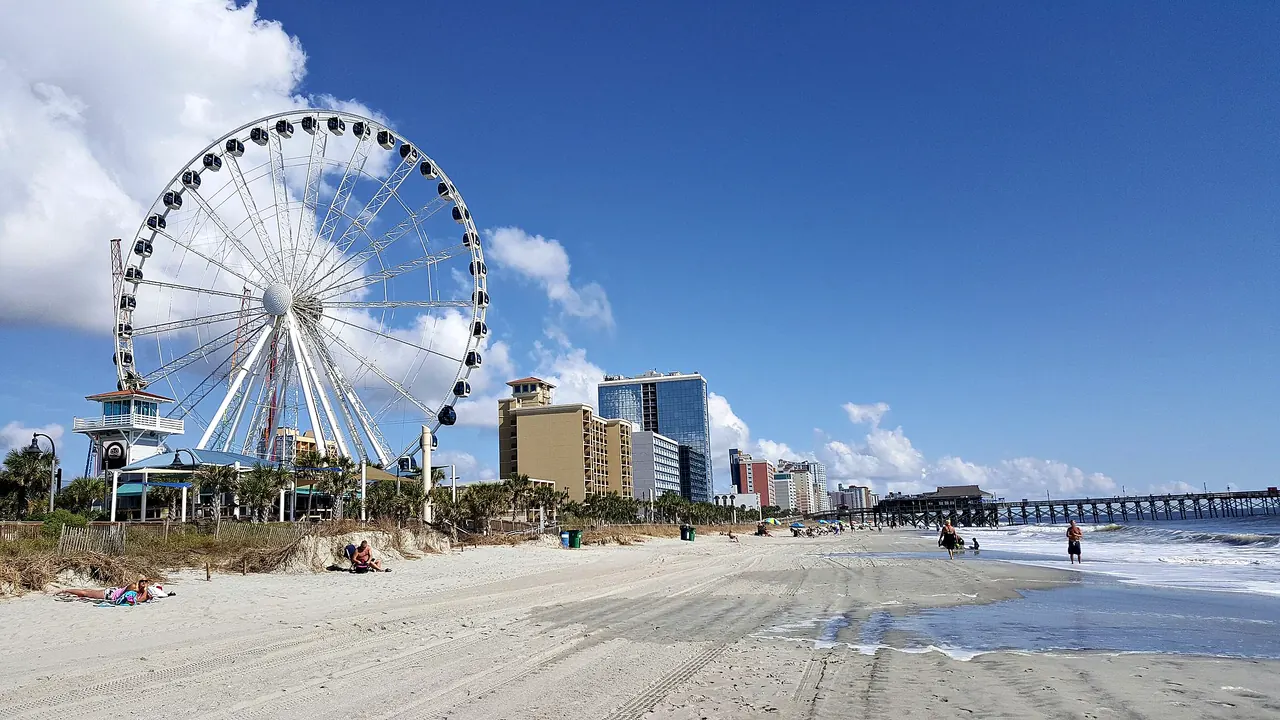
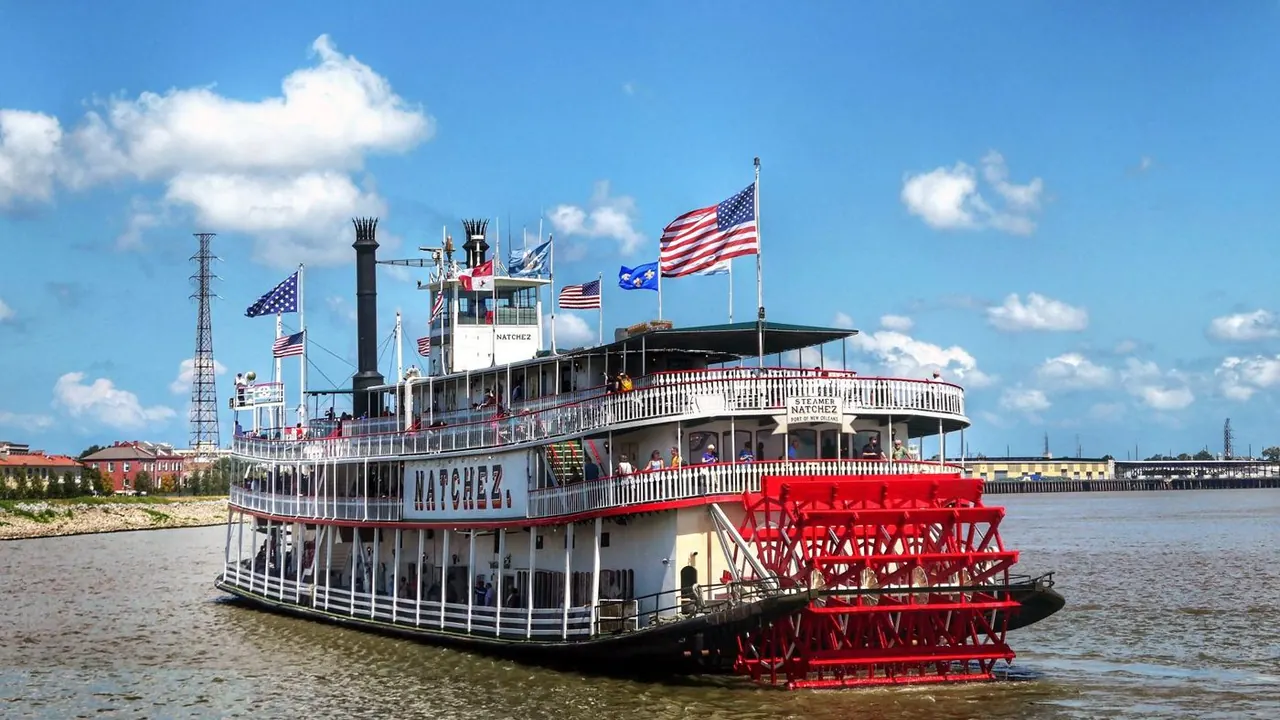
Photos: Myrtle Beach by The ed17, CC BY-SA 4.0, cropped; New Orleans by Bernard Spragg, CC0.
Myrtle Beach or New Orleans?
Our verdict in twelve categories, each scored against the same fixed benchmark cities, and the climate month by month, so you can choose for your trip.
Choose Myrtle Beach for
- beaches
- families
- prices
Myrtle Beach is the choice when the trip is built around sand and sea. Its long, gently shelving Atlantic shore, warm summer water and resort hotels with pools and kitchens make it easy for families. Aquariums, water parks and mini-golf fill the hours away from the beach. Expect to drive everywhere, and don't expect much history or serious food.
Choose New Orleans for
- live music and the arts
- culture and sights
- food and drink
For travellers who want a city with a character all its own, New Orleans is the stronger pick. Creole and Cajun cooking, live jazz and brass bands most nights, and a French Quarter that is one of the most complete colonial townscapes in the country give it far more depth. Its centre can be explored on foot or by streetcar. There is no beach worth the name, and the nights suit adults better than children.
Scoreboard
Twelve categories on one fixed scale from 0 to 100. The shaded stretch is the gap between the two.
Your match
Pick a travel style or drag the sliders, and both match scores follow your weighting.
Wins on beaches and families with your weighting.
Wins on live music and the arts and culture and sights with your weighting.
What matters to you?
Category by category
What the scores mean for a trip.
Beaches & swimming
Here the gap could hardly be wider. Myrtle Beach sits on the Grand Strand, about 100km of flat, pale sand with shallow water and small waves. The central blocks are crowded in summer, and the shore is calmer by the dunes around Surfside, Garden City and the state parks to the south.
New Orleans faces a lake and a working river, and nobody swims in either. The nearest sand is on the Mississippi coast around Bay St. Louis, more than an hour's drive away, where the water is shallow and murky. For most visitors, swimming means the hotel pool.
Food & drink
Myrtle Beach feeds crowds rather than food lovers, with seafood buffets, pancake houses and chain restaurants along the strip. The best meals are local shrimp and flounder on the Murrells Inlet waterfront, and a keen eater will get through them in an evening or two.
New Orleans is one of America's great eating cities, with a cooking tradition all its own. There are Creole dining rooms in the French Quarter that have served the same dishes for over a century, po'boy shops in Mid-City and beignets by Jackson Square. Classic cocktails such as the Sazerac were born in its bars. The food is rich and heavy, but there is enough to fill a whole week.
Culture & sights
Sightseeing in Myrtle Beach is a short affair, because the town grew up as a seaside resort and has few old streets or buildings to explore. Its two real sights lie just south of town. Brookgreen Gardens sets American figurative sculpture under live oaks on an old rice plantation and also tells the story of the people enslaved there. Next door is Atalaya, a Moorish-style winter house from the 1930s. Together they make a good day away from the sand.
New Orleans could fill several days. In the French Quarter you have Jackson Square and the Cabildo, where Louisiana was handed over to the United States in 1803. Beyond it are the mansions of the Garden District, the above-ground tombs and the National WWII Museum. Even so, the appeal lies more in the streets and the Creole heritage than in a long list of museums.
Nightlife
Myrtle Beach goes out in resort style: beach bars, rooftop decks and dance clubs around the boardwalk and the entertainment complexes in summer, plus the long-standing shag clubs of North Myrtle Beach. Out of season it goes quiet early.
Nights in New Orleans are far better. There is no legal closing time and drinks can be carried along the street, so evenings move on foot from Frenchmen Street to Bywater dive bars and neighbourhood corners all year round. Bourbon Street is the loud, neon extreme. Here it is about going from bar to bar rather than clubbing.
Nature & outdoors
Both sit on flat, low ground with no hills or real hiking, and summer humidity makes outdoor plans hard in both. What differs is the scenery. Myrtle Beach has dunes, maritime forest and salt marsh, with birdwatching at Huntington Beach State Park, kayaking in the cypress swamps of the Waccamaw River and dozens of golf courses.
New Orleans looks to the bayous instead. Swamp boat tours and the boardwalks of the Barataria Preserve are within an hour, and in town there are the old oaks and lagoons of City Park and the river levee for walks.
Day trips
Both offer a handful of good outings, and both need a car. From Myrtle Beach the standout is Charleston, two hours south, and closer trips go to the old rice port of Georgetown and the quiet beach village of Pawleys Island.
From New Orleans the trips run along the Mississippi to the River Road plantations about an hour away, where the Whitney tells the story of the people enslaved there. There is also Baton Rouge, the small Gulf towns, or the Cajun prairie around Lafayette for a longer day.
Good for families
Myrtle Beach is built for children: gentle surf, resorts with lazy rivers and kitchen suites, an aquarium, water parks, a wooden roller coaster and themed mini-golf on every stretch of highway. The catch is the heat, the traffic and driving almost everywhere.
New Orleans has enough for a few days, including Audubon Zoo, the riverfront aquarium, the children's museum in City Park, and rides on the streetcars and paddle steamers. Much of its appeal is still aimed at adults, though, and parents need to plan around Bourbon Street and quiet side streets at night.
Getting around
Myrtle Beach is spread along about 100km of multi-lane highway with few pavements. Beyond the boardwalk blocks almost everything needs a car, and summer traffic on Kings Highway is slow.
New Orleans is far easier without a car. The French Quarter, the Marigny and the Warehouse District are flat and walkable, and the historic green streetcars run out along St. Charles Avenue to the Garden District, if slowly. Ride-hailing covers the airport and longer journeys.
Shopping & style
Myrtle Beach is about volume: two big outlet centres, waterfront complexes, The Market Common and enormous beachwear stores. Apart from the sweetgrass baskets sold along the road south, very little feels local.
New Orleans has more character, though not much luxury. Antique dealers and galleries line Royal Street, and Magazine Street runs for miles with independent and vintage shops. Mardi Gras masks and hot sauces from the French Market make souvenirs you would not find anywhere else.
Affordability
Myrtle Beach is the easier place to stretch a budget. It has a huge supply of motels and rental condos, many with kitchens, and oceanfront rates fall low outside summer. The costs that catch people out are the car and the steep rise in prices in July.
New Orleans costs more mainly because of its rooms. Near the French Quarter they are priced like a big city's, with high hotel taxes on top. Cheap po'boys, the streetcar and free street music help, and staying along the streetcar lines saves money.
Live music & performing arts
Myrtle Beach offers polished variety shows: country and gospel revues, comedy, Christmas productions and dinner shows with pirates or knights, plus touring acts and summer cover bands.
New Orleans is the birthplace of jazz, and its live music is a reason to come in itself. Brass bands, blues, zydeco and traditional jazz play every night on Frenchmen Street and in Tremé, second-line parades move through the neighbourhoods on Sundays, and Jazz Fest fills the calendar each spring. Opera and serious theatre are thin in both cities.
Wellness & relaxation
Neither suits a spa vacation, and neither has a bathing tradition. Hotel and resort spas are about all there is. Where they differ is in how you find calm. In Myrtle Beach it means leaving the summer strip for Pawleys Island, or coming in spring or autumn.
In New Orleans it means quiet mornings in a courtyard guesthouse, slow streetcar rides under the oaks of St. Charles Avenue and lazy afternoons in City Park.
When should you go?
Pick your month. The climate figures are measured averages, not a forecast.
Myrtle Beach in July
New Orleans in July
Daytime high, °C
Rainfall in the month, mm
Where the figures come from
Myrtle Beach has no rain gauge within 25 km of the centre, so its rainfall comes from a gridded climate dataset read at the city rather than from a gauge further away.
Temperature and rainfall are climate normals, averaged over the years shown. Myrtle Beach: 1971-2000 (rainfall 1991-2020) normals, Myrtle Beach Air Force Base (5.5 km from centre). New Orleans: 1991-2020 normals, New Orleans Airport (2.7 km from centre).
Myrtle Beach is a warm-season resort. From late May the Atlantic is pleasant for swimming, and in July and August it reaches about 28°C. Summer is also the wettest stretch, with rain peaking at around 187mm in August. From November to April the sea is too cold for most swimmers, but the mild days of spring and autumn suit golf and long walks along the shore.
New Orleans is hotter and wetter. Summer highs reach 33°C with heavy humidity, and June brings around 194mm of rain, so long walks are hard work from June to September. Winter is mild, with daytime highs of about 17°C in January, which makes it a cool-season city trip in a way Myrtle Beach is not. Spring and late autumn are the most comfortable times to explore on foot.
Which traveller are you?
On a beach and sun trip, Myrtle Beach is the obvious answer. It has a long sweep of wide sand and a warm, shallow summer sea. New Orleans has no swimming beach at all, and the brownish Gulf shore is more than an hour's drive away.
For a food and nightlife trip, New Orleans is far ahead. Gumbo, po'boys, chargrilled oysters and crawfish boils lead into nights with no closing time, moving between music bars on Frenchmen Street and old corner bars. Myrtle Beach mostly offers buffets and seasonal resort bars.
On a family trip with young children, Myrtle Beach makes life easier. Gentle surf, resort pools with lazy rivers, an aquarium, water parks and endless mini-golf keep children busy. New Orleans has a good zoo and aquarium, but parents need to take care after dark.
Before you go
| Measure | Myrtle Beach | New Orleans |
|---|---|---|
| Currency | US Dollar (USD) | US Dollar (USD) |
| Sockets | AB120 V, 60 Hz | AB120 V, 60 Hz |
| Driving side | Right | Right |
| Time zone | UTC-5, UTC-4 in summer | UTC-6, UTC-5 in summer |
| Emergency number | 911 | 911 |
| Elevation | 8 m | -2 m |
| Main airport | Myrtle Beach International Airport (MYR)5 km from centre60 non-stop destinations | Louis Armstrong New Orleans International Airport (MSY)18 km from centre51 non-stop destinations |
| Public holidays this year | 12 days | 14 days |
By the numbers
| Measure | Myrtle Beach | New Orleans |
|---|---|---|
| City population | 35,682 | 383,997 |
| People per km² | 591 | 423 |
| Museums within 10 km | 2 | 16 |
| UNESCO World Heritage sites within 50 km | 0 | 0 |
| Swim season, months above 21 °C | 6 months | 7 months |
Where else could you go?
Every comparison below shares a destination with this one, so you can follow Myrtle Beach or New Orleans somewhere new.