Photos: Nafplio by Giles Laurent, CC BY-SA 4.0, cropped; Ohrid by kallerna, CC BY-SA 4.0, cropped.
Nafplio or Ohrid?
Our verdict in twelve categories, each scored against the same fixed benchmark cities, and the climate month by month, so you can choose for your trip.
Choose Nafplio for
- day trips
- beaches
- live music and the arts
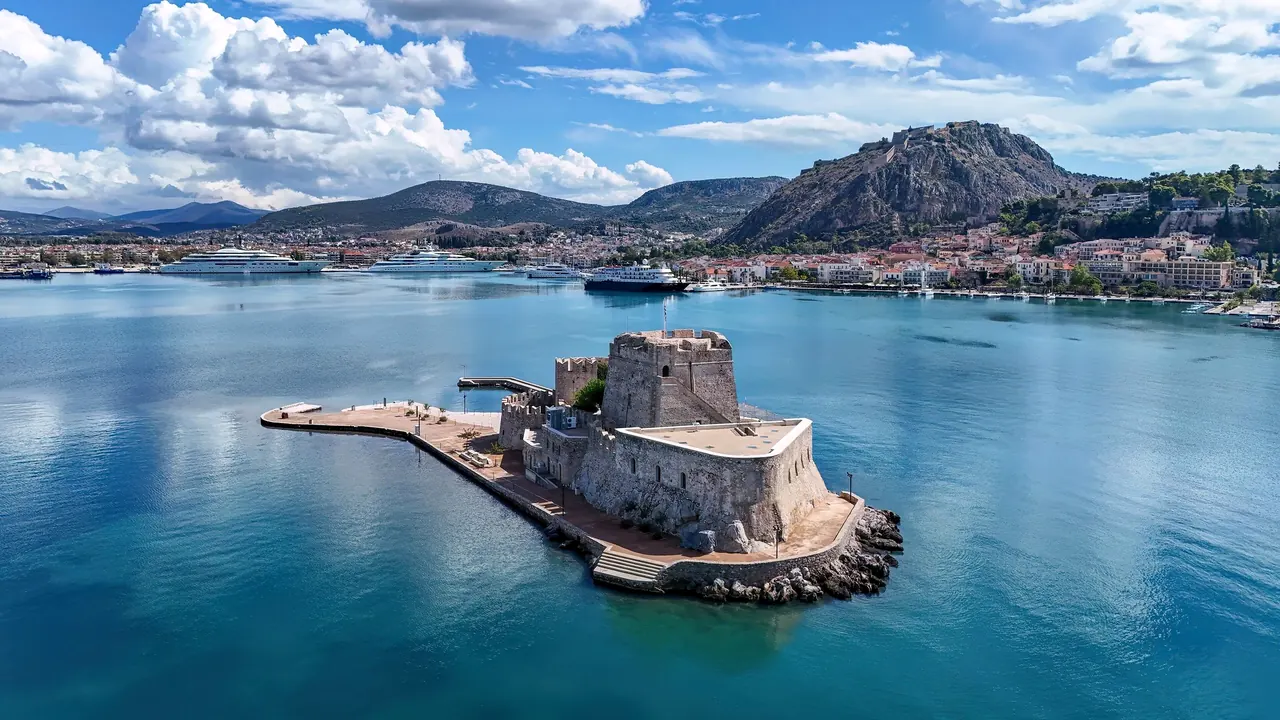
Choose Nafplio if your trip is built around ancient Greece and the sea. Mycenae, Tiryns and Epidaurus are all an easy drive away, the warm gulf makes a swim part of every summer day, and the restored old town below Palamidi is a graceful base. It suits travellers with a car, a few days and a liking for long evenings by the harbour.
Choose Ohrid for
- prices
- getting around
- culture and sights
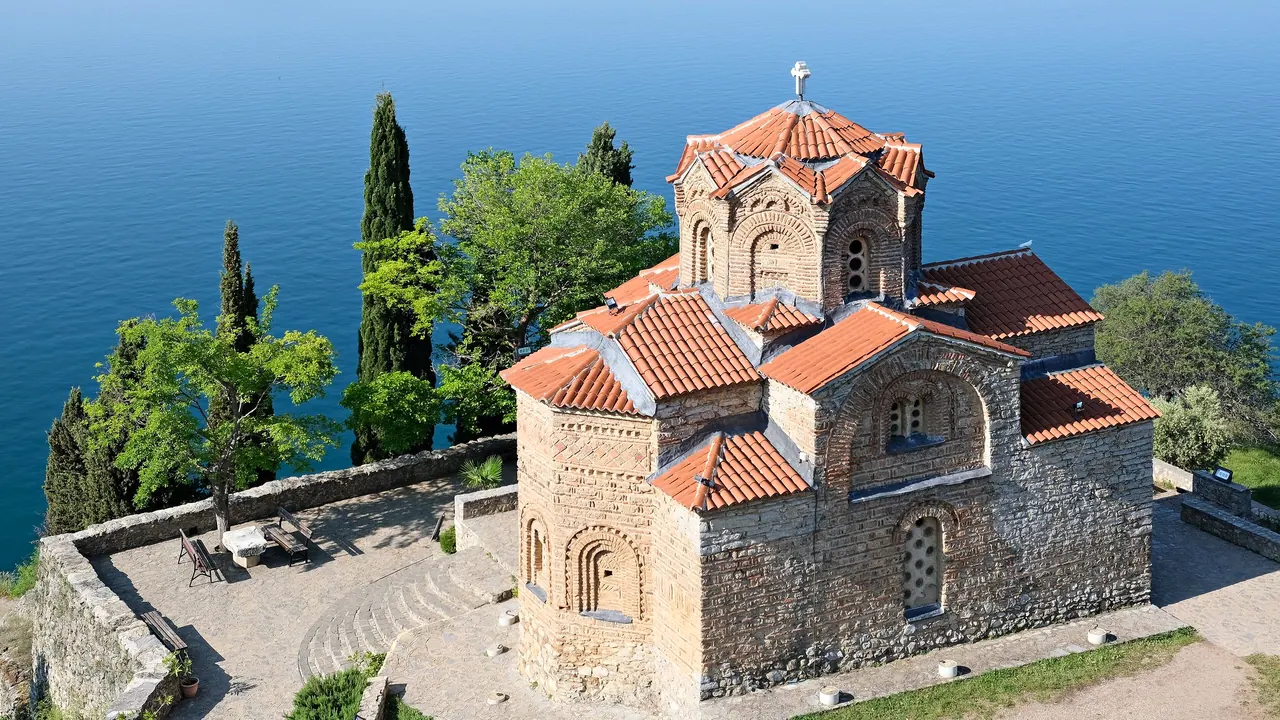
Ohrid suits those who want more for their money and more to see in the town itself. Its frescoed churches, St John at Kaneo above the water and the mountains around the lake give it the richer sights and the better outdoors, and day-to-day costs are far lower. It works well for walkers, lake swimmers and travellers on a budget, as long as they accept a shorter swimming season and colder winters.
Scoreboard
Twelve categories on one fixed scale from 0 to 100. The shaded stretch is the gap between the two.
Your match
Pick a travel style or drag the sliders, and both match scores follow your weighting.
Too close to call, 1 point apart
Wins on day trips and beaches with your weighting.
Wins on prices and getting around with your weighting.
What matters to you?
Category by category
What the scores mean for a trip.
Beaches & swimming
Nafplio has the better swimming. It has warm salt water in a sheltered gulf, a pebble cove at Arvanitia right below the old town, sand under the pines at Karathona and a longer developed beach at Tolo, and the season runs from June into September.
Ohrid's swimming is in fresh water, from concrete platforms, jetties and short pebble strips below Kaneo and along the southern shore at Lagadin and Gradište. The water is remarkably clear and calm, but it is only warm from late June to mid-September, and there is no sand to speak of.
Food & drink
Both towns eat simply and well rather than memorably, and in both the waterfront menus tend to repeat each other. The real difference is the local produce. Nafplio cooks from the sea and the Argolid: grilled octopus and gulf fish, lamb, citrus and the agiorgitiko red from Nemea, with some of the best plates in the fish tavernas at Tolo.
Ohrid serves Balkan home cooking: beans baked in earthenware, stuffed peppers, ajvar and sheep's cheese, with lake fish such as belvica instead of seafood and burek for breakfast. The family-run places in the upper old town are the ones to look for.
Culture & sights
Ohrid has the deeper set of sights. There are the medieval frescoes of St Sophia, the church of St John at Kaneo on its rock, the Cyrillic heritage at Plaošnik and a gallery of Byzantine icons, all within a UNESCO-listed old town that rewards a slow day or two.
Nafplio's appeal lies more in its architecture and its history: the Venetian and neoclassical lanes of Greece's first capital, Palamidi and the Bourtzi, and a compact Archaeological Museum with its Mycenaean armour. It is charming, but you see the town itself sooner, and its great antiquities lie outside the walls.
Nightlife
Neither town has real clubs, and both go quiet in winter. Ohrid has a little more going on in high summer, when crowds from Skopje fill the lakefront café-bars and beach clubs on the southern shore play music into the small hours. Nafplio's evenings are gentler: a long dinner, then wine or a cocktail by the harbour or off Syntagma Square, livelier on summer weekends when Athenians come down.
Nature & outdoors
Ohrid's setting is the grander one: a deep, ancient lake ringed by mountains. From Galičica's viewpoints you can see both Ohrid and Prespa, trails climb above 2,000m, and there are spring-fed pools near St Naum. You can be walking in high country without a long drive.
Nafplio's outdoors is coastal and smaller in scale: the path around the headland, the shore trail to Karathona, limestone for climbers and sea kayaking off Tolo. The fir forests of Mainalo are about an hour and a half away, and the summer heat limits walking to early mornings.
Day trips
For day trips, Nafplio is far ahead. Tiryns is ten minutes away, Mycenae under half an hour and Epidaurus about forty minutes, and Nemea, Ancient Corinth, Hydra and Spetses, and Mystras are all within a day. Few towns of its size have so much of the ancient world close by.
Ohrid's outings are good but fewer: St Naum by boat in summer, Struga, Bitola with the mosaics of Heraclea Lynkestis, and days across the border in Pogradec and Korçë. The roads are slow, so each trip takes more effort.
Good for families
Both are calm, safe small towns with nothing built for children, no zoos or theme parks, so the water keeps children busy. Nafplio is slightly easier: the old town is flat and mostly free of traffic, and Karathona and Tolo have shallow, warm sea, though the Palamidi steps and the ruins at midday are hard on small children.
In Ohrid the days revolve around the clear lake, boat rides and the prehistoric pile village at the Bay of Bones, and locals are warm towards children. The steep, cobbled old town is awkward with a pushchair, so a lakeside apartment works best.
Getting around
Both centres are easy to walk, but Ohrid is easier to get around beyond them. Taxis are plentiful for short hops, and buses and summer boats reach the southern shore and St Naum, even if they run infrequently. Its old town is steep and cobbled, though.
Nafplio's old town is flat and simple on foot, but buses to the ancient sites and beaches are thin. Most visitors hire a car, and then have to find parking near the walls in summer.
Shopping & style
Neither is a place to go shopping, and an hour or two covers either. What differs is the souvenir worth taking home. In Ohrid it is the Ohrid pearl, coated with a lustre made from lake-fish scales and sold by a few long-established workshops, along with carved wood, icons and filigree silver.
In Nafplio the local buys are komboloi worry beads and Argolid produce such as olive oil, honey, citrus preserves and Nemea wine, plus a few galleries and ceramics shops among the stalls selling sandals and beachwear.
Affordability
Ohrid is clearly cheaper across the board. Rooms, meals with wine, taxis and entry fees all cost little, and only weekends on the lakefront in July and August push prices up.
Nafplio is fair rather than cheap. Taverna meals and site fees are reasonable, but accommodation is the big expense, since the restored old-town guesthouses are aimed at weekend visitors from Athens. Coming on weekdays or in the shoulder seasons, or staying in Tolo, keeps costs down.
Live music & performing arts
Both come alive only in summer, but Nafplio has the more remarkable stage within reach. The Athens and Epidaurus Festival performs ancient Greek drama in the 4th-century BC theatre at Epidaurus, famous for its acoustics, and the town adds classical concerts in historic buildings.
Ohrid's Summer Festival, held since the early 1960s, puts concerts, opera and theatre inside St Sophia and the ancient theatre in the old town, with a choral festival alongside. Outside summer, neither town offers much beyond music in restaurants.
Wellness & relaxation
Thermal water is much closer to Nafplio. The spa town of Loutraki is about an hour's drive away, and the sulphur springs of Methana are a little further. In town, apart from a few hotel spas, rest means long coffees on the harbour and the walk around the headland, and both are calmest outside July and August.
Ohrid's nearest springs, near Debar, are a long drive into the mountains, so unwinding there comes down to the lake itself. It is at its most restful in May, June and September, when the water is still and the promenade quiet. August crowds make it noisier.
When should you go?
Pick your month. The climate figures are measured averages, not a forecast.
Nafplio in July
Ohrid in July
Daytime high, °C
Rainfall in the month, mm
Where the figures come from
Nafplio's temperatures are measured 89 km from the centre, at Kalamata Airport.
Nafplio has no rain gauge within 25 km of the centre, so its rainfall comes from a gridded climate dataset read at the city rather than from a gauge further away.
Ohrid has no rain gauge within 25 km of the centre, so its rainfall comes from a gridded climate dataset read at the city rather than from a gauge further away.
Temperature and rainfall are climate normals, averaged over the years shown. Nafplio: 1991-2020 normals, Kalamata Airport (88.8 km from centre). Ohrid: 1999-2017 (rainfall 1991-2020) normals, Ohrid (0.2 km from centre).
Nafplio has the longer warm season. From June to September the gulf is warm enough for swimming, reaching 26°C in July and August, and the summer is almost completely dry. Those same months bring highs of about 32°C, so visits to Mycenae and the climb to Palamidi are best done early in the day. April, May and October are the most comfortable months for walking. Winter is mild but wet, with the heaviest rain in November and December.
Ohrid is cooler all year and has a much harder winter, with January highs of around 6°C and rain spread across the year, heaviest from October to December. July and August, at about 29°C, are the months for swimming in the lake, warm without Nafplio's fierce heat. Late May, June and September are the best times for walking the old town and the trails of Galičica.
Which traveller are you?
On a beach and sun trip, Nafplio is the better choice. The warm, sheltered Argolic Gulf, the sand at Karathona and the long shore at Tolo make swimming part of every day from June to September, while Ohrid's lake is warm only in high summer.
For a trip on a tight budget, Ohrid wins. In Nafplio a small budget goes mostly on a bed and on a hire car to reach the ancient sites. In Ohrid the same money buys extra nights, the summer boat to St Naum and a day in Korçë.
On an outdoors trip, Ohrid has the bigger landscape. Nafplio offers coastal paths, limestone for climbing and sea kayaking on a smaller scale. Above Ohrid, Galičica rises straight from the lake to summits over 2,000m, with paragliders launching from the ridge.
Before you go
| Measure | Nafplio | Ohrid |
|---|---|---|
| Official language | Greek | Albanian, Macedonian |
| Currency | Euro (EUR) | Denar (MKD) |
| Sockets | CF230 V, 50 Hz | CF230 V, 50 Hz |
| Driving side | Right | Right |
| Time zone | UTC+2, UTC+3 in summer | UTC+1, UTC+2 in summer |
| Emergency number | 112 | 112 |
| Elevation | 6 m | 695 m |
| Main airport | Athens Eleftherios Venizelos International Airport (ATH)109 km from centre173 non-stop destinations | Ohrid St. Paul the Apostle Airport (OHD)9 km from centre14 non-stop destinations |
| Public holidays this year | 15 days | 12 days |
By the numbers
| Measure | Nafplio | Ohrid |
|---|---|---|
| City population | 14,532 | 38,818 |
| People per km² | 433 | 100 |
| Museums within 10 km | 5 | 11 |
| UNESCO World Heritage sites within 50 km | 2 | 2 |
| Swim season, months above 21 °C | 5 months | - |
Where else could you go?
Every comparison below shares a destination with this one, so you can follow Nafplio or Ohrid somewhere new.