
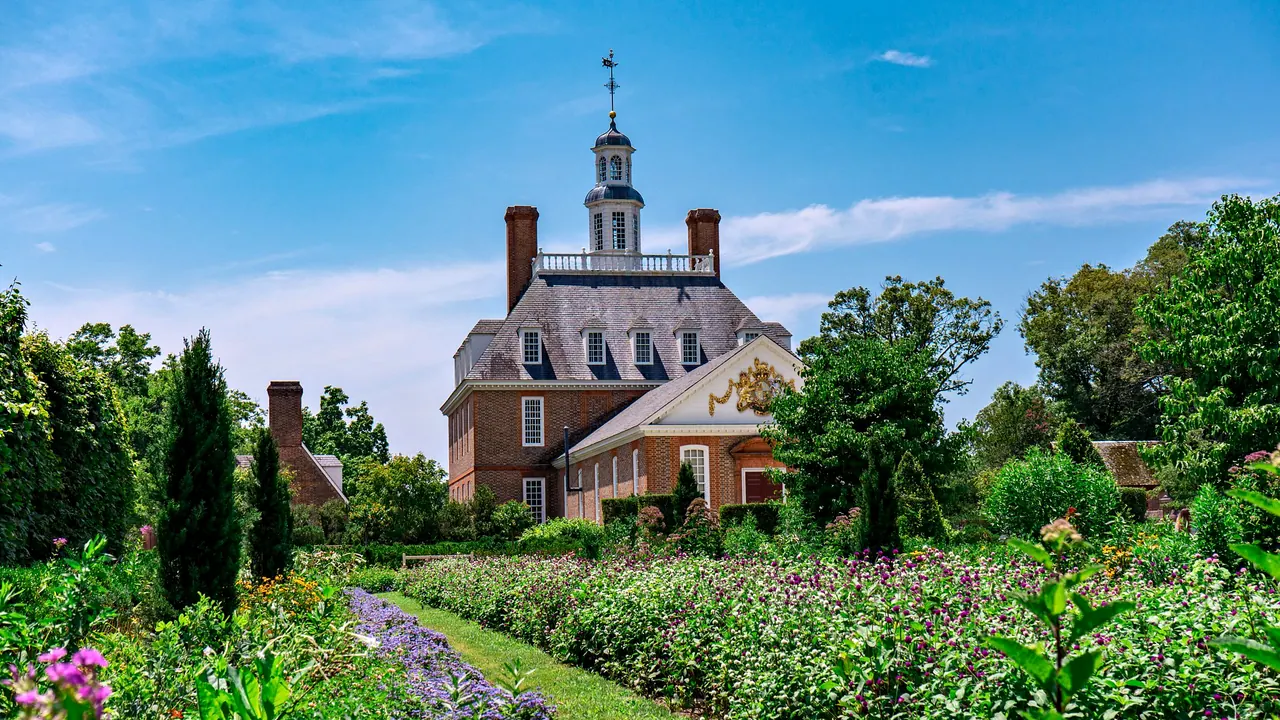
Photos: Nashville by Warren LeMay, CC BY-SA 2.0, cropped; Williamsburg, Virginia by Brian Magill, Pexels License.
Nashville or Williamsburg, Virginia?
Our verdict in twelve categories, each scored against the same fixed benchmark cities, and the climate month by month, so you can choose for your trip.
Choose Nashville for
- live music and the arts
- nightlife
- food and drink
Nashville suits adults who travel for music and a good night out. The honky-tonks of Lower Broadway, the Grand Ole Opry, the Ryman and the songwriter rooms give it a depth of live performance that Williamsburg can't approach. Hot chicken, meat-and-three cafeterias and the chef-led kitchens of East Nashville also make it the better place to eat.
Choose Williamsburg, Virginia for
- beaches
- families
- culture and sights
Families and history lovers will do better in Williamsburg. The restored colonial capital has costumed tradespeople on Duke of Gloucester Street, Jamestown and Yorktown are a few minutes' drive away, and there is a large theme park with a water park next door. Together they make a trip children remember. The evenings are quiet, rooms are easier on the budget, and the Chesapeake Bay is close enough for a swim.
Scoreboard
Twelve categories on one fixed scale from 0 to 100. The shaded stretch is the gap between the two.
Your match
Pick a travel style or drag the sliders, and both match scores follow your weighting.
Wins on live music and the arts and nightlife with your weighting.
Wins on beaches and families with your weighting.
What matters to you?
Category by category
What the scores mean for a trip.
Beaches & swimming
Nashville is far from any coast. The nearest swimming is at Percy Priest Lake and Old Hickory Lake, where the small swimming areas fill on summer weekends and locals spend more time on pontoon boats than on sand.
Williamsburg isn't a beach town either, but the coast is close enough for a day out. There is a quiet strip of sand at Yorktown, Buckroe Beach faces the bay in Hampton, and the long Atlantic beaches of Virginia Beach are about an hour's drive away. Watch for sea nettles in the bay in high summer.
Food & drink
Nashville is clearly the better city for eating. It has its own famous dish in hot chicken, as well as meat-and-three cafeterias and barbecue. East Nashville, Germantown and Nolensville Pike, with its Kurdish and Vietnamese places, add range beyond Southern food.
Williamsburg's best food is simple and regional: ham biscuits, peanut soup, and crab and oysters from the Chesapeake. People go to the candlelit colonial taverns more for the atmosphere than for the cooking, and Richmond Road is mostly pancake houses and buffets.
Culture & sights
Williamsburg has the richer sightseeing. It is a whole eighteenth-century capital to walk through, from the Capitol to the Wren Building, with the Governor's Palace, Bruton Parish Church and nearly ninety original buildings, plus good collections of American folk and decorative art.
Nashville's sights are mostly about music: the Country Music Hall of Fame, the National Museum of African American Music and a daytime tour of the Ryman. The Parthenon replica, the Frist in its Art Deco post office and the Hermitage add variety, but the city itself is mostly modern.
Nightlife
The two are very far apart here. In Nashville, going out is one of the main reasons to visit. Lower Broadway runs as one long party of multi-storey honky-tonks with a band on every floor, and East Nashville and Midtown offer quieter dive bars and cocktail lounges.
Williamsburg goes to bed early. A few student pubs near the college and some taprooms on the edge of town are about all there is, and anyone wanting a real night out drives to Norfolk or Richmond.
Nature & outdoors
Nashville has the slight edge, mostly because it has more variety. It has wooded hills and limestone creeks, owls and deer at Radnor Lake inside the city, forest walks in the Warner Parks, and the Natchez Trace Parkway for cycling just to the south.
Williamsburg's Tidewater is flat country of marsh and wide estuaries. It suits gentle exploring instead: riding the quiet Colonial Parkway or the paved Capital Trail, and kayaking the Chickahominy, where ospreys and bald eagles are common.
Day trips
Williamsburg has the better trips close to town. Jamestown and Yorktown, the other two corners of the Historic Triangle, are both within about 20 minutes. Further out are the James River plantation houses, Richmond about an hour away and Monticello at the edge of a day out.
Nashville's best outings are smaller: the Main Street and Civil War battlefields of Franklin, the village of Leiper's Fork, and the whiskey distilleries around Lynchburg. Chattanooga and Lookout Mountain, about two hours away, are the biggest trip within range.
Good for families
Williamsburg is designed for families. Children can quiz a costumed blacksmith, explore re-created forts at Jamestown and Yorktown, and spend a day on roller coasters followed by a day at the water park. Motels with pools and restaurants used to children make the stay easy.
Nashville works with some planning. The zoo at Grassmere, the Adventure Science Center and the Lane Motor Museum are good choices, but Lower Broadway is no place for children in the evening, and the attractions are a drive apart.
Getting around
You'll want a car in either city, though each has a small area you can walk. Nashville's downtown links Broadway, the Ryman, the riverfront and the Gulch, and a pedestrian bridge crosses to the east bank. Beyond that, ride-hailing and heavy interstate traffic take over.
Williamsburg's walkable area is the flat Historic Area, which takes about 20 minutes end to end. Duke of Gloucester Street is closed to cars by day, a shuttle runs around the edge, and Amtrak trains stop nearby, which Nashville doesn't have.
Shopping & style
Both cities are good for one kind of shopping and offer little beyond it. In Nashville, that means cowboy boots, rhinestone shirts and some of the best guitar browsing anywhere, with independent boutiques and record shops in 12 South and East Nashville.
Williamsburg sells the eighteenth century instead: pewter, pottery, tinware and books printed in the old way. Merchants Square has gifts and kitchenware, and Richmond Road has a large outlet centre.
Affordability
Williamsburg is easier on the budget, mainly because of its rooms. There are plenty of motels, chain hotels and condos at reasonable rates outside summer weekends. The main costs are the admission fees for the colonial sites and theme parks, and a rental car.
Nashville's downtown hotels are expensive, especially at weekends, and getting between neighbourhoods by ride-hailing adds up. The honky-tonk bands play with no cover charge, though, so a good night of music can cost very little.
Live music & performing arts
Music is where these two differ most. In Nashville it runs all day and every day, from a country band playing to a half-empty honky-tonk at lunchtime to a late set in a small listening room, where the writers behind well-known songs perform them with almost no amplification. Bluegrass, Americana and rock each have their own stages. The city also has a symphony orchestra with its own concert hall, plus ballet, opera and touring musicals, so a week of evenings could cover a different style every night.
Williamsburg's performances are part of the history visit rather than a reason to stay out: a recital of eighteenth-century music by candlelight, a period play, or fife and drums on Duke of Gloucester Street. Student concerts at William & Mary in term time and the theme-park stage shows complete the programme. Anyone wanting a professional orchestra or opera has to drive to Norfolk or Richmond, while in Nashville the only question is which stage to pick.
Wellness & relaxation
Neither city has a spa tradition, but Williamsburg is the easier place to slow down. You can take an early walk on the empty colonial greens, drive the wooded Colonial Parkway, or stay at one of the golf resorts along the James River with their spas and pools.
Nashville's centre is all noise and late nights. A calmer stay means basing yourself in leafy Belmont or Hillsboro, among porch-front cafés and quiet parks.
When should you go?
Pick your month. The climate figures are measured averages, not a forecast.
Nashville in July
Williamsburg, Virginia in July
Daytime high, °C
Rainfall in the month, mm
Where the figures come from
Williamsburg, Virginia's sunshine is measured 60 km from the centre, at Richmond International Airport.
Temperature and rainfall are climate normals, averaged over the years shown. Nashville: 1991-2020 (sunshine 1981-2010) normals, Nashville Airport (9.6 km from centre). Williamsburg, Virginia: 2006-2020 (sunshine 1981-2010, rainfall 1991-2020) normals, Williamsburg / Kingspoint (3.6 km from centre).
The two cities have almost the same temperatures. Both are hot and humid from June to August, with afternoons around 32°C, which is tiring for long walks around Colonial Williamsburg or between Nashville's downtown sights. Winters are cool but mild in both. April, May and October are the best months for walking and being outdoors in either city.
The rain falls differently. Nashville gets a steady amount every month, with spring slightly the wettest. Williamsburg is fairly dry from winter into spring and much wetter in late summer, with about 151mm in August. Williamsburg is also clearly the sunnier of the two all year. Its bay and ocean reach about 26°C in July and August, so June to September is the season for a swim.
Which traveller are you?
For a food and nightlife trip, choose Nashville. Hot chicken, smoked barbecue and the modern Southern kitchens of East Nashville and the Gulch come before a night of bands on Lower Broadway. Williamsburg's evenings rarely go past a tavern dinner and a ghost walk.
On a family trip with young children, Williamsburg is the easy choice. Children can join fife-and-drum parades and climb aboard replica ships at Jamestown, and there is a big theme park with a water park. Nashville's lively centre is built for adult drinking instead.
On a tight budget, Williamsburg goes further. It has plenty of motels and chain hotels at reasonable rates outside the summer peak, though combination passes help with the admission fees. Nashville's free honky-tonk music doesn't offset its expensive downtown rooms and ride-hailing costs.
Before you go
| Measure | Nashville | Williamsburg, Virginia |
|---|---|---|
| Currency | US Dollar (USD) | US Dollar (USD) |
| Sockets | AB120 V, 60 Hz | AB120 V, 60 Hz |
| Driving side | Right | Right |
| Time zone | UTC-6, UTC-5 in summer | UTC-5, UTC-4 in summer |
| Emergency number | 911 | 911 |
| Elevation | 182 m | 15 m |
| Main airport | Nashville International Airport (BNA)10 km from centre122 non-stop destinations | Newport News Williamsburg International Airport (PHF)24 km from centre1 non-stop destination |
| Public holidays this year | 13 days | 13 days |
By the numbers
| Measure | Nashville | Williamsburg, Virginia |
|---|---|---|
| City population | 689,447 | 15,425 |
| People per km² | 506 | 656 |
| Museums within 10 km | 12 | 8 |
| UNESCO World Heritage sites within 50 km | 0 | 0 |
| Swim season, months above 21 °C | - | 4 months |
Where else could you go?
Every comparison below shares a destination with this one, so you can follow Nashville or Williamsburg, Virginia somewhere new.
- Virginia Beachvs Williamsburg, Virginia
- Washington DCvs Williamsburg, Virginia
- Chattanoogavs Nashville
- Ocean City, Marylandvs Williamsburg, Virginia
- Bethany Beachvs Williamsburg, Virginia
- Rehoboth Beachvs Williamsburg, Virginia