
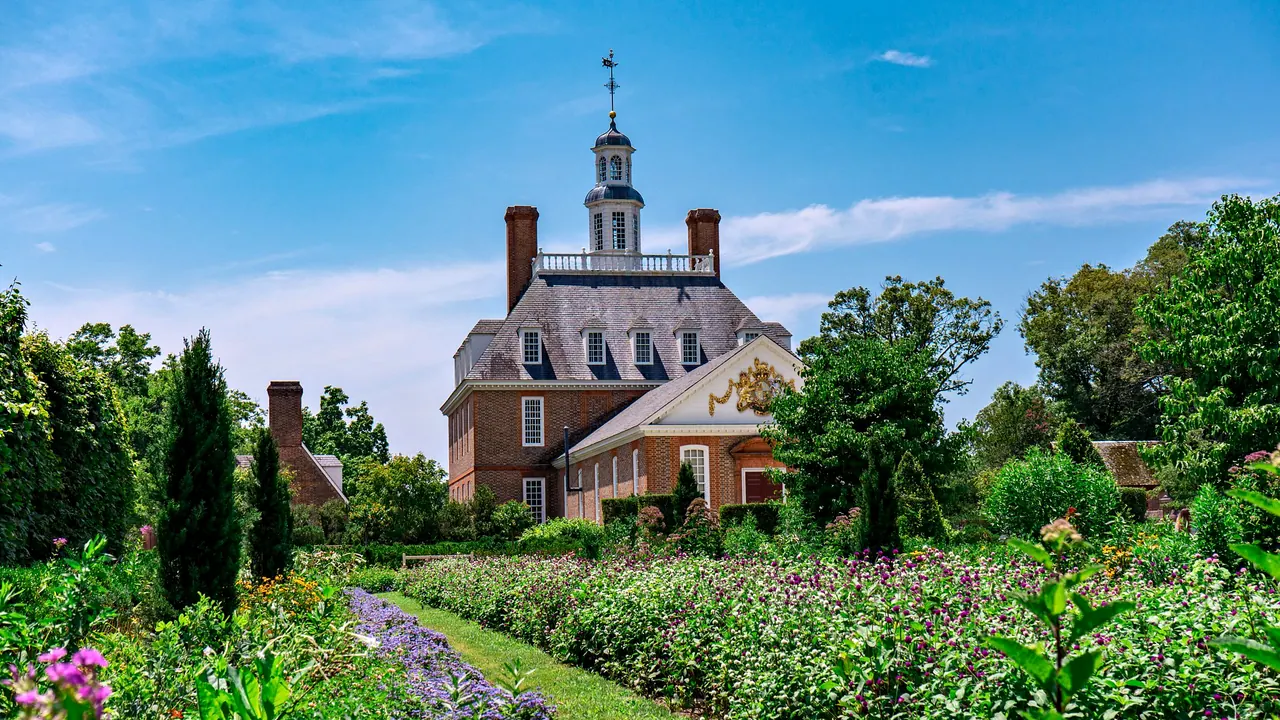
Photos: Washington DC by Guohua Song, Pexels License; Williamsburg, Virginia by Brian Magill, Pexels License.
Washington DC or Williamsburg, Virginia?
Our verdict in twelve categories, each scored against the same fixed benchmark cities, and the climate month by month, so you can choose for your trip.
Choose Washington DC for
- live music and the arts
- nightlife
- getting around
Washington suits the traveller who wants a full city on the trip. You get world-class museums you can wander into for free, a serious theatre and concert season, Ethiopian dinners in Shaw and late bars on U Street, all linked by a Metro, so you never need a car. It is the costlier stay, but a week of sightseeing here costs very little once the room is paid for.
Choose Williamsburg, Virginia for
- beaches
- prices
- wellness
Williamsburg is the better pick for a family vacation built around one era of history and a few big days out. Children can watch a costumed blacksmith in the morning and ride roller coasters at Busch Gardens in the afternoon, with Jamestown, Yorktown and a beach day on the bay all within easy reach. Evenings are quiet and you will need a car, but rooms are easier on the budget and the pace is gentler.
Scoreboard
Twelve categories on one fixed scale from 0 to 100. The shaded stretch is the gap between the two.
Your match
Pick a travel style or drag the sliders, and both match scores follow your weighting.
Wins on live music and the arts and nightlife with your weighting.
Wins on beaches and prices with your weighting.
What matters to you?
Category by category
What the scores mean for a trip.
Beaches & swimming
Neither is a beach destination, but Williamsburg brings the water much closer. Yorktown's small river beach is about twenty minutes away, Buckroe faces the bay and Virginia Beach's long Atlantic sand is an easy day trip.
From Washington, the nearest sand is the brackish bay shore near Annapolis, and the proper ocean resorts are about three hours away. For most visitors to the capital, a swim means the hotel pool.
Food & drink
Washington eats far more widely. Its immigrant communities give it real depth, from the Ethiopian dining rooms around U Street to Salvadoran pupusas, and there are market halls to graze in and ambitious kitchens at the top end. The half-smoke and the old Southwest fish market add a local touch.
Williamsburg's strength is a short list of Virginia classics: ham biscuits, peanut soup, crab cakes and bay oysters in season. Away from those, much of the eating is candlelit tavern meals chosen for the atmosphere and pancake houses on Richmond Road.
Culture & sights
Washington offers a week of major sights, almost all free. Along the Mall are the Smithsonian museums, the National Gallery and the African American history museum, set among the Capitol, the White House and the great memorials.
Williamsburg goes deep on one subject. It is a meticulously restored colonial capital where interpreters work the forges and print shops and the Wren Building still serves the college. It is immersive and well done, but its range is narrower, and two or three days covers it.
Nightlife
Washington has a proper night out from Thursday to Saturday, powered by young staffers and students. You can choose between cocktail bars and rooftops on 14th Street, the cheap late drinks of Adams Morgan, dive bars on H Street and the long-standing gay scene around Dupont Circle.
Williamsburg barely competes. A few student pubs and taprooms fill in term time, and a candlelit ghost walk is as late as most evenings go.
Nature & outdoors
The real difference is in the lie of the land. Around the capital the Potomac country climbs from wooded valleys to rocky gorges and mountain ridges. Rock Creek Park runs through the middle of the city, and the C&O Canal towpath follows the river upstream. Great Falls, about half an hour away, offers cliff paths, climbing and whitewater, and the Shenandoah ridges are close enough for a full day's hike.
Williamsburg sits in flat Tidewater forest, marsh and estuary. That is fine for gentle cycling along the Colonial Parkway or for kayaking the tidal creeks and watching for ospreys and bald eagles, but there is nothing to climb.
Day trips
The two regions tell different chapters of American history, and they spread over very different distances. Around Washington the excursions cover more ground and more variety. Old Town Alexandria and Mount Vernon are close by, Baltimore and Annapolis are within an hour, and the Civil War is marked at Gettysburg, Antietam and Harpers Ferry. Philadelphia makes a long but rewarding day by fast train.
From Williamsburg the colonial story is right on the doorstep, with Jamestown and Yorktown each less than half an hour away, and the James River plantations and Richmond follow after them. These places matter more to Americans than to overseas visitors, and nearly all of them need a car.
Good for families
Both work very well with children, in different ways. Washington's appeal is free and educational: dinosaurs at Natural History, rockets at Air and Space, the pandas at the zoo in many years, and the open lawns of the Mall, all reached by a Metro with lifts at every station.
Williamsburg has the edge for pure fun. Busch Gardens and Water Country USA sit beside a Historic Area where children march with the fife and drums and climb aboard the replica ships at Jamestown. Motels with pools make the evenings easy.
Getting around
Washington is much easier without a car. Its flat grid is good for walking, the Metro reaches Arlington, Alexandria and the airport, and bike-share docks line the riverside routes between the monuments. The main gap is Georgetown, which has no station.
In Williamsburg, only the Historic Area, Merchants Square and the campus are walkable, and they take about twenty minutes end to end. The theme parks, outlets, Jamestown and Yorktown are spread along highways, so almost every visitor rents a car.
Shopping & style
Neither is a reason to travel, but Washington offers more range. Georgetown's brick streets mix boutiques and antiques, CityCenterDC has the luxury labels, and the Smithsonian and National Gallery shops are good for prints and books.
Williamsburg's shopping is narrower but more particular. Colonial workshops sell pewter, pottery and books printed by hand, and beyond them there is an outlet centre and a long-established pottery store on Richmond Road.
Affordability
Williamsburg is the cheaper stay, mainly because motels and chain hotels line the main roads at reasonable rates outside the peak weeks. The catch is the paid entry at every major site and the cost of a rental car.
Washington works the other way round. Rooms, cocktails and taxis are expensive, but the museums, zoo, memorials and Capitol tours are free, so the sightseeing itself costs almost nothing.
Live music & performing arts
Washington has a full professional season. Arena Stage, the Shakespeare Theatre and Woolly Mammoth cover theatre from new American plays to the classics, the National Symphony and the National Opera provide the classical side, and U Street's restored theatres host touring bands. In summer, the lawn concerts at Wolf Trap are a highlight.
Williamsburg's performances belong to its setting: candlelit eighteenth-century recitals, period plays and the fife-and-drum corps, plus student shows at William & Mary. For a professional orchestra or opera, you would drive to Richmond or Norfolk.
Wellness & relaxation
Neither has a spa culture, though Williamsburg is the more restful of the two. Its golf resorts and historic inn along the James have proper spas, and early mornings on the empty greens or drives down the wooded Colonial Parkway set a slow pace.
In Washington, the working rhythm of a government town takes over. Calm means hotel spas, the Dumbarton Oaks gardens or the Arboretum, and an early loop of the Tidal Basin.
When should you go?
Pick your month. The climate figures are measured averages, not a forecast.
Washington DC in July
Williamsburg, Virginia in July
Daytime high, °C
Rainfall in the month, mm
Where the figures come from
Williamsburg, Virginia's sunshine is measured 60 km from the centre, at Richmond International Airport.
Temperature and rainfall are climate normals, averaged over the years shown. Washington DC: 1991-2020 (sunshine 1981-2010) normals, Washington National Airport (5 km from centre). Williamsburg, Virginia: 2006-2020 (sunshine 1981-2010, rainfall 1991-2020) normals, Williamsburg / Kingspoint (3.6 km from centre).
Both places share the same Virginia and Maryland pattern of mild springs, hot and humid summers and cool winters. Williamsburg runs a few degrees warmer all year and gets noticeably more sunshine. Its January afternoons reach around 10°C against about 7°C in Washington, so winter sightseeing on the colonial streets is more comfortable than winter walks along the Mall. In both places July is too hot for long walks between sights, with highs around 32°C in Washington and a touch more further south.
Late summer splits them. Williamsburg's rain peaks in August at about 151mm, often as heavy thunderstorms, while Washington's wettest months are lower and spread more evenly from May to September. July and August are also when the bay is warm enough to swim, at around 26°C, and that matters more in Williamsburg, where a beach is close by. For both, April to early June and late September through October give the best walking weather.
Which traveller are you?
For a food and nightlife trip, Washington is the clear choice. It has Ethiopian cooking in Shaw, pupusas in Columbia Heights and serious tasting menus, and then bars along 14th Street and late dancing in Adams Morgan. In Williamsburg the evening ends after a tavern dinner.
On a beach and sun trip, Williamsburg is the better base. Yorktown's calm river beach is twenty minutes away and Virginia Beach about an hour, and the town is sunnier throughout the year. From Washington the Atlantic shore is a weekend away rather than a day out.
For a culture and arts trip, Washington offers far more. It has the Smithsonian museums, the National Gallery, the Library of Congress and a full theatre, opera and symphony season. Colonial Williamsburg is absorbing for two or three days but covers one period in depth.
Before you go
| Measure | Washington DC | Williamsburg, Virginia |
|---|---|---|
| Currency | US Dollar (USD) | US Dollar (USD) |
| Sockets | AB120 V, 60 Hz | AB120 V, 60 Hz |
| Driving side | Right | Right |
| Time zone | UTC-5, UTC-4 in summer | UTC-5, UTC-4 in summer |
| Emergency number | 911 | 911 |
| Elevation | 72 m | 15 m |
| Main airport | Ronald Reagan Washington National Airport (DCA)5 km from centre105 non-stop destinations | Newport News Williamsburg International Airport (PHF)24 km from centre1 non-stop destination |
| Public holidays this year | 11 days | 13 days |
By the numbers
| Measure | Washington DC | Williamsburg, Virginia |
|---|---|---|
| City population | 689,545 | 15,425 |
| People per km² | 3,896 | 656 |
| Museums within 10 km | 98 | 8 |
| UNESCO World Heritage sites within 50 km | 0 | 0 |
| Swim season, months above 21 °C | 3 months | 4 months |
Where else could you go?
Every comparison below shares a destination with this one, so you can follow Washington DC or Williamsburg, Virginia somewhere new.
- Baltimorevs Washington DC
- Virginia Beachvs Williamsburg, Virginia
- Rehoboth Beachvs Washington DC
- Bethany Beachvs Washington DC
- Ocean City, Marylandvs Washington DC
- Cape Mayvs Washington DC