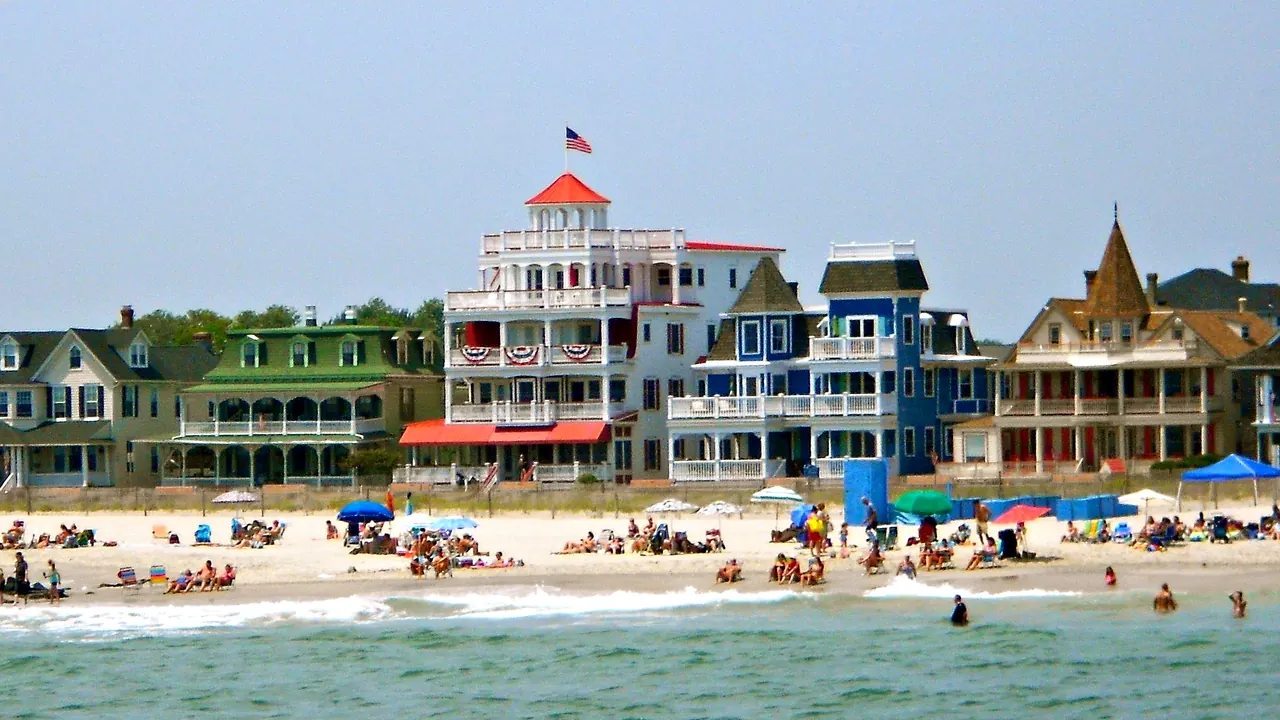

Photos: Cape May by Smallbones, CC0; Washington DC by Guohua Song, Pexels License.
Cape May or Washington DC?
Our verdict in twelve categories, each scored against the same fixed benchmark cities, and the climate month by month, so you can choose for your trip.
Choose Cape May for
- beaches
- wellness
Cape May is the choice for a summer week by the sea. It has a long lifeguarded beach, a Victorian town small enough to cross by bicycle, dolphin boats from the harbour and autumn birdwatching at the Point. It suits couples and families who want slow days, porch evenings and early nights, and who are happy to drive in and stay put.
Choose Washington DC for
- culture and sights
- live music and the arts
- nightlife
If you want full days, go to Washington. The free Smithsonian museums and the monuments along the Mall can fill a week, the theatre and restaurant scenes are much deeper, and the Metro and fast trains make it an easy base without a car. Battlefields, Baltimore and Philadelphia are all within a day's reach. The one thing it cannot give you is a beach.
Scoreboard
Twelve categories on one fixed scale from 0 to 100. The shaded stretch is the gap between the two.
Your match
Pick a travel style or drag the sliders, and both match scores follow your weighting.
Wins on beaches and wellness with your weighting.
Wins on culture and sights and live music and the arts with your weighting.
What matters to you?
Category by category
What the scores mean for a trip.
Beaches & swimming
On the beach, this is as one-sided as a comparison gets. Cape May has an unbroken sand beach along its oceanfront, with lifeguards and gentle surf. The beaches at the Point are quieter, and at Sunset Beach on the bay people hunt for the quartz pebbles called Cape May diamonds. In summer the sea is warm enough for proper swimming.
Washington is a river city, and nobody swims in the Potomac. The nearest sand is on the Chesapeake near Annapolis: warm water, but small, brackish beaches. The real Atlantic resorts are three hours' drive away.
Food & drink
Cape May's food is good but narrow. It is a working fishing port, so you eat scallops, flounder and local oysters at dockside shacks or in Victorian dining rooms, and long porch breakfasts are part of a stay. Outside seafood the choice is mostly fudge and boardwalk snacks, and many kitchens close in winter.
Washington has far more range: Ethiopian restaurants around Shaw and U Street, Salvadoran pupusas, the half-smoke, and grazing at Eastern Market and Union Market. It also has serious tasting menus and a restaurant scene that runs all year.
Culture & sights
Cape May does one thing well. It is a whole Victorian town, protected as a National Historic Landmark district, best seen on a walking or trolley tour, with the Emlen Physick Estate and the lighthouse climb to round it off. It makes a lovely setting, but two days cover it.
Washington is in another league. The Smithsonian museums along the Mall, the National Gallery of Art, the Capitol, the memorials and the Library of Congress could fill a week, and nearly all of them are free, so you can drop in for an hour as easily as stay all day.
Nightlife
Cape May has a few long-standing pubs and hotel bars around the pedestrian mall and the beachfront, often with a cover band in summer. Little is still open after midnight, and anyone who wants more drives to the Wildwoods.
Washington has a real night out, at least from Thursday to Saturday. Staffers and students fill the cocktail bars and rooftops along 14th Street and U Street, Adams Morgan runs late, and Dupont Circle is the heart of the LGBTQ+ scene. Early in the week it is mostly after-work drinks.
Nature & outdoors
Both are good for the outdoors in different ways, with Washington slightly ahead on variety. Cape May is flat coast and marsh, but it sits at the tip of a peninsula that makes it one of North America's great migration sites, with hawks and monarch butterflies pouring through in autumn. It also has dolphin boats in summer and kayaking in the back-bay marshes.
From Washington, Rock Creek Park and the C&O Canal towpath start in the city itself. Great Falls has cliffs and whitewater half an hour upriver, and the ridges of Shenandoah are within a morning's drive. Birders should pick Cape May, and walkers who want hills should pick Washington.
Day trips
From Cape May, the best outing is the ferry across Delaware Bay to colonial Lewes. The Wildwoods are next door and Atlantic City is about an hour up the coast. Philadelphia is a long, tiring drive, and almost every trip needs a car.
Washington sits in a region full of American history. Old Town Alexandria is a Metro ride away, Mount Vernon and Annapolis are close, and Baltimore is under an hour by train. Gettysburg, Antietam and Harpers Ferry are within a couple of hours, and Philadelphia is about two hours by fast train.
Good for families
Both work well with children, but in different ways. Cape May is a seaside vacation: lifeguarded beaches, surrey bikes on the promenade, crabbing on the bay, dolphin boats and a free county zoo nearby. Some historic B&Bs do not take small children, and the rides are up in the Wildwoods.
Washington is more of a learning trip, with dinosaurs at Natural History, rockets at Air and Space, the free National Zoo and the open lawns of the Mall. The downsides are long, exposed walks in summer heat and no beach for an easy afternoon.
Getting around
Once you arrive, Cape May is easy on foot or by bike, because the historic district, the promenade and the Washington Street Mall are a short, flat walk apart. The problem is everything further out. There is no passenger rail and there are few buses, so the Point, the zoo and the Wildwoods all need a car.
In Washington you can leave the car behind. The Metro reaches Arlington, Alexandria and Reagan National Airport, bike-share docks line the riverside paths, and trains run to Baltimore and Philadelphia. Distances on the Mall are longer than they look, though, and Georgetown has no station.
Shopping & style
In Cape May, shopping means a rainy-afternoon browse along the three pedestrian blocks of the Washington Street Mall, with boutiques, bookshops, fudge and a few antique dealers in the side streets.
Washington offers more: chain fashion and boutiques on Georgetown's M Street and Wisconsin Avenue, luxury labels at CityCenterDC, big malls at Tysons Corner, and good museum shops for prints and books. Even so, neither city is worth visiting for its shops.
Affordability
Neither city is cheap, but Cape May in summer costs more. B&Bs charge premium rates with minimum stays, a good dinner is priced like a big city, and you pay for beach tags and parking on top. Spring, autumn and a room in the Wildwoods all bring the cost down.
Washington's hotels and restaurants are also expensive, but its biggest sights cost nothing. The Smithsonian, the National Gallery, the zoo and the memorials are free, and staying across the river in Arlington can make the room cheaper.
Live music & performing arts
Cape May's stage life is modest but fits the town: a professional company playing in a converted church, historic American drama, a long-running chamber music festival in late spring and summer concerts in Convention Hall. It makes a pleasant evening and not much more.
Washington is a proper theatre city, with Arena Stage, the Shakespeare Theatre, Ford's Theatre and touring musicals at the National. It also has the National Symphony and the Washington National Opera, rock and go-go around U Street, and summer lawn concerts at Wolf Trap.
Wellness & relaxation
Cape May is the more restful of the two, at least outside high summer. Think porch rocking chairs, afternoon tea in guesthouse parlours, slow bike rides and sunsets over the bay, with a few hotel day spas. Spring and autumn are the calmest times.
Washington's pace is set by work. Rest there means a hotel spa, or an early walk around the Tidal Basin or a quiet hour at Dumbarton Oaks or the National Arboretum.
When should you go?
Pick your month. The climate figures are measured averages, not a forecast.
Cape May in July
Washington DC in July
Daytime high, °C
Rainfall in the month, mm
Where the figures come from
Cape May has no rain gauge within 25 km of the centre, so its rainfall comes from a gridded climate dataset read at the city rather than from a gauge further away.
Temperature and rainfall are climate normals, averaged over the years shown. Cape May: 2006-2020 (rainfall 1991-2020) normals, Wildwood / Sally Marshall Crossing (8.4 km from centre). Washington DC: 1991-2020 (sunshine 1981-2010) normals, Washington National Airport (5 km from centre).
Cape May's beach season is short. The Atlantic gets pleasant for swimming from late June, reaches about 24°C in August and stays warm well into September, so mid-June to mid-September is the time to swim. Spring and autumn are mild for walking and birding, and October days are still around 20°C. Winter is cold and the town goes quiet. Rain falls fairly evenly all year, and August is a little wetter than the rest.
Washington is a few degrees hotter in high summer. July highs reach about 32°C, and June and July are its wettest months, so long walks between monuments get tiring. The best months for sightseeing are April, May, September and October, when the days are warm and sunny without that heat. Winter is cold and the days are short of sun, but the free museums keep a January visit worthwhile.
Which traveller are you?
On a beach and sun trip, Cape May is the clear pick. Lifeguarded sand runs along its whole oceanfront and the summer Atlantic is warm enough for long swims. From Washington, the nearest sand is a small, brackish Chesapeake beach about an hour away.
For a culture and arts trip, choose Washington. The free Smithsonian museums, the National Gallery and the memorials fill the days, and in the evening there is Arena Stage, the Shakespeare Theatre or the National Symphony. Cape May's Victorian streets and lighthouse take a day or two.
On a food and nightlife trip, Washington again comes out well ahead. You can eat Ethiopian food in Shaw and pupusas in Columbia Heights, then go on to late bars along 14th Street and U Street. In Cape May, the fine local seafood is followed by a quiet pub, and the town is asleep by midnight.
Before you go
| Measure | Cape May | Washington DC |
|---|---|---|
| Currency | US Dollar (USD) | US Dollar (USD) |
| Sockets | AB120 V, 60 Hz | AB120 V, 60 Hz |
| Driving side | Right | Right |
| Time zone | UTC-5, UTC-4 in summer | UTC-5, UTC-4 in summer |
| Emergency number | 911 | 911 |
| Elevation | 3 m | 72 m |
| Main airport | Atlantic City International Airport (ACY)65 km from centre11 non-stop destinations | Ronald Reagan Washington National Airport (DCA)5 km from centre105 non-stop destinations |
| Public holidays this year | 13 days | 11 days |
By the numbers
| Measure | Cape May | Washington DC |
|---|---|---|
| City population | 2,768 | 689,545 |
| People per km² | 390 | 3,896 |
| Museums within 10 km | 4 | 98 |
| UNESCO World Heritage sites within 50 km | 0 | 0 |
| Swim season, months above 21 °C | 3 months | 3 months |
Where else could you go?
Every comparison below shares a destination with this one, so you can follow Cape May or Washington DC somewhere new.
- Rehoboth Beachvs Cape May
- Bethany Beachvs Cape May
- Baltimorevs Washington DC
- Ocean City, Marylandvs Cape May
- Atlantic Cityvs Cape May
- Philadelphiavs Cape May