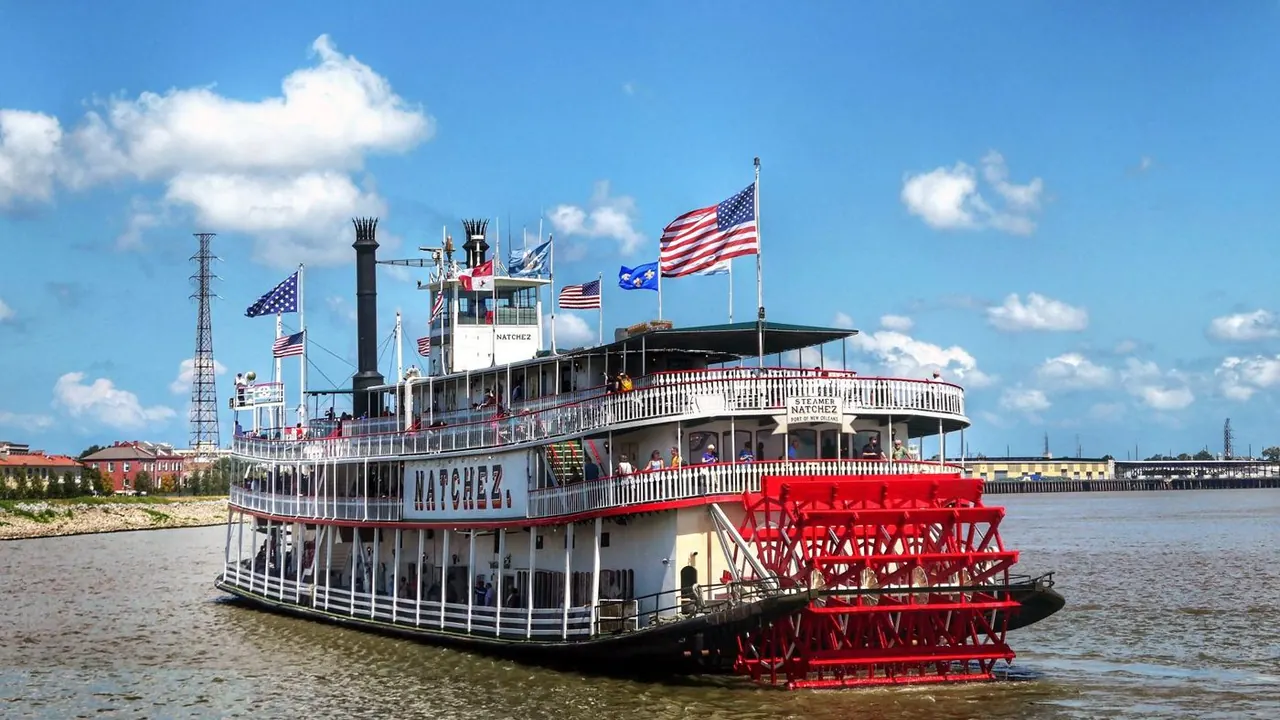
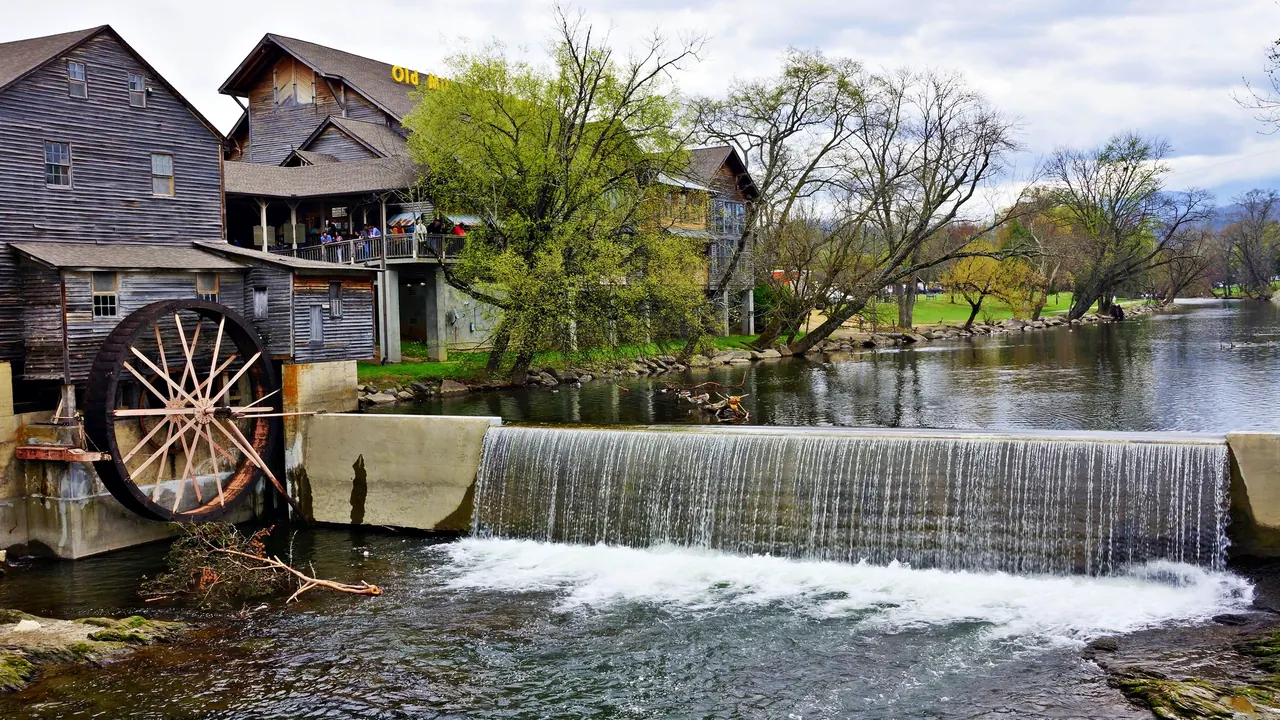
Photos: New Orleans by Bernard Spragg, CC0; Pigeon Forge by NealVickers, CC BY-SA 4.0, cropped.
New Orleans or Pigeon Forge?
Our verdict in twelve categories, each scored against the same fixed benchmark cities, and the climate month by month, so you can choose for your trip.
Choose New Orleans for
- nightlife
- food and drink
- culture and sights
New Orleans is the choice for adults who travel for what happens at the table and after dark. Its Creole and Cajun cooking, the jazz on Frenchmen Street and the late, street-level nights have few equals in the country. The French Quarter and the Garden District add real history to every walk. Couples, groups of friends and anyone happy to spend a long weekend on foot between meals and music will get far more out of it.
Choose Pigeon Forge for
- nature and the outdoors
- families
- prices
Pigeon Forge suits families and people who want the mountains. Dollywood, the dinner theatres and the big cabins with hot tubs are built around children and groups. The Great Smoky Mountains National Park is half an hour away, with waterfall trails, Cades Cove and the high ridges. Bring a car and expect simple food and early nights. Treat it as a base for the outdoors and a family fun park rather than a town to explore.
Scoreboard
Twelve categories on one fixed scale from 0 to 100. The shaded stretch is the gap between the two.
Your match
Pick a travel style or drag the sliders, and both match scores follow your weighting.
Wins on nightlife and food and drink with your weighting.
Wins on nature and the outdoors and families with your weighting.
What matters to you?
Category by category
What the scores mean for a trip.
Beaches & swimming
Neither city is a beach destination, but New Orleans has the better options. The Gulf is a drive of over an hour away, at Bay St. Louis and Gulfport. The water there is warm but shallow and murky, so you can have a day on the sand even though nobody goes to New Orleans for it.
Pigeon Forge is far inland and has no coast at all. Swimming there means Douglas Lake, the boulder-lined pools in the park's streams or the water park beside Dollywood.
Food & drink
This is one of the widest gaps between the two. New Orleans has a cuisine of its own, Creole and Cajun. It runs from the century-old dining rooms of the French Quarter to po'boy counters in Mid-City, with crawfish in spring, oysters in the cooler months and cocktails such as the Sazerac that were invented in the city.
Pigeon Forge cooks for volume: pancake houses, Southern buffets, barbecue and chains along the Parkway. Moonshine tastings and fudge are its local touch. It is fine for feeding a family, but for a really good dinner people drive to Knoxville or Asheville.
Culture & sights
New Orleans has much more history to show. The French Quarter is an unusually complete colonial town for the United States, and the Cabildo there is where Louisiana passed to the United States in 1803. Beyond it are the mansions of the Garden District, the above-ground tombs and the National WWII Museum.
Pigeon Forge is a resort strip, and its sights, such as the Titanic replica and the illusion museums, are built to entertain. Its real history comes down to the Old Mill of 1830 and the crafts at Dollywood. For Appalachian life, the log cabins and churches in the national park are a better outing.
Nightlife
After dark the two are opposites. New Orleans has no closing time and lets you carry a drink down the street, so a night drifts from the music bars of Frenchmen Street to the dives of the Bywater. Bourbon Street is there for those who want neon and crowds.
Pigeon Forge winds down at about ten, and its evenings are dinner shows and go-karts. Adults who want a drink find a few brewpubs and moonshine tasting rooms, or drive to Gatlinburg.
Nature & outdoors
Here Pigeon Forge is well ahead. The Great Smoky Mountains rise just beyond Gatlinburg, with ridges over 2,000m, the Alum Cave climb to Mount LeConte, the Appalachian Trail and black bears in Cades Cove. Tubing and fishing on the Little River fill out a stay.
New Orleans offers a different, quieter kind of outdoors: cypress swamps and bayous by boat or kayak, the boardwalks of the Barataria Preserve and the old oaks of City Park. The land is flat, though, and the summer heat keeps outings short.
Day trips
New Orleans has the more distinctive outings. The plantations of the River Road are about an hour away, among them the Whitney, which tells the story of the people enslaved there. The Gulf towns and Cajun country to the west add variety, although the choice thins after that.
From Pigeon Forge, most trips go into the mountains or to nearby towns: Gatlinburg next door, Knoxville in about forty minutes and Cherokee over Newfound Gap. Asheville and the Biltmore Estate make the best day out, but it is a long drive for a single day.
Good for families
Pigeon Forge is built for children in a way New Orleans is not. Dollywood, its water park, mountain coasters, mini-golf and cabins big enough for several families make it easy to fill a week, and the national park adds gentle waterfall walks. The catch is the car, because attractions are spread along the Parkway and traffic slows in the busy weeks.
New Orleans works better for families than its reputation suggests, with Audubon Zoo, the riverside aquarium, the carousel and children's museum in City Park, and streetcar rides. Still, the summer heat, Bourbon Street at night and the care needed after dark make it better for a few days than for a whole family week.
Getting around
New Orleans is much easier without a car. The French Quarter, the Marigny and the Warehouse District are all walkable. The St. Charles streetcar runs out to the Garden District, though slowly, and ride-hailing fills the gaps.
In Pigeon Forge a car is close to essential. The town is a multi-lane strip, the Parkway trolley is slow and does not reach the hillside cabins, and the park trailheads can only be reached by car.
Shopping & style
New Orleans gives you more to browse. Royal Street has antique dealers and galleries, Magazine Street has miles of independent boutiques and vintage shops, and Mardi Gras masks are the city's own speciality.
Pigeon Forge is mostly outlet malls selling American mid-market brands. Its local buys are the quilts, pottery and cornmeal near the Old Mill and the work of the craft studios above Gatlinburg. Both towns have their share of T-shirt shops, and neither offers much in the way of designer labels.
Affordability
Overall costs are broadly similar, but the money goes in different places. In New Orleans the big expense is the hotel, priced like a big city and steep at Mardi Gras and Jazz Fest. Everyday food, the streetcar and the music in the streets cost little.
In Pigeon Forge, lodging is the easy part, especially a large cabin shared between families. The money goes on theme park days, dinner shows and the car you cannot do without.
Live music & performing arts
In both towns live music is the main evening out, but New Orleans has far more of it. Jazz was born there, and any night brings brass bands, funk, zydeco and traditional jazz on Frenchmen Street and in Tremé. On top of that come second-line parades on Sundays and Jazz Fest in spring.
Pigeon Forge puts on country and gospel revues, comedy, magic and dinner shows with horses, plus bluegrass at Dollywood. It is polished family entertainment rather than a music scene. For orchestras and serious theatre, neither town offers much.
Wellness & relaxation
Neither town has a spa or bathing culture worth planning a trip around, so the real difference is the kind of quiet each one offers. In New Orleans, rest comes in the gaps of a city trip: a slow start to the day and a shaded afternoon between meals and music, with the noise of the Quarter never far away.
Pigeon Forge gives you a more complete escape, as long as you stay out of the town itself. A cabin up on the ridges lets you leave the neon and traffic behind for whole evenings at a time, though every outing means going back down to the Parkway. Couples who want a few days of doing very little will find that easier in the hills than in the city.
When should you go?
Pick your month. The climate figures are measured averages, not a forecast.
New Orleans in July
Pigeon Forge in July
Daytime high, °C
Rainfall in the month, mm
Where the figures come from
Pigeon Forge's temperatures are measured 38 km from the centre, at McGhee Tyson Airport.
Pigeon Forge has no rain gauge within 25 km of the centre, so its rainfall comes from a gridded climate dataset read at the city rather than from a gauge further away.
Temperature and rainfall are climate normals, averaged over the years shown. New Orleans: 1991-2020 normals, New Orleans Airport (2.7 km from centre). Pigeon Forge: 1991-2020 normals, McGhee Tyson Airport (37.9 km from centre).
New Orleans is at its best from March to early May and again from late October into November, when the days are warm enough to sit outside and still easy for walking. From June to September it is hot and sticky, with highs around 33°C. This is also the wettest stretch, peaking near 194mm in June. Winters are mild and grey rather than cold. The Gulf warms to about 30°C in midsummer, the time for a day on the Mississippi coast, though the swimming there is modest whatever the month.
Pigeon Forge has a proper winter, with January highs around 9°C, so a cold-season visit is about cabins and fireplaces rather than trails. April, May and October are the months for the national park. October is also the driest month, at about 64mm, and with the autumn colour that makes it the best month of the year. Summer on the strip is warm, though a couple of degrees cooler than in New Orleans, and that is when the water park and the mountain streams come into their own.
Which traveller are you?
For a food and nightlife trip, New Orleans wins outright. By day there is gumbo, po'boys and oysters, and by night cocktails invented in the city and bars with no closing time along Frenchmen Street. Pigeon Forge has buffets and a handful of brewpubs.
On a family trip with children, Pigeon Forge is the easier choice. Dollywood and its water park, mountain coasters, go-karts and large cabins built for groups keep children busy. New Orleans has a good zoo and aquarium, but its centre is geared to partying.
For an outdoors trip, Pigeon Forge is half an hour from the Great Smoky Mountains, with the climb to Mount LeConte, waterfall walks and bears in Cades Cove. New Orleans has swamp boat tours and City Park, but the land is flat and the summer heat limits outings.
Before you go
| Measure | New Orleans | Pigeon Forge |
|---|---|---|
| Currency | US Dollar (USD) | US Dollar (USD) |
| Sockets | AB120 V, 60 Hz | AB120 V, 60 Hz |
| Driving side | Right | Right |
| Time zone | UTC-6, UTC-5 in summer | UTC-5, UTC-4 in summer |
| Emergency number | 911 | 911 |
| Elevation | -2 m | 305 m |
| Main airport | Louis Armstrong New Orleans International Airport (MSY)18 km from centre51 non-stop destinations | McGhee Tyson Airport (TYS)39 km from centre34 non-stop destinations |
| Public holidays this year | 14 days | 13 days |
By the numbers
| Measure | New Orleans | Pigeon Forge |
|---|---|---|
| City population | 383,997 | 6,343 |
| People per km² | 423 | 185 |
| Museums within 10 km | 16 | 7 |
| UNESCO World Heritage sites within 50 km | 0 | 1 |
| Swim season, months above 21 °C | 7 months | - |
Where else could you go?
Every comparison below shares a destination with this one, so you can follow New Orleans or Pigeon Forge somewhere new.