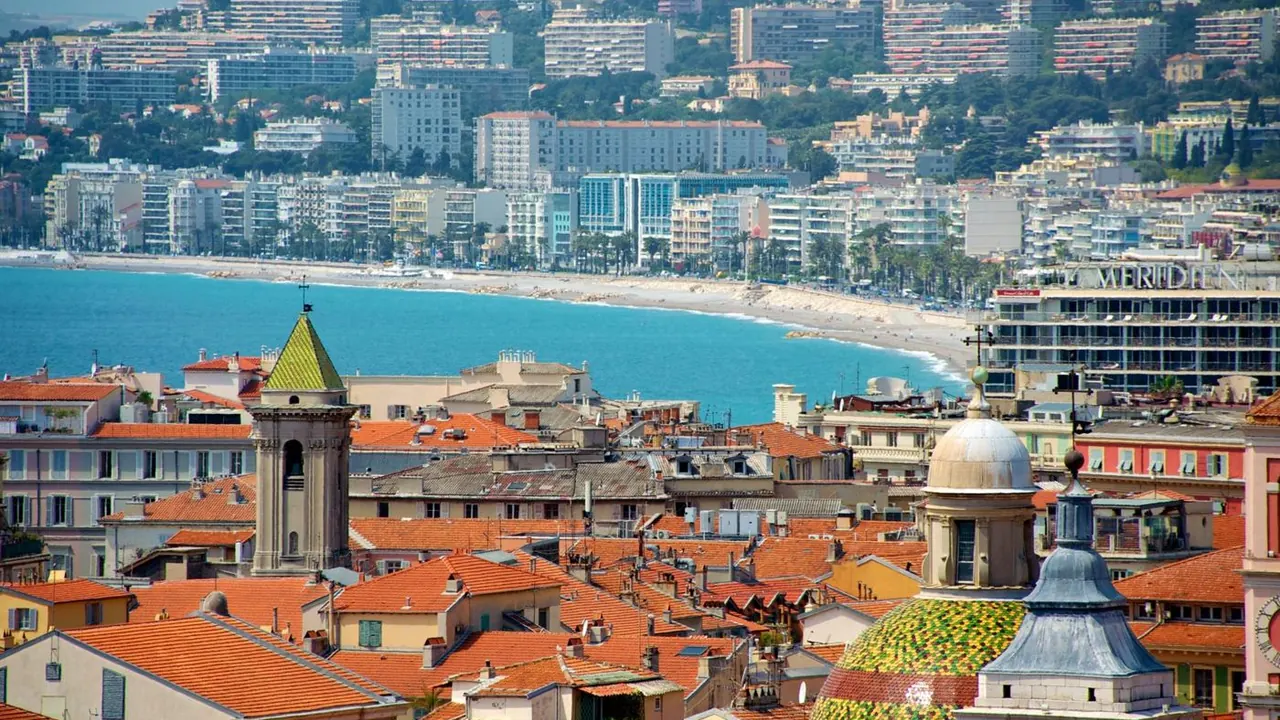
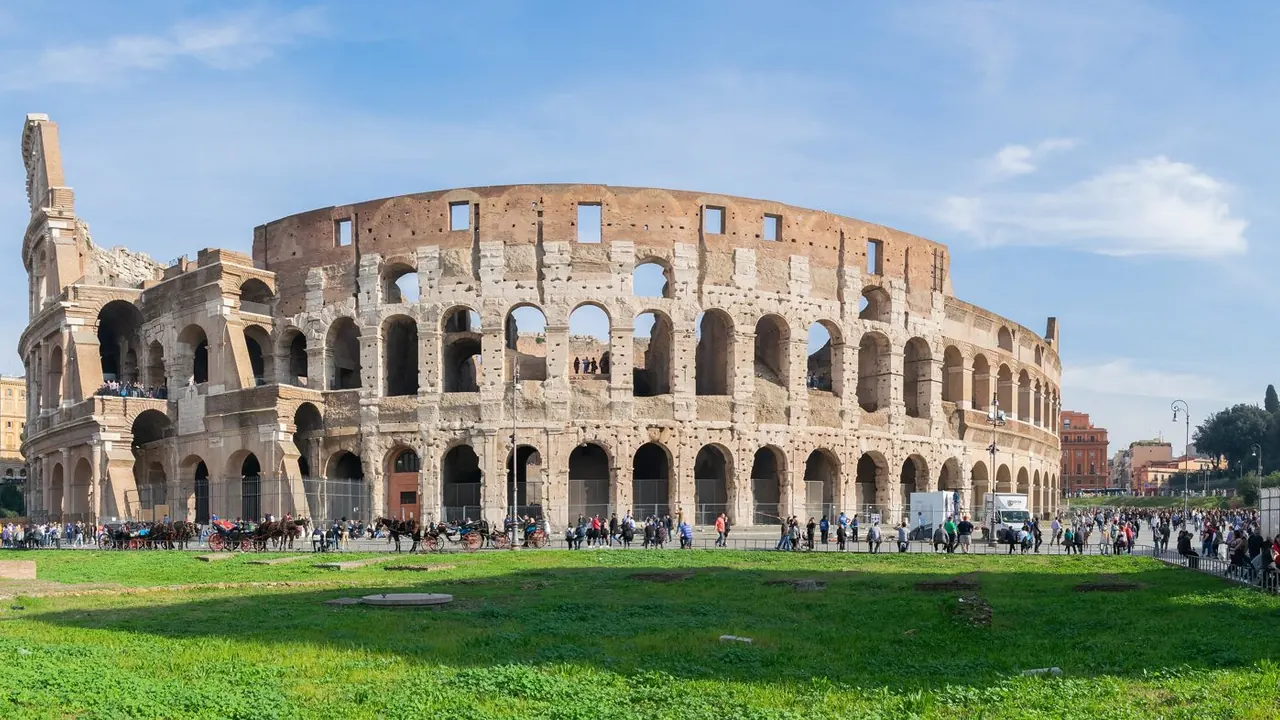
Photos: Nice by Daniel Stockman, CC BY-SA 2.0, cropped; Rome by Tournasol7, CC BY-SA 4.0, cropped.
Nice or Rome?
Our verdict in twelve categories, each scored against the same fixed benchmark cities, and the climate month by month, so you can choose for your trip.
Choose Nice for
- beaches
- nature and the outdoors
- getting around
Nice suits a trip where the sea and the coast set the pace: a swim off the pebbles in the morning, then a train to Monaco, Èze or Antibes, with the Alps close enough for a day of walking or skiing. The centre is flat and compact, so it makes an easy, unhurried base for travellers who want scenery and sunshine more than a long sightseeing list, and Matisse and Chagall are there for a cloudy afternoon.
Choose Rome for
- culture and sights
- live music and the arts
- shopping
If the sights are the reason for going, Rome is the better choice by a long way. Ancient ruins, the Vatican, Baroque churches and some of Europe's greatest museums fill a week without effort, and the trattorias, piazza evenings, opera and fashion streets give it a depth Nice cannot offer. Expect hotter summers, more walking on cobbles and a beach that means a day out rather than part of every day.
Scoreboard
Twelve categories on one fixed scale from 0 to 100. The shaded stretch is the gap between the two.
Your match
Pick a travel style or drag the sliders, and both match scores follow your weighting.
Wins on beaches and nature and the outdoors with your weighting.
Wins on culture and sights and live music and the arts with your weighting.
What matters to you?
Category by category
What the scores mean for a trip.
Beaches & swimming
In Nice the beach is part of daily life. The 7km pebble shore below the Promenade des Anglais has clear water you can step into after breakfast, and for sand and calmer coves there are Villefranche, Paloma beach and Beaulieu a short ride east, or Juan-les-Pins to the west.
Rome has to send you out of town for a swim. Ostia's dark volcanic sand is half an hour away by train, mostly lined with paid lidos, and the water is rarely clear. Pretty coves mean a long trip south to Sperlonga, so the sea is an outing rather than a rhythm.
Food & drink
Rome is the stronger place to eat. Its cooking runs deeper, from the four classic pastas and Jewish-style artichokes in the Ghetto to Testaccio's offal dishes, supplì and pizza al taglio, and Trastevere, Monti and Testaccio reward anyone who walks away from the big sights.
Nice has a distinctive kitchen too, closer to Liguria than Paris: socca from wood ovens, pissaladière, stuffed vegetables and the morning market on the Cours Saleya. It is a pleasure to eat simply there, but the range is narrower, and the promenade terraces are best avoided.
Culture & sights
This is where the two cities are furthest apart. Rome has ancient monuments standing in the middle of town, the Vatican and Sistine Chapel, Bernini's piazzas and the Borghese Gallery, and a week leaves much unseen.
Nice offers a more modest, pleasant mix: the ochre lanes of Vieux Nice, Belle Époque villas, the Russian Orthodox Cathedral, and an excellent modern art trio in the Matisse, Chagall and MAMAC museums. Two or three days cover it comfortably.
Nightlife
Rome gives you more to choose from after dark. The evening starts with aperitivo and carries on in the piazzas, and each quarter has its own crowd: Trastevere's busy wine bars, Monti's smaller cocktail spots, student San Lorenzo and arty Pigneto.
In Nice the night out is mostly the old town's pubs and wine bars, with a few calmer bars at the port and late summer evenings at the beach clubs. It quietens early outside summer. Neither city is a clubbing destination, and in Nice the glossier nights happen in Monaco or Cannes.
Nature & outdoors
Nice has the better outdoors, because the Alps meet the sea right behind it. Coastal paths around Cap Ferrat and Cap d'Ail, cycling on the corniches, the red rocks of the Esterel and the larch forests of the Mercantour are all within reach, and in winter you can ski at Isola 2000 and be back by the sea the same day.
Rome's green spaces are mostly inside the city: the villa parks of Borghese and Pamphili, and the Appian Way, a superb bike ride past tombs and aqueducts. The crater lakes of the Alban Hills and the Apennines need more travel and offer less variety.
Day trips
Both are outstanding bases, but the trips are different in character. From Nice it is a string of contrasting coastal towns, Monaco, Menton, Èze, Antibes, Saint-Paul-de-Vence and even Sanremo across the Italian border, almost all under an hour by train or bus and with no car needed.
From Rome the trips run through history: Ostia Antica's excavated port, Hadrian's Villa and the fountains of Tivoli, the Etruscan tombs of Tarquinia and cliff-top Orvieto. High-speed trains also put Florence and Naples within a day, which Nice cannot match for range.
Good for families
Nice is the easier of the two with children, though not by a wide margin. The flat promenade suits pushchairs and bikes, the Promenade du Paillon has playgrounds and water jets, and Parc Phoenix and Castle Hill fill a morning. The pebbles are its main drawback.
Rome makes children welcome at every table, and gladiators, catacombs and the Bioparco in Villa Borghese help. But long queues at the Vatican and Colosseum, cobbles, traffic and summer heat make sightseeing with young children more tiring.
Getting around
Nice is simpler to get around. The old town, promenade, port and shops sit within a flat half-hour walk, a tram runs straight from the airport to the centre, and coastal trains handle the day trips.
Rome's centre is also best seen on foot, and the walk from the Colosseum to Trastevere is a pleasure in itself. The metro, though, barely reaches the historic core, buses stall in traffic, and cobbles and scooters wear you down by evening.
Shopping & style
Nice is a place to browse rather than to shop. The lanes of the old town are good for olive oil, soaps and Provençal fabrics to take home, Avenue Jean Médecin covers everyday needs, and the Monday antiques stalls on the Cours Saleya are the most fun of it. There are only a few fashion houses, though, so anyone set on serious luxury ends up taking the train to Monaco or Cannes.
Rome has the whole range inside the city. The big Italian labels have their own shops a short walk from the Spanish Steps, so a luxury shopper never needs to leave town. Behind them is a real craft tradition of leather, shoes and paper made by hand. Monti has the young, independent side that Nice mostly lacks, and Porta Portese on a Sunday morning is a proper bargain hunt. As in Vieux Nice, though, the main tourist routes are full of souvenir stock.
Affordability
Neither is cheap, and the costs land in similar places. In Nice it is summer that hurts, with seafront rooms and beach loungers adding up, while cheap trams, regional trains and socca keep the rest of the day reasonable.
Rome's pressure is on small, costly rooms in the centre and steep entry fees at the major sights, and spring and autumn are busy. Free churches, drinking fountains and standing espresso help, and staying outside the centre makes a real difference.
Live music & performing arts
Rome has much more to offer for an evening of music. Opera and ballet move from the Teatro dell'Opera to the ruins of the Baths of Caracalla in summer, the Santa Cecilia orchestra plays at Renzo Piano's Auditorium, and churches host frequent sacred and organ concerts.
Nice has a respectable regional calendar: the red-and-gold Opéra de Nice, the long-established Jazz Festival in July and the February Carnival. Outside those, there is little beyond bar music in the old town.
Wellness & relaxation
Neither city has a bathing culture of its own, so relaxation takes different forms. In Nice it comes from the sea: an early swim, thalassotherapy centres along the coast and a calm, mild off-season.
Rome's escape is thermal water rather than the sea, at the sulphur pools of Bagni di Tivoli or the free open-air hot springs around Viterbo. The centre itself is noisy, and the villa gardens and the Aventine are where to find quiet.
When should you go?
Pick your month. The climate figures are measured averages, not a forecast.
Nice in July
Rome in July
Daytime high, °C
Rainfall in the month, mm
Where the figures come from
Rome's sunshine is measured 31 km from the centre, at Vigna Di Valle.
Temperature and rainfall are climate normals, averaged over the years shown. Nice: 1991-2020 normals, Nice (8 km from centre). Rome: 1991-2020 normals, Roma / Ciampino (15.1 km from centre).
Both cities share a Mediterranean year, but Nice is the one for swimming. Its sea is warm enough from June into early October and peaks at about 25°C in August, right below the promenade, while Rome's water is just as warm but half an hour away at Ostia. Rome also runs hotter: July and August reach around 31°C, which makes midday sightseeing among the ruins hard going, whereas Nice stays a few degrees milder with a sea breeze.
For walking the streets, Rome is at its best in late spring, when May is already around 24°C and dry, and again in late September and early October. Autumn brings the rain to both, and Nice's is heavier, with November the wettest month at about 138mm. Winters are mild and similar in both, though Nice gets noticeably more sunshine from December to February.
Which traveller are you?
On a culture and arts trip, Rome is the obvious pick. The Colosseum, the Vatican Museums, the Borghese Gallery and churches full of Caravaggios outweigh Nice's fine but small art museums, and summer opera at the Baths of Caracalla rounds it off.
For a beach and sun trip, Nice wins clearly. The pebble shore runs right along the city with clear blue water, and sandy coves at Villefranche and Cap Ferrat are minutes away, while Rome's nearest beaches are crowded volcanic sand at Ostia.
On an outdoors trip, Nice offers far more. Coastal paths around Cap Ferrat, cycling on the corniches, the Mercantour's high lakes and skiing at Isola 2000 are all within reach, where Rome mostly offers villa parks and the Appian Way.
Before you go
| Measure | Nice | Rome |
|---|---|---|
| Official language | French | Italian |
| Currency | Euro (EUR) | Euro (EUR) |
| Sockets | CE230 V, 50 Hz | CFL230 V, 50 Hz |
| Driving side | Right | Right |
| Time zone | UTC+1, UTC+2 in summer | UTC+1, UTC+2 in summer |
| Emergency number | 112 | 112 |
| Elevation | 0 m | 21 m |
| Main airport | Nice-Côte d'Azur Airport (NCE)6 km from centre130 non-stop destinations | Rome–Fiumicino Leonardo da Vinci International Airport (FCO)23 km from centre242 non-stop destinations |
| Public holidays this year | 11 days | 13 days |
By the numbers
| Measure | Nice | Rome |
|---|---|---|
| City population | 357,737 | 2,748,109 |
| People per km² | 4,975 | 2,135 |
| Museums within 10 km | 17 | 178 |
| UNESCO World Heritage sites within 50 km | 2 | 7 |
| Swim season, months above 21 °C | 4 months | 5 months |
Where else could you go?
Every comparison below shares a destination with this one, so you can follow Nice or Rome somewhere new.