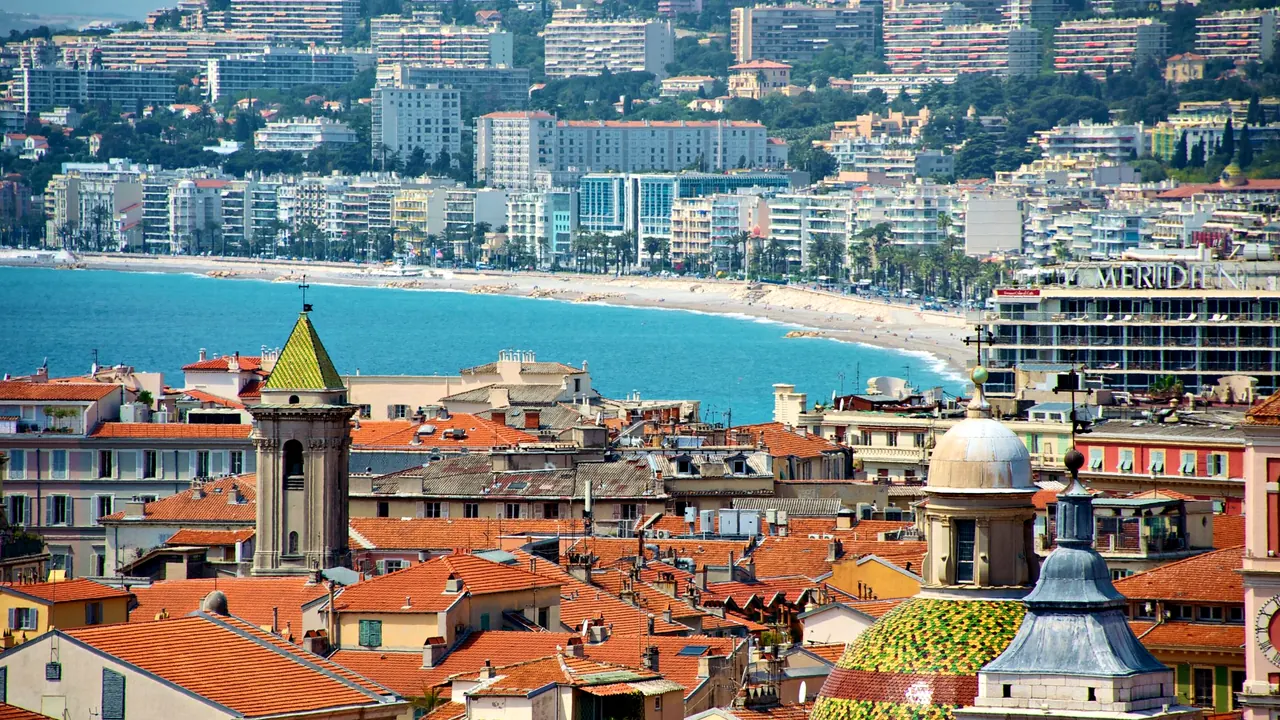
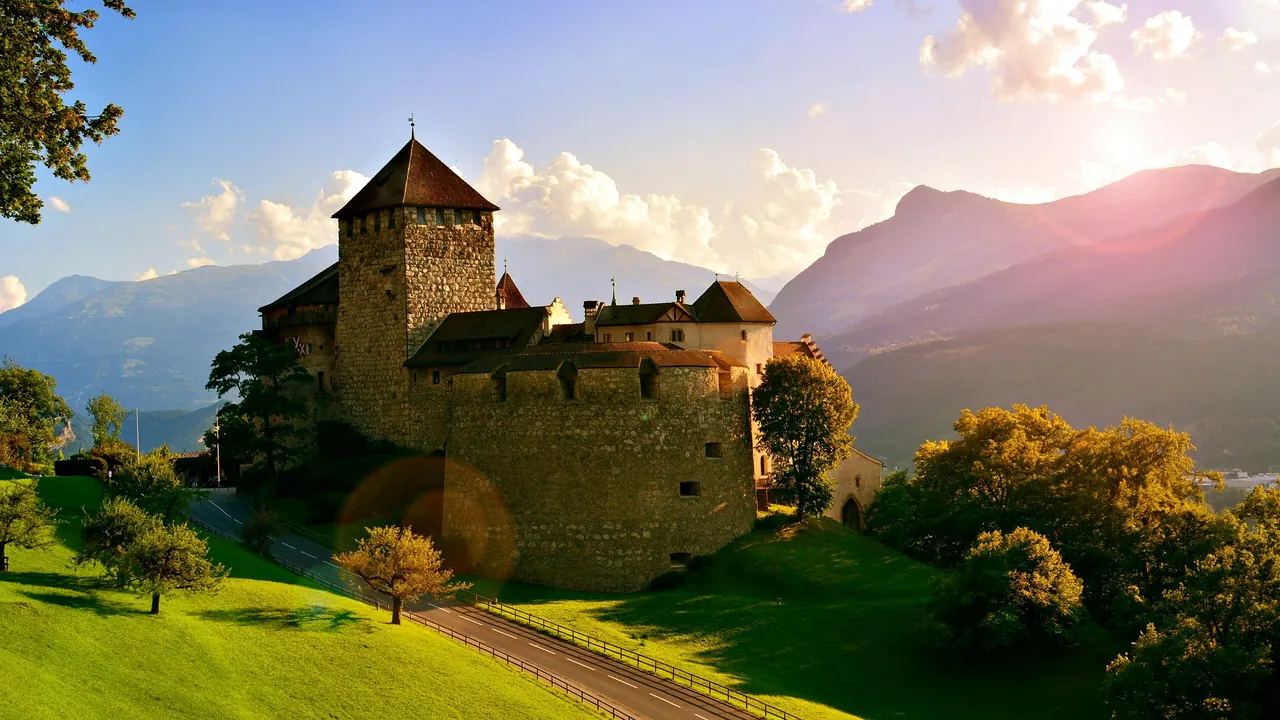
Photos: Nice by Daniel Stockman, CC BY-SA 2.0, cropped; Vaduz by Justin LaBerge, CC BY 2.0, cropped.
Nice or Vaduz?
Our verdict in twelve categories, each scored against the same fixed benchmark cities, and the climate month by month, so you can choose for your trip.
Choose Nice for
- beaches
- shopping
- food and drink
Nice is the choice for almost any classic warm-weather vacation. It gives you swimming off the promenade, a cuisine of its own built around socca and the Cours Saleya market, serious art in the Matisse and Chagall museums, and a chain of coastal towns from Monaco to Antibes that you can reach by train. It also costs noticeably less to stay there, and you can get around it without a car.
Choose Vaduz for
- nature and the outdoors
- wellness
Vaduz suits a narrower trip: walkers and cyclists who want the Alps right at the edge of a small, orderly town, and who are happy with early nights. Trails start from the centre, Malbun and the Rätikon peaks are close, and it makes a calm base for exploring the corner where Switzerland and Austria meet. Bring a generous budget, and come for the mountains rather than the town.
Scoreboard
Twelve categories on one fixed scale from 0 to 100. The shaded stretch is the gap between the two.
Your match
Pick a travel style or drag the sliders, and both match scores follow your weighting.
Wins on beaches and shopping with your weighting.
Wins on nature and the outdoors and wellness with your weighting.
What matters to you?
Category by category
What the scores mean for a trip.
Beaches & swimming
In Nice, the beach is part of daily life. The pebble shore runs the length of the Promenade des Anglais, the water is clear and blue, and you can swim from June into October. If you want sand or calmer water, Villefranche, Beaulieu and the coves of Cap Ferrat are a few minutes east by bus or train, and Juan-les-Pins and Antibes lie to the west.
Vaduz has nothing like this. The Rhine is not a river for swimming, so on hot days people go to the open-air pools or drive to the Walensee or Lake Constance. These are lovely afternoons out, with mountain walls around the water, but the lake season is short and swimming will never be why you come.
Food & drink
Nice has a real food identity, closer to Liguria than to Paris. You can eat hot socca in the old town and buy olives and produce at the Cours Saleya, and there are honest family kitchens in Vieux Nice and around the port. The main thing to avoid is the set-menu terraces on the promenade.
In Vaduz you choose between a few hotel dining rooms, restaurants on the Städtle and village inns in the hills serving Käsknöpfle, rösti and game. There is no street food and no market to wander. Both places make unusual local wine: Bellet in the hills above Nice, and the prince's Pinot Noir from the vines below Vaduz Castle.
Culture & sights
Nice has enough for two or three full days. You can explore the baroque chapels and ochre lanes of Vieux Nice, the Belle Époque villas of Cimiez and the Russian Orthodox Cathedral. Its biggest strength is art: Matisse among Roman ruins, Chagall's biblical cycle, and MAMAC for Yves Klein.
Vaduz takes an unhurried day. The Kunstmuseum and the Hilti Art Foundation have strong modern collections for a town this size, and the National Museum and the Postage Stamp Museum add some local interest. The castle is the prince's home, so you can only admire it from the walk up.
Nightlife
Nice offers a proper evening out, mostly in the bars of Vieux Nice and a few more grown-up places by the port, with beach clubs staying open late in summer. Clubs are few, though, and the glamorous nights take place in Monaco and Cannes.
Vaduz has almost nothing after dinner beyond a few wine bars and hotel lounges on the Städtle. Younger locals cross to Feldkirch or go to Zurich for a night out.
Nature & outdoors
Both are excellent bases for the outdoors, but the experience is different. Vaduz is entirely Alpine and starts at the edge of town. You can walk through vineyards and beech forest from the centre, reach Malbun in half an hour for walks in the Rätikon and the exposed Fürstensteig, and cycle the flat Rhine dam path.
Nice combines sea and mountains. It has coastal paths round Cap Ferrat, cycling on the corniches, and sailing and diving in the bay, with the Mercantour and the Esterel further away. Both have skiing within reach, at Isola 2000 and Auron from Nice and at Malbun and Flumserberg from Vaduz. The seasons differ: summer is best in Vaduz, while in Nice spring and autumn are better because of the summer heat.
Day trips
Nice is the better base for day trips. The coastal railway and buses take you to Monaco's Oceanographic Museum, the perched village of Èze, the Picasso Museum in Antibes, the perfume houses of Grasse and over the border to Sanremo, mostly in under an hour and without a car.
Vaduz has the advantage of three countries close by. You can visit the medieval lanes of Feldkirch, the baroque abbey library at St Gallen, the painted houses of Appenzell, and Lindau on Lake Constance. Without a train station, though, many trips mean changing at Buchs or Sargans, and a car makes things easier.
Good for families
Nice gives children more to do. The Promenade du Paillon has big playgrounds and water jets, Parc Phoenix has greenhouses and small animals, and Monaco's aquarium is a short train ride away. The pebbles are hard on small feet, and July and August are hot and crowded.
Vaduz is very safe and calm, but it has nothing built for children. Families spend their time at the open-air pools, on gentle walks above Triesenberg or on the beginner slopes at Malbun, so it suits older children who like hiking better than toddlers.
Getting around
Both centres are flat and easy on foot. Nice covers more ground: trams run straight from the airport to the centre and the port, buses climb to Cimiez, and regional trains cover the coast, so you only need a car for the mountains inland.
The centre of Vaduz is one short pedestrian street, and a tidy bus network reaches every village and goes up to Malbun. Because the town has no railway, any trip further afield starts with a bus to a station across the border.
Shopping & style
In Nice you can browse properly. Avenue Jean Médecin has the high-street chains, rue Paradis has the fashion houses, and Vieux Nice sells olive oil, soaps and Provençal fabrics. The Cours Saleya also turns into a flea and antiques market on Mondays.
Vaduz has only a handful of shops on the Städtle selling watches, jewellery and the collectable Liechtenstein stamps, and a bottle of the local wine is the best souvenir. Anyone who wants to shop seriously goes to Zurich.
Affordability
Neither place is cheap, but Nice is clearly easier on the budget. Rooms by the sea are expensive in summer. On the other hand, trams and coastal trains cost little, the city's museums are inexpensive, and socca and market picnics keep meals affordable. Spring and late autumn are cheaper still.
Vaduz charges Swiss prices for everything, and with so few hotels there is little choice at the lower end. Even a short stay adds up, which is why some visitors sleep across the border in Austria and come in by bus.
Live music & performing arts
Nice has a real season of performances. The red-and-gold Opéra de Nice stages opera, ballet and concerts by the Nice Philharmonic, and the Jazz Festival in July and the February Carnival are long-standing traditions. Outside these, though, it is mostly small bars and outdoor summer concerts.
Liechtenstein offers less: drama and touring productions at the national stage in nearby Schaan, a short orchestral season, a summer classical festival and the occasional church concert. Over a week you can usually find something to see, but you would not plan a trip around it.
Wellness & relaxation
Neither place has a bathing tradition of its own, so the difference is in the kind of rest you get. In Nice, relaxing means an early swim, a long lunch and an evening walk along the promenade, with thalassotherapy centres along the coast. It is calmest out of season.
Vaduz offers mountain quiet, with early evenings and views from every street. Its real asset is Bad Ragaz, about twenty-five minutes away, where people have bathed in warm water from the Tamina gorge for centuries. A few days of walking with an afternoon in the thermal bath make a restorative slow stay.
When should you go?
Pick your month. The climate figures are measured averages, not a forecast.
Nice in July
Vaduz in July
Daytime high, °C
Rainfall in the month, mm
Where the figures come from
Vaduz's temperatures are measured 51 km from the centre, at Sigmarszell-Zeisertsweiler.
Vaduz has no rain gauge within 25 km of the centre, so its rainfall comes from a gridded climate dataset read at the destination rather than from a gauge further away.
Temperature and rainfall are climate normals, averaged over the years shown. Nice: 1991-2020 normals, Nice (8 km from centre). Vaduz: 1991-2020 normals, Sigmarszell-Zeisertsweiler (51.3 km from centre).
Nice is warm from June to September. Daytime highs are around 28°C in July and August and the sea reaches about 25°C, so you can swim comfortably into early October. Summer is almost dry. The rain comes in autumn, and November is the wettest month at 138mm. Winters are mild, with plenty of clear days for walking round the old town. Because midsummer is hot, spring and September are the most pleasant months for sightseeing.
Vaduz follows a different pattern. Summer highs reach only about 24°C, which is ideal for hiking, but summer is also the wettest part of the year, so plan for showers. In winter, highs are around 4°C, and days in the valley are cold, short and dull. Nice is sunnier in every month. The difference is most noticeable in winter, when Vaduz's grey days are at their shortest.
Which traveller are you?
On a beach and sun trip, Nice is the only real option. It has a long city shoreline with clear water, sandy beaches a short ride away at Villefranche and Juan-les-Pins, and a long swimming season. Vaduz has the Rhine, municipal pools and lakes a drive away.
For a food and nightlife trip, Nice is much better. Socca, pissaladière and the family places of Vieux Nice give you a local cuisine to explore, and the old town lanes fill with wine and cocktail bars in the evening. Vaduz serves solid Alpine dishes and is quiet after dinner.
On an outdoors trip, both cities are strong in different ways. Vaduz suits walkers who want to set off on foot from the centre, climbing through vineyards towards Malbun and the Fürstensteig. Nice is better for mixing coastal paths, sailing and diving with the Mercantour inland.
Before you go
| Measure | Nice | Vaduz |
|---|---|---|
| Official language | French | German |
| Currency | Euro (EUR) | Swiss Franc (CHF) |
| Sockets | CE230 V, 50 Hz | CJ230 V, 50 Hz |
| Driving side | Right | Right |
| Time zone | UTC+1, UTC+2 in summer | UTC+1, UTC+2 in summer |
| Emergency number | 112 | 112 |
| Elevation | 0 m | 455 m |
| Main airport | Nice-Côte d'Azur Airport (NCE)6 km from centre130 non-stop destinations | Zürich Airport (ZRH)81 km from centre226 non-stop destinations |
| Public holidays this year | 11 days | 21 days |
By the numbers
| Measure | Nice | Vaduz |
|---|---|---|
| Population | 357,737 | 5,668 |
| People per km² | 4,975 | 328 |
| Museums within 10 km | 17 | 7 |
| UNESCO World Heritage sites within 50 km | 2 | 3 |
| Swim season, months above 21 °C | 4 months | - |
Where else could you go?
Every comparison below shares a destination with this one, so you can follow Nice or Vaduz somewhere new.