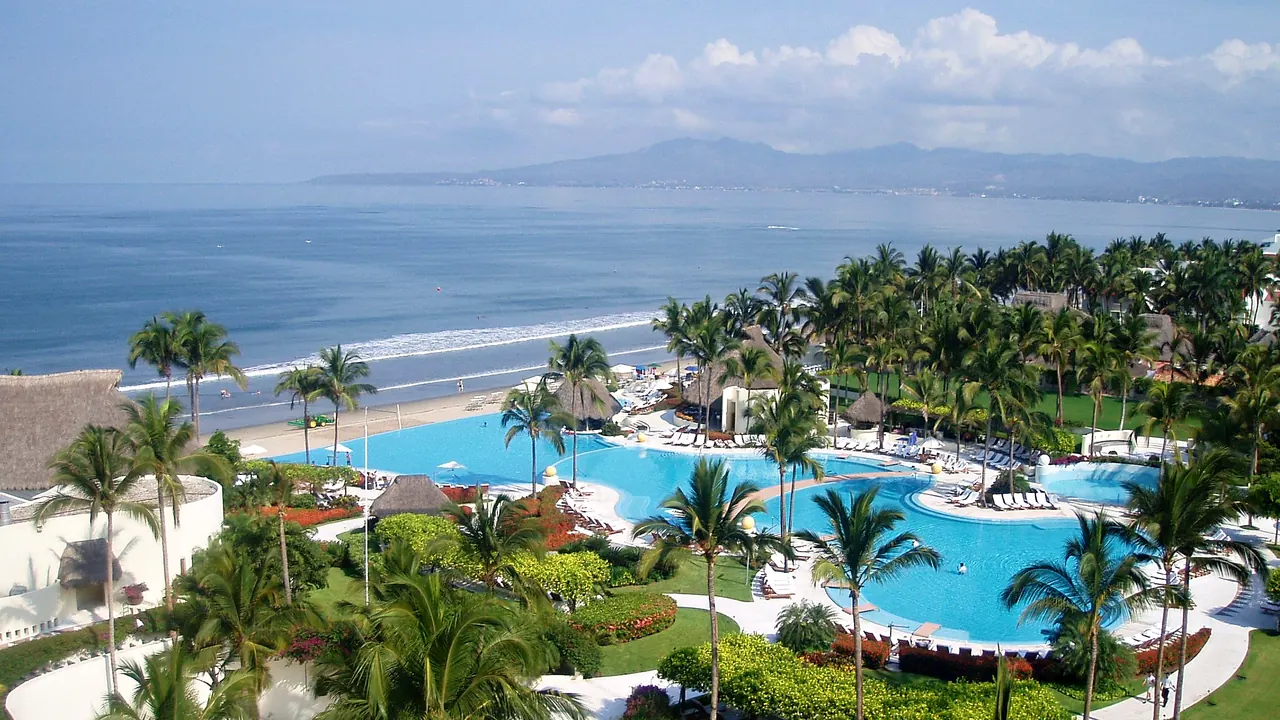
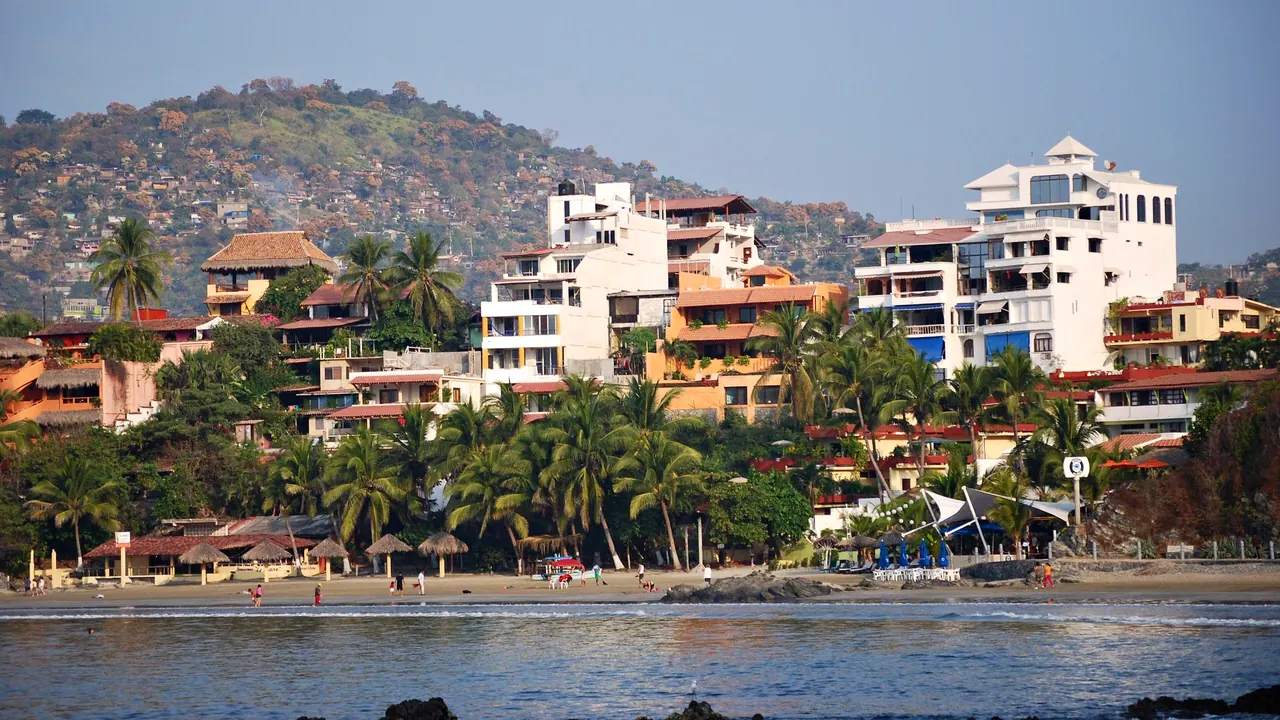
Photos: Nuevo Vallarta by Harpqueen, Public domain; Zihuatanejo by AlejandroLinaresGarcia, CC BY-SA 4.0, cropped.
Nuevo Vallarta or Zihuatanejo?
Our verdict in twelve categories, each scored against the same fixed benchmark cities, and the climate month by month, so you can choose for your trip.
Choose Nuevo Vallarta for
- day trips
- families
- nature and the outdoors
Nuevo Vallarta suits families and anyone who wants a resort to take care of the details, with pools, kids' clubs and a long sandy beach at the door. Banderas Bay also gives you more to fill the days: whale watching, the Marietas Islands, the jungle foothills, and Puerto Vallarta and a string of seaside towns within easy reach. The catch is that good food, nightlife and real town life all mean taking a taxi out of the enclave.
Choose Zihuatanejo for
- prices
- getting around
- nightlife
If you would rather stay in a working fishing town than in a resort enclave, Zihuatanejo is the better pick. Daily costs are lower and the centre is small enough to walk. Fish goes straight from the boats to palapa tables on La Ropa, and evenings happen in the streets and on the sand rather than in a hotel lobby. In return, there is less to do beyond the bay once you have seen Ixtapa and Barra de Potosí.
Scoreboard
Twelve categories on one fixed scale from 0 to 100. The shaded stretch is the gap between the two.
Your match
Pick a travel style or drag the sliders, and both match scores follow your weighting.
Too close to call, level with your weighting
Wins on day trips and families with your weighting.
Wins on prices and getting around with your weighting.
What matters to you?
Category by category
What the scores mean for a trip.
Beaches & swimming
On sand alone the two are evenly matched, but the beaches are different in shape. Nuevo Vallarta has one long, wide golden strand curving along Banderas Bay, lined with resorts almost the whole way. It is good for long walks and paddling on calm days, but it is rarely clear, and the river mouth can cloud the water after storms.
Zihuatanejo spreads its beaches around a deep, sheltered bay. There is the calm crescent of La Ropa, the small cove of Madera close to town, and Las Gatas, reached by water taxi, where an old stone reef keeps the water flat and clear enough to snorkel. The sea is also warmer there in winter.
Food & drink
Nuevo Vallarta's region has coastal cooking worth seeking out: zarandeado fish grilled over wood, sharp aguachile and ceviche in a coconut with a glass of raicilla. But most meals there are eaten inside the resorts, and finding the good food means taking a taxi to Bucerias or Puerto Vallarta.
Zihuatanejo eats better closer to home. The municipal market, the Thursday pozole and the family taquerías behind the waterfront are all walkable from the centre. Tiritas and pescado a la talla at the palapas on La Ropa and Las Gatas are a short taxi, colectivo or boat ride away.
Culture & sights
Neither is a place to come for sights, but Zihuatanejo has at least a real town to explore. It has whitewashed streets, a church, a fishermen's pier and a small archaeology museum on the waterfront covering the pre-Hispanic peoples of the coast. Nuevo Vallarta is a planned resort zone with nothing historic of its own. For a cobbled old town and a landmark church, you have to go to Puerto Vallarta for the day.
Nightlife
Evenings in Nuevo Vallarta stay inside the hotel. The night usually ends at the lobby bar or the poolside show, and the strip is quiet by midnight. The malecon clubs and the well-known gay scene of Puerto Vallarta's Zona Romantica are there for a big night, but each one means a taxi ride, not a stroll out of the hotel.
In Zihuatanejo, evenings take place in the town itself: sunset drinks on the beach, long dinners and small bars in the centre with a local and long-stay crowd. Ixtapa, up the coast, adds louder beach bars and a few clubs that fill up in the winter season, though it is still thin for anyone wanting to stay out late.
Nature & outdoors
Banderas Bay gives Nuevo Vallarta the richer outdoors. Humpbacks come into the bay to calve in winter, and the protected Marietas Islands offer snorkelling among arches and seabirds. The Ameca mangroves hold herons and crocodiles, and the Sierra Madre foothills inland have jungle walks, river canyons and zip-lines, with surf at Punta Mita and Sayulita.
Zihuatanejo's nature is mostly on the water, with diving at Las Gatas and Isla Ixtapa, kayaking in the calm bay and sport fishing for sailfish. On land you have the birdlife of the Barra de Potosí lagoon, but very little hiking.
Day trips
Nuevo Vallarta is much better placed for days out. Puerto Vallarta's old town and malecon are about half an hour south. To the north lies a chain of towns that each make a good day: the galleries of Bucerias, the surf town of Sayulita, quieter San Pancho and Punta Mita. Further afield are the mountain silver village of San Sebastián del Oeste and the boat-only village of Yelapa.
Zihuatanejo's outings are smaller: a beach day at Troncones, lunch on the sand at Barra de Potosí, and the ball court at Xihuacan. Anything bigger is too far for a comfortable return trip.
Good for families
Nuevo Vallarta is designed for families in a way Zihuatanejo is not. The resorts provide shallow pools, slides, kids' clubs and food all day inside a quiet, partly gated enclave. Outings include whale watching, turtle releases, Marietas boat trips for older children, water parks and a dolphin centre.
Zihuatanejo still works well for a simple beach vacation with children. La Ropa and Las Gatas are calm for paddling, and the town is easy to manage. Beyond that, there is little built for children, and families who want resort facilities have to stay in Ixtapa.
Getting around
Zihuatanejo is easier to manage without a car. The centre is compact and walkable, and a waterfront path runs to Playa Madera. Taxis are plentiful, colectivos run to La Ropa and Ixtapa, and boats reach Las Gatas, although the steep hill roads make walking between beaches impractical.
Nuevo Vallarta spreads along a long boulevard of resorts and golf courses, so almost everything beyond the beach means a taxi, a shuttle or a hot walk to the highway buses. A hire car helps if you want to see the northern coast. The airport is close, though.
Shopping & style
Both are modest for shopping, and the difference is where the good things are. Zihuatanejo has its own artisans' market in the centre, selling hammocks, embroidery, Taxco silver and lacquerware from Olinalá. In Nuevo Vallarta, the region's finest craft, Huichol beadwork and yarn painting, is found in the galleries of Bucerias and Puerto Vallarta rather than in the enclave's resort boutiques and small mall.
Affordability
Zihuatanejo is clearly the cheaper vacation. Simple guesthouses in town, market meals, palapa lunches and colectivos all keep daily costs low, and prices only climb in the hillside boutique hotels and Ixtapa's big resorts.
Nuevo Vallarta is built for North American visitors staying in resorts and condos, and drinks, tours and meals inside the enclave are priced to match. All-inclusive packages at least make costs predictable, and the cheap buses and taquerías of Bucerias help anyone willing to step outside.
Live music & performing arts
Neither has a stage worth planning around, and the little each offers is different in kind. Nuevo Vallarta's live performance is resort entertainment: poolside shows, mariachi dinners and one large acrobatic dinner theatre, with cabaret and drag in Puerto Vallarta. Zihuatanejo leans towards music in the streets, with trova singers and bands in restaurants during the season and an international guitar festival that brings concerts to the beach once a year.
Wellness & relaxation
Both are places to slow down, but they get there by different routes. In Nuevo Vallarta, the rest is organised. The larger resorts have full spas with hydrotherapy circuits, guided temazcal ceremonies, and yoga and massage under palapas on the beach, though how good it is depends on your hotel.
Zihuatanejo's calm comes mostly from the town's own unhurried pace: reading in the shade, swimming and long lunches. Spa treatments and temazcal are found mainly in the boutique hotels above La Ropa and in Ixtapa.
When should you go?
Pick your month. The climate figures are measured averages, not a forecast.
Nuevo Vallarta in July
Zihuatanejo in July
Daytime high, °C
Rainfall in the month, mm
Where the figures come from
Nuevo Vallarta has no weather station within reach, so its figures come from a gridded climate model rather than a measured record, and read a broad area rather than the city itself.
Zihuatanejo has no weather station within reach, so its figures come from a gridded climate model rather than a measured record, and read a broad area rather than the city itself.
Temperature and rainfall are climate normals, averaged over the years shown. Nuevo Vallarta: 1991-2020 normals, TerraClimate 4 km grid at the town, no weather station within 90 km. Zihuatanejo: 1991-2020 normals, TerraClimate 4 km grid at the town, no weather station within 90 km.
Both are at their best from November to May, when almost no rain falls and the days are hot, dry and settled. The wet season runs from June into October on both coasts and peaks in September at close to 300mm. It comes as heavy afternoon storms with thick humidity, and that is when walking around at midday becomes hard work. Neither place is ever cool enough to call cold, so the choice is about heat and rain, not chill.
The difference shows at the edges of the year. Nuevo Vallarta is slightly milder in late winter, at around 30°C. Its sea drops to about 24°C in February and March, which is refreshing rather than bath-warm, and its summers grow hotter than Zihuatanejo's. Zihuatanejo, further south, keeps a steady heat all year, and its sea stays near 28°C even in January, so a winter swim feels warmer there. Its rains also linger a little longer into October.
Which traveller are you?
On a family trip with young children, Nuevo Vallarta takes the planning off your hands. Meals, pools and supervised play are all inside the resort, and the gentle beach is right outside. Zihuatanejo suits families who are happy with paddling and boat rides.
On a tight budget, Zihuatanejo goes much further. A guesthouse in town, market breakfasts and colectivo rides keep costs down. In Nuevo Vallarta nearly every bed is in a resort or condo, so you only save by eating and travelling outside the enclave.
For an outdoors trip, Nuevo Vallarta suits an active week where no two days are the same, alternating between the boat, the surf and the hills, with golf inside the enclave too. Zihuatanejo is better for travellers who are content to spend their time in and on the water.
Before you go
| Measure | Nuevo Vallarta | Zihuatanejo |
|---|---|---|
| Official language | Spanish, Nahuatl, Yucatec Maya | Spanish, Nahuatl, Yucatec Maya |
| Currency | Mexican Peso (MXN) | Mexican Peso (MXN) |
| Sockets | AB127 V, 60 Hz | AB127 V, 60 Hz |
| Driving side | Right | Right |
| Time zone | UTC-6 | UTC-6 |
| Emergency number | 911 | 911 |
| Elevation | 3 m | 13 m |
| Main airport | Puerto Vallarta International Airport (PVR)4 km from centre52 non-stop destinations | Ixtapa-Zihuatanejo International Airport (ZIH)11 km from centre17 non-stop destinations |
| Public holidays this year | 9 days | 9 days |
By the numbers
| Measure | Nuevo Vallarta | Zihuatanejo |
|---|---|---|
| City population | 1,301 | 70,760 |
| Museums within 10 km | 0 | 1 |
| UNESCO World Heritage sites within 50 km | 1 | 0 |
| Swim season, months above 21 °C | 12 months | 12 months |
Where else could you go?
Every comparison below shares a destination with this one, so you can follow Nuevo Vallarta or Zihuatanejo somewhere new.
- Puerto Vallartavs Nuevo Vallarta
- Sayulitavs Nuevo Vallarta
- Acapulcovs Zihuatanejo
- Guadalajaravs Nuevo Vallarta
- Mazatlanvs Nuevo Vallarta
- Mexico Cityvs Zihuatanejo