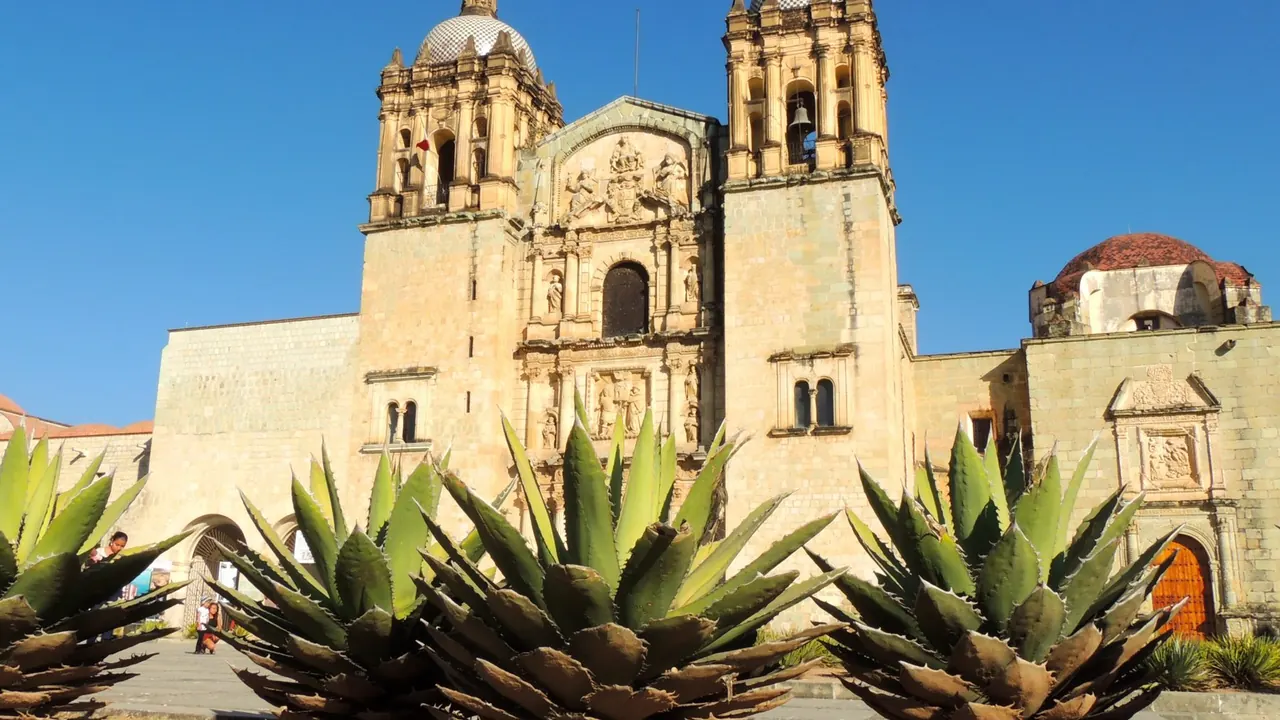
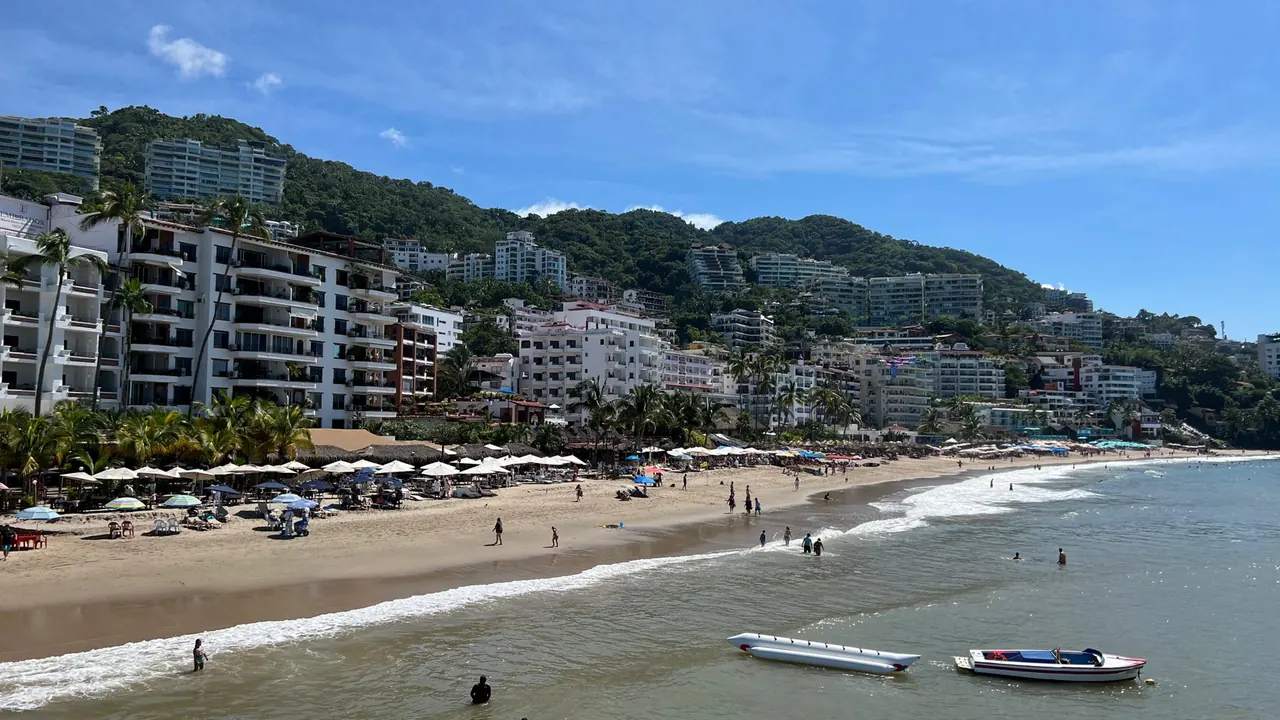
Photos: Oaxaca by Öskr Rck, CC BY-SA 3.0, cropped; Puerto Vallarta by RL0919, CC BY-SA 4.0, cropped.
Oaxaca or Puerto Vallarta?
Our verdict in twelve categories, each scored against the same fixed benchmark cities, and the climate month by month, so you can choose for your trip.
Choose Oaxaca for
- culture and sights
- food and drink
- shopping
Oaxaca is the choice for travellers who want to eat, look and learn. Its UNESCO-listed colonial centre, the Zapotec ruins of Monte Albán and Mitla, the mole and mezcal tradition and the craft villages of the Central Valleys make a trip with real depth, and it costs less day to day. It suits people happy to walk, sit in markets and spend the evening over mezcal rather than on a dance floor.
Choose Puerto Vallarta for
- beaches
- nightlife
- families
Puerto Vallarta suits a trip built around the sea. Banderas Bay gives warm swimming, whale-watching in winter, snorkelling at Los Arcos and jungle hills behind the town, and the Malecón and Zona Romántica keep going late into the night. Families, beach lovers and anyone who wants sun, boats and a lazy pace will get more from it than from a highland city hours from the coast.
Scoreboard
Twelve categories on one fixed scale from 0 to 100. The shaded stretch is the gap between the two.
Your match
Pick a travel style or drag the sliders, and both match scores follow your weighting.
Too close to call, 2 points apart
Wins on culture and sights and food and drink with your weighting.
Wins on beaches and nightlife with your weighting.
What matters to you?
Category by category
What the scores mean for a trip.
Beaches & swimming
This is the clearest gap between the two. Oaxaca sits in a mountain valley with ranges between it and the Pacific, so swimming means a hotel pool, and the coast at Puerto Escondido or Huatulco is a separate trip rather than an outing.
Puerto Vallarta lives on its beaches, from Playa Los Muertos in the Zona Romántica to the rocky coves of Conchas Chinas and the boat-only sands at Yelapa. The bay is warm and mostly gentle, with the flattest water at Nuevo Vallarta and surf at Sayulita.
Food & drink
Oaxaca is one of the great food destinations of Mexico, and for eating it is clearly ahead. Moles in several colours, tlayudas over charcoal, the grill aisle of the 20 de Noviembre market, village mezcal and morning chocolate give every meal a sense of place, and a group of serious chefs works with local maize.
Puerto Vallarta eats well in a narrower, coastal register: pescado zarandeado on the beach, aguachile, ceviche and late-night taco carts, with raicilla as the local spirit. Much of the seafront food is tourist fare, so the best meals take a little seeking out a few streets back.
Culture & sights
Oaxaca has far more to see. Its green-stone colonial grid, the gilded Santo Domingo, the Museo de las Culturas with the Tomb 7 treasure and the Rufino Tamayo and Textile museums fill two or three days, with Monte Albán twenty minutes out.
Puerto Vallarta is a pretty old fishing town rather than a sightseeing city. The crown-topped Guadalupe church, the sculptures on the Malecón, the whitewashed hill streets and the small museums on the Cuale island make a pleasant afternoon, not a programme.
Nightlife
Puerto Vallarta stays out much later. Dance clubs along the Malecón fill after midnight, the Zona Romántica adds rooftop bars and beach clubs, and its gay scene is one of the biggest in Latin America. It is quieter in the rainy summer.
Oaxaca's evenings are about mezcal tasting bars in the centre and Jalatlaco, rooftops facing Santo Domingo and a stroll on the Alcalá. A few places have salsa or DJs at weekends, but there is little clubbing and most nights end well before dawn.
Nature & outdoors
Puerto Vallarta has the more striking setting, with jungle-covered Sierra Madre ridges dropping into the bay. Humpback whales calve offshore in winter, boats run to Los Arcos and the Marietas Islands for snorkelling, and trails follow the roadless south shore.
Oaxaca's outdoors is drier and higher. The best of it is the Sierra Norte, where the Pueblos Mancomunados run village-to-village trails through pine-oak and cloud forest, while Hierve el Agua's petrified waterfalls make an easy half-day. It suits hikers more than swimmers or wildlife watchers.
Day trips
Oaxaca has the better spread of outings, most within an hour. The road east alone takes in the Tule cypress, the weavers of Teotitlán, the stone fretwork of Mitla and mezcal distilleries at Matatlán, and the Mixteca Alta monasteries make a longer day.
Puerto Vallarta's trips are mostly coastal: the beach towns of Bucerías, Sayulita and San Pancho, or Yelapa by boat. Inland, the old silver town of San Sebastián del Oeste is the one real change of scene, and Guadalajara is too far to go and return comfortably.
Good for families
Oaxaca's appeal for children is in its streets more than its attractions. Evenings on the zócalo bring balloon sellers and live music, festival parades are a real thrill, and older children can paint alebrijes in the craft villages or join a tortilla-making session. With no zoo or theme park, though, it suits curious older children far better than toddlers.
Puerto Vallarta is the easier place overall, because the beach keeps children busy, and water parks and the small jungle zoo at Mismaloya fill the gaps. Ice cream and street performers on the Malecón make the evening walk part of the routine. Come in winter if you can, as the summer heat and humidity quickly tire small children.
Getting around
Oaxaca is the simpler place to get about. Nearly everything sits within a twenty-minute walk of the zócalo on an easy grid, and colectivos and drivers cover the valley villages.
Puerto Vallarta has a walkable old centre and Zona Romántica, but the town strings out a long way along the bay to the marina and Nuevo Vallarta. Hill streets are steep, buses take some learning, so taxis or ride-hailing do most of the work, with water taxis for the south shore.
Shopping & style
Oaxaca is the stronger place to shop, and its strength is buying from the makers. Rugs in Teotitlán, black pottery in San Bartolo Coyotepec, alebrijes in Arrazola and the weekly markets at Tlacolula and Ocotlán sit alongside cooperative galleries on the Alcalá.
Puerto Vallarta's best buys are Huichol yarn paintings and beadwork, plus galleries and the stalls of the Mercado Municipal, though mass-produced souvenirs crowd in. Neither city offers fashion brands or luxury streets.
Affordability
Oaxaca stretches a budget further. Market meals, fondas, colectivos and simple guesthouses are all cheap, and only the boutique hotels, tasting menus and festival weeks push costs up.
Puerto Vallarta is a resort, and beachfront hotels, Malecón restaurants and boat tours are priced for visitors, especially in winter. Taco stands, local buses and old-centre guesthouses still keep it reasonable for those who live like residents.
Live music & performing arts
Neither city is a place to plan around concerts, and they are broadly level, with Oaxaca a touch ahead for tradition. Its high points are the Guelaguetza dance festival in July and the Day of the Dead, with marimbas in the zócalo and the occasional performance at the Teatro Macedonio Alcalá the rest of the year.
Puerto Vallarta's stage is more informal: drag and cabaret revues in the Zona Romántica in winter, mariachis in the plazas and the Papantla flyers on the Malecón.
Wellness & relaxation
For unwinding the two are much alike, and both offer the temazcal sweat lodge. In Oaxaca it is a living Zapotec and Mixtec custom led by healers in the valley villages, and the calm comes from courtyards and quiet Jalatlaco gardens.
Puerto Vallarta's version is the resort spa, beachside massage and yoga retreats in the south-shore villages, with sunsets over the bay setting the pace. The Malecón is noisy at night, so quiet seekers stay south of town.
When should you go?
Pick your month. The climate figures are measured averages, not a forecast.
Oaxaca in July
Puerto Vallarta in July
Daytime high, °C
Rainfall in the month, mm
Where the figures come from
Puerto Vallarta has no weather station within reach, so its figures come from a gridded climate model rather than a measured record, and read a broad area rather than the city itself.
Temperature and rainfall are climate normals, averaged over the years shown. Oaxaca: 1961-1990 normals, Oaxaca, Oax. (1.1 km from centre). Puerto Vallarta: 1991-2020 normals, TerraClimate 4 km grid at the town, no weather station within 90 km.
Oaxaca is warm all year without becoming oppressive, because of its altitude. From November to April the valley is almost completely dry and very sunny, ideal for walking the streets and visiting ruins, though April and May bring the hottest afternoons at around 33°C. The rains set in from May, peak in June and again in September at well over 100mm, and turn the hills green while making trails muddy. Afternoon storms in these months still leave plenty of dry hours.
Puerto Vallarta is hotter and has a much sharper wet season. November to May is the dry stretch and the best time for a beach stay, with the sea at about 24°C in late winter, cool enough to feel refreshing. From June to October heat, humidity and heavy rain take over, with September bringing close to 298mm, though the sea warms to 30°C. For a trip combining both, the dry winter months suit each city at the same time.
Which traveller are you?
On a beach and sun trip, Puerto Vallarta is the obvious pick. It sits on a warm, sheltered bay with town beaches, coves reached by water taxi and surf an hour north, while Oaxaca is a highland city several hours from any sand.
For a culture and arts trip, Oaxaca is far richer. The UNESCO-listed centre, Santo Domingo and its museum of Monte Albán's gold, the Zapotec sites nearby and a long printmaking tradition fill several days, where Puerto Vallarta offers an afternoon of galleries.
On a family trip with young children, Puerto Vallarta works better. Calm sands at Nuevo Vallarta, resort kids' clubs, boat trips to see whales and turtle releases keep children busy, whereas Oaxaca's main outings are shadeless ruins that can bore younger children.
Before you go
| Measure | Oaxaca | Puerto Vallarta |
|---|---|---|
| Official language | Spanish, Nahuatl, Yucatec Maya | Spanish, Nahuatl, Yucatec Maya |
| Currency | Mexican Peso (MXN) | Mexican Peso (MXN) |
| Sockets | AB127 V, 60 Hz | AB127 V, 60 Hz |
| Driving side | Right | Right |
| Time zone | UTC-6 | UTC-6 |
| Emergency number | 911 | 911 |
| Elevation | 1,555 m | 101 m |
| Main airport | Xoxocotlán International Airport (OAX)7 km from centre14 non-stop destinations | Puerto Vallarta International Airport (PVR)5 km from centre52 non-stop destinations |
| Public holidays this year | 9 days | 9 days |
By the numbers
| Measure | Oaxaca | Puerto Vallarta |
|---|---|---|
| City population | 258,913 | 224,166 |
| People per km² | 3,028 | 4,311 |
| Museums within 10 km | 10 | 2 |
| UNESCO World Heritage sites within 50 km | 2 | 1 |
| Swim season, months above 21 °C | - | 12 months |
Where else could you go?
Every comparison below shares a destination with this one, so you can follow Oaxaca or Puerto Vallarta somewhere new.