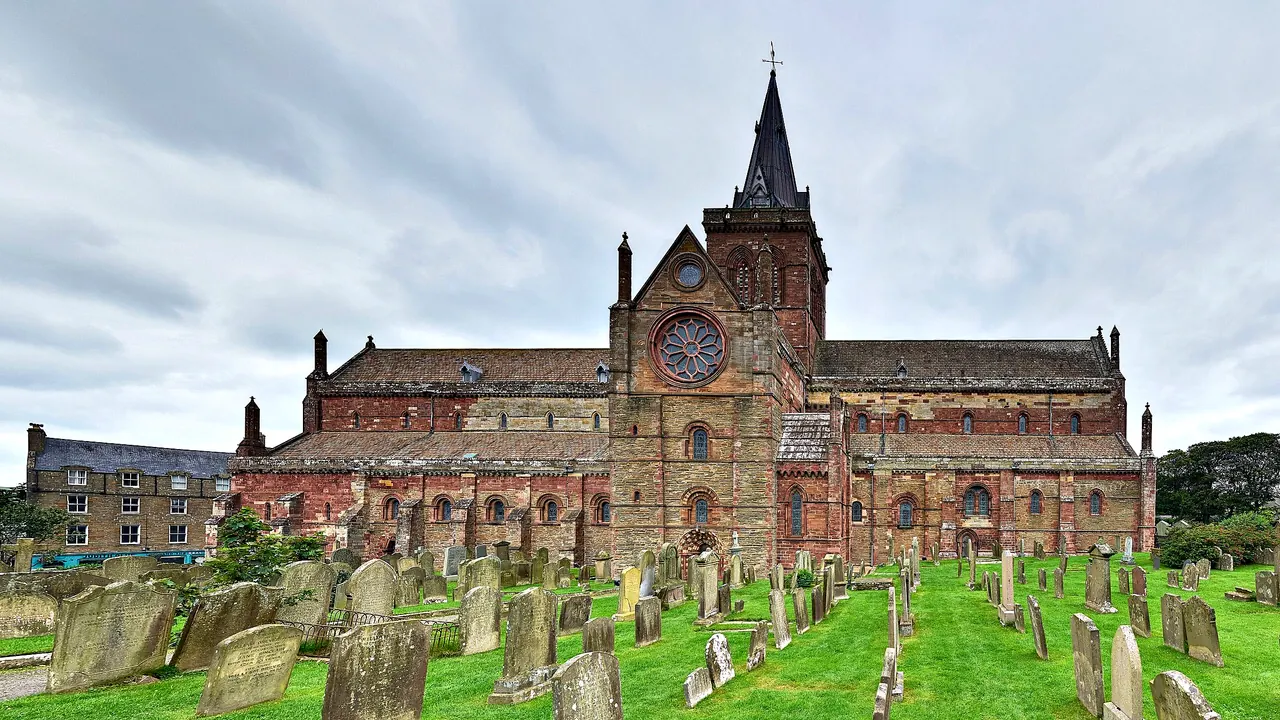
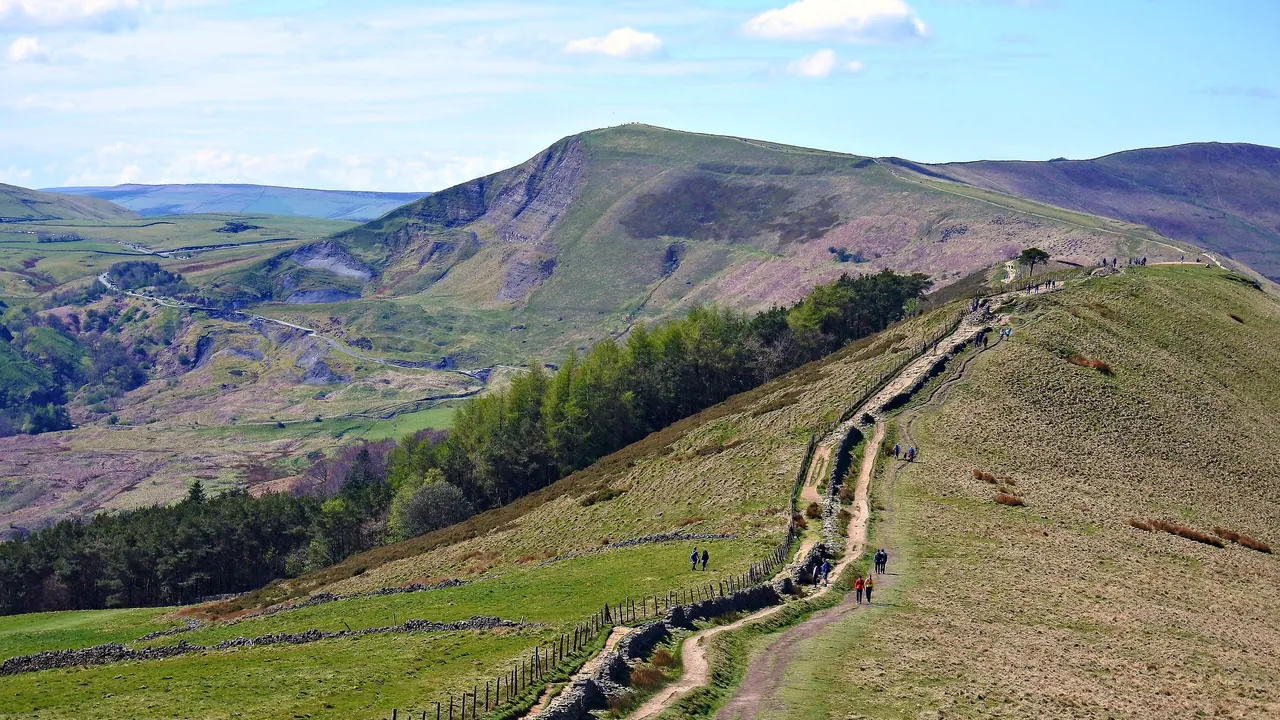
Photos: Orkney by Virtual-Pano, CC BY-SA 4.0, cropped; Peak District by Donnchadh H, CC BY 2.0, cropped.
Orkney or Peak District?
Our verdict in twelve categories, each scored against the same fixed benchmark cities, and the climate month by month, so you can choose for your trip.
Choose Orkney for
- beaches
- culture and sights
- getting around
Orkney is for the traveller who wants to stand inside prehistory and feel properly far from everywhere. Skara Brae, Maeshowe and the stone circles of the West Mainland, St Magnus Cathedral in Kirkwall and the seabird cliffs give it a depth of the very old that the Peak cannot match. Empty shell-sand bays and short ferry hops to the North Isles add to that. In return you accept a long journey, few places to eat, little laid on for children and weather that often decides the day.
Choose Peak District for
- wellness
- families
- day trips
The Peak District suits walkers, active families and anyone who wants a varied stay without a ferry crossing. Two very different hill landscapes, show caves, Chatsworth and the spa town of Buxton sit within easy reach of Manchester and Sheffield, so a wet afternoon or a free day always has an answer. It is the easier, warmer and more sociable choice. What it lacks is Orkney's sense of remoteness and its sea.
Scoreboard
Twelve categories on one fixed scale from 0 to 100. The shaded stretch is the gap between the two.
Your match
Pick a travel style or drag the sliders, and both match scores follow your weighting.
Wins on beaches and culture and sights with your weighting.
Wins on wellness and families with your weighting.
What matters to you?
Category by category
What the scores mean for a trip.
Beaches & swimming
Orkney at least has beaches worth seeing. Pale shell sand and clear shallows at Waulkmill Bay and Birsay, and long empty strands on Sanday and Westray, make for fine beach walks, seal-watching and the odd very brisk dip.
The Peak District is in the middle of England and has no coast at all. The cold reservoirs are not for swimming, so the heated lido at Hathersage or a river pool in the dales is as close as it gets.
Food & drink
Neither has much range, but they eat in different ways. Orkney's strength is its produce: hand-dived scallops, crab, island beef, bere bannocks and whisky from Kirkwall's distilleries. With so few restaurants, though, a cottage kitchen and the local fish shop often do better than eating out.
The Peak is built around the country pub. After a walk there is ale and hearty food in almost every village, along with Bakewell pudding, Hartington cheese and a few ambitious country-house dining rooms, though the pubs fill quickly on summer weekends.
Culture & sights
Orkney has the deeper heritage. The Neolithic landscape of the West Mainland, a stone village older than the pyramids and Viking runes inside Maeshowe, is among the most remarkable in Europe. Kirkwall's sandstone cathedral and the wartime story of Scapa Flow add later chapters.
The Peak's history is grand rather than ancient: Chatsworth and Haddon Hall, Georgian Buxton, plague-era Eyam and the Cromford mills. It makes a rewarding day or two, but it is spread thinly across the hills.
Nightlife
Both are early-to-bed places with no clubs. In Orkney the best evenings are a fiddle session in a Stromness or Kirkwall pub, or a walk under a midsummer sky that barely darkens. The Peak's equivalent is a low-beamed pub with a fire and a room full of walkers, but Sheffield and Manchester are about an hour away for anyone who wants a real night out.
Nature & outdoors
The Peak District gives walkers more variety. In the north are the gritstone moors of the Dark Peak, Kinder Scout and the climbing edges of Stanage. In the south are the limestone dales of the White Peak, such as Dovedale and Lathkill, with caves underneath and old railway trails for cycling.
Orkney's landscape is low and treeless, and its high points are on the edges: the Old Man of Hoy, the seabird cliffs at Marwick Head and Noup Head, puffins, seals and the occasional orca. The scuttled German fleet in Scapa Flow makes it a serious wreck-diving destination, something no inland park can offer.
Day trips
The Peak District's position between big cities gives it far more choice. Manchester and Sheffield are an easy train ride away, Hardwick Hall and Kedleston are just beyond the boundary, and the Potteries and Derwent Valley mills fill other days.
Orkney's outings are island hops. Rousay's cairns, Westray's bays and the tiny flight to Papa Westray are memorable, but each depends on ferry timetables and offers a handful of sights rather than a full city.
Good for families
The Peak District has far more for children. There are the show caves at Castleton, the cable car to the Heights of Abraham, Crich's vintage trams, Chatsworth's farmyard and adventure playground, and Alton Towers a short drive south.
Orkney suits only outdoorsy families. Rock-pooling, seals, puffins and the Skara Brae replica house are a real pleasure, but beyond Kirkwall's pool there is nothing for a rainy day.
Getting around
With a car, the Orkney Mainland is the easier of the two. Roads are quiet, and Kirkwall, Stromness and the Neolithic sites are all within half an hour of each other. It only gets harder once you head for the outer islands, where ferries and small planes need booking and can be cancelled by weather.
The Peak has a real advantage in its railway lines, which let you start walks from Edale or Hathersage station without a car. Off those lines, buses are thin, the moorland roads are narrow, and Castleton or Bakewell car parks overflow on sunny weekends.
Shopping & style
Neither is a shopping destination, and both are best for something made locally. Orkney's speciality is craft: silver jewellery with Norse and Neolithic designs, knitwear and the straw-backed Orkney chair along Kirkwall's Albert Street. In the Peak you find Blue John stone from Castleton, outdoor gear for walkers and climbers, antiques in Leek and Ashbourne, and Bakewell's weekly market.
Affordability
Day to day, the two cost much the same, at the prices of rural Britain. The difference lies in what the money goes on. In Orkney, getting there and the inter-island ferries add up, but the stone circles, cliffs and beaches are free. In the Peak, the train is a cheap way in and hostels and campsites are plentiful, but stately homes and show caves all charge entry.
Live music & performing arts
Orkney's live arts come in a few concentrated bursts, while the Peak District has a stage that runs all year. In Orkney the big moments are the St Magnus International Festival, founded by Peter Maxwell Davies, which fills the cathedral and island halls with classical music and drama around midsummer, and the folk festival that takes over Stromness in late spring. Outside those weeks there is little beyond the odd touring show in Kirkwall and a community dance, so a visit has to be timed for them.
Buxton gives the Peak its regular programme. Frank Matcham's Edwardian Opera House stages drama, comedy, concerts and pantomime in every season, and in July the Buxton International Festival adds opera, with a large fringe in the town's smaller rooms. Beyond Buxton there are folk nights in village pubs and summer concerts at the great houses. For a full concert season, Sheffield and Manchester are close at hand.
Wellness & relaxation
The Peak District is the place for proper unwinding. Buxton grew up around its warm springs, and its Crescent has a spa that uses the thermal water. Country-house hotels in the dales add their own spas, and a pub fire after a long walk does the rest.
Orkney has no spas at all, only a few hotel treatments and the Kirkwall pool. What it offers is stillness: empty roads, long light evenings and nothing much to do, which suits a reader more than anyone hoping to be pampered.
When should you go?
Pick your month. The climate figures are measured averages, not a forecast.
Orkney in July
Peak District in July
Daytime high, °C
Rainfall in the month, mm
Where the figures come from
Peak District's temperatures are measured 43 km from the centre, at Manchester Airport.
Peak District has no rain gauge within 25 km of the centre, so its rainfall comes from a gridded climate dataset read at the destination rather than from a gauge further away.
Temperature and rainfall are climate normals, averaged over the years shown. Orkney: 1991-2020 normals, Kirkwall Airport (4.9 km from centre). Peak District: 1991-2020 normals, Manchester Airport (43.1 km from centre).
Neither is a sun destination, but the Peak District is the warmer of the two all year. Around Kirkwall summer highs reach only about 16°C, and the sea peaks near 13°C in August, so even the best beach days mean walking, not swimming. The Peak climbs to around 21°C in July and gets noticeably more sunshine from May to August. Both are pleasant for walking from late spring to early autumn, and both are cold, short-dayed and grey in winter.
The rain falls differently. Orkney is at its driest from April to July, and May is its sunniest month, which also brings the nesting seabirds. From October the wind and rain set in hard, at around 121mm a month. In the Peak the rain is spread more evenly, so midsummer there is damper than Orkney's, but its winters are less wet. For Orkney, aim for May to early July. For the Peak, May to September all work well, and the long daylight makes June the best month for big moorland days.
Which traveller are you?
On a culture and arts trip, Orkney is the stronger pick. Its Neolithic sites, Skara Brae, Maeshowe and the Ring of Brodgar, sit beside a medieval cathedral and the Italian Chapel, a concentration of ancient history that the Peak's country houses cannot rival.
On a family trip with children, the Peak District is far easier. Show caves, the Matlock Bath cable car, vintage trams at Crich and flat, traffic-free railway trails keep children busy, while Orkney offers rock pools and seals but almost nothing built for them.
For a relaxing and wellness trip, choose the Peak District. Buxton's thermal spring water, a spa in the Georgian Crescent and country-house hotels with treatments give real pampering. Orkney offers deep quiet but no spa culture at all.
Before you go
| Measure | Orkney | Peak District |
|---|---|---|
| Official language | English | English |
| Currency | Pound Sterling (GBP) | Pound Sterling (GBP) |
| Sockets | G230 V, 50 Hz | G230 V, 50 Hz |
| Driving side | Left | Left |
| Time zone | UTC, UTC+1 in summer | UTC, UTC+1 in summer |
| Emergency number | 112 or 999 | 112 or 999 |
| Main airport | Kirkwall Airport (KOI)9 non-stop destinations | Manchester Airport (MAN)211 non-stop destinations |
| Public holidays this year | 10 days | 8 days |
By the numbers
| Measure | Orkney | Peak District |
|---|---|---|
| Population | 22,270 | 35,901 |
| People per km² | 22 | 25 |
| Swim season, months above 21 °C | None | - |
Where else could you go?
Every comparison below shares a destination with this one, so you can follow Orkney or Peak District somewhere new.
- Yorkshire Dalesvs Peak District
- Snowdoniavs Peak District
- Cotswoldsvs Peak District
- Lake Districtvs Peak District
- Scottish Highlandsvs Orkney
- Northumberlandvs Peak District