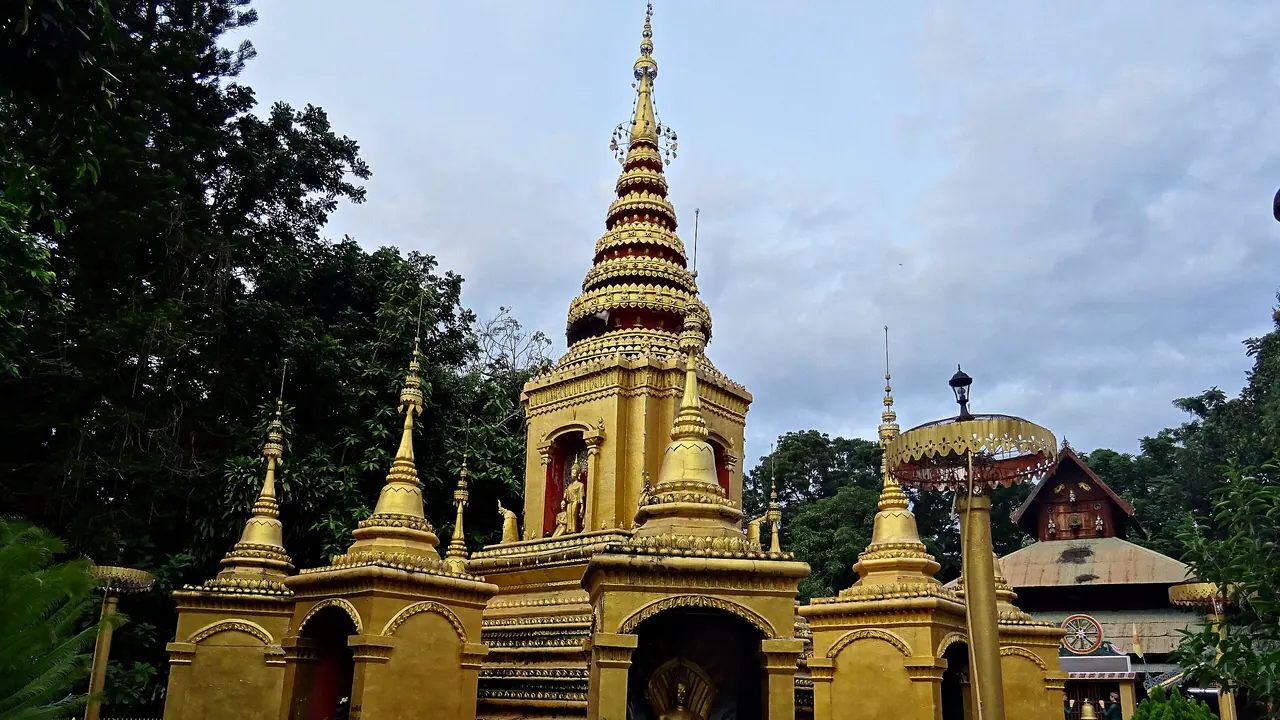
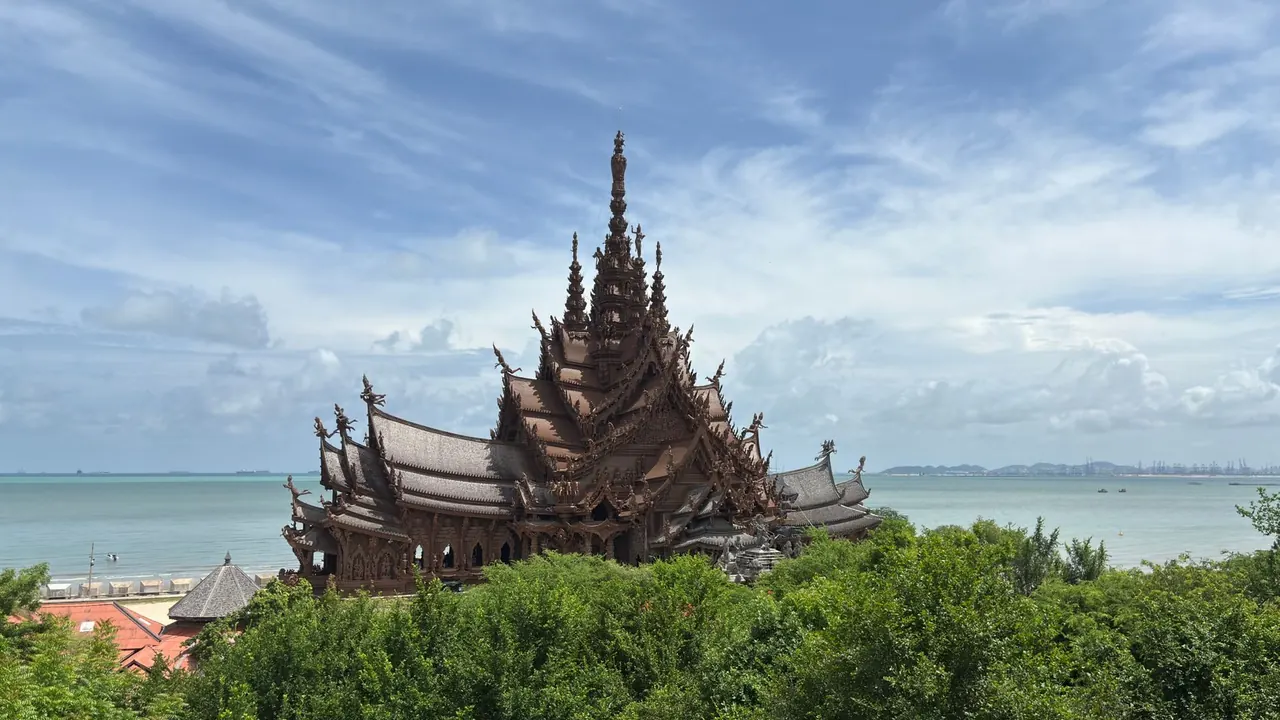
Photos: Pai by Christophe95, CC BY-SA 4.0, cropped; Pattaya by Matrix, Pexels License.
Pai or Pattaya?
Our verdict in twelve categories, each scored against the same fixed benchmark cities, and the climate month by month, so you can choose for your trip.
Choose Pai for
- nature and the outdoors
- wellness
- prices
Pai suits travellers who want to slow down in the mountains. You get scooter rides through a green valley of rice fields, sunset walks at Pai Canyon, morning soaks in hot springs and guesthouses so cheap that a few days easily become a few weeks. In return you accept a winding road in, very few sights, and no sea or polished nights out.
Choose Pattaya for
- beaches
- day trips
- nightlife
Choose Pattaya for warm sea, late nights and an easier trip. It has a beach on the doorstep and clear water on Koh Larn, far more seafood and going out, and water parks and a zoo for children. Bangkok is also within reach for a day. The catch is that it is a noisy, built-up resort with a heavy bar-street reputation, so where you stay shapes the trip far more than it does in Pai.
Scoreboard
Twelve categories on one fixed scale from 0 to 100. The shaded stretch is the gap between the two.
Your match
Pick a travel style or drag the sliders, and both match scores follow your weighting.
Wins on nature and the outdoors and wellness with your weighting.
Wins on beaches and day trips with your weighting.
What matters to you?
Category by category
What the scores mean for a trip.
Beaches & swimming
Pai is a mountain town with no coast. Being in the water there means tubing down the Pai River in the hot season, a dip under Mo Paeng falls or a guesthouse pool.
Pattaya has warm sea in every month. Pattaya Beach itself is better for deckchairs than for swimming, but Jomtien and Na Jomtien are calmer. Koh Larn's Tien and Samae beaches have the clear, swimmable water that Pai cannot offer at all.
Food & drink
Pai feeds you well and cheaply at its evening walking street, with khao soi, Shan dishes and grilled skewers, plus vegan cafés and Yunnanese noodles in Santichon. Still, much of it is tuned to foreign tastes and the range is narrow.
Pattaya has more to explore, above all seafood bought by weight along the Naklua waterfront and in the fishing villages to the south, along with long rows of night-market stalls. The central strip is full of schnitzel and English breakfasts, so the better meals are away from Beach Road, but there is more Thai cooking to dig into than in Pai.
Culture & sights
Neither is a heritage destination, but Pattaya has the one sight of real quality between the two. That is the Sanctuary of Truth, a carved teak temple-palace on the shore at Naklua, and Big Buddha Hill and Wat Yansangwararam add some religious interest.
Pai fills about half a day: the white Buddha of Wat Phra That Mae Yen at sunset, the wartime iron bridge and the mud-brick houses of Santichon. Pattaya rounds out its list with illusion galleries and replica floating markets, which are entertainment rather than culture.
Nightlife
Pai has a sociable backpacker evening of reggae bars and fairy-lit gardens off the walking street. Most of it closes around midnight, and there are no proper clubs.
Pattaya is a different order of night out. Walking Street's clubs and live-band bars run into the small hours, hundreds of beer bars line the sois off Second Road, and there are rooftop bars over the bay and a gay quarter at Boyztown. The sex trade is part of the scene, which is why couples often stay in Jomtien or Naklua.
Nature & outdoors
Here Pai is plainly the stronger, because the landscape is the whole point. It has a green valley of rice fields ringed by forested hills, Pai Canyon's eroded ridges, waterfalls a short ride out, morning mist at Yun Lai and the cave of Tham Lod about an hour west.
Pattaya's nature is mostly offshore: snorkelling around Koh Larn and Koh Sak, dives on sunken naval ships and kitesurfing at Na Jomtien. Inland the country is flat and built up, and the heat cuts out much of the day for walking.
Day trips
Pai is remote. Beyond Soppong and the Lahu and Lisu villages an hour to the west, Chiang Mai and Mae Hong Son are three bendy hours away, so they work better as the next stop than as a day out.
Pattaya gives you far more choice for a day trip. Bangkok's royal palace and riverside temples are about two hours off. Closer in are Si Racha and the island of Koh Si Chang, and Bang Saen, where Thai families go at weekends. Koh Samet's white sand is reached by road and a short ferry from Ban Phe.
Good for families
Pattaya is the easier choice with children. It has large water parks, an aquarium with a walk-through tunnel, the night safari at Khao Kheow Open Zoo and the shows at Nong Nooch. Families usually stay in Jomtien or at resorts with big pools, away from the bar streets.
Pai suits older children who like the outdoors, with farm visits, hot springs and gentle tubing in the dry season. The road in from Chiang Mai often makes passengers carsick, and most sights need a scooter or a driver, which makes it harder going with small children.
Getting around
Pai has no public transport at all. Its centre is small enough to cross on foot in minutes, but the canyon, the waterfalls and the Tha Pai hot springs all lie out in the valley. To reach them you either ride a hired scooter on hill roads that catch out many first-timers, or pay for a songthaew, taxi or tour for each trip. Even arriving means a winding minibus ride from Chiang Mai.
Pattaya at least has a shared ride along the coast. Songthaews loop between Naklua, the centre and Jomtien for very little, so the beach, the bars and the night markets are easy to reach without planning anything. For Nong Nooch, Khao Kheow or the water parks you are back to a taxi or a ride-hailing app, much as you are for almost everything in Pai. On foot it is the other way round: the traffic and heat make Pattaya harder going than Pai's few quiet streets.
Shopping & style
Pai's shopping is the evening walking street: cotton trousers, woven bags, hill-tribe textiles and handmade jewellery. Much of it is made locally, but the same things repeat from stall to stall.
Pattaya has a wider range. There are air-conditioned malls with international chains, night markets at Thepprasit and Jomtien, tailors who make shirts within days, and stalls selling Thai silk. Neither is a place for luxury boutiques or independent design.
Affordability
Both are cheap by any Western measure, and Pai is a little cheaper. Its simple bungalows, night-market dinners and scooter hire are why travellers stay for weeks, and most sights are free or nearly so.
In Pattaya, a huge oversupply of rooms keeps hotels low-priced, especially in the wet season. Costs add up with speedboat island trips, water parks, shows and imported drinks, though, and you need to agree jet ski and taxi prices in advance.
Live music & performing arts
Neither has theatre or a concert season, so the difference is one of style. Pai's music is informal acoustic sets, blues, reggae and jazz jams in its bars. The quality varies, but the open-stage feel has its charm.
Pattaya puts on shows staged for visitors: sequinned ladyboy cabaret in large theatres, dinner shows with Thai dance and martial arts, and cover bands playing rock standards late on Walking Street.
Wellness & relaxation
Pai is the more restful place. It has hot springs at Tha Pai and in the hills, cheap massage everywhere, and yoga and meditation retreats that last days or weeks, all suited to the slow pace of the valley. It is at its best in the cool months, before the spring haze.
Pattaya has the grander spas, at the resorts in Naklua, Na Jomtien and on the Pratamnak headland. Its central streets are loud late into the night, though, some massage places are part of the nightlife trade, and there are no hot springs.
When should you go?
Pick your month. The climate figures are measured averages, not a forecast.
Pai in July
Pattaya in July
Daytime high, °C
Rainfall in the month, mm
Where the figures come from
Pai's temperatures are measured 64 km from the centre, at Mae Hong Son.
Pai's station stands 242 m below the city centre, so the centre is likely a little cooler than the figures say.
Pai has no rain gauge within 25 km of the centre, so its rainfall comes from a gridded climate dataset read at the city rather than from a gauge further away.
Pai's sunshine is measured 86 km from the centre, at Chiang Mai.
Pattaya's temperatures are measured 31 km from the centre, at Sattahip.
Pattaya has no rain gauge within 25 km of the centre, so its rainfall comes from a gridded climate dataset read at the city rather than from a gauge further away.
Pattaya's sunshine is measured 86 km from the centre, at Bangna Agromet / Ban Khlong Samrong.
Temperature and rainfall are climate normals, averaged over the years shown. Pai: 1971-2000 (sunshine 1991-2020, rainfall 1991-2020) normals, Mae Hong Son (63.7 km from centre). Pattaya: 1971-2000 (sunshine 1961-1990, rainfall 1991-2020) normals, Sattahip (31.2 km from centre).
Pai is at its best from November to February. The valley is dry and sunny then, with daytime highs around 30°C and cool mornings that suit the hot springs. March and April turn hot, peaking near 38°C, and haze from field burning hides the hills. The rains arrive in May and are heaviest in July and August, which makes the tracks muddy but fills the river for rafting.
Pattaya hardly changes in temperature. It stays in the low 30s all year, with the sea between 28°C and 31°C, so you can swim in any month. December to February is its driest and sunniest stretch, the same months as Pai's best season. September and October are the wettest, with October bringing around 258mm and rougher water.
Which traveller are you?
On a beach and sun trip, Pattaya is the clear choice. The sea is warm all year, Jomtien is calm enough to swim and Koh Larn's pale-sand beaches are a short ferry ride away. In Pai, swimming means river tubing and waterfall pools.
For an outdoors trip, Pai wins on land. By scooter you reach Pai Canyon, waterfalls, misty viewpoints and the great cave at Tham Lod, with hill-tribe treks and wet-season rafting further out. Pattaya's outdoors is mostly snorkelling, diving and kitesurfing.
On a food and nightlife trip, Pattaya offers far more. There is seafood cooked to order at Naklua, there are long night markets, and Walking Street, the clubs and the rooftop bars run into the small hours. Pai's stalls and reggae bars are friendly but quiet down around midnight.
Before you go
| Measure | Pai | Pattaya |
|---|---|---|
| Official language | Thai | Thai |
| Currency | Baht (THB) | Baht (THB) |
| Sockets | ABCF220 V, 50 Hz | ABCF220 V, 50 Hz |
| Driving side | Left | Left |
| Time zone | UTC+7 | UTC+7 |
| Emergency number | Police 191, ambulance 1669, fire 199 | Police 191, ambulance 1669, fire 199 |
| Elevation | 509 m | 35 m |
| Main airport | Chiang Mai International Airport (CNX)86 km from centre28 non-stop destinations | Suvarnabhumi Airport (BKK)83 km from centre150 non-stop destinations |
By the numbers
| Measure | Pai | Pattaya |
|---|---|---|
| City population | 3,598 | 119,532 |
| Museums within 10 km | 0 | 0 |
| UNESCO World Heritage sites within 50 km | 0 | 0 |
| Swim season, months above 21 °C | - | 12 months |
Where else could you go?
Every comparison below shares a destination with this one, so you can follow Pai or Pattaya somewhere new.
- Chiang Maivs Pai
- Bangkokvs Pattaya
- Hua Hinvs Pattaya
- Chiang Raivs Pai
- Ayutthayavs Pattaya
- Kanchanaburivs Pattaya