Lahore
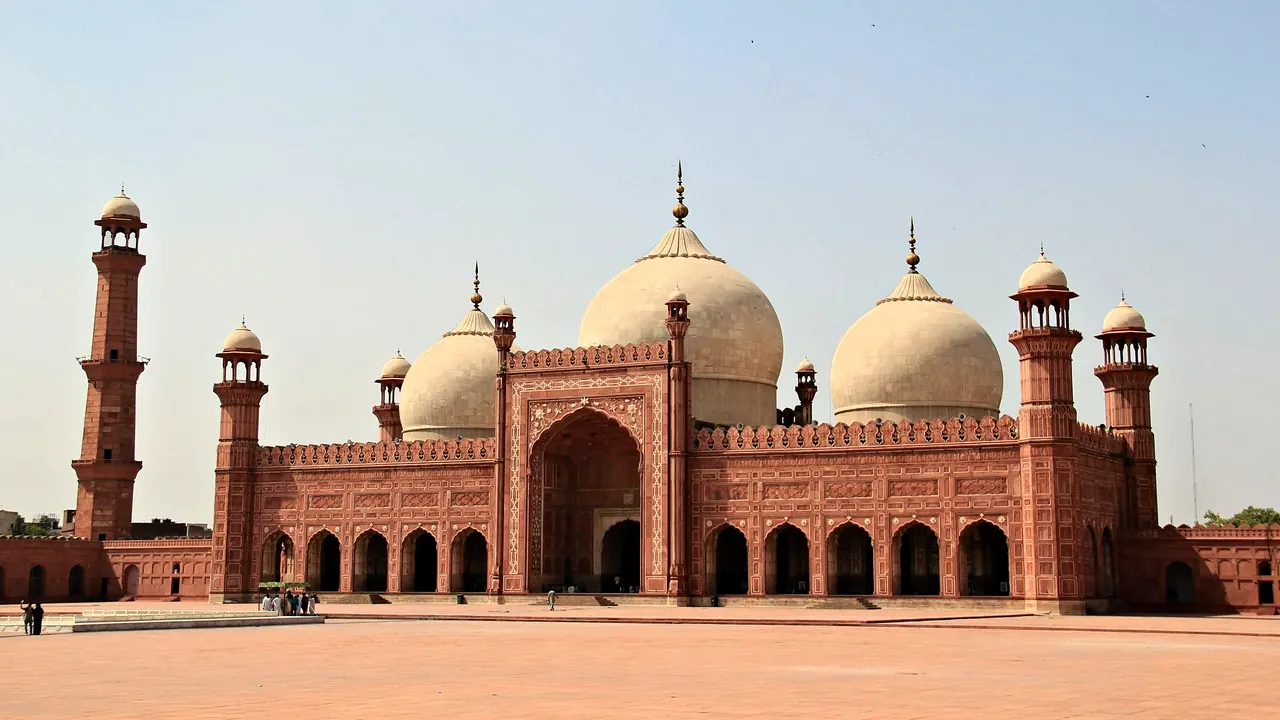
The front of the Badshahi Mosque with its domes and minarets
- Affordability92
- Culture & sights82
- Food & drink79
Photo: Romero Maia, CC BY-SA 4.0, cropped
Match
41
Every category weighted equally
- Beach & sun37
- Culture & arts49
- Food & nightlife45
- Family trip42
- Outdoors39
- Relax & unwind37
- Shopping & style47
- On a budget47
Lahore in twelve categories
Our verdict on each, scored 0 to 100 against the same fixed benchmark cities, so a score means the same thing on every page.
Beaches & swimming. Scores 3 out of 100.
Food & drink. Scores 79 out of 100.
Culture & sights. Scores 82 out of 100.
Nightlife. Scores 12 out of 100.
Nature & outdoors. Scores 15 out of 100.
Day trips. Scores 38 out of 100.
Good for families. Scores 32 out of 100.
Getting around. Scores 34 out of 100.
Shopping & style. Scores 60 out of 100.
Affordability. Scores 92 out of 100.
Live music & performing arts. Scores 33 out of 100.
Wellness & relaxation. Scores 12 out of 100.
Lahore category by category
Beaches & swimming
3Lahore is deep inland on the Punjab plain, roughly 1,000km from the Arabian Sea, and has nothing to offer for beaches or swimming. The Ravi river is not used for bathing, so swimming means a hotel pool or one of the water parks on the city's edge. Anyone who wants the sea will need to fly to the coast at Karachi.
Food & drink
79Food is the centre of Lahore's social life, and eating out is the thing locals most want to show a visitor. The walled city and its edges are the heart of it: nihari and paye at dawn, halwa puri for weekend breakfast, karahi cooked to order, charcoal tikka and seekh kebab, and thick lassi served in steel tumblers. The food streets around Gawalmandi and the Fort Road, with the Badshahi Mosque lit up above the tables, are the classic evening out.
Away from the old city, Gulberg and the Defence neighbourhoods have family restaurants, barbecue halls and smart cafés. Desi sweet shops and chai stalls are everywhere. What it lacks is a drinking culture: alcohol is hard to find, so tea, lassi and fresh juice stand in for wine and beer.
Culture & sights
82Lahore is the great Mughal city of the subcontinent's northwest. The Lahore Fort, with its Sheesh Mahal mirror palace and painted Picture Wall, faces the huge red sandstone Badshahi Mosque across a single courtyard. Together they make one of the finest groups of Islamic architecture in South Asia. Inside the walled city, the Wazir Khan Mosque is covered in brilliant tilework and the Shahi Hammam has its frescoes. The Shalimar Gardens step down in terraces of water channels and pavilions.
Across the Ravi, the tombs of Jahangir and Nur Jahan sit in quiet gardens. The colonial Mall Road has the Lahore Museum and red-brick Raj buildings, and Data Darbar and the Sikh samadhi of Ranjit Singh show the city's many faiths. Spring and autumn are the best seasons for long days on foot.
Nightlife
12Lahore stays up late, but it does not go out in the usual sense. There are no public bars or clubs, alcohol is restricted, and whatever party scene exists happens at private gatherings a visitor rarely sees. The city's evenings are social rather than wild. Families and groups of friends stay out until well after midnight at the food streets, ice-cream and dessert shops and roadside chai stalls.
In Gulberg, along MM Alam Road and in the Defence neighbourhoods, younger Lahoris meet in coffee shops and late-opening cafés. Summer nights are the busiest, when people wait for the heat to break before heading out, and Ramadan turns the hours after iftar into the liveliest of the year. Anyone looking for drinks, dance floors or a club night will find nothing here.
Nature & outdoors
15Lahore is a city of gardens set on a flat, hot plain, and that is as far as its outdoor offer goes. Bagh-e-Jinnah, the old Lawrence Gardens, has big shade trees and quiet paths. Racecourse Park and Jallo Park on the eastern edge give more room, and the Ravi makes for a slow boat ride. There are no hills or wild landscapes within easy reach. Summers are fiercely hot and in early winter a thick haze often settles over the city. The mountains of the north need a long drive or a flight, so this is not a base for hiking or outdoor sport.
Day trips
38The classic outing is the Wagah border, about 30km east, where the flag-lowering ceremony is a loud, theatrical show of high-kicking guards and cheering crowds. Within an hour or so you can also reach the Mughal Hiran Minar, a hunting tower and water tank near Sheikhupura. Sikh pilgrims and curious visitors go to Nankana Sahib, the birthplace of Guru Nanak, and to the gurdwara at Kartarpur, about two hours away.
The list thins after that. Rohtas Fort and the Indus Valley site of Harappa are both remarkable, but each is a long day on the road rather than an easy trip. Most visitors find the walled city keeps them busier than anything outside it.
Good for families
32Children are welcomed everywhere in Lahore, and families are the main crowd at food streets, parks and shrines. There is a fair amount aimed at them: the old Lahore Zoo, the Safari Park on the city's edge, amusement and water parks, and the big gardens where families picnic in the evenings. Daily life with children is harder going. Summers are extremely hot, a smoggy haze often hangs over the city in early winter, traffic is chaotic, and pavements are broken or missing. The walled city's lanes are crowded and tough with a pushchair. Late winter and spring are the easiest seasons.
Getting around
34Lahore is large and spread out, and most visitors get around by ride-hailing car or auto-rickshaw. These are cheap and easy, but the traffic is dense and erratic. The elevated Orange Line metro and the Metrobus corridor are clean and quick along their routes, though they miss many of the places visitors want to go. The walled city is best seen on foot or by rickshaw through narrow, crowded lanes. Outside it, walking between sights is rarely practical because of the distances, the heat and the lack of pavements. Driving yourself is not advisable.
Shopping & style
60Lahore is Pakistan's fashion capital, and clothes are what to shop for. MM Alam Road and the Gulberg boutiques show off the country's designers, with embroidered lawn, formal wear and elaborate bridal outfits, and tailors can make something up quickly. In the old city, Anarkali Bazaar and the lanes around Shah Alami and the Ichhra market sell fabric, glass bangles, embroidered khussa slippers and spices in a dense, noisy crush. Liberty Market is the middle-class favourite. Visitors can also find carpets, onyx, brassware and truck-art souvenirs. Large modern malls cover the global brands, but there is no international luxury street.
Affordability
92Lahore is very cheap for a visitor. A full street-food meal, a rickshaw across town or a metro ride costs very little, and even the smartest local restaurants are modest by international standards. The monuments charge foreigners more than locals, but entry is still low. The one real expense is accommodation. Many foreign travellers stay in international-standard hotels, which are priced well above everything else, while local guesthouses and mid-range hotels are far cheaper.
Live music & performing arts
33Lahore's most distinctive live performance is devotional. Qawwali singers perform at Data Darbar and other Sufi shrines, and on Thursday nights the drumming and whirling dhamaal at shrines such as Shah Jamal draw packed, ecstatic crowds. A visitor can join in, ideally with a local companion. The Alhamra arts complex on the Mall hosts classical music, dance and theatre, and the city has a long tradition of ghazal singing and broad Punjabi stage comedy. There is no opera, orchestra or regular jazz scene, and much of the formal programme is announced locally and hard to find from outside.
Wellness & relaxation
12Lahore is not a place to slow down. It is loud, crowded and hot, and the air is often hazy in winter. Relaxation is limited to the spas of the international hotels and the traditional head and shoulder massage offered by neighbourhood barbers. The Mughal Shahi Hammam in the walled city is worth seeing for its frescoes, but it is a monument, not a working bath. The calmest moments come in the shaded old gardens early in the morning, or on a hotel terrace once the evening heat breaks.
When should you go?
Pick a month to see what it is like. The climate figures are measured averages, not a forecast.
Lahore in July
Daytime high, °C
Rainfall in the month, mm
The whole year
Shaded against this destination’s own year: the deepest cell is its best month for that figure and the palest its weakest.
Temperature and rainfall are climate normals, averaged over the years shown. Lahore: 1991-2020 (sunshine 1961-1990) normals, Lahore City (1 km from centre).
Before you go
| Measure | Lahore |
|---|---|
| Official language | Urdu, English |
| Currency | Pakistan Rupee (PKR) |
| Sockets | CGM230 V, 50 Hz |
| Driving side | Left |
| Time zone | UTC+5 |
| Emergency number | Police 15, ambulance 1122, fire 16 |
| Elevation | 217 m |
| Main airport | Allama Iqbal International Airport (LHE)6 km from centre26 non-stop destinations |
By the numbers
| Measure | Lahore |
|---|---|
| Population | 11,126,285 |
| People per km² | 6,279 |
| Museums within 10 km | 5 |
| UNESCO World Heritage sites within 50 km | 1 |
Compare Lahore with
Every comparison with a written verdict behind it.