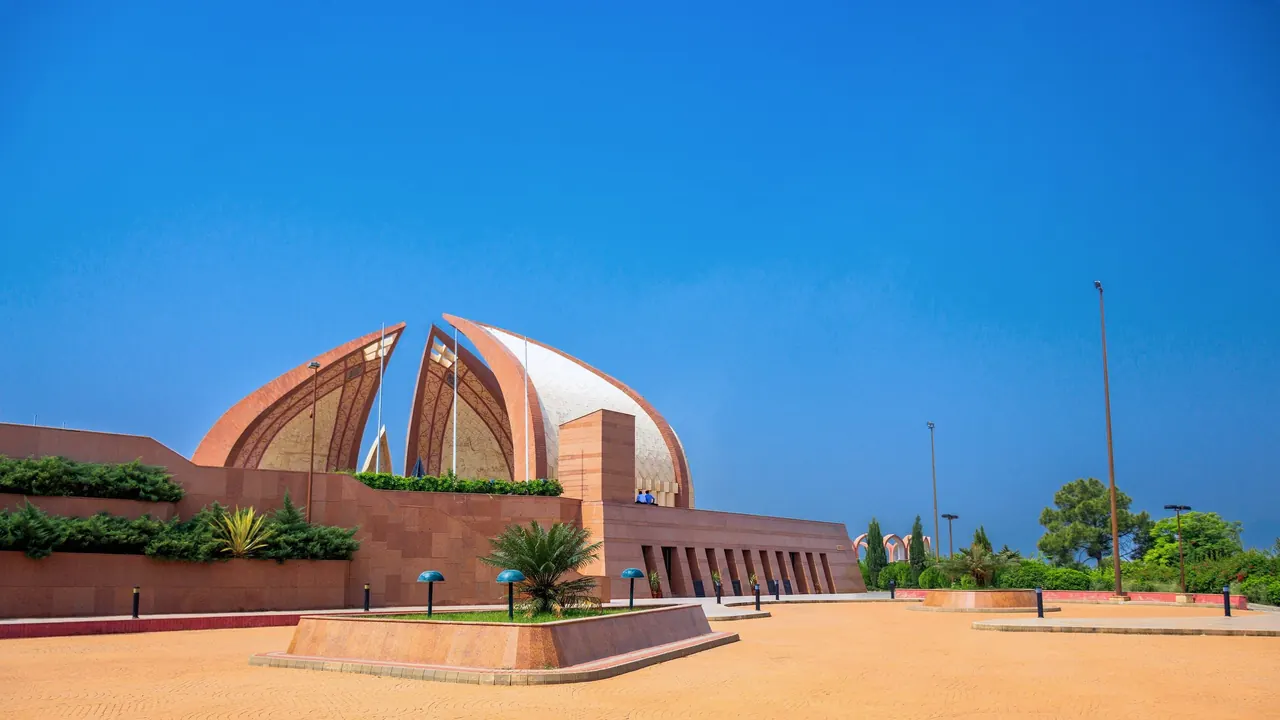
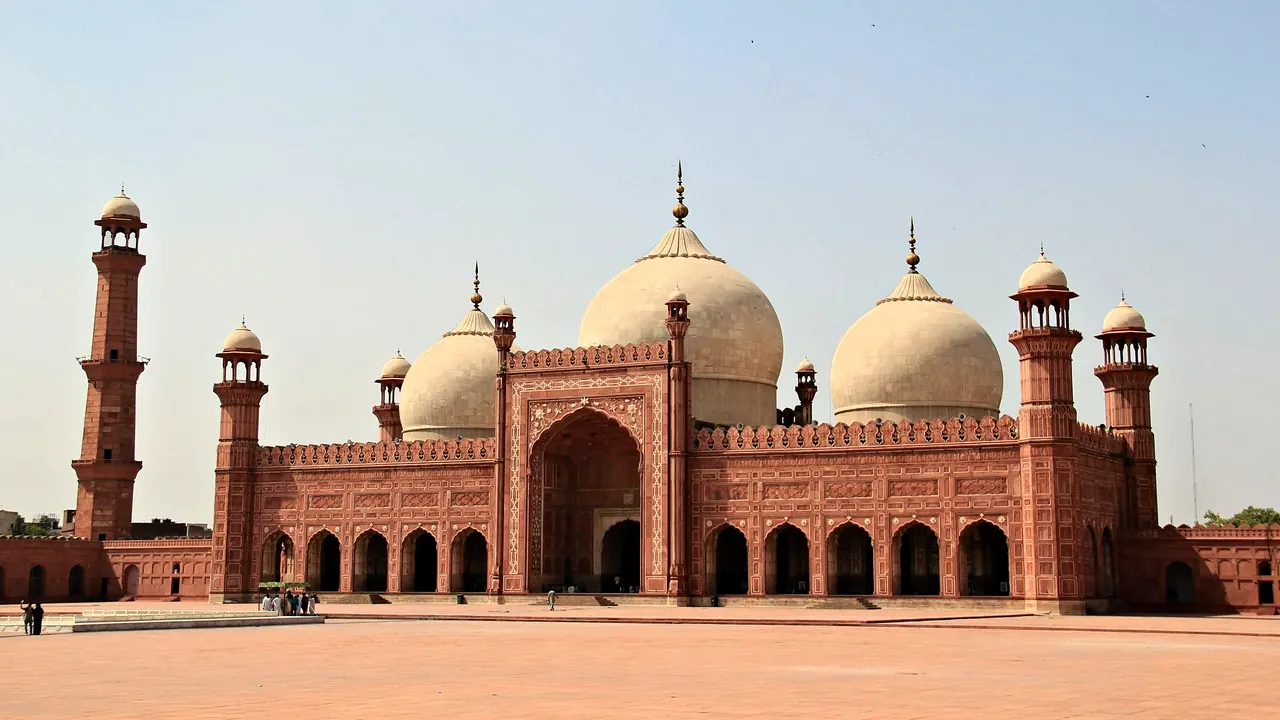
Photos: Islamabad by Fawad4real, CC BY-SA 4.0, cropped; Lahore by Romero Maia, CC BY-SA 4.0, cropped.
Islamabad or Lahore?
Our verdict in twelve categories, each scored against the same fixed benchmark cities, and the climate month by month, so you can choose for your trip.
Choose Islamabad for
- nature and the outdoors
- day trips
- wellness
Islamabad is the better choice for travellers who want calm, green space and the outdoors. The Margalla Hills begin at the edge of the northern sectors, so you can be on a forest trail in the early morning. Taxila and the Galyat ridge are easy outings, and the city's quiet, tree-lined streets make it the more restful base. Its own sights take only a couple of days, so it suits a trip where hiking and nearby excursions matter more than monuments.
Choose Lahore for
- culture and sights
- food and drink
- shopping
Lahore is for anyone who comes to Pakistan for its history and its table. The Fort, the Badshahi Mosque, the tiled Wazir Khan Mosque and the Shalimar Gardens make it one of the great Mughal cities, and its food streets and old-city breakfasts are the heart of local life. It is louder, hotter and harder going than Islamabad, but it gives a visitor more to see, eat and buy.
Scoreboard
Twelve categories on one fixed scale from 0 to 100. The shaded stretch is the gap between the two.
Your match
Pick a travel style or drag the sliders, and both match scores follow your weighting.
Too close to call, 1 point apart
Wins on nature and the outdoors and day trips with your weighting.
Wins on culture and sights and food and drink with your weighting.
What matters to you?
Category by category
What the scores mean for a trip.
Beaches & swimming
Both cities are far inland on the Punjab side of the country, and neither has any beach life. Rawal Lake in Islamabad and the Ravi in Lahore are for boating, not bathing, and the sea means a flight to Karachi.
If you need to swim, Islamabad leaves you with hotel pools. Lahore at least has water parks on its outskirts, which help with children in the summer heat.
Food & drink
Both cities cook the same hearty Punjabi repertoire: karahi made to order, charcoal tikka, seekh kebabs, and nihari or paya at breakfast. The difference is how central food is to the city. Islamabad eats well but quietly, at grill houses in the sector markets and at the view restaurants in Saidpur and the foothills. For older street-food bazaars, its residents cross into Rawalpindi.
In Lahore, eating out is the main way the city socialises. The walled city serves dawn nihari and weekend halwa puri, and the food streets of Gawalmandi and Fort Road set their tables under the lit Badshahi Mosque. Gulberg and Defence add smarter cafés. Neither city has a drinking culture, so tea and lassi take the place of bars in both.
Culture & sights
The gap is wide. Islamabad was built in the 1960s, and its sights are modern ones. The Faisal Mosque against the Margalla Hills is genuinely striking, and the Lok Virsa museum explains the country's regional crafts and music. After that the list soon runs out.
Lahore has the centuries of history the capital lacks. The Fort with its Sheesh Mahal faces the Badshahi Mosque, the Wazir Khan Mosque and the Shahi Hammam are inside the walled city, and the Shalimar Gardens and Jahangir's tomb are further out. Add the Lahore Museum and the colonial Mall Road, and there is enough to fill several days on foot.
Nightlife
Neither city has bars, clubs or a public drinking scene. In both, evenings mean late dinners, ice cream and tea with families out well after dark, especially in summer and during Ramadan.
Lahore's evenings are a little busier and younger. Its food streets stay full past midnight, and the coffee shops along MM Alam Road and in Defence give younger people somewhere to meet. Islamabad's evenings centre on the quieter sector markets.
Nature & outdoors
Islamabad wins easily. The Margalla Hills rise right behind the northern sectors, with trails through pine forest to Daman-e-Koh and Pir Sohawa, monkeys and birds of prey along the way, and Rawal Lake for walks by the water. The cool Galyat ridge, with the Mushkpuri and Miranjani hikes, is within a couple of hours.
Lahore sits on a flat plain. Its outdoor life comes down to shaded gardens such as Bagh-e-Jinnah, larger parks on the edge of town and a slow boat on the Ravi. The mountains are a long drive or a flight away.
Day trips
Islamabad is the better base for outings. Taxila's Gandhara monasteries and sculpture museum are under an hour away, and Rawalpindi's bazaars are right next door. Rohtas Fort, the temples of Katas Raj and the hill station of Murree each make a full day.
Lahore's highlight is the flag-lowering ceremony at the Wagah border. The Hiran Minar and the Sikh sites at Nankana Sahib and Kartarpur also appeal, but Rohtas and Harappa are long days on the road from here. Most visitors find the walled city keeps them busy enough.
Good for families
Islamabad is the calmer and greener place to bring children. Lahore has more aimed at them but is harder going day to day. In the capital, families have the big parks by Rawal Lake, the dinosaurs at the Natural History Museum and gentle Margalla trails for older children, though the summers are punishing.
Lahore has its old zoo, the Safari Park and water parks. Against that, the chaotic traffic, broken pavements, winter haze and crowded old-city lanes, where a pushchair is a struggle, make every outing more effort.
Getting around
Neither city is easy to get around, but they are hard in different ways. Islamabad's grid of lettered and numbered sectors is simple to read on a map, yet the sights are scattered, pavements come and go, and the wide avenues are unpleasant to cross on foot. Of the Metro Bus lines, the one to Rawalpindi is the most useful for a visitor. Otherwise, cheap ride-hailing cars and taxis do most of the work, and day trips mean a car with a driver.
Lahore's elevated Orange Line and Metrobus corridor are quick, but they miss many of the places visitors want to see. Most people use ride-hailing cars or auto-rickshaws through traffic that is far denser and more erratic than the capital's. Walking between sights is rarely practical, except in the walled city, whose narrow lanes are best explored on foot or by rickshaw.
Shopping & style
Islamabad's shopping is about crafts: carpets, Kashmiri shawls, onyx and regional handicrafts in Jinnah Super, Kohsar Market and around Lok Virsa. For a proper bazaar, people go to Rawalpindi.
Lahore is the country's fashion capital and offers more. Designer lawn and bridal wear line MM Alam Road and Gulberg, tailors work fast, and Anarkali Bazaar and the old-city lanes sell bangles, khussa slippers and fabric in a dense crush.
Affordability
Both are very cheap for visitors, with grills, rides and entry fees all costing little. In both, the main expense is the international hotels. Lahore comes out slightly cheaper day to day, while Islamabad is the country's priciest city, although its guesthouses in the sectors still keep a stay modest.
Live music & performing arts
Lahore has more live performance to offer. Qawwali at Data Darbar and the Thursday-night dhamaal drumming at Shah Jamal are packed and ecstatic, and the Alhamra complex stages classical music, dance and Punjabi comedy.
In Islamabad, the arts council and Lok Virsa's occasional folk festivals are the main events. Qawwali at Bari Imam is the one memorable live tradition, and most visitors leave without seeing a formal performance.
Wellness & relaxation
Neither city has a bathing culture, and spas are mostly confined to the big hotels. Islamabad is still the easier place to unwind, with quiet residential sectors, tree-lined avenues and early walks in the foothills.
Lahore is loud, crowded and hot. Its Shahi Hammam is a monument rather than a working bath, and calm comes only in brief moments, such as dawn in the old gardens or a barber's head massage.
When should you go?
Pick your month. The climate figures are measured averages, not a forecast.
Islamabad in July
Lahore in July
Daytime high, °C
Rainfall in the month, mm
Temperature and rainfall are climate normals, averaged over the years shown. Islamabad: 1991-2020 (sunshine 1961-1990) normals, Islamabad Airport (10.8 km from centre). Lahore: 1991-2020 (sunshine 1961-1990) normals, Lahore City (1 km from centre).
Islamabad is at its best from October to early December. The rain eases and the days cool from about 31°C to the low twenties, which is ideal for the Margalla trails. February and March are mild but noticeably wet. April is a good dry spell before the heat, but in May and June highs of up to 38°C make long walks hard work. Then the monsoon arrives in force, with more than 300mm of rain in August.
Lahore is a few degrees hotter and much drier. Its comfortable season runs from late October through March. There is almost no rain from October to December, and the winter months are sunnier than in the capital. That makes February and March, wet months in Islamabad, good months for Lahore's monuments. From April the heat builds quickly, reaching 39°C in May and June. The July and August monsoon is real but lighter than Islamabad's.
Which traveller are you?
On a culture and arts trip, Lahore is the clear pick. The Lahore Fort, the Badshahi Mosque, the walled city's tiled mosques and the qawwali and dhamaal at its Sufi shrines give you days of material. Islamabad's modern landmarks take two days.
For an outdoors trip, choose Islamabad. Numbered trails climb the Margalla Hills straight from the city to Daman-e-Koh and Pir Sohawa, and the pine forests of Nathia Gali are a short drive away. Flat, hot Lahore offers only gardens and parks.
On a food and nightlife trip, Lahore wins on the food. Dawn nihari, the Fort Road food streets under the floodlit mosque and late chai in Gulberg make eating the evening's entertainment. Neither city has bars or clubs, so expect long dinners rather than drinks.
Before you go
| Measure | Islamabad | Lahore |
|---|---|---|
| Official language | Urdu, English | Urdu, English |
| Currency | Pakistan Rupee (PKR) | Pakistan Rupee (PKR) |
| Sockets | CGM230 V, 50 Hz | CGM230 V, 50 Hz |
| Driving side | Left | Left |
| Time zone | UTC+5 | UTC+5 |
| Emergency number | Police 15, ambulance 1122, fire 16 | Police 15, ambulance 1122, fire 16 |
| Elevation | 490 m | 217 m |
| Main airport | Islamabad International Airport (ISB)26 km from centre43 non-stop destinations | Allama Iqbal International Airport (LHE)6 km from centre26 non-stop destinations |
By the numbers
| Measure | Islamabad | Lahore |
|---|---|---|
| Population | 1,014,825 | 11,126,285 |
| People per km² | 1,120 | 6,279 |
| Museums within 10 km | 5 | 5 |
| UNESCO World Heritage sites within 50 km | 1 | 1 |
Where else could you go?
Every comparison below shares a destination with this one, so you can follow Islamabad or Lahore somewhere new.