Photos: Amritsar by Ken Wieland, CC BY-SA 2.0, cropped; Islamabad by Fawad4real, CC BY-SA 4.0, cropped.
Amritsar or Islamabad?
Our verdict in twelve categories, each scored against the same fixed benchmark cities, and the climate month by month, so you can choose for your trip.
Choose Amritsar for
- culture and sights
- food and drink
- live music and the arts
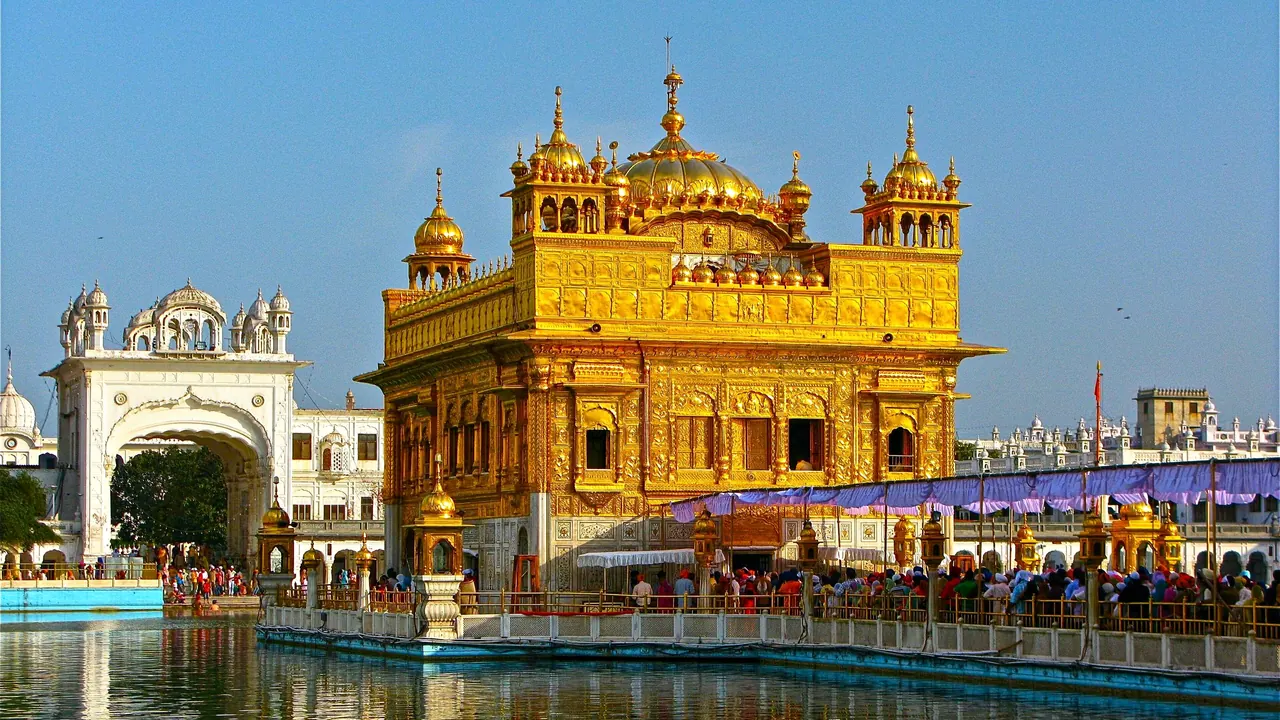
Choose Amritsar if the purpose of the trip is a single great sight and the food around it. The Golden Temple is worth going back to at dawn, at midday and late at night. Jallianwala Bagh and the Partition Museum are a short walk away, and the old city's dhabas serve kulcha and lassi from early morning. Allow a few days for the temple, the lanes and the Wagah ceremony. It suits travellers who want depth from one place and are happy to leave the outdoors for another trip.
Choose Islamabad for
- nature and the outdoors
- day trips
- families
Islamabad rewards a different traveller, one who wants green space and a base for excursions rather than a list of monuments. The Margalla trails begin at the edge of the city's northern sectors, and Taxila, Rohtas Fort and the pine ridges of the Galyat are all within a day's drive. The city's own sights take two days at most, but it is calmer and easier on families. For walkers, and for anyone curious about Gandhara, it is the better pick.
Scoreboard
Twelve categories on one fixed scale from 0 to 100. The shaded stretch is the gap between the two.
Your match
Pick a travel style or drag the sliders, and both match scores follow your weighting.
Wins on culture and sights and food and drink with your weighting.
Wins on nature and the outdoors and day trips with your weighting.
What matters to you?
Category by category
What the scores mean for a trip.
Beaches & swimming
Neither city works for a beach trip. Both sit far inland and swimming means a hotel pool.
The water you do see is for looking at. In Amritsar it is the sacred pool of the Golden Temple, where pilgrims bathe as an act of devotion. In Islamabad it is Rawal Lake and the reservoirs, which are for walks and boating.
Food & drink
Both cities cook in the Punjabi tradition, but Amritsar is the stronger food destination. Many people travel there partly to eat. Kulcha from the tandoor with chole, river fish fried in batter and lassi in steel tumblers fill the lanes around the temple, and the free langar, eaten on the floor beside pilgrims, is an experience in itself. The best eating is at breakfast and lunch.
Islamabad leans towards meat and the grill: karahi cooked to order, seekh kebabs and chapli kebabs, with nihari and paya for breakfast. Its eating is spread across the sector markets and hillside restaurants with views over the city rather than one dense old quarter. For the older street-food scene you cross into Rawalpindi. Neither city has a drinking culture.
Culture & sights
Amritsar has much more to see. The Golden Temple, with the Akal Takht and its museum of Sikh history, is reason enough to come. Jallianwala Bagh, where the 1919 massacre left bullet marks in the walls, and the Partition Museum's personal accounts of 1947 give the visit real historical weight.
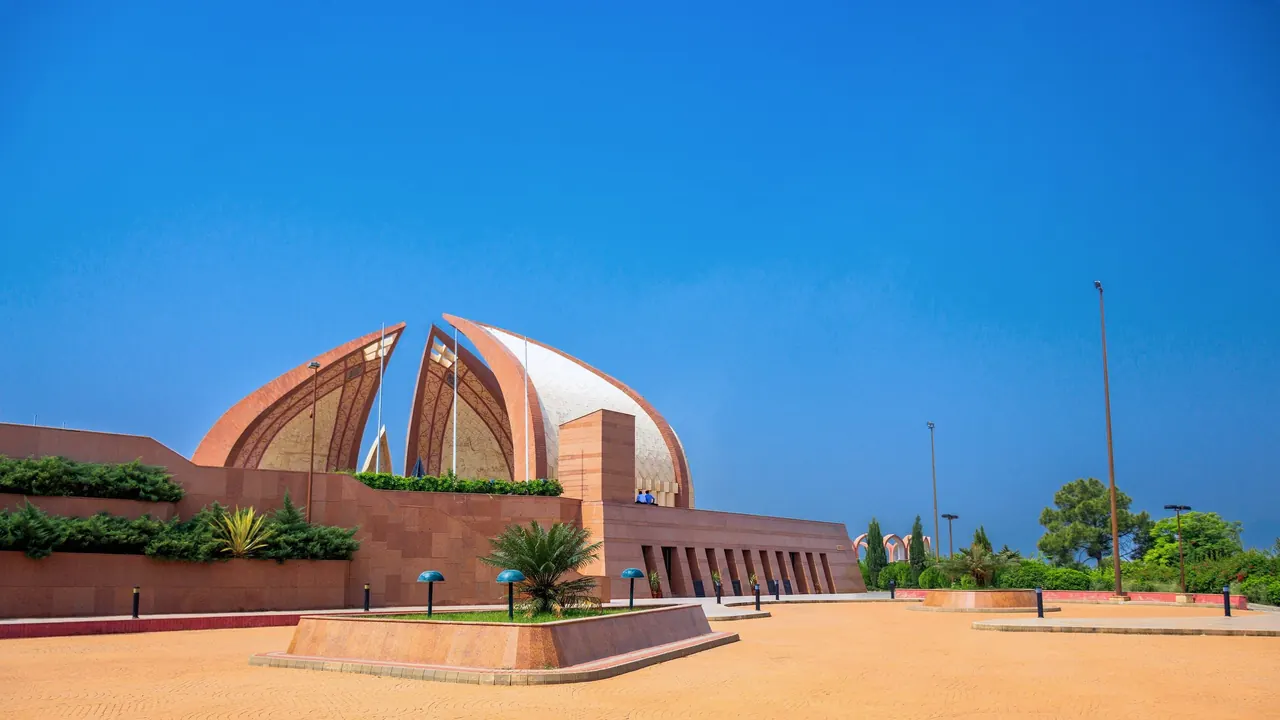
Islamabad was built in the 1960s, so its sights are modern. The Faisal Mosque against the Margalla Hills is striking, and Lok Virsa is excellent on the country's regional crafts and music. Two days is enough, and the older history lies outside the city, at places such as Taxila.
Nightlife
Neither city has nightlife in the usual sense, though Amritsar has slightly more, with a few hotel bars and lounges in its newer districts. Its best evening is a quiet walk around the lit temple pool after dinner.
Islamabad has no bars or clubs to speak of. Instead, families stay out late in the sector markets for dinner, ice cream and tea, especially on hot summer nights.
Nature & outdoors
Islamabad is by far the better place for the outdoors. The Margalla Hills rise directly behind the northern sectors, with trails through pine forest to Daman-e-Koh and Pir Sohawa. Beyond the city, Nathia Gali and the Mushkpuri hike are within reach, with cool forest in summer and snow in winter.
Amritsar sits among flat wheat and mustard fields, and its green space is limited to Ram Bagh and Company Bagh. The one real outing is the Harike wetland, which is worth the trip in winter for its migratory waterbirds. The Himalayan foothills are too far for a day out.
Day trips
Islamabad has more good excursions and a wider range of them. Taxila's Gandhara ruins and sculpture museum are under an hour away. Rohtas Fort, the temples of Katas Raj and the hill station of Murree each fill a full day, and old Rawalpindi is right next door.
From Amritsar, the main excursion is the evening flag ceremony at the Wagah border, which is loud and memorable. After that the trips are mostly Sikh pilgrimage sites such as Tarn Taran Sahib, plus the French-style palace at Kapurthala. They appeal mainly to travellers with a particular interest.
Good for families
Islamabad is the easier city with children. Fatima Jinnah Park and Lake View Park have space and rides, the natural history museum has dinosaurs, and the lower Margalla trails suit older children. Summer heat and the need for a car everywhere are the drawbacks.
Amritsar can still excite older children, with the langar kitchens and the stamping guards at Wagah, and families are welcomed warmly at the temple. Little else is designed for them, though, and the crowded lanes and care needed with water and food make it better suited to a short visit than a relaxed one.
Getting around
Amritsar is the easier of the two for a visitor, because the places that matter are close together. The Golden Temple, Jallianwala Bagh and the Partition Museum sit a few minutes apart around a pedestrianised heritage street, so most of a visit can be done on foot. Away from that core you rely on cycle rickshaws, e-rickshaws and ride-hailing cars through noisy traffic and poor pavements.
Islamabad asks more of you. Its lettered sectors and wide avenues are simple to follow on a map, but the sights are far apart, pavements come and go and the big roads are unpleasant to cross, so nearly every outing means a ride-hailing car or taxi. The Metro Bus is handy for reaching Rawalpindi. For trips out of either city, a hired car with a driver is the usual way.
Shopping & style
The two are evenly matched, and both are better for crafts and cloth than for brands. Amritsar's Hall Bazaar and Katra Jaimal Singh are good for phulkari embroidery, juttis and Punjabi suits, and the city's dried papad and warian make good food gifts to take home.
Islamabad's shopping is tidier and more spread out. Carpets, Kashmiri shawls, onyx and truck-art souvenirs are sold in its sector markets and around Lok Virsa, and the malls carry international chains. For a crowded traditional bazaar, Rawalpindi's Raja Bazaar is the answer.
Affordability
Both are very cheap, and Amritsar has a slight edge. Its main sight costs nothing, the langar feeds visitors for free, and pilgrim rest houses offer basic beds.
Islamabad is the most expensive city in Pakistan, and its business hotels are priced accordingly. Even so, its grills, ride-hailing and sector guesthouses keep a visit inexpensive.
Live music & performing arts
Amritsar has one performance no visitor misses: the gurbani kirtan sung to harmonium and tabla at the Golden Temple from before dawn until late, which anyone can sit and hear beside the pool. There are a few bhangra and folk shows besides.
Islamabad has nothing that runs every day. The National Council of the Arts and Lok Virsa put on plays and folk festivals at intervals, and the most rewarding live music is qawwali at shrines such as Bari Imam, but many visitors will not catch a performance.
Wellness & relaxation
For someone who wants to unwind, the difference is where the quiet is found. In Amritsar it lies in one place, the Golden Temple. Step outside its gates and the old city's lanes fill with horns, rickshaws and pilgrims, and spa treatments go no further than what a few hotels offer. Inside, though, the marble walkway in the early hours or after dark, with kirtan carrying across the water, has a stillness that many visitors remember above anything else in the city.
Islamabad is the better choice for a few unhurried days, because you do not have to go looking for calm there. The leafy avenues and quiet sectors set the pace for the whole city, and a morning on the lower Margalla trails before the day warms up fits easily into each day. Like Amritsar, it has little pampering outside the larger hotels and some salons. The rest comes from the pace of the place rather than from treatments.
When should you go?
Pick your month. The climate figures are measured averages, not a forecast.
Amritsar in July
Islamabad in July
Daytime high, °C
Rainfall in the month, mm
Temperature and rainfall are climate normals, averaged over the years shown. Amritsar: 1991-2020 normals, Amritsar (1.2 km from centre). Islamabad: 1991-2020 (sunshine 1961-1990) normals, Islamabad Airport (10.8 km from centre).
Both cities share the same basic year: a cool, dry winter, a fierce early summer and a monsoon in July and August. Amritsar is the harsher of the two in summer, reaching about 40°C in May. Its winter is also gloomier, with dense morning fog and the least sunshine in December. October and November are its best months, dry and warm enough for long walks around the temple and the bazaars. February and March are also good.
Islamabad gets far more rain. Its monsoon peaks at about 308mm in August, against roughly 190mm in Amritsar, and February and March are noticeably wet as well, which makes the Margalla trails muddy. Even so, spring is the season for hiking there once the rain eases, and April is pleasant at around 31°C. October and November are dry, sunny and comfortable in both cities, so they are the safest months for a trip that takes in both.
Which traveller are you?
On a culture and arts trip, Amritsar is the clear choice. The Golden Temple, with kirtan sung from before dawn until late at night, is one of the great religious sites of the subcontinent. Jallianwala Bagh and the Partition Museum add powerful modern history close by.
For an outdoors trip, Islamabad wins easily. Numbered trails climb into the Margalla Hills straight from the city, Rawal Lake has walks and boating, and the Galyat ridge offers pine-forest hikes. Around Amritsar the land is flat farmland, and the main nature outing is birdwatching at Harike.
On a family trip with children, Islamabad is the easier city. It has big parks with rides, dinosaurs at the natural history museum, gentle lower trails and quieter streets. Amritsar's crowded lanes, traffic and summer heat suit only a short visit with older children.
Before you go
| Measure | Amritsar | Islamabad |
|---|---|---|
| Official language | Hindi, English | Urdu, English |
| Currency | Indian Rupee (INR) | Pakistan Rupee (PKR) |
| Sockets | CM230 V, 50 Hz | CGM230 V, 50 Hz |
| Driving side | Left | Left |
| Time zone | UTC+5:30 | UTC+5 |
| Emergency number | 108 or 112 | Police 15, ambulance 1122, fire 16 |
| Elevation | 234 m | 490 m |
| Main airport | Sri Guru Ram Das Ji International Airport (ATQ)12 km from centre17 non-stop destinations | Islamabad International Airport (ISB)26 km from centre43 non-stop destinations |
By the numbers
| Measure | Amritsar | Islamabad |
|---|---|---|
| Population | 1,159,227 | 1,014,825 |
| People per km² | 6,819 | 1,120 |
| Museums within 10 km | 3 | 5 |
| UNESCO World Heritage sites within 50 km | 1 | 1 |
Where else could you go?
Every comparison below shares a destination with this one, so you can follow Amritsar or Islamabad somewhere new.
- Lahorevs Amritsar
- Lahorevs Islamabad
- Rishikeshvs Amritsar
- Lehvs Amritsar
- Delhivs Amritsar
- Lehvs Islamabad