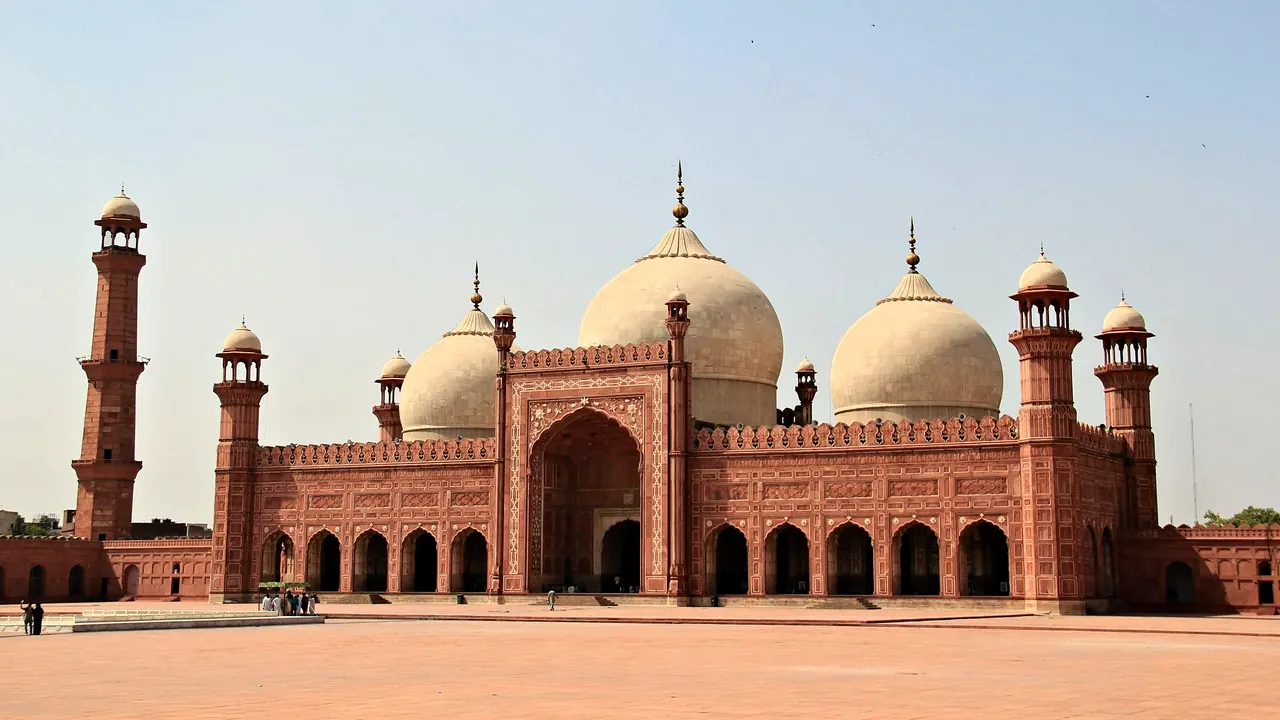
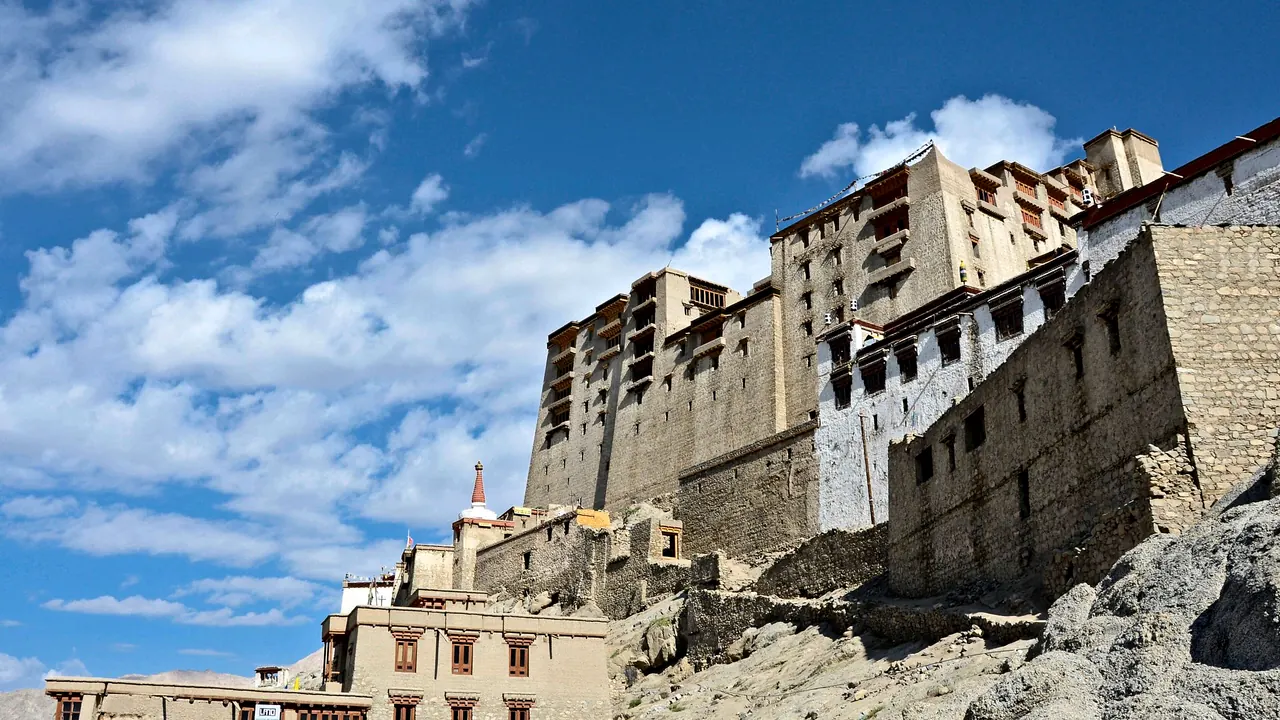
Photos: Lahore by Romero Maia, CC BY-SA 4.0, cropped; Leh by Rayan Naqash, CC BY-SA 3.0, cropped.
Lahore or Leh?
Our verdict in twelve categories, each scored against the same fixed benchmark cities, and the climate month by month, so you can choose for your trip.
Choose Lahore for
- food and drink
- culture and sights
- shopping
Lahore suits a traveller who wants a great historic city and its table. It has the Fort and the Badshahi Mosque, the tiled mosques of the walled city, food streets busy until well after midnight, and bazaars and boutiques full of fabric and tailoring. It is cheap, intense and urban, and best in the cool months. It asks for patience with heat, traffic and noise rather than physical stamina.
Choose Leh for
- nature and the outdoors
- day trips
- wellness
For mountains, monasteries and thin, clear air, go to Leh instead. The town itself is small and quickly seen, but it is the base for treks, rafting, high passes and the painted gompas of the Indus valley, with Alchi the finest of them. It rewards fit, unhurried travellers who leave a few days to acclimatise. It is a poor choice with young children or for anyone who wants evenings out.
Scoreboard
Twelve categories on one fixed scale from 0 to 100. The shaded stretch is the gap between the two.
Your match
Pick a travel style or drag the sliders, and both match scores follow your weighting.
Wins on food and drink and culture and sights with your weighting.
Wins on nature and the outdoors and day trips with your weighting.
What matters to you?
Category by category
What the scores mean for a trip.
Beaches & swimming
Neither city works for a beach trip. Lahore lies far inland on the Punjab plain, so swimming means a hotel pool or one of the water parks on the outskirts, and the coast at Karachi is a flight away.
Leh is high in the Himalaya and even further from any sea. Its rivers and lakes are fed by snowmelt and stay cold all year, so the water there is for rafting and for the view, not for swimming.
Food & drink
Food is one of the main reasons to visit Lahore, and Leh cannot match it. In the walled city you can start the day with nihari and finish it with karahi and charcoal kebabs. The food streets below the floodlit Badshahi Mosque are the classic evening out, and Gulberg and Defence add smart restaurants and cafés.
Leh eats simply: momos, thukpa, Ladakhi skyu, butter tea and apricots, plus trekkers' cafés around the Main Bazaar and Changspa that mostly close outside the summer. It is good, warming food after a day in the mountains but rarely a reason to travel. Alcohol is scarce in both cities, though a beer is easier to find in Leh.
Culture & sights
Lahore has far more to see. The Fort with its Sheesh Mahal, the Badshahi Mosque, the tiled Wazir Khan Mosque, the Shalimar Gardens and the tombs of Jahangir and Nur Jahan take several full days. The Lahore Museum and the Raj buildings of Mall Road come on top of those.
Leh's sights are fewer and quicker to see. The nine-storey palace, the Namgyal Tsemo ridge, the mud-brick old town and Shanti Stupa at sunset fill a day or two. The region's great Buddhist art is in the valley monasteries, which you visit on day trips rather than in town.
Nightlife
Neither city has bars or clubs, but Lahore at least stays up late. Families and friends gather at the food streets, dessert shops and chai stalls until after midnight, younger Lahoris fill the cafés of MM Alam Road, and the nights after iftar in Ramadan are the liveliest of the year. Leh goes quiet early, worn out by the altitude and the dawn starts, and a rooftop dinner with a beer is about as far as an evening goes.
Nature & outdoors
For the outdoors, Leh is in a different league. It sits in the Indus valley below the Stok range, with treks into Hemis National Park, the road over Khardung La, rafting on the Indus and Zanskar, and overnight trips to Nubra and Pangong Tso. Winter adds snow leopard tracking and the frozen-river Chadar trek.
Lahore lies on a flat, hot plain with no hills within reach. It has shaded parks such as Bagh-e-Jinnah and Jallo Park, and slow boat rides on the Ravi. They make a pleasant morning, not a reason to go.
Day trips
Leh has the better day trips, and they are close by. Shey and Thiksey are under half an hour away, Hemis about an hour, and Alchi's thousand-year-old painted temples make a full day to the west. Nearly everything is a monastery or a palace, but the quality is exceptional.
From Lahore the obvious outing is the flag ceremony at the Wagah border, about 30km away. Hiran Minar and the Sikh shrines at Nankana Sahib and Kartarpur are further options. Rohtas Fort and Harappa are remarkable but each takes a long day on the road.
Good for families
Lahore is the easier of the two with children, though neither is easy. It has a zoo, a safari park, water parks and big gardens where families picnic in the evenings, and children are welcome everywhere. The drawbacks are the summer heat, the winter haze, the traffic and broken pavements.
Leh is hard with young children because altitude sickness is a real risk when you arrive in a single flight. Days out are long mountain drives, and nothing in town is made for children. Robust teenagers who want to trek or raft are the exception.
Getting around
Lahore is the easier city to get around, if not an easy one. Ride-hailing cars and auto-rickshaws are cheap and always available, and the Orange Line metro and Metrobus are quick where they run. The traffic is erratic, though, and the sights are too far apart to walk between.
In Leh it is the other way round: the centre is easy to walk, despite the steep slopes at this altitude, and getting further out is the hard part. Buses are sparse, so you rely on taxi-union cars, hired motorbikes or shared jeeps for long drives on mountain roads, and some passes close in winter.
Shopping & style
Lahore is a real shopping city, and clothes are the thing to buy. MM Alam Road and the Gulberg boutiques sell designer lawn and bridal wear, and tailors can make something up quickly. Anarkali Bazaar and Liberty Market are the places for fabric, glass bangles, khussa slippers and spices.
Leh's Main Bazaar is smaller and has a narrower range: pashmina, thangkas, turquoise jewellery, singing bowls and decent trekking gear. Much of the stock repeats from stall to stall, so it suits a souvenir hunt more than a shopping trip.
Affordability
Both cities are cheap once you are there, Lahore even more so. A street meal, a rickshaw or a metro ride costs very little, and only the international hotels are priced well above everything else.
Leh's guesthouses and momo dinners are cheap too, but transport adds up. Taxi-union fares are fixed and high, most days out mean hiring a car, the outer valleys need permits, and comfortable hotels charge more in the short summer season.
Live music & performing arts
Lahore has more to go and see. Qawwali at Data Darbar and the Thursday-night drumming and dhamaal at Shah Jamal are powerful to watch. The Alhamra complex stages classical music, dance and theatre, though programmes are hard to find from abroad.
Leh has no theatre or concert hall. Its performance tradition is the masked cham dance in monastery courtyards, at the Hemis festival or around Losar. It is worth planning a trip around, but outside those days there is little to attend.
Wellness & relaxation
Leh is the better place to slow down, in a quiet, contemplative way. It has no spa culture, but there are guesthouse rooftops for slow mornings, meditation courses at Buddhist centres and amchi practitioners of Tibetan medicine. The thin air disturbs sleep for the first few days.
Lahore is loud, hot and crowded. Relaxation there comes down to hotel spas, a head massage at the barber's and early mornings in the old gardens. Its Shahi Hammam is a frescoed monument, not a working bath.
When should you go?
Pick your month. The climate figures are measured averages, not a forecast.
Lahore in July
Leh in July
Daytime high, °C
Rainfall in the month, mm
Where the figures come from
Leh has no weather station within reach, so its figures come from a gridded climate model rather than a measured record, and read a broad area rather than one spot.
Temperature and rainfall are climate normals, averaged over the years shown. Lahore: 1991-2020 (sunshine 1961-1990) normals, Lahore City (1 km from centre). Leh: 1991-2020 normals, TerraClimate 4 km grid at the town, no weather station within 90 km.
The two run on opposite calendars. Lahore is at its best from November to March, when the days are mild and dry, around 18°C in January, and sunny enough for long walks through the walled city. From April the heat builds to 39°C in May and June, far too hot for sightseeing on foot. The monsoon follows, with close to 189mm of rain in July. October is dry but still hot.
Leh is the reverse. Its winters are bitter, with daytime highs of -3°C in January and some passes closed, so in practice it is a June to September destination, when afternoons reach about 25°C. Rain is slight in every month, so the summer is reliably dry. Neither city is near the sea, so no month suits a beach trip. Choose Lahore for a winter trip and Leh for a summer one.
Which traveller are you?
For a culture and arts trip, Lahore is the clear choice. The Fort, the Badshahi Mosque, Wazir Khan's tilework and the Shalimar Gardens fill several days, and Sufi qawwali at the shrines adds live performance that Leh's compact town cannot match.
On an outdoors trip, Leh is far ahead. Treks into Hemis National Park, rafting on the Indus and Zanskar, the road up to Khardung La and overnight trips to Pangong Tso make it a great mountain base. Lahore has only its parks.
For a food and nightlife trip, choose Lahore, with one caveat: there are no bars or clubs. What it does have is food streets, charcoal kebabs and chai stalls busy past midnight. Leh offers simple noodle soups and early nights.
Before you go
| Measure | Lahore | Leh |
|---|---|---|
| Official language | Urdu, English | Hindi, English |
| Currency | Pakistan Rupee (PKR) | Indian Rupee (INR) |
| Sockets | CGM230 V, 50 Hz | CM230 V, 50 Hz |
| Driving side | Left | Left |
| Time zone | UTC+5 | UTC+5:30 |
| Emergency number | Police 15, ambulance 1122, fire 16 | 108 or 112 |
| Elevation | 217 m | 3,500 m |
| Main airport | Allama Iqbal International Airport (LHE)6 km from centre26 non-stop destinations | Leh Kushok Bakula Rimpochee Airport (IXL)5 km from centre5 non-stop destinations |
By the numbers
| Measure | Lahore | Leh |
|---|---|---|
| Population | 11,126,285 | 30,870 |
| People per km² | 6,279 | - |
| Museums within 10 km | 5 | 2 |
| UNESCO World Heritage sites within 50 km | 1 | 0 |
Where else could you go?
Every comparison below shares a destination with this one, so you can follow Lahore or Leh somewhere new.