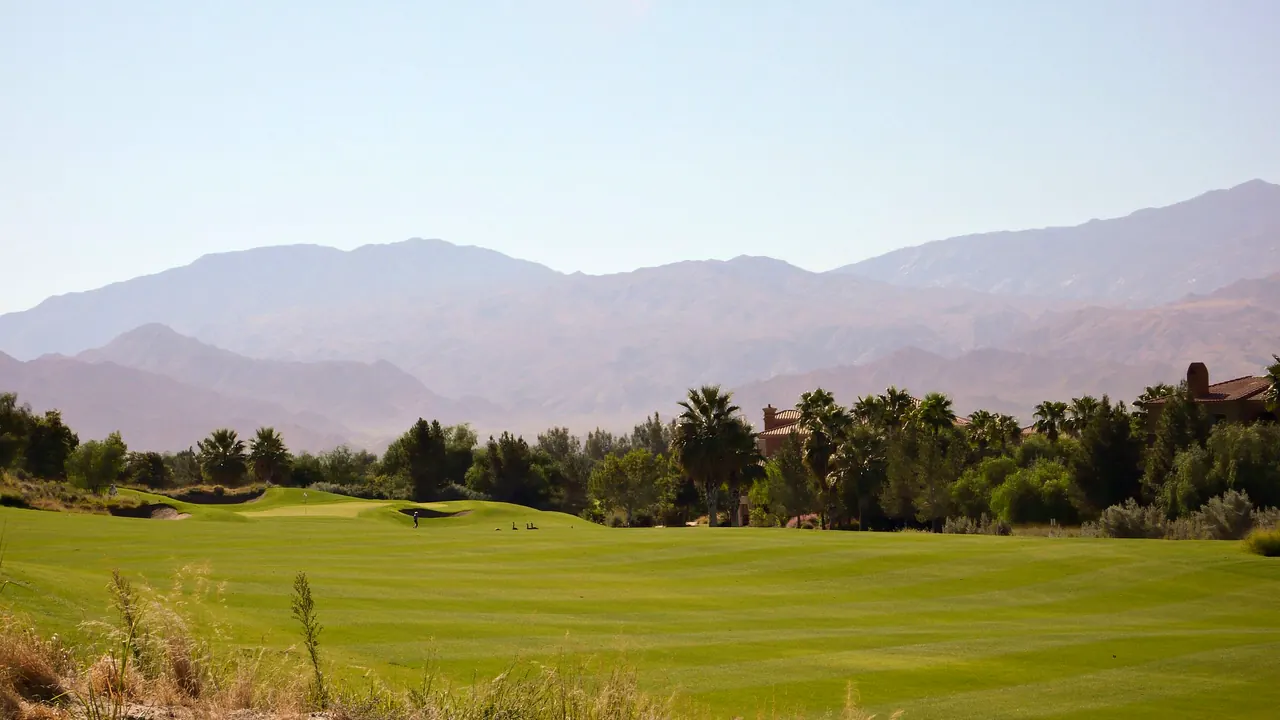
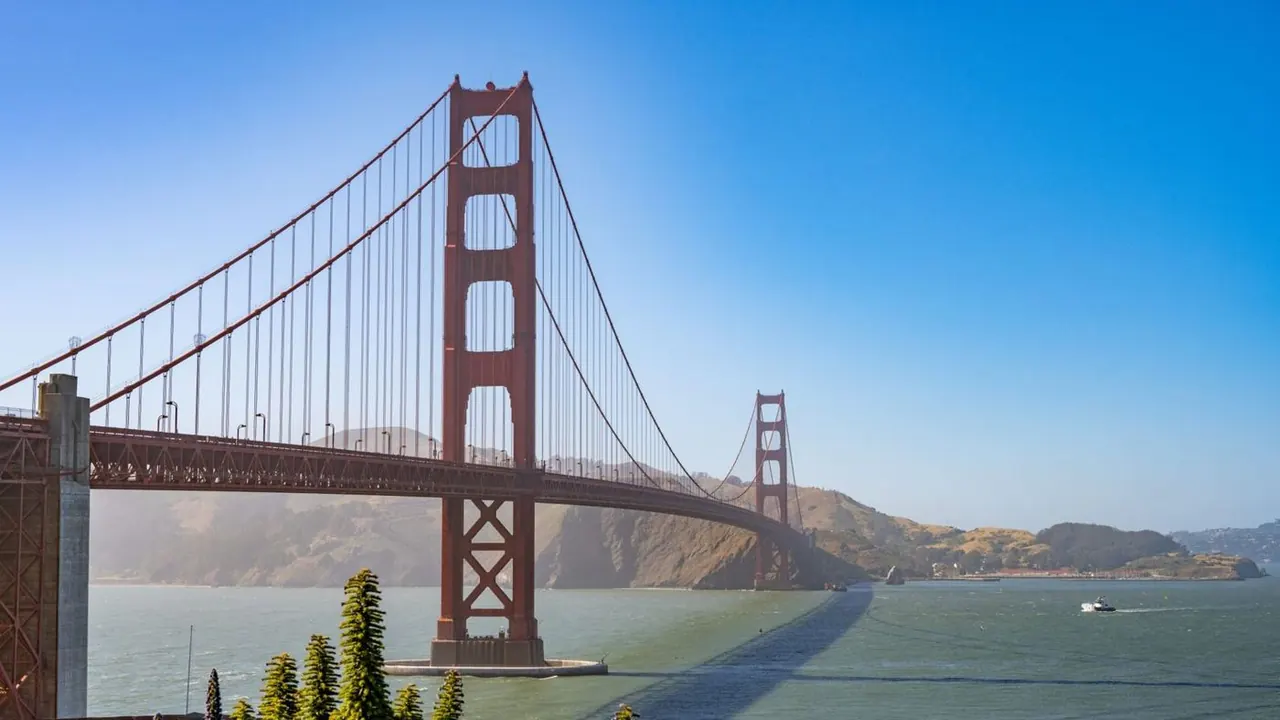
Photos: Palm Desert by David Balmer, CC BY 3.0, cropped; San Francisco by Elijah Cobb, Pexels License.
Palm Desert or San Francisco?
Our verdict in twelve categories, each scored against the same fixed benchmark cities, and the climate month by month, so you can choose for your trip.
Choose Palm Desert for
- wellness
- prices
Palm Desert suits travellers who want warmth in winter and very little on the schedule: a resort pool, a spa, a round of golf, an early hike into the Santa Rosa Mountains and an unhurried dinner on El Paseo. It is the more restful and the cheaper of the two, as long as you are happy to drive everywhere and need little to see or do after dark.
Choose San Francisco for
- getting around
- food and drink
- culture and sights
For a trip built around eating, sightseeing and evenings out, San Francisco is the far stronger choice. Its landmarks, museums, opera and jazz halls, neighbourhood restaurants and bars sit close together on a compact transit network, and wine country and the redwoods are within easy reach. Expect cool, often foggy weather and some of the steepest costs in the country.
Scoreboard
Twelve categories on one fixed scale from 0 to 100. The shaded stretch is the gap between the two.
Your match
Pick a travel style or drag the sliders, and both match scores follow your weighting.
Wins on wellness and prices with your weighting.
Wins on getting around and food and drink with your weighting.
What matters to you?
Category by category
What the scores mean for a trip.
Beaches & swimming
Neither city is a place for sea swimming, but San Francisco at least has a coastline worth going to. Palm Desert sits in a desert valley two hours from the Pacific, and its water is the resort pool, often heated in winter and central to the stay.
San Francisco's Ocean Beach, Baker Beach below the Golden Gate Bridge and the small cove at China Beach make fine places for sunset walks and bonfires, even though the cold water and rip currents keep almost everyone out. In both cities, warm swimming means a hotel pool.
Food & drink
San Francisco is one of the great places to eat in the country, and Palm Desert is not. In Palm Desert, eating out means steakhouses and Californian bistros along El Paseo and in the resorts, which are reliable but much alike. Its real local flavour lies in the Mexican taquerias of Indio and Coachella and in date shakes from the groves.
San Francisco offers sourdough, cioppino, Dungeness crab and the Mission burrito, the Ferry Building market on the waterfront, Cantonese cooking in Chinatown and the Richmond, Italian bakeries in North Beach and a fine-dining scene with Napa and Sonoma wines to match. A food-led trip has only one answer here.
Culture & sights
Palm Desert is a post-war resort town, and its sightseeing amounts to the art museum branch with its sculpture garden, some public art and galleries on El Paseo. That fills a morning or two, and the mid-century modern houses that give the valley its architectural interest are over in Palm Springs.
San Francisco offers days of material by comparison. The Golden Gate Bridge, Alcatraz, the cable cars on Nob Hill and the Victorians at Alamo Square sit alongside SFMOMA, the de Young, the Legion of Honor and the Asian Art Museum, with the Mission's murals and the Castro's history in the neighbourhoods.
Nightlife
Palm Desert winds down early. Its evenings are patio happy hours, wine bars and cocktail lounges around El Paseo with a crowd of golfers and retirees, and staying out late means driving to a tribal casino or to Palm Springs.
San Francisco has a proper night out spread across several districts: dive and mezcal bars on Valencia Street, old saloons in North Beach, the bars of the Castro, and warehouse clubs in SoMa. The 2am closing keeps it short of a party city, but it is in a different league from Palm Desert.
Nature & outdoors
Both cities have striking landscapes, but of very different kinds. Palm Desert offers desert mountains: trails climb straight into the Santa Rosa range from the edge of town, fan-palm oases hide in the Indian Canyons, the Palm Springs tramway lifts you into pine forest, and Joshua Tree's boulders and night skies are an hour away. All of this works only from October to May.
San Francisco edges ahead because its wild places start inside the city and stay usable all year. Lands End, the Presidio and Golden Gate Park are on the doorstep, and the Marin Headlands, Muir Woods' redwoods and Point Reyes are a short drive across the bridge, with sailing and whale watching on the water. Fog and wind are the price.
Day trips
From Palm Desert, almost every outing begins with a drive: Palm Springs twenty minutes away, Temecula's tasting rooms, cool Idyllwild in the mountains, the old film set at Pioneertown and the painted folk art of Salvation Mountain. They are pleasant, but spread thinly across the desert.
San Francisco has the richer choice, and some of it needs no car. Ferries reach Sausalito and Tiburon, trains run to Berkeley and Oakland, Napa and Sonoma are about an hour north, and the coast road leads to Santa Cruz, Monterey's aquarium and Carmel.
Good for families
Palm Desert has one big draw for children, the Living Desert zoo and gardens with its giraffes and cheetahs, plus the tramway and the resort pools and slides. Beyond that the valley is built for golfers and adults, every outing means a drive, and summer middays are too hot for small children.
San Francisco gives families more to fill the days. The Exploratorium and the California Academy of Sciences can each take a whole day, and the zoo, the sea lions at Fisherman's Wharf, cable car rides and Golden Gate Park's playgrounds and paddle boats round it out. Steep hills with a pushchair and some rough downtown streets are the drawbacks.
Getting around
This is the starkest difference between the two cities. Palm Desert is a low-density spread of resorts and shopping centres along wide boulevards, buses are slow and rare, and a hire car is essential. The consolations are empty roads, easy parking and ride-hailing for evenings out.
San Francisco is compact enough to manage without a car at all, using Muni buses and streetcars, BART, cable cars and bay ferries on one Clipper card. Walking North Beach, Chinatown or Hayes Valley is a pleasure, though the hills are hard work. A car is useful there only for wine country or the coast.
Shopping & style
The two cities shop in different ways, and San Francisco offers the wider range. Palm Desert concentrates its shopping on El Paseo, a palm-lined boulevard of upscale boutiques, jewellers and galleries aimed at a wealthy winter crowd, with a big designer outlet centre half an hour west for bargain hunting.
San Francisco has department stores and flagships around Union Square, but its better browsing is in the neighbourhoods: design boutiques in Hayes Valley, bookshops and independent labels on Valencia Street, vintage in Haight-Ashbury, and tea and ceramics along Grant Avenue in Chinatown.
Affordability
Neither is cheap, but Palm Desert is noticeably easier on the wallet. Winter resort rooms are expensive and the hire car is a steady extra, yet summer rates fall to a fraction of high season and chain hotels and rentals keep cheaper options open all year. Golf and spa days are where the money goes.
San Francisco is among the costliest American cities to visit, with high hotel rates, taxes and tips on top of every meal, and steep drinks. Its free parks, coastal trails and the bridge walk, and the cheap taquerias and dim sum houses, help, but they do not close the gap.
Live music & performing arts
Palm Desert's stage life rests on the McCallum Theatre, which brings touring Broadway shows, ballet and orchestras in the winter season, plus casino concerts and the spring weekends of Coachella and Stagecoach in nearby Indio. Outside those, there is little going on.
San Francisco has a full resident arts scene: San Francisco Opera and the country's oldest professional ballet company at the War Memorial Opera House, the Symphony at Davies Hall, serious drama at the American Conservatory Theater, jazz at SFJAZZ and rock at the Fillmore. There is something to book on most nights of the year.
Wellness & relaxation
Unwinding is what Palm Desert is for. Resort spas, poolside afternoons, golf and early nights set the pace, and half an hour north the small hotels of Desert Hot Springs fill their pools from natural mineral springs.
San Francisco is a working city with a hurried centre. The calm comes in pockets, such as the Japanese bathhouse in Japantown, day spas and yoga studios, or the Japanese Tea Garden, and the nearest real hot springs are at Calistoga, a two-hour drive away.
When should you go?
Pick your month. The climate figures are measured averages, not a forecast.
Palm Desert in July
San Francisco in July
Daytime high, °C
Rainfall in the month, mm
Where the figures come from
Palm Desert has no rain gauge within 25 km of the centre, so its rainfall comes from a gridded climate dataset read at the city rather than from a gauge further away.
Temperature and rainfall are climate normals, averaged over the years shown. Palm Desert: 2006-2020 (rainfall 1991-2020) normals, Palm Springs (17.2 km from centre). San Francisco: 1981-2010 normals, Alameda Naval Air Station (9.1 km from centre).
Palm Desert is a winter and spring destination. From November to March the days are warm, in the low to mid twenties, and even the wettest months see little rain. March, April and October bring the heat that makes a long pool afternoon properly inviting. From June to September highs reach about 42°C, which is far too hot for walking or hiking after mid-morning, and May is already heading that way.
San Francisco follows the opposite rhythm and stays mild all year. Its warmest weather comes in September and October, and even then highs rarely top 23°C. Rain falls mainly from November to March, with January the wettest at about 105mm, while June to September is almost dry. The sea stays around 12-14°C in every month, so whatever the season this is a city for walking in a jacket, not for swimming. A winter escape favours Palm Desert. A summer or autumn trip favours San Francisco.
Which traveller are you?
On a relaxing and wellness trip, Palm Desert is the clear choice. The whole valley keeps the pace of a winter retreat, with resort spas, long afternoons by the pool and the mineral-spring hotels of Desert Hot Springs half an hour away.
For a food and nightlife trip, San Francisco wins easily. Mission burritos, dim sum in the Richmond and serious tasting menus fill the days, and the evenings carry on in Mission cocktail bars, the Castro and SoMa's clubs, all without a car.
On a trip on a tight budget, Palm Desert is the easier of two expensive places. Resort rooms drop sharply in summer and chain hotels stay reasonable all year, although the heat and a daily car hire eat into the saving. San Francisco rarely gives way.
Before you go
| Measure | Palm Desert | San Francisco |
|---|---|---|
| Currency | US Dollar (USD) | US Dollar (USD) |
| Sockets | AB120 V, 60 Hz | AB120 V, 60 Hz |
| Driving side | Right | Right |
| Time zone | UTC-8, UTC-7 in summer | UTC-8, UTC-7 in summer |
| Emergency number | 911 | 911 |
| Elevation | 67 m | 16 m |
| Main airport | Palm Springs International Airport (PSP)17 km from centre29 non-stop destinations | San Francisco International Airport (SFO)18 km from centre142 non-stop destinations |
| Public holidays this year | 13 days | 13 days |
By the numbers
| Measure | Palm Desert | San Francisco |
|---|---|---|
| City population | 51,163 | 873,965 |
| People per km² | 731 | 1,455 |
| Museums within 10 km | 2 | 51 |
| UNESCO World Heritage sites within 50 km | 0 | 0 |
| Swim season, months above 21 °C | - | None |
Where else could you go?
Every comparison below shares a destination with this one, so you can follow Palm Desert or San Francisco somewhere new.