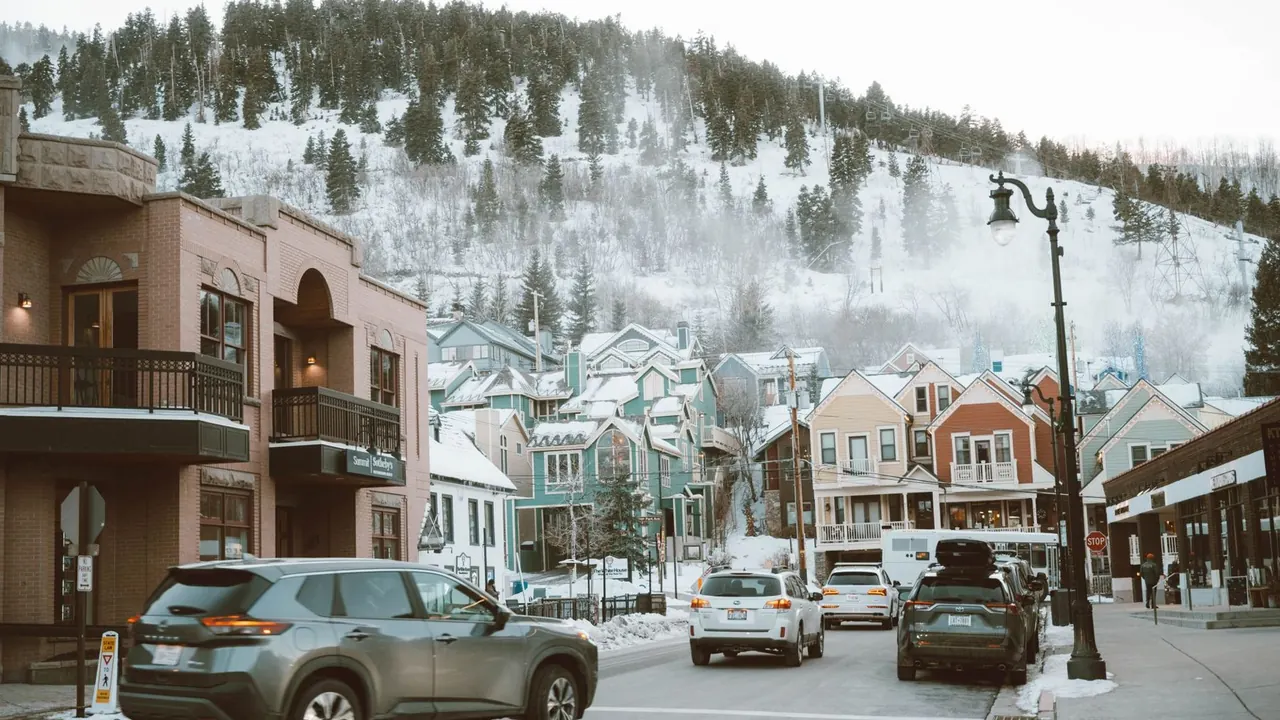
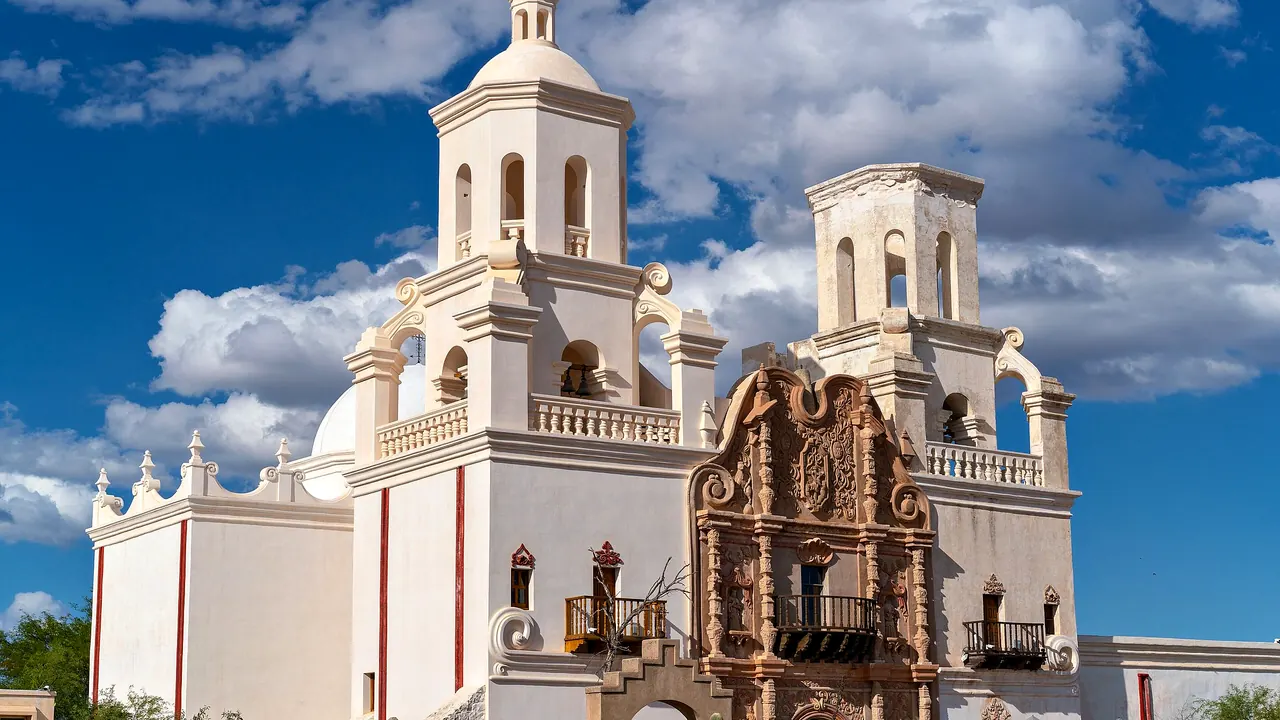
Photos: Park City by Quang Vuong, Pexels License; Tucson by Steve and Kimberly Rader, CC BY-SA 4.0, cropped.
Park City or Tucson?
Our verdict in twelve categories, each scored against the same fixed benchmark cities, and the climate month by month, so you can choose for your trip.
Choose Park City for
- getting around
- nature and the outdoors
- families
Park City is for travellers whose vacation revolves around the mountain. Two big ski areas rise straight from town, Utah's dry powder falls all winter, and in summer the same slopes become a base for biking and hiking. It is easy with children and easy without a car. It is also expensive, and once the lifts close there are few sights and no late nights.
Choose Tucson for
- prices
- culture and sights
- food and drink
Tucson suits someone who wants a fuller week in the sun, especially in winter. It has the better food, built on Sonoran Mexican cooking, along with a great mission church, strong Native American collections, more varied day trips into frontier country and much lower costs. The desert and Mount Lemmon give you plenty of time outdoors, but you will need a hire car for nearly all of it.
Scoreboard
Twelve categories on one fixed scale from 0 to 100. The shaded stretch is the gap between the two.
Your match
Pick a travel style or drag the sliders, and both match scores follow your weighting.
Wins on getting around and nature and the outdoors with your weighting.
Wins on prices and culture and sights with your weighting.
What matters to you?
Category by category
What the scores mean for a trip.
Beaches & swimming
Neither city has a coast, so for a beach vacation they are equally poor choices. The difference is where you get into the water. Park City has sandy swimming areas at Jordanelle Reservoir for a short, cool summer season. In Tucson it is the resort pool, with the Gulf of California a four-hour drive away and the creek pools in Sabino Canyon appearing only after rain.
Food & drink
Park City eats well for a small town. Polished restaurants on Main Street serve elk, bison and trout, and après-ski drinks are taken on the slopeside decks. The range is narrow, though. There is no local cuisine, and most of the cheaper meals come from the chains at Kimball Junction.
Tucson has the cooking worth travelling for. Sonoran Mexican food is a true regional cuisine, from mesquite-grilled carne asada and paper-thin flour tortillas to bacon-wrapped hot dogs from south-side carts. The family kitchens along South 12th Avenue have been serving it for decades.
Culture & sights
Park City's heritage is its silver-mining past. You see it in the wooden storefronts of Main Street and the old headframes on the slopes, and the Park City Museum tells the story, with the Olympic Park's ski museums as an extra. An afternoon covers it all.
Tucson has much more depth. Mission San Xavier del Bac, with its painted and gilded interior, is a sight of national standing, and the adobe of Barrio Viejo and El Presidio carries the city's Spanish and Mexican history. The Arizona State Museum and the aircraft at Pima Air & Space fill another day or two.
Nightlife
Neither city suits a big night out, but Tucson gives you more of an evening. In Park City, evenings begin on the decks as the lifts close and end early on a short run of Main Street saloons, which are only lively on winter weekends.
Tucson has two areas within walking distance of each other. Fourth Avenue has student dive bars and patios, and Congress Street has cocktail bars, rooftops and a few dance floors. On warm nights, drinking outside is much of the appeal, though things go quiet in summer when the university empties.
Nature & outdoors
Both are excellent for the outdoors, but Park City is built around them. Two big ski areas rise from the edge of town and dry Utah powder falls all winter. In the warmer months there is fly fishing on the Provo and Weber rivers, kayaking on the reservoirs and aspen gold on the high ridges in autumn.
Tucson's draw is the desert. Forests of giant saguaro flank the city on both sides, trails climb through Sabino Canyon and Catalina State Park, and the road up Mount Lemmon takes you from cactus to pine within an hour. It is outstanding from autumn to spring, but summer heat pushes outings to dawn.
Day trips
Park City's main outing is Salt Lake City, down the canyon, for Temple Square and a city's choice of restaurants. Closer in are the Heber Valley steam railway and the Swiss-style chalets of Midway. After Ogden and the road past Sundance, what is left is mostly scenery.
Tucson has a wider spread of places with character: the Wild West streets of Tombstone, the Victorian mining town of Bisbee, the artists' village of Tubac with the Tumacácori mission ruins beyond it, the Sonoita wineries and Biosphere 2. All of them need a car and none is a headline destination, but together they fill a week.
Good for families
Park City makes for the easier family trip. Both resorts have ski schools and gentle learning areas, free buses run to the slopes, and the Olympic Park has an alpine coaster, ziplines and freestyle skiers landing in a splash pool. Summer adds alpine slides and climbing walls. The catches are the altitude in the first few days and the cost.
Tucson has more conventional attractions, including the Arizona-Sonora Desert Museum, Reid Park Zoo, a planetarium and an old western film set. They are spread across a wide city, though, and are best visited between October and April, when the heat is manageable for small children.
Getting around
Park City is far easier without a car. Free buses link Old Town, both ski bases and Kimball Junction, and many hotels run shuttles. You will only want a car for the other ski areas and the valleys.
Tucson is built around driving. The Sun Link streetcar covers only downtown, Fourth Avenue and the university. The national park, the Desert Museum, the mission and Mount Lemmon all lie on the edges of the city or beyond, so a hire car is essential. At least traffic and parking are easy.
Shopping & style
Shopping is a minor draw in both, but the two differ in character. Park City is resort browsing, with galleries, cowboy boots, outdoor gear and ski fashion along Main Street and outlets at Kimball Junction. Tucson is about things made in the region, such as Native American jewellery, Tohono O'odham baskets and Mexican folk art, along with vintage shops on Fourth Avenue and a winter gem and mineral show that draws collectors from around the world.
Affordability
Park City is among the most expensive places in North America to ski. Slopeside lodging, lift tickets and ski school all sit at the top of the market, and the Christmas weeks cost even more. Prices ease in summer and autumn, and many travellers on a budget sleep in Salt Lake City or the Heber Valley instead.
Tucson costs far less for an American city, with reasonable mid-range hotels and cheap taquerías. The hire car and the resort spas add up, and winter is the most expensive season, but summer brings real bargains.
Live music & performing arts
Park City has a small programme. There is comedy and theatre at the 1920s Egyptian Theatre, touring shows at the Eccles Center and, in summer, the Utah Symphony playing on the lawns at Deer Valley.
Tucson has a fuller season from autumn to spring. It has its own symphony, Arizona Opera, the Arizona Theatre Company and touring Broadway shows at Centennial Hall, with the restored Fox and Rialto theatres downtown. Mariachi is the city's own sound, and Park City has nothing to match the annual mariachi conference.
Wellness & relaxation
In Park City, relaxing follows the ski day. There are large spas at the Deer Valley and Canyons lodges and outdoor hot tubs under the snow. In nearby Midway, the Homestead Crater is a warm spring inside a limestone dome where you can swim.
Tucson treats wellness as a reason to travel in itself. It is one of the original homes of the American destination spa, and its resorts in the foothills build whole stays around fitness, desert walks, massage and meditation. The clear winter light and quiet evenings do much of the rest.
When should you go?
Pick your month. The climate figures are measured averages, not a forecast.
Park City in July
Tucson in July
Daytime high, °C
Rainfall in the month, mm
Where the figures come from
Park City's temperatures are measured 79 km from the centre, at Evanston.
Park City has no rain gauge within 25 km of the centre, so its rainfall comes from a gridded climate dataset read at the city rather than from a gauge further away.
Temperature and rainfall are climate normals, averaged over the years shown. Park City: 1999-2020 (rainfall 1991-2020) normals, Evanston (78.8 km from centre). Tucson: 1991-2020 normals, Tucson International Airport (10.1 km from centre).
Park City is a winter and summer town with little in between. From December to February daytime highs stay around freezing, which is what the ski season needs, and spring warms slowly. June to September is the warm stretch, with July reaching about 28°C. These are also the driest months and the only time the reservoir is pleasant for a swim. The rest of the year's rain and snow is spread fairly evenly, with no real wet season.
Tucson runs almost the other way. October to April is the time to go, with mild to warm days of around 19°C in midwinter and very little rain, which is ideal for walking and hiking. By June highs reach about 39°C, too hot for sightseeing in the middle of the day, and the monsoon storms of July and August bring the year's heaviest rain, around 56mm in July. That makes Tucson the choice for winter sun, and Park City the choice for snow or for a cool summer escape.
Which traveller are you?
For an outdoors trip, Park City is the clear pick. The ski lifts start in town and the powder of Alta and Snowbird is within an hour. In summer, hundreds of kilometres of singletrack leave straight from the streets, and lifts carry bikes uphill.
On a culture and arts trip, Tucson gives you far more to fill the days. Mission San Xavier del Bac, the adobe streets of Barrio Viejo, the Arizona State Museum and a season of symphony, opera and theatre outweigh Park City's afternoon of mining heritage.
For a trip on a tight budget, Tucson is much kinder. Mid-range hotels are reasonable, taquerías and hot dog stands make eating cheaply easy, and summer brings bargains. Park City sits at the top of the resort market, above all in ski season.
Before you go
| Measure | Park City | Tucson |
|---|---|---|
| Currency | US Dollar (USD) | US Dollar (USD) |
| Sockets | AB120 V, 60 Hz | AB120 V, 60 Hz |
| Driving side | Right | Right |
| Time zone | UTC-7, UTC-6 in summer | UTC-7 |
| Emergency number | 911 | 911 |
| Elevation | 2,134 m | 728 m |
| Main airport | Salt Lake City International Airport (SLC)43 km from centre108 non-stop destinations | Tucson International Airport (TUS)12 km from centre18 non-stop destinations |
| Public holidays this year | 12 days | 12 days |
By the numbers
| Measure | Park City | Tucson |
|---|---|---|
| City population | 8,396 | 542,629 |
| People per km² | 185 | 923 |
| Museums within 10 km | 1 | 10 |
| UNESCO World Heritage sites within 50 km | 0 | 0 |
Where else could you go?
Every comparison below shares a destination with this one, so you can follow Park City or Tucson somewhere new.