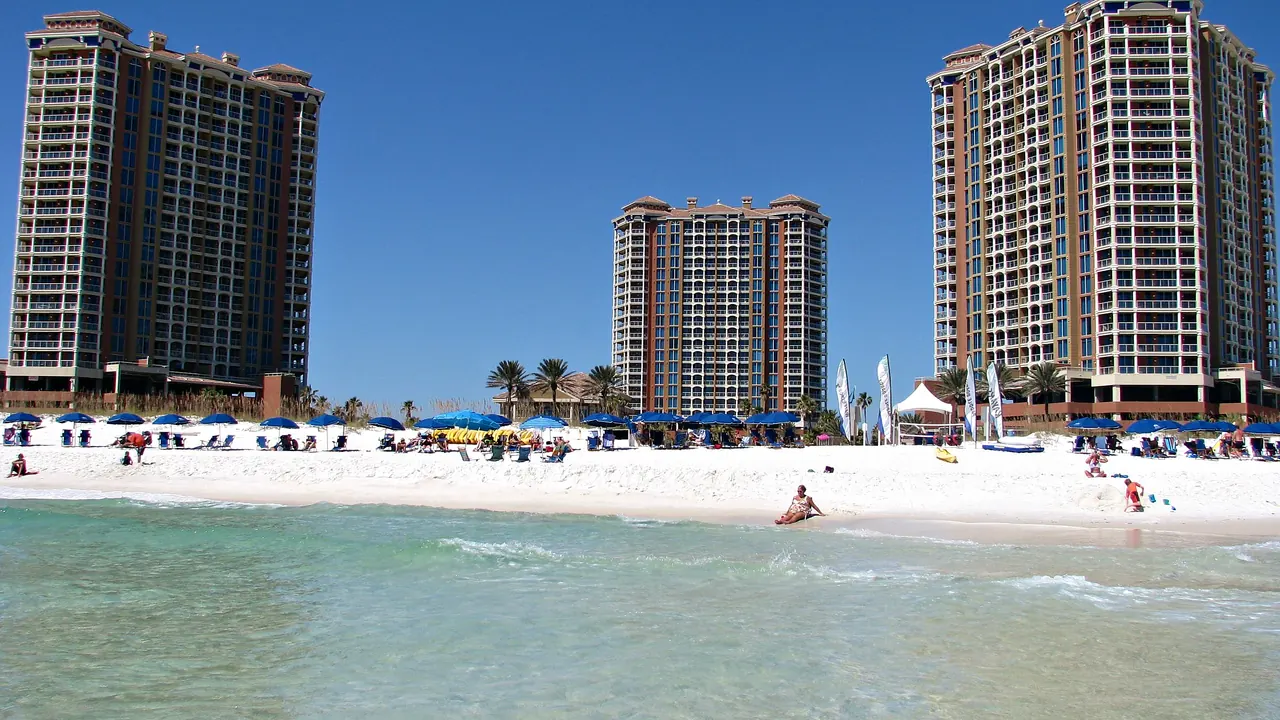
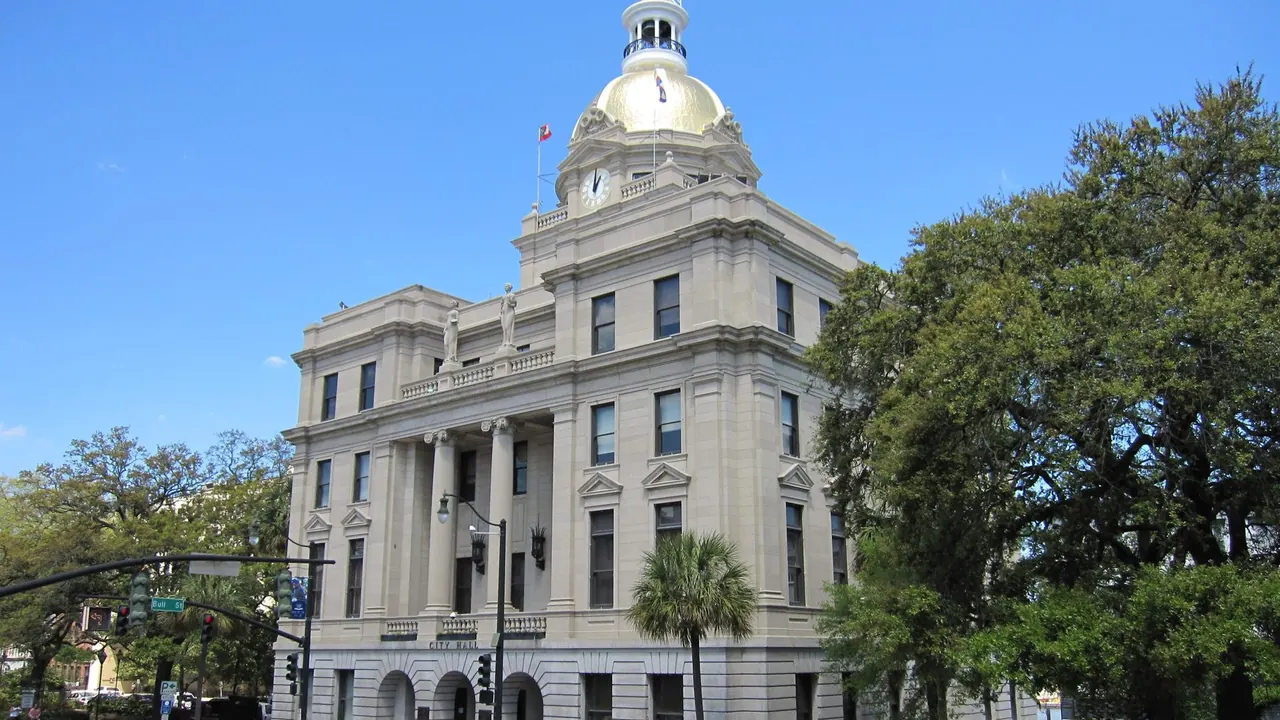
Photos: Pensacola by Jason Meredith, CC BY 2.0, cropped; Savannah by Chris M Morris, CC BY 2.0, cropped.
Pensacola or Savannah?
Our verdict in twelve categories, each scored against the same fixed benchmark cities, and the climate month by month, so you can choose for your trip.
Choose Pensacola for
- beaches
- nature and the outdoors
- families
Pensacola is the choice when the beach is the point of the trip. The white quartz sand and clear green water of Santa Rosa Island are a class above Tybee, the calm sound side suits small children, and the national seashore gives you more to do outdoors. It also costs a little less, as long as you are happy to drive everywhere.
Choose Savannah for
- getting around
- culture and sights
- day trips
For a trip built around walking, looking and eating, Savannah is the better pick. Oglethorpe's squares and old houses make a far richer town to explore on foot, the Lowcountry cooking has more depth, and Charleston and Beaufort are better day trips than anything near Pensacola. Here the sea is a half-hour side trip rather than the main event.
Scoreboard
Twelve categories on one fixed scale from 0 to 100. The shaded stretch is the gap between the two.
Your match
Pick a travel style or drag the sliders, and both match scores follow your weighting.
Wins on beaches and nature and the outdoors with your weighting.
Wins on getting around and culture and sights with your weighting.
What matters to you?
Category by category
What the scores mean for a trip.
Beaches & swimming
Pensacola is well ahead, and for most visitors the beach is the reason to come. About twenty minutes from downtown across the bay, Pensacola Beach and the Gulf Islands National Seashore stretch for miles along Santa Rosa Island, with white quartz sand, low dunes and clear green water. The summer surf is usually gentle, the sound side has calm shallows for toddlers, and Perdido Key adds quieter sand to the west. On rougher days the rip currents are real, so it is worth watching the flags.
Savannah has no beach of its own. Tybee Island, about half an hour east, has wide, flat sand that is good for walking and paddling, but the water is greenish-brown from the marshes and the town is low-key rather than glamorous. Most visitors give it a single day, whereas in Pensacola the beach can fill the whole trip.
Food & drink
Savannah eats better, mainly because its food has a clearer local identity. Lowcountry dishes such as shrimp and grits, she-crab soup and Lowcountry boil are served in family-style dining rooms. Above that, a small group of chef-led restaurants occupies restored townhouses and warehouses south of Forsyth Park.
Pensacola's best food is simpler: oysters, royal red shrimp and grouper sandwiches in casual places on the bay and the island, plus a modest modern Southern scene along Palafox Street. In both cities the waterfront leans on fried seafood for tourists, and there is little cooking from outside the South.
Culture & sights
Savannah is well ahead here, because the city itself is the attraction. Its 1733 grid of garden squares under live oaks, lined with Federal and Victorian houses, can fill two days of walking. The Telfair Museums, the Owens-Thomas House and Bonaventure Cemetery add depth.
Pensacola's history as the City of Five Flags is real but more scattered. There is the restored Seville district around Plaza Ferdinand, Fort Pickens out on the island, and the large National Naval Aviation Museum, which sits on an active base with ID checks. It is worthwhile, but it fits into the gaps between beach days.
Nightlife
Savannah has the livelier evenings, helped by the rule that lets you carry a drink in a to-go cup through the historic district. Nights move between the cobbled bars of River Street, the taverns around City Market and cocktail rooms in old townhouses. St Patrick's Day turns the whole city into a street party.
Pensacola's going out is split between Palafox Street's pubs and rooftop bars and the sandy beach bars on the island, plus the rowdy roadhouse bar at Perdido Key. It is fun in summer and at weekends but goes quiet early the rest of the time. Neither city has much in the way of clubs.
Nature & outdoors
Pensacola has more outdoors to offer. The national seashore protects dunes, sea oats and maritime forest, with a bike path and dolphins in the sound. The sunken aircraft carrier offshore draws experienced divers, and the clear, sand-bottomed Blackwater River inland is excellent for canoeing and tubing.
Savannah's Lowcountry is gentler and mostly about salt marsh: paddling tidal creeks at high tide, watching wood storks, and walking the oak avenue at Wormsloe or the trails at Skidaway Island. Both are completely flat, and in both summer heat pushes outdoor plans to spring and autumn, although Savannah's biting insects make its summers harder.
Day trips
Savannah is better placed for days out. Charleston is about two hours north, Beaufort and Hilton Head are each about an hour or less, Fort Pulaski is on the road to Tybee, and the Georgia islands of Jekyll and St Simons are within an hour and a half to the south.
From Pensacola, Mobile is the one outing with real substance, with Fairhope and Fort Morgan nearby. Destin, Seaside and Rosemary Beach to the east are mostly more beach. Both cities need a car for almost every trip.
Good for families
For children, Pensacola is the easier choice, largely because its beach does so much of the work. Warm, gentle water, toddler-friendly shallows on the sound side and condos with pools cover most days. The naval aviation museum, the Blue Angels, the Gulf Breeze Zoo and the tunnels at Fort Pickens fill the rest.
Savannah is manageable rather than made for children. There are shady squares to run in, trolley tours, the free river ferry and ghost walks for older children, but Tybee is a drive away. Neither city has a theme park, and summer heat wears young children out in both.
Getting around
This is where the two cities differ most. In Savannah's historic district, almost everything a visitor wants is a short, flat walk through shaded squares, and a free shuttle and a river ferry cover the rest. You only need a car for Tybee, Wormsloe or Bonaventure.
In Pensacola, the walkable part is limited to Palafox Street and the historic district. The beach, the naval air station and Perdido Key are spread along highways and bridges, the buses are of little use to visitors, and you will need a hire car for most of the stay.
Shopping & style
Neither is a shopping destination, but Savannah gives you more to browse. Broughton Street's restored shopfronts hold clothing and homeware boutiques, and shops selling work by art-school students and graduates, along with antique dealers and bookshops in the squares, give it some character.
Pensacola has a handful of independent boutiques and antique shops on Palafox Street, a regional mall with the usual chains, and beach shops selling swimwear and souvenirs.
Affordability
Pensacola is the somewhat cheaper stay. Rooms in town and inland cost noticeably less than on the beachfront, island prices drop sharply out of season, and the biggest museum is free. The cost people tend to forget is the hire car.
Savannah's historic district inns are priced for a popular weekend destination and cost even more in spring. You can save by staying in highway motels or coming midweek in summer, but then you need a car too. What softens Savannah's costs is how much of the city's pleasure, from the squares to the cemeteries, is free.
Live music & performing arts
The two cities are roughly level, but their seasons work differently. Pensacola's restored 1925 Saenger Theatre is home to resident symphony, opera and ballet companies, so there is usually something regional to see whenever you visit.
Savannah's offer is built around events: the spring Savannah Music Festival in historic theatres and churches, and an autumn jazz festival in Forsyth Park. Plan around those and you will find plenty. Arrive at another time and you may find only buskers and bar bands.
Wellness & relaxation
Neither city has a bathing or spa tradition, but Savannah is the more restful place to stay. Its unhurried pace, benches under the oaks and courtyard gardens in the old inns make doing very little easy, especially on a quiet southern square midweek.
Pensacola relaxes best out of season, when Santa Rosa Island and Perdido Key are empty and slow. In summer the crowds and the heat make it less restful.
When should you go?
Pick your month. The climate figures are measured averages, not a forecast.
Pensacola in July
Savannah in July
Daytime high, °C
Rainfall in the month, mm
Temperature and rainfall are climate normals, averaged over the years shown. Pensacola: 1991-2020 normals, Pensacola / Pleasant Grove (12.3 km from centre). Savannah: 1991-2020 normals, Savannah Airport (9.9 km from centre).
Both cities follow the same Southern pattern: mild winters, hot and sticky summers, and spring and autumn as the comfortable seasons for being out on foot. The Gulf off Pensacola is warm enough to swim from late May, reaching 28°C in June and staying there through September, and it never gets as cold in winter as the Atlantic off Tybee, which drops to 14°C in February. Pensacola is the wetter of the two all year round, though, and from June to September its summer storms bring around 200mm a month at their peak.
Savannah gets slightly hotter in midsummer, up to 34°C in July, which makes walking the squares at midday hard going from June to September. Its rainfall is lower, and November is its driest month at 61mm. That makes late October and November, along with March and April, the best times for a city stay. For swimming, choose Pensacola from June to September. For walking, either city works best in spring or autumn.
Which traveller are you?
On a beach and sun trip, choose Pensacola. Santa Rosa Island's miles of white quartz sand, clear green Gulf water and protected national seashore are what the city is about. Savannah's beach is a drive away on Tybee, with marsh-tinted water.
For a short city break, Savannah is the easy winner. Its historic district is compact and flat enough to cover on foot, with the squares, house museums, Telfair galleries and good Southern restaurants all close together. Pensacola needs a car for almost everything.
On a family trip with children, Pensacola works better. Warm, gentle water, calm shallows on the sound side, condos with kitchens and pools, and the naval aviation museum's planes keep children busy. Savannah has shady squares and ghost walks, but fewer things aimed at children.
Before you go
| Measure | Pensacola | Savannah |
|---|---|---|
| Currency | US Dollar (USD) | US Dollar (USD) |
| Sockets | AB120 V, 60 Hz | AB120 V, 60 Hz |
| Driving side | Right | Right |
| Time zone | UTC-6, UTC-5 in summer | UTC-5, UTC-4 in summer |
| Emergency number | 911 | 911 |
| Elevation | 31 m | 15 m |
| Main airport | Pensacola International Airport (PNS)6 km from centre27 non-stop destinations | Savannah Hilton Head International Airport (SAV)12 km from centre39 non-stop destinations |
| Public holidays this year | 11 days | 12 days |
By the numbers
| Measure | Pensacola | Savannah |
|---|---|---|
| City population | 54,312 | 147,780 |
| People per km² | 515 | 524 |
| Museums within 10 km | 5 | 19 |
| UNESCO World Heritage sites within 50 km | 0 | 0 |
| Swim season, months above 21 °C | 7 months | 6 months |
Where else could you go?
Every comparison below shares a destination with this one, so you can follow Pensacola or Savannah somewhere new.