Philippines
Davao
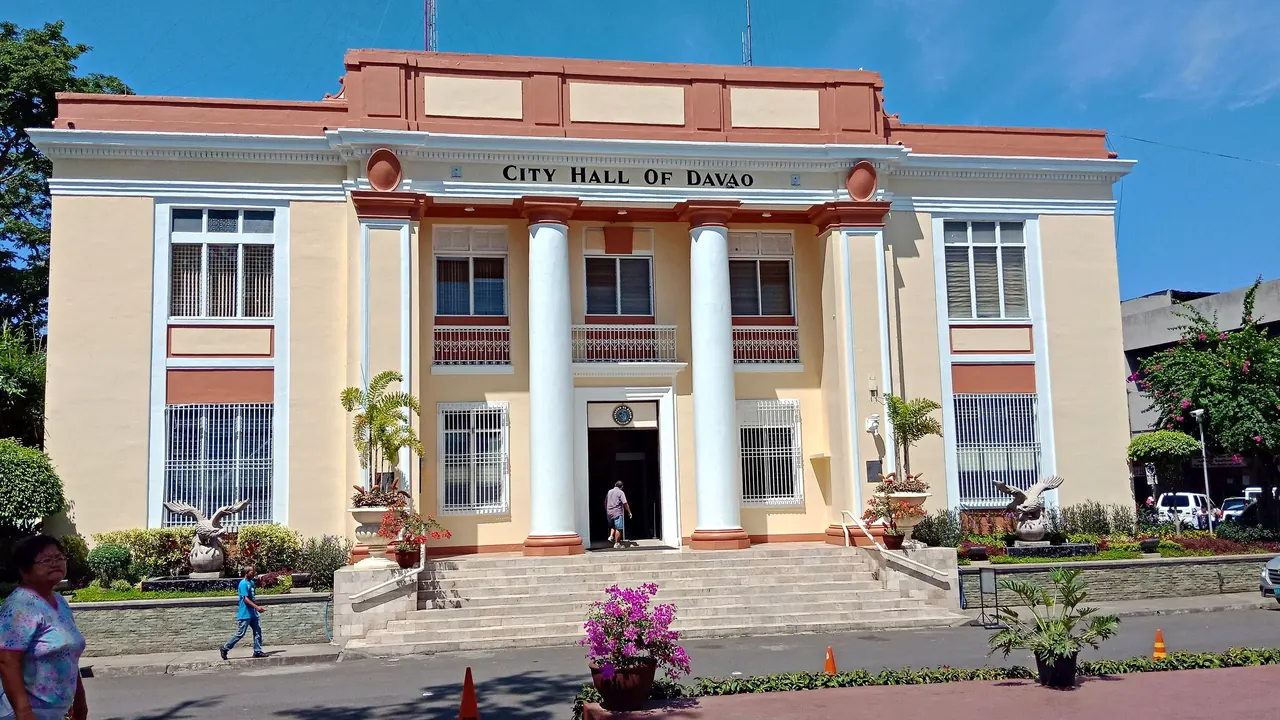
The colonnaded front of the city hall
- Affordable cities82
- Nature & outdoors68
- Beaches64
Photo: RoyKabanlit, CC BY-SA 4.0, cropped
Match
44
Every category weighted equally
- Beach & sun50
- Culture & arts37
- Food & nightlife40
- Family trip50
- Outdoors48
- Relax & unwind48
- Shopping & style40
- On a budget48
Davao in twelve categories
Our verdict on each, scored 0 to 100 against the same fixed benchmark cities, so a score means the same thing on every page.
Beaches & swimming. Scores 64 out of 100.
Food & drink. Scores 54 out of 100.
Culture & sights. Scores 24 out of 100.
Nightlife. Scores 28 out of 100.
Nature & outdoors. Scores 68 out of 100.
Day trips. Scores 22 out of 100.
Good for families. Scores 55 out of 100.
Getting around. Scores 36 out of 100.
Shopping & style. Scores 32 out of 100.
Affordability. Scores 82 out of 100.
Live music & performing arts. Scores 20 out of 100.
Wellness & relaxation. Scores 40 out of 100.
Davao category by category
Beaches & swimming
64Davao's own waterfront is a port and a working shoreline, not somewhere to swim. The beaches are across the narrow strait on Samal Island, a few minutes by boat from the city's wharves. There you find white and golden sand, coral close to shore and calm, very warm water around 29°C all year, with resorts and simpler day-use beaches along the island's western coast. Smaller islets such as Talikud are quieter still.
So beach time here is a day out, or a few nights moved across to Samal, rather than something woven into a city stay. The gulf is sheltered, so there is no surf, and the dry months from about February to May bring the clearest water.
Food & drink
54Davao eats from the sea and the orchards of Mindanao. Durian is the city's emblem, sold with pomelo, mangosteen and marang at fruit stalls that run late along Magsaysay Avenue. Gulf tuna turns up as grilled jaw and belly, and as kinilaw, raw fish cured in vinegar and calamansi. Grilled seafood joints, the evening stalls on Roxas Avenue and the produce at Bankerohan market show everyday eating at its most local.
Beyond that the restaurant scene is solid but provincial: Filipino family restaurants, mall chains and a modest set of cafés. Locally grown cacao and highland coffee give it something of its own. Fine dining and international range are thin.
Culture & sights
24Davao is a young, sprawling commercial city with little old fabric. The main stops are San Pedro Cathedral at the historic core, the Museo Dabawenyo and the Davao Museum, which explain the city's mix of indigenous Lumad, Moro, Visayan and Japanese settlement, and the Lon Wa Buddhist temple. Japanese tunnels from the Second World War and People's Park, with sculptures of indigenous figures, round it out.
It is an afternoon's worth of sightseeing rather than a reason to come. Most visitors treat it as a base for the island, the mountain and the wildlife rather than for museums.
Nightlife
28Davao has a reputation as a disciplined, orderly city, and its nights follow suit. Going out mostly means bars with live cover bands, grill-and-beer places and a few clubs around the Matina and Lanang areas and near the big malls, with a student crowd near the universities. Strict local rules on drinking and smoking in public shape the mood, and most nights wind down well before they would in the country's larger cities.
It is pleasant for a beer and a band after dinner. Anyone after a long, late scene will find little here.
Nature & outdoors
68Mount Apo, at 2,954m the highest mountain in the Philippines, rises west of the city and dominates clear mornings. Climbing it takes two or three days from trailheads a couple of hours away, through mossy forest to sulphur vents and a crater summit. Closer in, the cool upland around Malagos and the Marilog highlands has gardens, forest trails and fruit and cacao farms.
The Davao Gulf adds a second world: reef diving and snorkelling off Samal and Talikud, and the Monfort Bat Sanctuary, home to an enormous colony of fruit bats. Rafting on the Davao River and birding for raptors and hornbills fill out the list. Heat and humidity make early starts essential.
Day trips
22As a base for visiting other places, Davao is limited. Samal Island is the obvious outing, though it is mostly about resorts rather than a town to explore. Within two hours the nearby towns, such as Digos and Tagum, are ordinary provincial centres. The surf beaches of Mati and the UNESCO-listed forests of Mount Hamiguitan lie three hours or more away and are better treated as overnight trips. Most visitors spend their spare days on the island, the mountain or the highland gardens instead.
Good for families
55Davao is easy on families in ways larger Philippine cities are not. It is calm, clean and orderly, and Filipino culture is warmly welcoming to children. The Philippine Eagle Center in the Malagos hills lets children see the national bird up close, the Crocodile Park adds reptiles and animal shows, and Eden Nature Park in the cooler highlands has zip lines, horse rides and space to run.
Samal's resort beaches offer shallow, warm water for younger swimmers, and the big air-conditioned malls are a refuge on hot afternoons. The drawbacks are the steady heat and distances between attractions, which mean taxi rides rather than strolls.
Getting around
36Davao is a large, spread-out city with no rail line, and only small pockets around the old centre are pleasant to walk in the heat. Jeepneys run everywhere but their routes are hard for a newcomer to read. The real answer is the metered taxi: plentiful, and with a long reputation for being honest and using the meter, plus ride-hailing apps. Short boat crossings from the city's wharves reach Samal. Trips to the highland parks and Mount Apo trailheads mean a hired car with a driver or an organised tour.
Shopping & style
32Shopping in Davao mostly happens in large air-conditioned malls in Lanang, Bajada and along the main avenues, which locals use as much for the cool as for the shops. They cover Filipino and international chain fashion, electronics and food courts well, but there is no luxury street or district of independent design boutiques.
What is worth carrying home comes from Mindanao itself. Look for woven textiles such as malong tube skirts and abaca dagmay cloth, T'boli brass and beadwork, and pearls from the gulf, sold by craft and souvenir stalls and pasalubong shops across the city. Dried mango, durian candy, local chocolate made from Davao cacao and highland coffee make the classic edible gifts. Bankerohan market is for produce rather than souvenirs.
Affordability
82Davao is a very cheap city to stay in. Comfortable mid-range hotels, local restaurants, fruit stalls and metered taxis all cost little, and the city runs cheaper than the capital. The costs that add up are the better beach resorts on Samal, diving, guided climbs of Mount Apo and private drivers for highland outings. Even with those, a visitor spends far less than in most travel cities.
Live music & performing arts
20Formal performing arts are thin. There is no opera or regular theatre season to speak of, and live music mostly means cover bands in bars and the occasional touring concert. The exception is the Kadayawan festival each August, a harvest celebration with street dancing and performances by the region's indigenous and Muslim communities, in costumes and to rhythms seldom seen elsewhere. Outside that week a visitor will find little to attend.
Wellness & relaxation
40There is no bathing tradition here, but Davao is easier to unwind in than most Philippine cities. It is quieter and more orderly, and traditional hilot and other massage are cheap and easy to find. The more restorative stays are out of town: resort spas on Samal, and lodges in the cooler highlands towards Malagos and Marilog, where the air is fresher and the pace slower. The city itself, with its heat and traffic, is pleasant rather than restful.
When should you go?
Pick a month to see what it is like. The climate figures are measured averages, not a forecast.
Davao in July
Daytime high, °C
Rainfall in the month, mm
The whole year
Shaded against this city’s own year: the deepest cell is its best month for that figure and the palest its weakest.
Where the figures come from
Davao has no weather station within reach, so its figures come from a gridded climate model rather than a measured record, and read a broad area rather than the city itself.
Temperature and rainfall are climate normals, averaged over the years shown. Davao: 2001-2020 normals, NASA POWER reanalysis grid, no weather station within 90 km.
Before you go
| Measure | Davao |
|---|---|
| Official language | English, Filipino, Taglish |
| Currency | Philippine Peso (PHP) |
| Sockets | ABC220 V, 60 Hz |
| Driving side | Right |
| Time zone | UTC+8 |
| Emergency number | 911 |
| Elevation | 13 m |
| Main airport | Francisco Bangoy International Airport (DVO)8 km from centre15 non-stop destinations |
| Public holidays this year | 18 days |
By the numbers
| Measure | Davao |
|---|---|
| City population | 1,848,947 |
| People per km² | 757 |
| Museums within 10 km | 1 |
| UNESCO World Heritage sites within 50 km | 0 |
| Swim season, months above 21 °C | 12 months |
Compare Davao with
Every comparison with a written verdict behind it.