Philippines
Manila
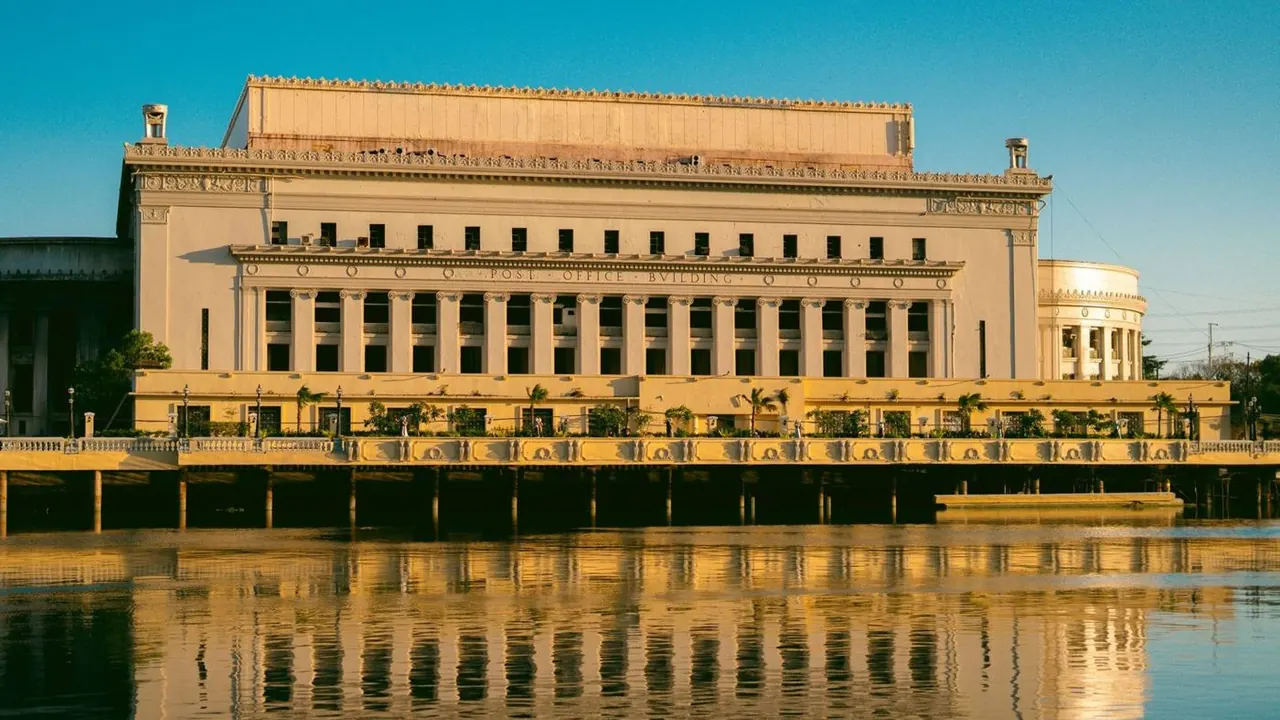
The Manila Central Post Office on the Pasig
- Affordable cities77
- Food & drink64
- Nightlife64
Photo: Kenneth Surillo, Pexels License
Match
48
Every category weighted equally
- Beach & sun45
- Culture & arts50
- Food & nightlife52
- Family trip44
- Outdoors45
- Relax & unwind44
- Shopping & style51
- On a budget51
Manila in twelve categories
Our verdict on each, scored 0 to 100 against the same fixed benchmark cities, so a score means the same thing on every page.
Beaches & swimming. Scores 12 out of 100.
Food & drink. Scores 64 out of 100.
Culture & sights. Scores 54 out of 100.
Nightlife. Scores 64 out of 100.
Nature & outdoors. Scores 40 out of 100.
Day trips. Scores 42 out of 100.
Good for families. Scores 42 out of 100.
Getting around. Scores 26 out of 100.
Shopping & style. Scores 60 out of 100.
Affordability. Scores 77 out of 100.
Live music & performing arts. Scores 50 out of 100.
Wellness & relaxation. Scores 40 out of 100.
Manila category by category
Beaches & swimming
12Manila sits on a bay but is not a beach city. The waterfront along Roxas Boulevard is for sunset walks, not swimming, and the water there is too polluted to go in. The sea further out is warm all year, around 28°C to 30°C, but the nearest proper beaches, around Nasugbu and Anilao in Batangas or along the Bataan coast, take two to three hours by road and are better treated as an overnight escape than a day out. For a beach vacation, most travellers use Manila as a transit point and fly on to Palawan, Boracay or Bohol.
Food & drink
64Filipino food is the heart of eating here: adobo, sinigang, crisp-skinned lechon, sizzling sisig, kare-kare and the shaved-ice dessert halo-halo, with sweet pandesal bread from neighbourhood bakeries in the morning. Binondo, founded centuries ago and often called the oldest Chinatown in the world, is the best place to eat on foot, with dumpling houses, hopia bakeries and noodle shops packed into a few streets. Carinderias, the home-style canteens with dishes on display, and grilled skewers at street stalls give the everyday side.
The modern scene lives in Makati, Poblacion and Bonifacio Global City, where chefs reworking Filipino cooking sit alongside Japanese, Korean and Spanish kitchens, and the malls hold huge food halls. Coffee culture is solid and craft beer is easy to find. Quality outside these areas is uneven, and much of the city eats in chains.
Culture & sights
54The walled Spanish city of Intramuros is the core: stone ramparts, Fort Santiago where José Rizal was held before his execution, Manila Cathedral and San Agustin Church, a 16th-century baroque church listed by UNESCO with a fine cloister museum. Next door, Rizal Park leads to the National Museum complex, three grand neoclassical buildings holding Filipino fine art, anthropology and natural history, including Juan Luna's huge canvas Spoliarium.
Beyond that the city is mostly modern, because the battle of 1945 flattened much of old Manila. Quiapo Church and its Black Nazarene, the old Chinese quarter of Binondo, the Ayala Museum's dioramas in Makati and the art deco survivors of Escolta reward a visit, but they are spread out and two or three days cover the essentials.
Nightlife
64Manila goes out late and with enthusiasm. Poblacion in Makati is the most characterful district, a grid of old streets packed with small cocktail bars, rooftop terraces, dive bars and street-food stalls that stay busy well past midnight. Bonifacio Global City offers the polished version, with large clubs and lounges drawing a dressed-up crowd, while Malate and the bayfront casino resorts add older and glitzier options.
Karaoke is a national pastime, from private rooms with friends to bars where strangers take the microphone with real seriousness. The catch is geography: each district is a separate island in the traffic, so a night out usually means staying in one area and taking a ride-hailing car home.
Nature & outdoors
40The city itself is dense and hot, with little green beyond Rizal Park, the Manila American Cemetery lawns and a few pocket parks. The landscape opens up beyond the sprawl. Tagaytay's ridge looks down on Taal, a volcano sitting in a lake, about two hours south, and the hills of Rizal province to the east offer short hikes to viewpoints and waterfalls, along with the limestone trails of the Masungi georeserve. Mountains such as Batulao and Pico de Loro suit early-morning day hikes.
Divers head to Anilao in Batangas for some of the richest reef life in the region. Every outing depends on leaving early to beat the traffic, and the hot, humid months and typhoon season from roughly June to October limit what is pleasant.
Day trips
42Corregidor is the classic outing: a ferry across the bay to the island fortress that guarded Manila Bay, with gun batteries, barracks ruins and the Malinta Tunnel from the Second World War. Tagaytay, on the cool ridge above Taal Lake, is a weekend escape for Manileños, known for bulalo beef soup and views.
South in Laguna, the old towns of Pila and Paete, the Rizal shrine at Calamba and the hot-spring resorts of Los Baños make a full day, and Pampanga to the north is the place to go for Kapampangan cooking. The heritage town of Taal in Batangas, with its huge basilica and ancestral houses, is rewarding but long. Traffic is the constant limit, and anything beyond two or three of these needs an early start or a driver.
Good for families
42Filipinos are openly fond of children, and families travelling with them are made welcome in restaurants, hotels and shops. Most family days happen indoors: the enormous malls have ice rinks, play areas and cinemas, and Manila Ocean Park on the bayfront has an oceanarium and shows. The free National Museum of Natural History, with its tree-of-life atrium, is good for curious older children, and the walls of Intramuros can be explored by bicycle or horse-drawn calesa.
Outside, the city is tiring with small children. Pavements are broken or missing, crossing roads is stressful, traffic eats hours and the heat is relentless. A pram is more trouble than it is worth, and a hotel with a pool becomes a real asset.
Getting around
26Getting around is the hardest part of a Manila trip. The metropolis is a sprawl of separate cities, and the sights, hotels and nightlife districts are far apart across roads that jam for much of the day. A handful of elevated rail lines run north to south and east to west, but they are crowded at peak times, do not link up neatly and miss many places a visitor wants to go.
Jeepneys, the decorated shared minibuses, and tricycles fill the gaps for those willing to learn the routes. Most visitors use ride-hailing cars and plan one area per day. Makati's business district, Bonifacio Global City and Intramuros are pleasant on foot, often linked by covered walkways, but walking between districts is not realistic.
Shopping & style
60Shopping in Manila means malls, on a scale few cities match. The giant complexes on the bayfront and in Ortigas, the garden malls of the Ayala Center in Makati and the open-air high streets of Bonifacio Global City hold international fashion, luxury wings, department stores and Filipino brands under one air-conditioned roof, and they double as places to escape the heat.
For bargains, the stalls and wholesale lanes of Divisoria sell almost anything in bulk, Greenhills in San Juan is known for pearls, gadgets and clothes, and the streets under Quiapo's bridge sell woven baskets and handicrafts. Look for South Sea pearls, piña and abaca weaving, dried mangoes and woodcarving. Independent boutiques and street-level shopping are thin.
Affordability
77Manila is cheap for most everyday costs. Carinderia meals, street food, bakeries, jeepneys and the trains cost very little, ride-hailing across the city is inexpensive by Western standards, and the National Museum complex is free. Comfortable hotels and serviced apartments are good value, especially outside the central business districts.
The bill climbs in Makati and Bonifacio Global City, where modern restaurants, cocktail bars and international hotels are priced for expatriates and the local business crowd. Imported wine and spirits cost more than local beer and rum. A visitor who eats locally and stays in a mid-range hotel spends little; one who lives in the upscale districts spends noticeably more.
Live music & performing arts
50The Cultural Center of the Philippines, a modernist complex on reclaimed land along the bay, is the home of the Philippine Philharmonic Orchestra and Ballet Philippines, and the national folk dance companies perform the bamboo-pole tinikling and other regional dances that are worth seeing at least once. English-language theatre companies stage Broadway and West End musicals with strong local casts, and touring productions come through the bayfront resort theatres.
The everyday strength is singing. Filipino bands play in bars across Makati, Quezon City and BGC most nights, covering anything from soul to rock with real skill, and original Filipino pop and indie acts have their own small venues. The formal programme is respectable rather than deep.
Wellness & relaxation
40Massage is the main way to unwind in Manila. Spas from simple neighbourhood places to polished hotel retreats offer Swedish, shiatsu and hilot, the traditional Filipino massage using warm banana leaves and coconut oil, and a long session is an easy, affordable end to a day in the traffic. The luxury hotels in Makati, BGC and on the bayfront have full spas and pools.
The city itself is the opposite of restorative: loud, crowded and hot, with little calm outdoor space. There is no bathing tradition in town, though the volcanic hot springs of Los Baños, south in Laguna, fill private pools at resorts a couple of hours away, and the cool air of Tagaytay draws people looking for quiet.
When should you go?
Pick a month to see what it is like. The climate figures are measured averages, not a forecast.
Manila in July
Daytime high, °C
Rainfall in the month, mm
The whole year
Shaded against this city’s own year: the deepest cell is its best month for that figure and the palest its weakest.
Temperature and rainfall are climate normals, averaged over the years shown. Manila: 1991-2020 normals, Science Garden (6 km from centre).
Before you go
| Measure | Manila |
|---|---|
| Official language | English, Filipino, Taglish |
| Currency | Philippine Peso (PHP) |
| Sockets | ABC220 V, 60 Hz |
| Driving side | Right |
| Time zone | UTC+8 |
| Emergency number | 911 |
| Elevation | 9 m |
| Main airport | Ninoy Aquino International Airport (MNL)11 km from centre90 non-stop destinations |
| Public holidays this year | 18 days |
By the numbers
| Measure | Manila |
|---|---|
| City population | 1,902,590 |
| People per km² | 76,104 |
| Museums within 10 km | 27 |
| UNESCO World Heritage sites within 50 km | 1 |
| Swim season, months above 21 °C | 12 months |
Compare Manila with
Every comparison with a written verdict behind it.