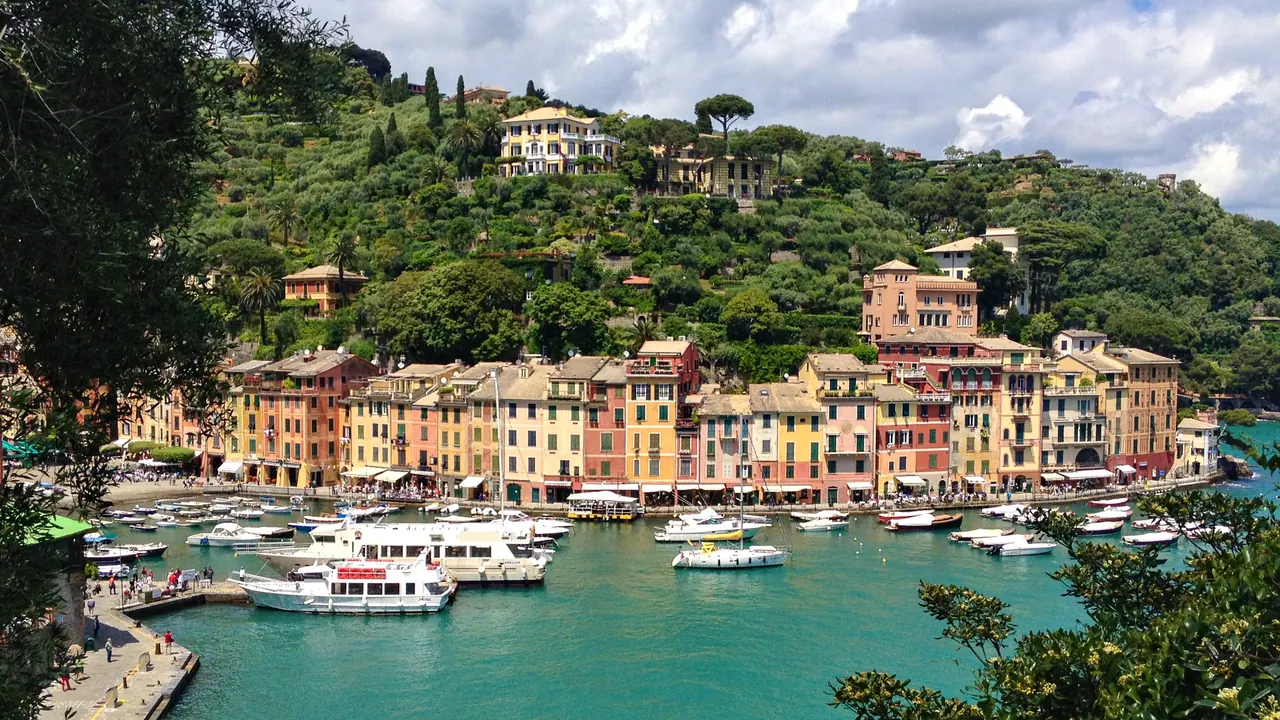
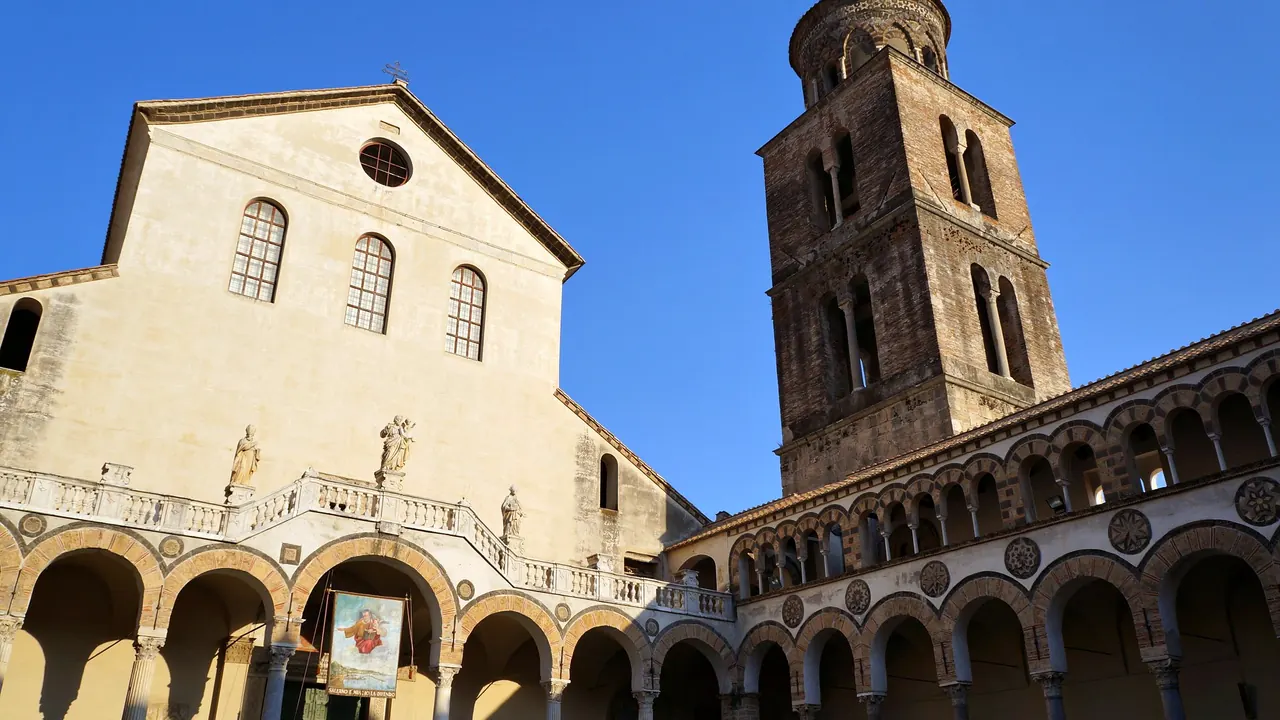
Photos: Portofino by Michal Osmenda, CC BY 2.0, cropped; Salerno by Leandro Neumann Ciuffo, CC BY 2.0, cropped.
Portofino or Salerno?
Our verdict in twelve categories, each scored against the same fixed benchmark cities, and the climate month by month, so you can choose for your trip.
Choose Portofino for
- wellness
Portofino suits a short, unhurried stay where the setting matters more than the itinerary: a painted harbour, a protected headland of cliff paths and clear water, and quiet mornings and evenings. It asks a great deal of your budget and offers little after dinner, so it rewards couples and walkers who are happy to pay for the view, or to sleep further along the coast and come over for the day.
Choose Salerno for
- prices
- live music and the arts
- food and drink
For almost any other trip, Salerno is the stronger base. It costs far less, eats better and keeps livelier evenings in its old town. It also puts Paestum, Pompeii, Naples and the Amalfi Coast within easy reach by train or ferry, which makes it the choice for a longer, busier stay where the city is a launch pad rather than the point.
Scoreboard
Twelve categories on one fixed scale from 0 to 100. The shaded stretch is the gap between the two.
Your match
Pick a travel style or drag the sliders, and both match scores follow your weighting.
Wins on wellness with your weighting.
Wins on prices and live music and the arts with your weighting.
What matters to you?
Category by category
What the scores mean for a trip.
Beaches & swimming
For swimming the two are about even, but the experience is very different. Portofino has no beach of its own. You swim from rock platforms and ladders into deep, very clear water, or go to the small bay at Paraggi, which is mostly given over to paid beach clubs, or take a boat to the pebbles at San Fruttuoso.
Salerno has sand: grey city beaches along the seafront, with murkier water near the port. South towards Paestum it has kilometres of wide beach backed by pine woods, which is better for a full day with a towel than anything near Portofino.
Food & drink
Salerno eats far better. Portofino's Ligurian dishes, such as trofie with pesto and the cheese focaccia from Recco, are served on a small cluster of harbour terraces where the view costs more than the cooking deserves, and there is little else.
Salerno has more variety and more character. Buffalo mozzarella is made fresh on the plain to the south, colatura comes from Cetara next door, and the old town is full of friggitorie, trattorias and pastry shops selling sfogliatelle. It is everyday food at its best.
Culture & sights
Salerno has much more to see. Its Norman cathedral holds the relics of Saint Matthew in a richly decorated crypt, the Giardino della Minerva recalls Europe's earliest medical school, and the Arechi Castle watches over the gulf.
In Portofino the sight is the village itself, with its ochre harbour front, San Giorgio and Castello Brown above, and the abbey of San Fruttuoso in a cove you can reach only by boat or on foot. It is a beautiful setting, but you will have seen it all within a day.
Nightlife
Neither is a clubbing town, but Salerno has a real night out and Portofino does not. Portofino's evenings are a dressed-up aperitivo facing the yachts and then dinner, after which the village goes quiet, especially outside July and August.
In Salerno, young locals fill the squares around Largo Campo and Via dei Mercanti until late at weekends and all summer. The seafront passeggiata keeps things sociable earlier in the evening.
Nature & outdoors
Both have superb coastal scenery, but on different scales. Portofino is one compact protected headland, both regional park and marine reserve. Trails with chained sections run over Monte di Portofino down to San Fruttuoso, and offshore there is diving among red coral walls and around the sunken Christ of the Abyss.
Salerno is the gateway to something larger: the limestone cliffs and lemon terraces of the Amalfi Coast, the Path of the Gods above Positano and the wooded gorges of the Cilento national park. To reach any of it, though, you have to travel out of the city first.
Day trips
Both are good bases, but Salerno's outings are among the best in Italy. Paestum's Greek temples and Pompeii are each about half an hour by train, Naples is a fast train ride away, and in season ferries cross to Amalfi and Positano.
Portofino has the Riviera di Levante towns of Camogli, Santa Margherita and Sestri Levante, Genoa's palaces less than an hour off, and summer ferries to the Cinque Terre. Outside the ferry season, getting about takes more planning.
Good for families
Salerno works much better with children. It has a long, flat, car-free promenade with playgrounds and gelato, shallow sandy beaches to the south and the Luci d'Artista lights in winter. The old town's steps are still hard work with a pushchair.
Portofino is calm and safe, and children like the boats and the castle, but it was built for adults. There are no playgrounds, the sand is mostly in paid beach clubs, and most families stay in Santa Margherita or Rapallo instead.
Getting around
Portofino takes only minutes to cross on foot, though the paths up to the church, the castle and the lighthouse are steep. The difficulty is getting in and out. A single narrow road winds about 5km from Santa Margherita, parking is scarce and in summer the buses are crowded and the road jams, so the seasonal ferries are often the easier way to arrive.
From Salerno, by contrast, getting about is straightforward. The station, the shopping street, the seafront and the old town lie in one walkable strip, a short metro serves the eastern districts and regional trains run direct to Naples, Pompeii and Paestum. A car is more trouble than it is worth in either place, except for trips into the Cilento.
Shopping & style
The difference here is designer labels against ordinary shopping streets. In a few lanes behind the harbour, Portofino has big fashion and jewellery houses, resort wear for people coming off the yachts and a little Ligurian lace and pesto. You can see the lot in under an hour, and there is nothing for everyday needs.
For a longer browse, Salerno gives you far more ground to cover. Corso Vittorio Emanuele is a long pedestrian street of Italian chains, the old town adds artisan workshops and food shops, and Vietri's painted majolica and Cetara's colatura are close by. What it lacks is luxury.
Affordability
There is a huge gap between them. Portofino has only a few hotels, mostly luxury ones, and the harbour bars, Paraggi loungers and boat hire all charge for the setting. Many visitors save by sleeping in Rapallo or Camogli and coming over for the day.
Salerno is a working city with local prices for rooms, pizza and trains, and it makes a sensible base for the expensive Amalfi Coast. Only summer ferries, lido sunbeds and entry to the big archaeological sites add up.
Live music & performing arts
Salerno has a real stage and Portofino has almost none. The gilded Teatro Verdi, modelled on the San Carlo in Naples, runs a season of opera, concerts and ballet, and the Ravello Festival's cliff-top concerts are within reach in summer.
In Portofino there are only occasional summer concerts in the piazzetta or at the castle. For a real evening of opera you would go to the Teatro Carlo Felice in Genoa.
Wellness & relaxation
Portofino is the more restful of the two, as long as you avoid midday in high summer, when the tour boats arrive. Its hillside hotels have proper spas, and early mornings, evenings and the shoulder months bring shaded paths with only the sea and birdsong for company.
Salerno's calm comes from palm-lined sunset walks along the seafront and long lunches, but traffic noise from a working port is never far off. The nearest thermal pools are at Contursi Terme, about an hour inland.
When should you go?
Pick your month. The climate figures are measured averages, not a forecast.
Portofino in July
Salerno in July
Daytime high, °C
Rainfall in the month, mm
Where the figures come from
Portofino's temperatures are measured 31 km from the centre, at Genova / Sestri.
Portofino has no rain gauge within 25 km of the centre, so its rainfall comes from a gridded climate dataset read at the city rather than from a gauge further away.
Salerno's temperatures are measured 71 km from the centre, at Grazzanise.
Salerno has no rain gauge within 25 km of the centre, so its rainfall comes from a gridded climate dataset read at the city rather than from a gauge further away.
Temperature and rainfall are climate normals, averaged over the years shown. Portofino: 1991-2020 normals, Genova / Sestri (31 km from centre). Salerno: 1991-2020 normals, Grazzanise (71.3 km from centre).
Both are summer sea destinations with wet autumns, but Salerno runs hotter and sunnier. In Portofino the swimming is good from June to early October, and August peaks at around 28°C, warm enough for the rocks but still fine for an early walk on the headland. Rain comes heavily in autumn: October is the wettest month at 225mm and November is nearly as wet, so late spring and September are the best times for hiking.
Salerno climbs to 31°C in July and August under long, cloudless days. That is too hot for the stepped lanes of the old town or the shadeless ruins nearby at midday, though the sea reaches 26°C. May, June and late September suit a trip that mixes sightseeing and swimming. Winters are mild in both, and in Salerno the rain peaks a little later, in November.
Which traveller are you?
On a trip on a tight budget, Salerno is the obvious pick. Its hotels, pizzerias and regional trains are priced for locals, while Portofino is among Italy's most expensive villages, where only the walking and the buses come cheap.
For a culture and arts trip, Salerno wins clearly. It has a Norman cathedral and an opera house, and Paestum's temples, Pompeii and Naples are all close by. Portofino offers a lovely village, a small castle and an abbey, all seen in a day.
On a relaxing and wellness trip, Portofino has the edge. Its luxury hotel spas, shaded headland paths and quiet off-season mornings give real calm, whereas Salerno is a working port where traffic and noise follow you along the main roads.
Before you go
| Measure | Portofino | Salerno |
|---|---|---|
| Official language | Italian | Italian |
| Currency | Euro (EUR) | Euro (EUR) |
| Sockets | CFL230 V, 50 Hz | CFL230 V, 50 Hz |
| Driving side | Right | Right |
| Time zone | UTC+1, UTC+2 in summer | UTC+1, UTC+2 in summer |
| Emergency number | 112 | 112 |
| Elevation | 20 m | 4 m |
| Main airport | Genoa Cristoforo Colombo Airport (GOA)32 km from centre25 non-stop destinations | Naples International Airport (NAP)46 km from centre131 non-stop destinations |
| Public holidays this year | 13 days | 13 days |
By the numbers
| Measure | Portofino | Salerno |
|---|---|---|
| City population | 355 | 127,186 |
| People per km² | 142 | 2,123 |
| Museums within 10 km | 14 | 9 |
| UNESCO World Heritage sites within 50 km | 2 | 5 |
| Swim season, months above 21 °C | 4 months | 5 months |
Where else could you go?
Every comparison below shares a destination with this one, so you can follow Portofino or Salerno somewhere new.